Search

Bava Batra 153

Want to dedicate learning? Get started here:

podcast placeholder

0:00
0:00


Summary

Rav and Shmuel disagreed regarding a case where one promised a gift using the phrase “in life and in death.” Rav held that this language indicated a deathbed gift, with “in life” being mentioned merely as an expression of hope. Shmuel, however, interpreted it as a gift from a healthy person.

In Nehardea, they followed Rav’s ruling. Later, Rava introduced a distinction: he argued that Rav would agree that using the phrase “from life” (rather than “in life”) would be treated as a gift from a healthy person. Ameimar, however, rejected Rava’s interpretation of Rav’s position.

When a case of this nature came before Rav Nachman in Nehardea, he sent it to be adjudicated in a different city, not wanting to rule against Shmuel in Shmuel’s own city of Nehardea.

In another instance, Rava ruled against a woman who tried to reclaim her gift, which was consistent with his position (as she had used the phrase “from life and in death”). When she persistently complained about his ruling, Rava arranged for another rabbi to write her the ruling she desired, but instructed him to add a citation at the bottom of the document from Bava Metzia regarding deception, signaling that he was deceiving her and the ruling should not be followed. Upon realizing this subterfuge, the woman cursed Rava that his boat should sink—and indeed, his boat sank.

When a gift document lacks language indicating either a deathbed or healthy status of the giver, and there is a dispute between the giver claiming it was written while dying and the recipients claiming otherwise, who bears the burden of proof? Rabbi Meir holds that we presume the person was healthy until proven otherwise. The rabbis, however, rule that the money remains with the giver until proven otherwise.

A case arose involving a deathbed gift that used appropriate deathbed gift language, but the document didn’t record that the person had died. After the person’s death, the recipients claimed the gift, while the heirs argued that their father had recovered from his illness (thus invalidating the gift) before becoming sick again and dying. Raba ruled in favor of the recipients, reasoning that since the person was now dead, it was likely they died from the original illness, making the gift valid.

Abaye challenged Raba’s ruling by citing the case of a sunken ship: even though we presume the passengers died, we must consider the possibility they survived if their bodies aren’t found. Similarly, he argued, we should consider the possibility of recovery, as most sick people do recover. Rav Huna, son of Rav Yehoshua, resolved the difficulty by explaining that Raba was following Rabbi Natan’s position.

Rabbi Natan and Rabbi Yaakov disagreed about a case where the document did not include whether given while healthy or on one’s deathbed. Rabbi Yaakov held that we follow the last known presumption of ownership, regardless of current possession. Rabbi Natan ruled that we follow the current presumption – if the person is currently on their deathbed, we assume the gift was given on their deathbed; if healthy, we assume they were healthy at the time the document was written.

Rabbi Elazar noted that this same dispute between Rabbi Natan and Rabbi Yaakov applies to a case in Mishna Taharot 6:7 regarding ritual impurity. The case involves a valley enclosed by a fence that is defined as a public space in summer (due to heavy foot traffic) but as a private space in winter (due to minimal traffic). When there’s a known dead body present but uncertainty about whether someone passed over it, the rule is: doubt in a public space yields ritual purity, while doubt in a private space yields impurity (based on Sotah laws). If it’s unknown whether the person was there in summer or winter, Rabbi Yaakov would rule based on the last known presumption of the person, which means they are deemed pure, while Rabbi Natan would rule based on the current season – they would be declared impure if the issue arises in the winter, and pure if it is summer.

Bava Batra 153

סְבוּר מִינֵּיהּ, הָנֵי מִילֵּי לְאַחֵר, אֲבָל לְעַצְמוֹ – לֹא; אֲמַר לְהוּ רַב חִסְדָּא: כִּי אֲתָא רַב הוּנָא מִכּוּפְרִי, פָּירְשַׁהּ: בֵּין לְעַצְמוֹ בֵּין לַאֲחֵרִים.

Rav’s disciples understood from this that this statement applies only when the person on his deathbed wishes to retract his gift and transfer it to another. But if he recovers and wishes to retract the gift and retain it for himself, Shmuel’s statement does not apply. Rav Ḥisda said to them: When Rav Huna came from Kufrei, he explained that Shmuel’s statement applies both to retaining the property for himself and to transferring it to others.

הָהוּא דִּקְנוֹ מִינֵּיהּ, אֲתָא לְקַמֵּיהּ דְּרַב הוּנָא, אָמַר: מַאי אֶיעְבֵּיד לָךְ, דְּלָא אַקְנֵית כִּדְמַקְנוּ אִינָשֵׁי.

The Gemara relates: There was a certain person on his deathbed who wrote a deed of transfer granting his property to another, and it was acquired from him by means of an act of acquisition. He subsequently recovered and wanted to retract the gift, and he came before Rav Huna. Rav Huna said to him: What can I do for you? You cannot retract the gift, as you did not transfer the gift in the manner that people on their deathbed transfer ownership of gifts, and you enhanced the legal power of the recipient by performing an act of acquisition.

הָהִיא מַתַּנְתָּא דַּהֲוָה כָּתוּב בָּהּ ״בַּחַיִּים וּבַמָּוֶת״ – רַב אָמַר: הֲרֵי הִיא כְּמַתְּנַת שְׁכִיב מְרַע. וּשְׁמוּאֵל אָמַר: הֲרֵי הִיא כְּמַתְּנַת בָּרִיא.

§ The Gemara relates: There was a deed pertaining to a certain gift of a person on his deathbed, in which it was written that the gift is given both in life and in death. In such a case, Rav says: It is like the gift of a person on his deathbed, and if he recovers he can retract it. And Shmuel says: It is like the gift of a healthy person, and he cannot retract it.

רַב אָמַר הֲרֵי הִיא כְּמַתְּנַת שְׁכִיב מְרַע – מִדִּכְתִיב בָּהּ ״בַּמָּוֶת״, אַחַר מִיתָה קָאָמַר לֵיהּ; וְהַאי דִּכְתִיב ״בַּחַיִּים״ – סִימָן בְּעָלְמָא, דְּחָיֵי.

The Gemara explains: Rav says: It is like the gift of a person on his deathbed. This can be inferred from the fact that it is written in the deed that the gift is given in death. This means that the giver is saying to him that the gift should take effect after his death, and that which is written in the deed, that the gift is given in life, is merely an auspicious omen, expressing hope that the giver will live.

וּשְׁמוּאֵל אָמַר הֲרֵי הִיא כְּמַתְּנַת בָּרִיא – מִדִּכְתִיב בָּהּ ״בַּחַיִּים״, מֵחַיִּים קָאָמַר; וְהַאי דִּכְתַב ״וּבַמָּוֶת״ – כְּמַאן דְּאָמַר ״מֵעַתָּה וְעַד עוֹלָם״. אָמְרִי נְהַרְדָּעֵי: הִלְכְתָא כְּווֹתֵיהּ דְּרַב.

And Shmuel says: It is like the gift of a healthy person. This can be inferred from the fact that it is written in the deed that the gift is given in life. This means that the giver is saying that the gift takes effect during his life, i.e., immediately. And that which he wrote, that the gift is given in death, is like one who says: From now and for evermore, i.e., that the gift is not retractable. The Sages of Neharde’a say: The halakha is in accordance with the opinion of Rav.

אָמַר רָבָא: וְאִי כְּתִיב בַּהּ ״מֵחַיִּים״ – קְנָה.

Rava said: And if it was written in the deed that the gift is given during life and in death, the recipient acquires the gift and it cannot be retracted, as this term indicates that the gift takes effect while the giver still lives.

אָמַר אַמֵּימָר: לֵית הִלְכְתָא כְּווֹתֵיהּ דְּרָבָא. אֲמַר לֵיהּ רַב אָשֵׁי לְאַמֵּימָר: פְּשִׁיטָא, דְּהָא אָמְרִי נְהַרְדָּעֵי: הִלְכְתָא כְּווֹתֵיהּ דְּרַב! מַהוּ דְּתֵימָא ״מֵחַיִּים״ – מוֹדֵי רַב; קָא מַשְׁמַע לַן.

Ameimar said: The halakha is not in accordance with the opinion of Rava. Rav Ashi said to Ameimar: Isn’t that obvious, as the Sages of Neharde’a say that the halakha is in accordance with the opinion of Rav? Ameimar replied: Lest you say that with regard to the term: During life, Rav concedes that the giver intends for the gift to take effect immediately, Ameimar teaches us that since the giver also mentioned death, he intended the gift as the gift of a person on his deathbed and he can retract it.

הָהוּא דַּאֲתָא לְקַמֵּיהּ דְּרַב נַחְמָן לִנְהַרְדְּעָא. שַׁדְּרֵיהּ לְקַמֵּיהּ דְּרַבִּי יִרְמְיָה בַּר אַבָּא לְשׁוּם טַמְיָא, אָמַר: הָכָא אַתְרָא דִשְׁמוּאֵל – הֵיכִי נַעֲבֵיד כְּווֹתֵיהּ דְּרַב!

The Gemara relates: There was a certain person who wrote in the deed that the gift is given in life and in death. When he recovered he wanted to retract the gift. He came before Rav Naḥman in Neharde’a. Rav Naḥman sent him to appear before Rabbi Yirmeya bar Abba in Shum Tamya. Rav Naḥman said in explanation of his actions: Here, Neharde’a, is the place of Shmuel. Consequently, Shmuel’s rulings should be followed, and therefore how can we act in accordance with the opinion of Rav?

הָהִיא דַּאֲתַאי לְקַמֵּיהּ דְּרָבָא, עֲבַד לַהּ רָבָא כִּשְׁמַעְתֵּיהּ. הֲוָה קָא טָרְדָא לֵיהּ.

The Gemara relates: There was a certain woman who wrote in the deed that the gift is given during life and in death. She came before Rava. Rava acted with regard to her case in accordance with his halakhic ruling, and he ruled that she cannot retract the gift. She did not accept the ruling, and she constantly troubled him, saying that he had not judged her case properly.

אֲמַר לֵיהּ לְרַב פָּפָּא בְּרֵיהּ דְּרַב חָנָן – סָפְרֵיהּ: זִיל כְּתוֹב לַהּ, וּכְתוֹב בָּהּ: ״שׂוֹכֵר עֲלֵיהֶן אוֹ מַטְעָן״. אָמְרָה: לִיטְבַּע אַרְבֵּיהּ! אַטְעוֹיֵי קָא מַטְעֵית לִי! אַמְשִׁינְהוּ לְמָנֵיהּ דְּרָבָא בְּמַיָּא, וַאֲפִילּוּ הָכִי לָא אִיפְּרַק מִטִּיבְעָא.

Rava said to Rav Pappa, his scribe, son of Rav Ḥanan: Go, write for her a ruling in her favor, and write in the ruling the phrase: He may hire replacements at their expense, or deceive them to get them to return to work. This is a phrase from the mishna (Bava Metzia 75b) that discusses the ruling in the case of one who hired laborers to perform a task that cannot be delayed, and they quit. Rava intended this phrase to indicate to the court that the ruling was merely a ruse in order to persuade the woman to leave. The woman understood the ruse. She said: May his ship sink; you are deceiving me. Rava had his clothes immersed in water so that the curse should be fulfilled in this alternative manner, but even so he was not saved from the sinking of his ship.

מַתְנִי׳ לֹא כָּתַב בָּהּ שְׁכִיב מְרַע, הוּא אוֹמֵר ״שְׁכִיב מְרַע הָיִיתִי״, וְהֵן אוֹמְרִים ״בָּרִיא הָיִיתָ״ – צָרִיךְ לְהָבִיא רְאָיָה שֶׁשְּׁכִיב מְרַע הָיָה, דִּבְרֵי רַבִּי מֵאִיר. וַחֲכָמִים אוֹמְרִים: הַמּוֹצִיא מֵחֲבֵרוֹ – עָלָיו הָרְאָיָה.

MISHNA: If one did not write in the deed that he was on his deathbed, and he then recovered and wished to retract the gift, and he says: I was on my deathbed, and since I recovered, I can retract the gift, but the recipients say: You were healthy, and the gift cannot be retracted, the giver must bring proof that he was on his deathbed in order to retract the gift. This is the statement of Rabbi Meir. And the Rabbis say: The burden of proof rests upon the claimant, and since the property is in the possession of the giver, the recipients must bring proof that they have the right to receive it.

גְּמָ׳ הָהוּא מַתַּנְתָּא דַּהֲוָה כְּתִב בַּהּ: ״כַּד הֲוָה קְצִיר וּרְמֵי בְּעַרְסֵיהּ״; וְלָא כְּתַב בָּהּ: ״וּמִגּוֹ מַרְעֵיהּ אִיפְּטַר לְבֵית עוֹלָמֵיהּ״.

GEMARA: There was a deed pertaining to a certain gift of a person on his deathbed, in which it was written that the gift was bestowed when the giver was sick and lying in his bed, but the continuation of the standard formula: And from his sickness he departed to his eternal home, was not written in it. The giver’s heirs claimed that although he was ill when he wrote the deed, he later recovered, and his gift is not valid.

אֲמַר רַבָּה: הֲרֵי מֵת, וַהֲרֵי קִבְרוֹ מוֹכִיחַ עָלָיו. אֲמַר לֵיהּ אַבָּיֵי: הַשְׁתָּא, וּמָה סְפִינָה – שֶׁרוּבָּן לֵאָבֵד, נוֹתְנִין עֲלֵיהֶן חוּמְרֵי חַיִּים וְחוּמְרֵי מֵתִים; חוֹלִין – שֶׁרוֹב חוֹלִין לְחַיִּים, לֹא כׇּל שֶׁכֵּן?!

Rabba said: He is dead, and his grave proves that he died. It may therefore be assumed that he did not recover from his sickness, and his gift remains valid. Abaye said to him: And now, if in the case of a ship that sank, where the fate of most of the passengers of sunken ships is to perish, the stringencies of the living and the stringencies of the dead are applied to them due to the uncertainty as to whether they are alive or dead, in the case of sick people, where the fate of most sick people is to return to life, all the more so is it not clear that one should assume that he recovered from the illness and his gift is invalid?

אָמַר רַב הוּנָא בְּרֵיהּ דְּרַב יְהוֹשֻׁעַ: כְּמַאן אָזְלָא הָא שְׁמַעְתָּא דְּרַבָּה – כְּרַבִּי נָתָן. דְּתַנְיָא: מִי מוֹצִיא מִיַּד מִי? הוּא מוֹצִיא מִידֵיהֶן בְּלֹא רְאָיָה, וְהֵן אֵין מוֹצִיאִין מִיָּדוֹ אֶלָּא בִּרְאָיָה; דִּבְרֵי רַבִּי יַעֲקֹב.

Rav Huna, son of Rav Yehoshua, said: In accordance with whose opinion is that halakha of Rabba? It is in accordance with the opinion of Rabbi Natan, as it is taught in a baraita: With regard to a case where one who gave his property to others claims that since he was on his deathbed at the time he can retract the gifts, and the recipients claim that he was healthy and cannot retract it, who removes the property from whose possession? The giver can remove it from the recipients’ possession without proof, as the property was previously established to be in his possession, but the recipients can remove it from the giver’s possession only with proof. This is the statement of Rabbi Ya’akov.

רַבִּי נָתָן אוֹמֵר: אִם בָּרִיא הוּא – עָלָיו לְהָבִיא רְאָיָה שֶׁהָיָה שְׁכִיב מְרַע. אִם שְׁכִיב מְרַע הוּא – עֲלֵיהֶן לְהָבִיא רְאָיָה שֶׁבָּרִיא הָיָה.

Rabbi Natan says: The presumption is that the current situation reflects the situation at the time the gift was bestowed. Therefore, if he is currently healthy, the obligation is upon him to bring proof that he was on his deathbed when he gave his property to others. If he is currently on his deathbed, the obligation is upon the recipients to bring proof that he was healthy then.

אָמַר רַבִּי אֶלְעָזָר: וּלְטוּמְאָה – כַּמַּחְלוֹקֶת. דִּתְנַן: בִּקְעָה בִּימוֹת הַחַמָּה – רְשׁוּת הַיָּחִיד לַשַּׁבָּת, וּרְשׁוּת הָרַבִּים לַטּוּמְאָה.

Rabbi Elazar says: And with regard to a case of uncertain ritual impurity, the halakha depends on the same dispute. This is as we learned in a mishna (Teharot 6:7): The halakha is that a case where it is uncertain if something or someone became impure in the public domain, the item or person is deemed pure. With regard to an expanse of fields, in the summer, when many people pass through the fields, it is considered the private domain with regard to the halakhot of Shabbat, but it is considered the public domain with regard to the halakhot of ritual impurity, and if one is uncertain as to whether he was rendered impure there, he is deemed pure.

בִּימוֹת הַגְּשָׁמִים – רְשׁוּת הַיָּחִיד לְכָאן וּלְכָאן.

In the rainy season, when not many people pass through the fields, an expanse of fields is considered the private domain both with regard to this, Shabbat, and with regard to that, ritual impurity. Therefore, if one is uncertain whether he was rendered impure there, he is deemed impure. If one does not know whether the day he entered the expanse of fields was considered part of the summer or the rainy season, and he is uncertain whether he was rendered impure there, Rabbi Ya’akov maintains that he retains the status of purity that he held before entering the fields. According to Rabbi Natan, it is presumed that he entered the fields during the same season in which he came to ask whether he was rendered impure.

אָמַר רָבָא: לֹא שָׁנוּ אֶלָּא שֶׁלֹּא עָבְרוּ עָלָיו יְמוֹת הַגְּשָׁמִים, אֲבָל עָבְרוּ עָלָיו יְמוֹת הַגְּשָׁמִים – רְשׁוּת הַיָּחִיד לְכָאן וּלְכָאן.

Rava disagrees with Rabbi Elazar and says: They taught the ruling of the mishna only with regard to a case where the rainy season has not yet passed over the fields after the possibility arose that the fields contained impurity. But if the rainy season has already passed over the fields, it is considered the private domain both with regard to this, Shabbat, and with regard to that, ritual impurity. Even though the one who passed through the fields came to ask about his status in the summer, when the fields should be considered the public domain, he is nevertheless deemed impure even according to Rabbi Natan, and there is no parallel dispute with regard to uncertain ritual impurity.

וַחֲכָמִים אוֹמְרִים: הַמּוֹצִיא מֵחֲבֵירוֹ עָלָיו הָרְאָיָה וְכוּ׳.

§ The mishna teaches: And the Rabbis say: The burden of proof rests upon the claimant, and since the property is in the possession of the giver, the recipients must bring proof that they have the right to receive it.

New to Talmud?

Check out our resources designed to help you navigate a page of Talmud – and study at the pace, level and style that fits you. 

The Hadran Women’s Tapestry

Meet the diverse women learning Gemara at Hadran and hear their stories. 

I had dreamed of doing daf yomi since I had my first serious Talmud class 18 years ago at Pardes with Rahel Berkovitz, and then a couple of summers with Leah Rosenthal. There is no way I would be able to do it without another wonderful teacher, Michelle, and the Hadran organization. I wake up and am excited to start each day with the next daf.

Beth Elster
Beth Elster

Irvine, United States

I started last year after completing the Pesach Sugiyot class. Masechet Yoma might seem like a difficult set of topics, but for me made Yom Kippur and the Beit HaMikdash come alive. Liturgy I’d always had trouble connecting with took on new meaning as I gained a sense of real people moving through specific spaces in particular ways. It was the perfect introduction; I am so grateful for Hadran!

Debbie Engelen-Eigles

Minnesota, United States

It happened without intent (so am I yotzei?!) – I watched the women’s siyum live and was so moved by it that the next morning, I tuned in to Rabbanit Michelle’s shiur, and here I am, still learning every day, over 2 years later. Some days it all goes over my head, but others I grasp onto an idea or a story, and I ‘get it’ and that’s the best feeling in the world. So proud to be a Hadran learner.

Jeanne Yael Klempner

Zichron Yaakov, Israel

Having never learned Talmud before, I started Daf Yomi in hopes of connecting to the Rabbinic tradition, sharing a daily idea on Instagram (@dafyomiadventures). With Hadran and Sefaria, I slowly gained confidence in my skills and understanding. Now, part of the Pardes Jewish Educators Program, I can’t wait to bring this love of learning with me as I continue to pass it on to my future students.

Hannah-G-pic
Hannah Greenberg

Pennsylvania, United States

I started the daf at the beginning of this cycle in January 2020. My husband, my children, grandchildren and siblings have been very supportive. As someone who learned and taught Tanach and mefarshim for many years, it has been an amazing adventure to complete the six sedarim of Mishnah, and now to study Talmud on a daily basis along with Rabbanit Michelle and the wonderful women of Hadran.

Rookie Billet
Rookie Billet

Jerusalem, Israel

I had never heard of Daf Yomi and after reading the book, The Weight of Ink, I explored more about it. I discovered that it was only 6 months before a whole new cycle started and I was determined to give it a try. I tried to get a friend to join me on the journey but after the first few weeks they all dropped it. I haven’t missed a day of reading and of listening to the podcast.

Anne Rubin
Anne Rubin

Elkins Park, United States

In my Shana bet at Migdal Oz I attended the Hadran siyum hash”as. Witnessing so many women so passionate about their Torah learning and connection to God, I knew I had to begin with the coming cycle. My wedding (June 24) was two weeks before the siyum of mesechet yoma so I went a little ahead and was able to make a speech and siyum at my kiseh kallah on my wedding day!

Sharona Guggenheim Plumb

Givat Shmuel, Israel

I started with Ze Kollel in Berlin, directed by Jeremy Borowitz for Hillel Deutschland. We read Masechet Megillah chapter 4 and each participant wrote his commentary on a Sugia that particularly impressed him. I wrote six poems about different Sugiot! Fascinated by the discussions on Talmud I continued to learn with Rabanit Michelle Farber and am currently taking part in the Tikun Olam course.
Yael Merlini
Yael Merlini

Berlin, Germany

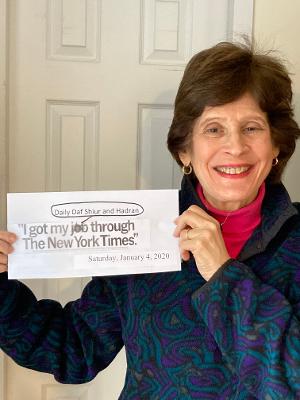
“I got my job through the NY Times” was an ad campaign when I was growing up. I can headline “I got my daily Daf shiur and Hadran through the NY Times”. I read the January 4, 2020 feature on Reb. Michelle Farber and Hadran and I have been participating ever since. Thanks NY Times & Hadran!
Deborah Aschheim
Deborah Aschheim

New York, United States

I attended the Siyum so that I could tell my granddaughter that I had been there. Then I decided to listen on Spotify and after the siyum of Brachot, Covid and zoom began. It gave structure to my day. I learn with people from all over the world who are now my friends – yet most of us have never met. I can’t imagine life without it. Thank you Rabbanit Michelle.

Emma Rinberg
Emma Rinberg

Raanana, Israel

I started at the beginning of this cycle. No 1 reason, but here’s 5.
In 2019 I read about the upcoming siyum hashas.
There was a sermon at shul about how anyone can learn Talmud.
Talmud references come up when I am studying. I wanted to know more.
Yentl was on telly. Not a great movie but it’s about studying Talmud.
I went to the Hadran website: A new cycle is starting. I’m gonna do this

Denise Neapolitan
Denise Neapolitan

Cambridge, United Kingdom

See video

Susan Fisher
Susan Fisher

Raanana, Israel

I started with Ze Kollel in Berlin, directed by Jeremy Borowitz for Hillel Deutschland. We read Masechet Megillah chapter 4 and each participant wrote his commentary on a Sugia that particularly impressed him. I wrote six poems about different Sugiot! Fascinated by the discussions on Talmud I continued to learn with Rabanit Michelle Farber and am currently taking part in the Tikun Olam course.
Yael Merlini
Yael Merlini

Berlin, Germany

A Gemara shiur previous to the Hadran Siyum, was the impetus to attend it.It was highly inspirational and I was smitten. The message for me was התלמוד בידינו. I had decided along with my Chahsmonaim group to to do the daf and take it one daf at time- without any expectations at all. There has been a wealth of information, insights and halachik ideas. It is truly exercise of the mind, heart & Soul

Phyllis Hecht.jpeg
Phyllis Hecht

Hashmonaim, Israel

I started last year after completing the Pesach Sugiyot class. Masechet Yoma might seem like a difficult set of topics, but for me made Yom Kippur and the Beit HaMikdash come alive. Liturgy I’d always had trouble connecting with took on new meaning as I gained a sense of real people moving through specific spaces in particular ways. It was the perfect introduction; I am so grateful for Hadran!

Debbie Engelen-Eigles

Minnesota, United States

In early 2020, I began the process of a stem cell transplant. The required extreme isolation forced me to leave work and normal life but gave me time to delve into Jewish text study. I did not feel isolated. I began Daf Yomi at the start of this cycle, with family members joining me online from my hospital room. I’ve used my newly granted time to to engage, grow and connect through this learning.

Reena Slovin
Reena Slovin

Worcester, United States

After being so inspired by the siyum shas two years ago, I began tentatively learning daf yomi, like Rabbanut Michelle kept saying – taking one daf at a time. I’m still taking it one daf at a time, one masechet at a time, but I’m loving it and am still so inspired by Rabbanit Michelle and the Hadran community, and yes – I am proud to be finishing Seder Mo’ed.

Caroline Graham-Ofstein

Bet Shemesh, Israel

Margo
I started my Talmud journey in 7th grade at Akiba Jewish Day School in Chicago. I started my Daf Yomi journey after hearing Erica Brown speak at the Hadran Siyum about marking the passage of time through Daf Yomi.

Carolyn
I started my Talmud journey post-college in NY with a few classes. I started my Daf Yomi journey after the Hadran Siyum, which inspired both my son and myself.

Carolyn Hochstadter and Margo Kossoff Shizgal

Merion Station,  USA

Beit Shemesh, Israel

A beautiful world of Talmudic sages now fill my daily life with discussion and debate.
bringing alive our traditions and texts that has brought new meaning to my life.
I am a מגילת אסתר reader for women . the words in the Mishna of מסכת megillah 17a
הקורא את המגילה למפרע לא יצא were powerful to me.
I hope to have the zchut to complete the cycle for my 70th birthday.

Sheila Hauser
Sheila Hauser

Jerusalem, Israel

The start of my journey is not so exceptional. I was between jobs and wanted to be sure to get out every day (this was before corona). Well, I was hooked after about a month and from then on only looked for work-from-home jobs so I could continue learning the Daf. Daf has been a constant in my life, though hurricanes, death, illness/injury, weddings. My new friends are Rav, Shmuel, Ruth, Joanna.
Judi Felber
Judi Felber

Raanana, Israel

Bava Batra 153

סְבוּר מִינֵּיהּ, הָנֵי מִילֵּי לְאַחֵר, אֲבָל לְעַצְמוֹ – לֹא; אֲמַר לְהוּ רַב חִסְדָּא: כִּי אֲתָא רַב הוּנָא מִכּוּפְרִי, פָּירְשַׁהּ: בֵּין לְעַצְמוֹ בֵּין לַאֲחֵרִים.

Rav’s disciples understood from this that this statement applies only when the person on his deathbed wishes to retract his gift and transfer it to another. But if he recovers and wishes to retract the gift and retain it for himself, Shmuel’s statement does not apply. Rav Ḥisda said to them: When Rav Huna came from Kufrei, he explained that Shmuel’s statement applies both to retaining the property for himself and to transferring it to others.

הָהוּא דִּקְנוֹ מִינֵּיהּ, אֲתָא לְקַמֵּיהּ דְּרַב הוּנָא, אָמַר: מַאי אֶיעְבֵּיד לָךְ, דְּלָא אַקְנֵית כִּדְמַקְנוּ אִינָשֵׁי.

The Gemara relates: There was a certain person on his deathbed who wrote a deed of transfer granting his property to another, and it was acquired from him by means of an act of acquisition. He subsequently recovered and wanted to retract the gift, and he came before Rav Huna. Rav Huna said to him: What can I do for you? You cannot retract the gift, as you did not transfer the gift in the manner that people on their deathbed transfer ownership of gifts, and you enhanced the legal power of the recipient by performing an act of acquisition.

הָהִיא מַתַּנְתָּא דַּהֲוָה כָּתוּב בָּהּ ״בַּחַיִּים וּבַמָּוֶת״ – רַב אָמַר: הֲרֵי הִיא כְּמַתְּנַת שְׁכִיב מְרַע. וּשְׁמוּאֵל אָמַר: הֲרֵי הִיא כְּמַתְּנַת בָּרִיא.

§ The Gemara relates: There was a deed pertaining to a certain gift of a person on his deathbed, in which it was written that the gift is given both in life and in death. In such a case, Rav says: It is like the gift of a person on his deathbed, and if he recovers he can retract it. And Shmuel says: It is like the gift of a healthy person, and he cannot retract it.

רַב אָמַר הֲרֵי הִיא כְּמַתְּנַת שְׁכִיב מְרַע – מִדִּכְתִיב בָּהּ ״בַּמָּוֶת״, אַחַר מִיתָה קָאָמַר לֵיהּ; וְהַאי דִּכְתִיב ״בַּחַיִּים״ – סִימָן בְּעָלְמָא, דְּחָיֵי.

The Gemara explains: Rav says: It is like the gift of a person on his deathbed. This can be inferred from the fact that it is written in the deed that the gift is given in death. This means that the giver is saying to him that the gift should take effect after his death, and that which is written in the deed, that the gift is given in life, is merely an auspicious omen, expressing hope that the giver will live.

וּשְׁמוּאֵל אָמַר הֲרֵי הִיא כְּמַתְּנַת בָּרִיא – מִדִּכְתִיב בָּהּ ״בַּחַיִּים״, מֵחַיִּים קָאָמַר; וְהַאי דִּכְתַב ״וּבַמָּוֶת״ – כְּמַאן דְּאָמַר ״מֵעַתָּה וְעַד עוֹלָם״. אָמְרִי נְהַרְדָּעֵי: הִלְכְתָא כְּווֹתֵיהּ דְּרַב.

And Shmuel says: It is like the gift of a healthy person. This can be inferred from the fact that it is written in the deed that the gift is given in life. This means that the giver is saying that the gift takes effect during his life, i.e., immediately. And that which he wrote, that the gift is given in death, is like one who says: From now and for evermore, i.e., that the gift is not retractable. The Sages of Neharde’a say: The halakha is in accordance with the opinion of Rav.

אָמַר רָבָא: וְאִי כְּתִיב בַּהּ ״מֵחַיִּים״ – קְנָה.

Rava said: And if it was written in the deed that the gift is given during life and in death, the recipient acquires the gift and it cannot be retracted, as this term indicates that the gift takes effect while the giver still lives.

אָמַר אַמֵּימָר: לֵית הִלְכְתָא כְּווֹתֵיהּ דְּרָבָא. אֲמַר לֵיהּ רַב אָשֵׁי לְאַמֵּימָר: פְּשִׁיטָא, דְּהָא אָמְרִי נְהַרְדָּעֵי: הִלְכְתָא כְּווֹתֵיהּ דְּרַב! מַהוּ דְּתֵימָא ״מֵחַיִּים״ – מוֹדֵי רַב; קָא מַשְׁמַע לַן.

Ameimar said: The halakha is not in accordance with the opinion of Rava. Rav Ashi said to Ameimar: Isn’t that obvious, as the Sages of Neharde’a say that the halakha is in accordance with the opinion of Rav? Ameimar replied: Lest you say that with regard to the term: During life, Rav concedes that the giver intends for the gift to take effect immediately, Ameimar teaches us that since the giver also mentioned death, he intended the gift as the gift of a person on his deathbed and he can retract it.

הָהוּא דַּאֲתָא לְקַמֵּיהּ דְּרַב נַחְמָן לִנְהַרְדְּעָא. שַׁדְּרֵיהּ לְקַמֵּיהּ דְּרַבִּי יִרְמְיָה בַּר אַבָּא לְשׁוּם טַמְיָא, אָמַר: הָכָא אַתְרָא דִשְׁמוּאֵל – הֵיכִי נַעֲבֵיד כְּווֹתֵיהּ דְּרַב!

The Gemara relates: There was a certain person who wrote in the deed that the gift is given in life and in death. When he recovered he wanted to retract the gift. He came before Rav Naḥman in Neharde’a. Rav Naḥman sent him to appear before Rabbi Yirmeya bar Abba in Shum Tamya. Rav Naḥman said in explanation of his actions: Here, Neharde’a, is the place of Shmuel. Consequently, Shmuel’s rulings should be followed, and therefore how can we act in accordance with the opinion of Rav?

הָהִיא דַּאֲתַאי לְקַמֵּיהּ דְּרָבָא, עֲבַד לַהּ רָבָא כִּשְׁמַעְתֵּיהּ. הֲוָה קָא טָרְדָא לֵיהּ.

The Gemara relates: There was a certain woman who wrote in the deed that the gift is given during life and in death. She came before Rava. Rava acted with regard to her case in accordance with his halakhic ruling, and he ruled that she cannot retract the gift. She did not accept the ruling, and she constantly troubled him, saying that he had not judged her case properly.

אֲמַר לֵיהּ לְרַב פָּפָּא בְּרֵיהּ דְּרַב חָנָן – סָפְרֵיהּ: זִיל כְּתוֹב לַהּ, וּכְתוֹב בָּהּ: ״שׂוֹכֵר עֲלֵיהֶן אוֹ מַטְעָן״. אָמְרָה: לִיטְבַּע אַרְבֵּיהּ! אַטְעוֹיֵי קָא מַטְעֵית לִי! אַמְשִׁינְהוּ לְמָנֵיהּ דְּרָבָא בְּמַיָּא, וַאֲפִילּוּ הָכִי לָא אִיפְּרַק מִטִּיבְעָא.

Rava said to Rav Pappa, his scribe, son of Rav Ḥanan: Go, write for her a ruling in her favor, and write in the ruling the phrase: He may hire replacements at their expense, or deceive them to get them to return to work. This is a phrase from the mishna (Bava Metzia 75b) that discusses the ruling in the case of one who hired laborers to perform a task that cannot be delayed, and they quit. Rava intended this phrase to indicate to the court that the ruling was merely a ruse in order to persuade the woman to leave. The woman understood the ruse. She said: May his ship sink; you are deceiving me. Rava had his clothes immersed in water so that the curse should be fulfilled in this alternative manner, but even so he was not saved from the sinking of his ship.

מַתְנִי׳ לֹא כָּתַב בָּהּ שְׁכִיב מְרַע, הוּא אוֹמֵר ״שְׁכִיב מְרַע הָיִיתִי״, וְהֵן אוֹמְרִים ״בָּרִיא הָיִיתָ״ – צָרִיךְ לְהָבִיא רְאָיָה שֶׁשְּׁכִיב מְרַע הָיָה, דִּבְרֵי רַבִּי מֵאִיר. וַחֲכָמִים אוֹמְרִים: הַמּוֹצִיא מֵחֲבֵרוֹ – עָלָיו הָרְאָיָה.

MISHNA: If one did not write in the deed that he was on his deathbed, and he then recovered and wished to retract the gift, and he says: I was on my deathbed, and since I recovered, I can retract the gift, but the recipients say: You were healthy, and the gift cannot be retracted, the giver must bring proof that he was on his deathbed in order to retract the gift. This is the statement of Rabbi Meir. And the Rabbis say: The burden of proof rests upon the claimant, and since the property is in the possession of the giver, the recipients must bring proof that they have the right to receive it.

גְּמָ׳ הָהוּא מַתַּנְתָּא דַּהֲוָה כְּתִב בַּהּ: ״כַּד הֲוָה קְצִיר וּרְמֵי בְּעַרְסֵיהּ״; וְלָא כְּתַב בָּהּ: ״וּמִגּוֹ מַרְעֵיהּ אִיפְּטַר לְבֵית עוֹלָמֵיהּ״.

GEMARA: There was a deed pertaining to a certain gift of a person on his deathbed, in which it was written that the gift was bestowed when the giver was sick and lying in his bed, but the continuation of the standard formula: And from his sickness he departed to his eternal home, was not written in it. The giver’s heirs claimed that although he was ill when he wrote the deed, he later recovered, and his gift is not valid.

אֲמַר רַבָּה: הֲרֵי מֵת, וַהֲרֵי קִבְרוֹ מוֹכִיחַ עָלָיו. אֲמַר לֵיהּ אַבָּיֵי: הַשְׁתָּא, וּמָה סְפִינָה – שֶׁרוּבָּן לֵאָבֵד, נוֹתְנִין עֲלֵיהֶן חוּמְרֵי חַיִּים וְחוּמְרֵי מֵתִים; חוֹלִין – שֶׁרוֹב חוֹלִין לְחַיִּים, לֹא כׇּל שֶׁכֵּן?!

Rabba said: He is dead, and his grave proves that he died. It may therefore be assumed that he did not recover from his sickness, and his gift remains valid. Abaye said to him: And now, if in the case of a ship that sank, where the fate of most of the passengers of sunken ships is to perish, the stringencies of the living and the stringencies of the dead are applied to them due to the uncertainty as to whether they are alive or dead, in the case of sick people, where the fate of most sick people is to return to life, all the more so is it not clear that one should assume that he recovered from the illness and his gift is invalid?

אָמַר רַב הוּנָא בְּרֵיהּ דְּרַב יְהוֹשֻׁעַ: כְּמַאן אָזְלָא הָא שְׁמַעְתָּא דְּרַבָּה – כְּרַבִּי נָתָן. דְּתַנְיָא: מִי מוֹצִיא מִיַּד מִי? הוּא מוֹצִיא מִידֵיהֶן בְּלֹא רְאָיָה, וְהֵן אֵין מוֹצִיאִין מִיָּדוֹ אֶלָּא בִּרְאָיָה; דִּבְרֵי רַבִּי יַעֲקֹב.

Rav Huna, son of Rav Yehoshua, said: In accordance with whose opinion is that halakha of Rabba? It is in accordance with the opinion of Rabbi Natan, as it is taught in a baraita: With regard to a case where one who gave his property to others claims that since he was on his deathbed at the time he can retract the gifts, and the recipients claim that he was healthy and cannot retract it, who removes the property from whose possession? The giver can remove it from the recipients’ possession without proof, as the property was previously established to be in his possession, but the recipients can remove it from the giver’s possession only with proof. This is the statement of Rabbi Ya’akov.

רַבִּי נָתָן אוֹמֵר: אִם בָּרִיא הוּא – עָלָיו לְהָבִיא רְאָיָה שֶׁהָיָה שְׁכִיב מְרַע. אִם שְׁכִיב מְרַע הוּא – עֲלֵיהֶן לְהָבִיא רְאָיָה שֶׁבָּרִיא הָיָה.

Rabbi Natan says: The presumption is that the current situation reflects the situation at the time the gift was bestowed. Therefore, if he is currently healthy, the obligation is upon him to bring proof that he was on his deathbed when he gave his property to others. If he is currently on his deathbed, the obligation is upon the recipients to bring proof that he was healthy then.

אָמַר רַבִּי אֶלְעָזָר: וּלְטוּמְאָה – כַּמַּחְלוֹקֶת. דִּתְנַן: בִּקְעָה בִּימוֹת הַחַמָּה – רְשׁוּת הַיָּחִיד לַשַּׁבָּת, וּרְשׁוּת הָרַבִּים לַטּוּמְאָה.

Rabbi Elazar says: And with regard to a case of uncertain ritual impurity, the halakha depends on the same dispute. This is as we learned in a mishna (Teharot 6:7): The halakha is that a case where it is uncertain if something or someone became impure in the public domain, the item or person is deemed pure. With regard to an expanse of fields, in the summer, when many people pass through the fields, it is considered the private domain with regard to the halakhot of Shabbat, but it is considered the public domain with regard to the halakhot of ritual impurity, and if one is uncertain as to whether he was rendered impure there, he is deemed pure.

בִּימוֹת הַגְּשָׁמִים – רְשׁוּת הַיָּחִיד לְכָאן וּלְכָאן.

In the rainy season, when not many people pass through the fields, an expanse of fields is considered the private domain both with regard to this, Shabbat, and with regard to that, ritual impurity. Therefore, if one is uncertain whether he was rendered impure there, he is deemed impure. If one does not know whether the day he entered the expanse of fields was considered part of the summer or the rainy season, and he is uncertain whether he was rendered impure there, Rabbi Ya’akov maintains that he retains the status of purity that he held before entering the fields. According to Rabbi Natan, it is presumed that he entered the fields during the same season in which he came to ask whether he was rendered impure.

אָמַר רָבָא: לֹא שָׁנוּ אֶלָּא שֶׁלֹּא עָבְרוּ עָלָיו יְמוֹת הַגְּשָׁמִים, אֲבָל עָבְרוּ עָלָיו יְמוֹת הַגְּשָׁמִים – רְשׁוּת הַיָּחִיד לְכָאן וּלְכָאן.

Rava disagrees with Rabbi Elazar and says: They taught the ruling of the mishna only with regard to a case where the rainy season has not yet passed over the fields after the possibility arose that the fields contained impurity. But if the rainy season has already passed over the fields, it is considered the private domain both with regard to this, Shabbat, and with regard to that, ritual impurity. Even though the one who passed through the fields came to ask about his status in the summer, when the fields should be considered the public domain, he is nevertheless deemed impure even according to Rabbi Natan, and there is no parallel dispute with regard to uncertain ritual impurity.

וַחֲכָמִים אוֹמְרִים: הַמּוֹצִיא מֵחֲבֵירוֹ עָלָיו הָרְאָיָה וְכוּ׳.

§ The mishna teaches: And the Rabbis say: The burden of proof rests upon the claimant, and since the property is in the possession of the giver, the recipients must bring proof that they have the right to receive it.

Want to follow content and continue where you left off?

Create an account today to track your progress, mark what you’ve learned, and follow the shiurim that speak to you.

Clear all items from this list?

This will remove ALL the items in this section. You will lose any progress or history connected to them. This is irreversible.

Cancel
Yes, clear all

Are you sure you want to delete this item?

You will lose any progress or history connected to this item.

Cancel
Yes, delete