Search

Bava Batra 154

Want to dedicate learning? Get started here:

podcast placeholder

0:00
0:00


Summary

When a gift document lacks language indicating either a deathbed or healthy status of the giver, and there is a dispute between the giver claiming it was written while dying and the recipients claiming otherwise, who bears the burden of proof? Rabbi Meir holds that we presume the person was healthy until proven otherwise. The rabbis, however, rule that the gift remains with the giver until proven otherwise.

There are two different approaches to understanding this debate. Some hold that the proof necessary according to each opinion is witnesses who will corroborate the facts, whether the giver was healthy or not when the gift was given. According to that understanding, Rabbi Meir and the rabbis disagree along the same lines as Rabbi Natan and Rabbi Yaakov – do we rely on the present state of the giver or the earlier presumption of ownership over the item? Others hold that the rabbis hold that the gift remains with the given unless the recipients can prove that the document is valid. The debate between Rabbi Meir and the rabbis is whether or not a document where the one who wrote it admits it is a document but raises a problem with its validity needs to be ratified.

A difficulty is raised against the second understanding, as Rabbi Meir and the rabbi debate this issue elsewhere regarding witnesses who bring a document but raise a doubt on its validity. However, this is resolved as one could have thought to distinguish between a case where witnesses question the validity and where the giver questions the validity.

Raba holds by the first explanation. When Abaye questioned his understanding, Raba explained the rabbi’s position: since the document should have included that the giver was either sick or healthy and included neither, it creates a doubt on each side and therefore the gift remains in the original owner’s property until proven otherwise.

Rabbi Yochanan and Reish Lakish also disagree about whether the debate between Rabbi Meir and the rabbis is about who needs to prove whether the giver was sick or healthy or whether the issue surrounds the ratification of the document. At first, the Gemara explains that Rabbi Yochanan holds the debate is about who needs to prove whether the giver was sick or healthy. He then questions Reish Lakish from a braita about a similar case where they needed to prove the seller’s age, that he was not too young to have sold the property, rather than ratifying the document, thus proving that ratification alone would not have been effective. To resolve the difficulty, Reish Lakish explains the details of the case differently, in a way that ratification of the document was irrelevant.

Reish Lakish brings a Mishna of Bar Kapara to Rabbi Yochanan that implies that a document where the owner admits to having written the document but claims that it is invalid is valid even without ratification. Reish Lakish asks Rabbi Yochanan if this only follows Rabbi Meir’s position and not the rabbis, as discussed earlier. Rabbi Yochanan explains that it follows the rabbis’ position as well as they both agree on this topic. Two questions are raised against Rabbi Yochanan’s answer from sources quoted previously. One is resolved but the second is not. As a result, the entire sugya unravels as Rabbi Zeira explains Rabbi Yochanan’s answer in a different manner, that the debate between Rabbi Meir and the rabbis is about ratification of the document and Bar Kapara matches the rabbi’s position. This explanation requires switching the positions of Rabbi Meir and the rabbis in both Mishna and the braita quoted previously about the witnesses and switching Rabbi Yochanan and Reish Lakish’s explanations of the debate between Rabbi Meir and the rabbis in our Mishna.

Bava Batra 154

רְאָיָה – בְּמַאי? רַב הוּנָא אָמַר: רְאָיָה בְּעֵדִים. רַב חִסְדָּא וְרַבָּה בַּר רַב הוּנָא אָמְרִי: רְאָיָה בְּקִיּוּם הַשְּׁטָר.

The Gemara asks: With regard to the proof that the recipients must bring, in what manner is it brought? Rav Huna says: The proof is presented by bringing witnesses who testify that the giver was healthy. Rav Ḥisda and Rabba bar Rav Huna say: The proof is presented by the ratification of the deed, i.e., the recipients are required only to ascertain that the signatures of the witnesses on the deed are authentic in order to prove that it is not forged.

רַב הוּנָא אָמַר רְאָיָה בְּעֵדִים – קָא מִיפַּלְגִי בִּפְלוּגְתָּא דְּרַבִּי יַעֲקֹב וְרַבִּי נָתָן;

The Gemara explains: Rav Huna says that the proof is presented by bringing witnesses. He maintains that Rabbi Meir and the Rabbis disagree with regard to the issue that is the subject of the dispute of Rabbi Ya’akov and Rabbi Natan in the baraita (153b).

(סִימָן: מַנִּיחַ.) רַבִּי מֵאִיר – כְּרַבִּי נָתָן, וְרַבָּנַן – כְּרַבִּי יַעֲקֹב.

The Gemara notes a mnemonic device that indicates which tannaitic opinions are correlated: Manniaḥ, which represents the letters mem, nun, yod, ḥet, stands for Meir, Natan, Ya’akov, and the Rabbis [ḥakhamim]. This indicates that Rabbi Meir, who says that the giver must bring proof that he was on his deathbed, holds in accordance with the opinion of Rabbi Natan, who maintains that one presumes that the current situation reflects the situation at the time the gift was bestowed. And the Rabbis, who say that the recipients must bring proof that the giver was healthy, hold in accordance with the opinion of Rabbi Ya’akov.

רַב חִסְדָּא וְרַבָּה בַּר רַב הוּנָא אָמְרִי רְאָיָה בְּקִיּוּם הַשְּׁטָר – קָא מִיפַּלְגִי בְּמוֹדֶה בִּשְׁטָר שֶׁכְּתָבוֹ צָרִיךְ לְקַיְּימוֹ; דְּרַבִּי מֵאִיר סָבַר: מוֹדֶה בִּשְׁטָר שֶׁכְּתָבוֹ – אֵינוֹ צָרִיךְ לְקַיְּימוֹ. וְרַבָּנַן סָבְרִי: מוֹדֶה בִּשְׁטָר שֶׁכְּתָבוֹ – צָרִיךְ לְקַיְּימוֹ.

Rav Ḥisda and Rabba bar Rav Huna say that the proof is presented by the ratification of the deed. The Gemara explains: Rav Ḥisda and Rabba bar Rav Huna maintain that Rabbi Meir and the Rabbis disagree with regard to whether when there is a debtor who admits that he wrote a promissory note, the creditor must ratify it in court in order to collect payment. The same ruling would apply to a case where the person on his deathbed admits that he wrote the deed granting the gift. They explain that Rabbi Meir holds that when there is a debtor who admits that he wrote a promissory note, the creditor need not ratify it in court in order to collect payment, and in this case the giver cannot invalidate the deed by claiming that he was on his deathbed. But the Rabbis hold that even when there is a debtor who admits that he wrote a promissory note, the creditor must ratify it in court in order to collect payment.

וְהָא אִיפְּלִיגוּ בַהּ חֲדָא זִימְנָא! דְּתַנְיָא: אֵין נֶאֱמָנִין לְפוֹסְלוֹ, דִּבְרֵי רַבִּי מֵאִיר. וַחֲכָמִים אוֹמְרִים: נֶאֱמָנִין!

The Gemara asks: But didn’t they already disagree with regard to this matter once? As it is taught in a baraita: With regard to witnesses who ratified their signatures but claimed that at the time they signed the document they were not fit to bear witness, their testimony is not deemed credible to invalidate the document; this is the statement of Rabbi Meir. And the Rabbis say: Their testimony is deemed credible.

צְרִיכָא, דְּאִי אִיתְּמַר הָהִיא – בְּהַהִיא קָאָמְרִי רַבָּנַן, מִשּׁוּם דְּאַלִּימֵי עֵדִים וּמַרְעִי שְׁטָרָא; אֲבָל הָכָא – הוּא דְּלָאו כָּל כְּמִינֵּיהּ, אֵימָא לָא;

The Gemara answers: It is necessary to state both cases, because if only that case with regard to witnesses who disqualified their testimony was stated, one might think that the Sages say that their testimony is accepted only in that case, due to the fact that the testimony of witnesses is powerful and they can impair the validity of the document, but here, with regard to him, the giver, who admitted that he wrote the deed but it is not in his power to impair the validity of the deed, I would say that his claim is not accepted.

וְאִי אִיתְּמַר בְּהָא, בְּהָא קָאָמַר רַבִּי מֵאִיר; אֲבָל בְּהָךְ, אֵימָא מוֹדֶה לְהוּ לְרַבָּנַן; צְרִיכָא.

And if only this case, with regard to a debtor who admits that he wrote a promissory note, was stated, one might think that Rabbi Meir says that the giver cannot invalidate the deed only with regard to this case, but with regard to that case, where the witnesses ratified their signatures, I would say that Rabbi Meir concedes to the Rabbis that witnesses can invalidate the deed. Therefore, it is necessary to state the dispute in both cases.

וְכֵן אָמַר רַבָּה: רְאָיָה בְּעֵדִים. אֲמַר לֵיהּ אַבָּיֵי: מַאי טַעְמָא? אִי נֵימָא מִדְּכוּלְּהוּ כְּתִיב בְּהוּ: ״כַּד הֲוָה מְהַלֵּךְ עַל רַגְלוֹהִי בְּשׁוּקָא״, וּבְהָא לָא כְּתִיב בָּהּ – שְׁמַע מִינַּהּ שְׁכִיב מְרַע הָוֵי; אַדְּרַבָּה! מִדְּכוּלְּהוּ כְּתִיב בְּהוּ: ״כַּד קְצִיר וּרְמֵי בְּעַרְסֵיהּ״, וְהָא לָא כְּתִיב בָּהּ, שְׁמַע מִינַּהּ בָּרִיא הָוֵי!

And Rabba also says: With regard to the proof that the recipients must present, it is presented by bringing witnesses who testify that the giver was healthy. Abaye said to him: What is the reason for this? If we say that due to the fact that in all deeds of gift the following formulation is written: When he was walking on his feet in the marketplace, which indicates that the gift was the gift of a healthy person, and in this deed this was not written, therefore one may conclude from the deed that the giver was on his deathbed, that is not correct. On the contrary, one could say that due to the fact that in all deeds concerning the gifts of a person on his deathbed the following is written: When he was sick and lying in his bed, and in this deed this was not written, therefore one may conclude from the deed that the giver was healthy.

אִיכָּא לְמֵימַר הָכִי וְאִיכָּא לְמֵימַר הָכִי, אוֹקִי מָמוֹנָא בְּחֶזְקַת מָרֵיהּ.

Rabba replied: Since one can say this and one can say that, nothing can be concluded from the formulation of the deed. Therefore, due to the uncertainty, establish the property in the possession of its last known owner.

וּבִפְלוּגְתָּא; דְּרַבִּי יוֹחָנָן אָמַר: רְאָיָה בְּעֵדִים, וְרַבִּי שִׁמְעוֹן בֶּן לָקִישׁ אָמַר: רְאָיָה בְּקִיּוּם הַשְּׁטָר.

And this dispute with regard to the statement of the Rabbis is also the subject of a dispute between other amora’im, as Rabbi Yoḥanan says: The proof is presented by bringing witnesses, and Rabbi Shimon ben Lakish says: The proof is presented by the ratification of the deed.

אֵיתִיבֵיהּ רַבִּי יוֹחָנָן לְרַבִּי שִׁמְעוֹן בֶּן לָקִישׁ: מַעֲשֶׂה בִּבְנֵי בְרַק בְּאֶחָד שֶׁמָּכַר בְּנִכְסֵי אָבִיו, וּמֵת, וּבָאוּ בְּנֵי מִשְׁפָּחָה וְעִרְעֲרוּ לוֹמַר: קָטָן הָיָה בִּשְׁעַת מִיתָה, וּבָאוּ וְשָׁאֲלוּ אֶת רַבִּי עֲקִיבָא: מַהוּ לְבוֹדְקוֹ? אָמַר לָהֶם: אִי אַתֶּם רַשָּׁאִים לְנַוְּולוֹ. וְעוֹד, סִימָנִין עֲשׂוּיִין לְהִשְׁתַּנּוֹת לְאַחַר מִיתָה.

Rabbi Yoḥanan raised an objection to Rabbi Shimon ben Lakish from a baraita: There was an incident in Bnei Brak involving one who sold some of his father’s property that he had inherited, and he died, and the members of his family came and contested the sale, saying: He was a minor at the time of his death, and therefore the sale was not valid. And they came and asked Rabbi Akiva: What is the halakha? Is it permitted to exhume the corpse in order to examine it and ascertain whether or not the heir was a minor at the time of his death? Rabbi Akiva said to them: It is not permitted for you to disgrace him for the sake of a monetary claim. And furthermore, signs indicating puberty are likely to change after death, and therefore nothing can be proved by exhuming the body.

בִּשְׁלָמָא לְדִידִי – דְּאָמֵינָא רְאָיָה בְּעֵדִים; כֵּיוָן דְּאָמַר לְלָקוֹחוֹת: ״אַיְיתוֹ עֵדִים״, וְלָא אַשְׁכַּחוּ, הַיְינוּ דְּקָא אֲתוֹ וַאֲמַרוּ לֵיהּ: מַהוּ לְבוֹדְקוֹ. אֶלָּא לְדִידָךְ דְּאָמְרַתְּ: רְאָיָה בְּקִיּוּם הַשְּׁטָר, לְמָה לְהוּ לְבוֹדְקוֹ? לְקַיְּימוּ שְׁטָרַיְיהוּ, וְלוֹקְמוּ בְּנִכְסֵי!

Rabbi Yoḥanan explains: Granted, according to my explanation of the mishna, that I say that the proof must be presented by bringing witnesses, I can explain the baraita. Since Rabbi Akiva said to the buyers: Bring witnesses, and they did not find witnesses, this is the reason that they came and said to him: What is the halakha? Is it permitted to examine him? But according to you, that you say that the proof is presented by ratification of the deed, why do they need to examine him? Let them ratify their deed and they shall be established as owners of the property.

מִי סָבְרַתְּ נִכְסֵי בְּחֶזְקַת בְּנֵי מִשְׁפָּחָה קָיְימִי – וְקָא אָתוּ לָקוֹחוֹת וּמְעַרְעֲרִי? נִכְסֵי בְּחֶזְקַת לָקוֹחוֹת קָיְימִי – וְקָא אָתוּ בְּנֵי מִשְׁפָּחָה וְקָא מְעַרְעֲרִי!

Rabbi Shimon ben Lakish replies: Do you maintain that the property stood in the possession of the members of his family and the buyers came and contested their possession of the property? Rather, the property stood in the possession of the buyers, and the members of his family came and contested the sale. Since they claimed that the deed was invalid, they could not prove their claim by ratifying the deed, but only by bringing witnesses or examining the body.

הָכִי נָמֵי מִסְתַּבְּרָא, מִדְּקָאָמַר לְהוּ: אִי אַתֶּם רַשָּׁאִים לְנַוְּולוֹ, וְאִישְׁתִּיקוּ. אִי אָמְרַתְּ בִּשְׁלָמָא בְּנֵי מִשְׁפָּחָה קָא מְעַרְעֲרִי, מִשּׁוּם הָכִי אִישְׁתִּיקוּ. אֶלָּא אִי אָמְרַתְּ לָקוֹחוֹת קָא מְעַרְעֲרִי, אַמַּאי שָׁתְקִי? לֵימְרוּ לֵיהּ: אֲנַן זוּזֵי יָהֲבִינַן לֵיהּ, לִינַּוַול וְלִינַּוַּול!

This, too, stands to reason, as Rabbi Akiva said to the claimants: You are not permitted to disgrace him, and they were silent. Granted, if you say that the members of his family were contesting the sale, due to that reason they were silent, as they accepted that they should not disgrace their relative. But if you say that the buyers were contesting the claim of the relatives, why were they silent? They should have said to Rabbi Akiva: We gave him money, and if our right to the property cannot be proven without disgracing him, let him be disgraced.

אִי מִשּׁוּם הָא – לָא אִירְיָא; הָכִי קָאָמַר לְהוּ: חֲדָא, דְּאִי אַתֶּם רַשָּׁאִים לְנַוְּולוֹ. וְעוֹד, וְכִי תֵּימְרוּ זוּזֵי שְׁקַל – לִינַּוַול וְלִינַּוַּול; סִימָנִים עֲשׂוּיִין לְהִשְׁתַּנּוֹת לְאַחַר מִיתָה.

The Gemara rejects this argument: If it is due to that reason, i.e., this claim they could have said, there is no conclusive argument. This is what Rabbi Akiva said to them: One reason to prohibit exhuming the body is that you are not permitted to disgrace him. And furthermore, if you should say: He took the money; let him be disgraced, in any event nothing can be proved by exhuming the body, as signs indicating puberty are likely to change after death.

תָּא שְׁמַע: שָׁאַל רַבִּי שִׁמְעוֹן בֶּן לָקִישׁ אֶת רַבִּי יוֹחָנָן, זוֹ שֶׁשְּׁנוּיָה בְּמִשְׁנַת בַּר קַפָּרָא: הֲרֵי שֶׁהָיָה אוֹכֵל שָׂדֶה וּבָא – בְּחֶזְקַת שֶׁהִיא שֶׁלּוֹ, וְקָרָא עָלָיו אֶחָד עַרְעָר לוֹמַר: ״שֶׁלִּי הִיא״, וְהוֹצִיא זֶה אֶת אוֹנוֹ לוֹמַר: ״שֶׁמְּכַרְתָּהּ לִי״ אוֹ ״שֶׁנְּתַתָּהּ לִי בְּמַתָּנָה״, אִם אָמַר: ״אֵינִי מַכִּיר בִּשְׁטָר זֶה מֵעוֹלָם״ – יִתְקַיֵּים הַשְּׁטָר בְּחוֹתְמָיו.

The Gemara suggests: Come and hear a proof: Rabbi Shimon ben Lakish asked Rabbi Yoḥanan about that which is taught in the Mishna of bar Kappara: There was one who was continually enjoying the profits from a field, and it was the presumption that it was his, and someone contested his claim, saying: It is mine. And that person, who was profiting from the field, produced a deed, in order to say: It is mine, as you sold this field to me, or: It is mine, as you gave me this field as a gift. If the one who protested his claim said: I do not recognize that deed as one that I have ever written, the deed must be ratified through its signatures.

אִם אָמַר: ״שְׁטַר פַּסִּים הוּא זֶה״ אוֹ ״שְׁטַר אֲמָנָה״; ״שֶׁמָּכַרְתִּי לָךְ, וְלֹא נָתַתָּ לִי דָּמִים״ – אִם יֵשׁ עֵדִים, הַלֵּךְ אַחַר עֵדִים; וְאִם לָאו – הַלֵּךְ אַחַר הַשְּׁטָר.

If the one who protested his claim said: This is a document of appeasement [shtar passim], a document written only so that the holder should appear wealthy, or a document of trust, which means that I sold the field to you and provided you with the deed, trusting you to provide payment, and since you did not give me the money the sale is void, then if there are witnesses, follow the testimony of the witnesses, and if not, follow the deed.

לֵימָא רַבִּי מֵאִיר הִיא, דְּאָמַר: מוֹדֶה בִּשְׁטָר שֶׁכְּתָבוֹ – אֵינוֹ צָרִיךְ לְקַיְּימוֹ; וְלָא רַבָּנַן?

Rabbi Shimon ben Lakish concludes: According to your explanation, the Rabbis maintain that even if the deed is ratified the claimant cannot take possession of the property without bringing witnesses. If so, shall we say that this baraita is in accordance with the opinion of Rabbi Meir, who says that when there is a debtor who admits that he wrote a promissory note, the creditor is not required to ratify it in court in order to collect payment, and it is not in accordance with the opinion of the Rabbis?

אֲמַר לֵיהּ: לָא; שֶׁאֲנִי אוֹמֵר: דִּבְרֵי הַכֹּל – מוֹדֶה בִּשְׁטָר שֶׁכְּתָבוֹ, אֵינוֹ צָרִיךְ לְקַיְּימוֹ. וְהָא מִיפְלָג פְּלִיגִי! דִּתְנַן: אֵין נֶאֱמָנִין לְפוֹסְלוֹ, דִּבְרֵי רַבִּי מֵאִיר. וַחֲכָמִים אוֹמְרִים: נֶאֱמָנִין!

Rabbi Yoḥanan said to Rabbi Shimon ben Lakish: No, it is not so. As I say that everyone agrees that in the case of a debtor who admits that he wrote a promissory note, the creditor is not required to ratify it in court in order to collect payment. Rabbi Shimon ben Lakish asked: But don’t they disagree, as we learned in a baraita: With regard to witnesses who ratified their signatures but claimed that they were not fit to bear witness when they signed the deed, their testimony is not deemed credible to invalidate the document; this is the statement of Rabbi Meir. And the Rabbis say: Their testimony is deemed credible.

אֲמַר לֵיהּ: אִי עֵדִים אַלִּימֵי וּמַרְעִי שְׁטָרָא, אִיהוּ כָּל כְּמִינֵּיהּ?! אֲמַר לֵיהּ, וַהֲלֹא מִשִּׁמְךָ אָמְרוּ: יָפֶה עִרְעֲרוּ בְּנֵי מִשְׁפָּחָה! אֲמַר לֵיהּ: זוֹ – אֶלְעָזָר אֲמָרָהּ; אֲנִי לֹא אָמַרְתִּי דָּבָר זֶה מֵעוֹלָם.

Rabbi Yoḥanan said to Rabbi Shimon ben Lakish: Even if the testimony of witnesses is powerful and they impair the validity of the deed, which they admit to have written, with regard to him, the giver, is it in his power to impair the validity of a deed that he admits to have written? Rabbi Shimon ben Lakish said to Rabbi Yoḥanan: But wasn’t it stated in your name with regard to the aforementioned incident in Bnei Brak: The members of his family contested the claim correctly, even though they admitted that the deed was authentic? This means that the claimant is required to ratify the deed. Rabbi Yoḥanan said to Rabbi Shimon ben Lakish: That statement was stated in my name by Rabbi Elazar, my disciple, but I never said that statement.

אָמַר רַבִּי זֵירָא: אִם יִכְפּוֹר רַבִּי יוֹחָנָן בְּרַבִּי אֶלְעָזָר תַּלְמִידוֹ, יִכְפּוֹר בְּרַבִּי יַנַּאי רַבּוֹ? דְּאָמַר רַבִּי יַנַּאי אָמַר רַבִּי: מוֹדֶה בִּשְׁטָר שֶׁכְּתָבוֹ – אֵינוֹ צָרִיךְ לְקַיְּימוֹ. וַאֲמַר לֵיהּ רַבִּי יוֹחָנָן: רַבִּי, לֹא מִשְׁנָתֵנוּ הִיא זוֹ? וַחֲכָמִים אוֹמְרִים: הַמּוֹצִיא מֵחֲבֵירוֹ – עָלָיו הָרְאָיָה. אֵין רְאָיָה אֶלָּא בְּקִיּוּם הַשְּׁטָר!

Rabbi Zeira says: If Rabbi Yoḥanan denies the statement of Rabbi Elazar, his disciple, will Rabbi Yoḥanan also deny that which he said to Rabbi Yannai, his teacher? This is as Rabbi Yannai says that Rabbi Yehuda HaNasi says: When there is a debtor who admits that he wrote a promissory note, the creditor is not required to ratify it in court in order to collect the payment. And Rabbi Yoḥanan said to Rabbi Yannai: My teacher, is this not the case discussed in our mishna, which states to the contrary: And the Rabbis say: The burden of proof rests upon the claimant? Rabbi Yoḥanan concludes: The proof mentioned in this mishna is nothing other than ratification of the deed. This indicates that Rabbi Yoḥanan maintains that according to the opinion of the Rabbis, the recipient is required to ratify the deed. If so, why does he state that everyone agrees that the recipient is not required to ratify the deed?

בְּרַם, נִרְאִין דִּבְרֵי רַבֵּינוּ יוֹסֵף – דְּאָמַר רַבֵּינוּ יוֹסֵף אָמַר רַב יְהוּדָה אָמַר שְׁמוּאֵל: זוֹ דִּבְרֵי חֲכָמִים, אֲבָל רַבִּי מֵאִיר אוֹמֵר: מוֹדֶה בִּשְׁטָר שֶׁכְּתָבוֹ, שֶׁצָּרִיךְ לְקַיְּימוֹ. וּמַאי דִּבְרֵי הַכֹּל? דְּרַבָּנַן לְגַבֵּי רַבִּי מֵאִיר – דִּבְרֵי הַכֹּל הִיא.

Rabbi Zeira explains: Indeed, the statement of our teacher, Rav Yosef, appears to be correct, as our teacher Rav Yosef says that Rav Yehuda says that Shmuel says: The opinions here should be reversed. This, the baraita taught by bar Kappara, according to which the deed does not require ratification, is the statement of the Rabbis. But Rabbi Meir says that when there is a debtor who admits that he wrote a promissory note, the creditor is not required to ratify it in court in order to collect payment. And what is the meaning of Rabbi Yoḥanan’s statement that everyone agrees that in this case, the recipient is not required to ratify the deed? Rabbi Yoḥanan means that this is the statement of the Rabbis, and a statement of the Rabbis that is disputed only by Rabbi Meir is tantamount to a statement accepted by all.

וְהָא אִיפְּכָא תְּנַן, וַחֲכָמִים אוֹמְרִים: הַמּוֹצִיא מֵחֲבֵירוֹ – עָלָיו הָרְאָיָה! אֵיפוֹךְ. וְהָא תַּנְיָא: אֵין נֶאֱמָנִין לְפוֹסְלוֹ, דִּבְרֵי רַבִּי מֵאִיר. וַחֲכָמִים אוֹמְרִים: נֶאֱמָנִין! אֵיפוֹךְ.

The Gemara asks: But didn’t we learn the opposite in the mishna: And the Rabbis say that the burden of proof rests upon the claimant? This means that the recipient is required to ratify the deed. The Gemara replies: Reverse the opinions in the mishna. The Gemara asks: But isn’t it taught in a baraita: With regard to witnesses who ratified their signatures but claimed that they were not fit to bear witness, their testimony is not deemed credible to invalidate the document; this is the statement of Rabbi Meir. And the Rabbis say: Their testimony is deemed credible. This indicates that according to the Rabbis the document requires ratification. The Gemara answers: Here too, reverse the opinions.

וְהָא רַבִּי יוֹחָנָן ״רְאָיָה בְּעֵדִים״ קָאָמַר! אֵיפוֹךְ. לֵימָא לֵיפוֹךְ נָמֵי תְּיוּבְתָּא? לָא,

The Gemara asks: But doesn’t Rabbi Yoḥanan say with regard to the proof that the recipient is required to bring, that the proof is presented by bringing witnesses who testify that the giver was healthy, and not by ratifying the deed? The Gemara answers: Reverse the opinions of Rabbi Yoḥanan and Rabbi Shimon ben Lakish. Rabbi Yoḥanan maintains that the recipient is required to prove his claim only by ratifying the deed, whereas Rabbi Shimon ben Lakish maintains that the recipient is required to bring witnesses. The Gemara asks: Shall we say that we should also reverse the objection that Rabbi Yoḥanan raised to Rabbi Shimon ben Lakish previously, and say that Rabbi Shimon ben Lakish raised the objection to Rabbi Yoḥanan? The Gemara answers: No, that is unnecessary.

New to Talmud?

Check out our resources designed to help you navigate a page of Talmud – and study at the pace, level and style that fits you. 

The Hadran Women’s Tapestry

Meet the diverse women learning Gemara at Hadran and hear their stories. 

3 years ago, I joined Rabbanit Michelle to organize the unprecedented Siyum HaShas event in Jerusalem for thousands of women. The whole experience was so inspiring that I decided then to start learning the daf and see how I would go…. and I’m still at it. I often listen to the Daf on my bike in mornings, surrounded by both the external & the internal beauty of Eretz Yisrael & Am Yisrael!

Lisa Kolodny
Lisa Kolodny

Raanana, Israel

About a year into learning more about Judaism on a path to potential conversion, I saw an article about the upcoming Siyum HaShas in January of 2020. My curiosity was piqued and I immediately started investigating what learning the Daf actually meant. Daily learning? Just what I wanted. Seven and a half years? I love a challenge! So I dove in head first and I’ve enjoyed every moment!!
Nickie Matthews
Nickie Matthews

Blacksburg, United States

I never thought I’d be able to do Daf Yomi till I saw the video of Hadran’s Siyum HaShas. Now, 2 years later, I’m about to participate in Siyum Seder Mo’ed with my Hadran community. It has been an incredible privilege to learn with Rabbanit Michelle and to get to know so many caring, talented and knowledgeable women. I look forward with great anticipation and excitement to learning Seder Nashim.

Caroline-Ben-Ari-Tapestry
Caroline Ben-Ari

Karmiel, Israel

I began to learn this cycle of Daf Yomi after my husband passed away 2 1/2 years ago. It seemed a good way to connect to him. Even though I don’t know whether he would have encouraged women learning Gemara, it would have opened wonderful conversations. It also gives me more depth for understanding my frum children and grandchildren. Thank you Hadran and Rabbanit Michelle Farber!!

Harriet Hartman
Harriet Hartman

Tzur Hadassah, Israel

I started learning Daf Yomi in January 2020 after watching my grandfather, Mayer Penstein z”l, finish shas with the previous cycle. My grandfather made learning so much fun was so proud that his grandchildren wanted to join him. I was also inspired by Ilana Kurshan’s book, If All the Seas Were Ink. Two years in, I can say that it has enriched my life in so many ways.

Leeza Hirt Wilner
Leeza Hirt Wilner

New York, United States

I started Daf during the pandemic. I listened to a number of podcasts by various Rebbeim until one day, I discovered Rabbanit Farbers podcast. Subsequently I joined the Hadran family in Eruvin. Not the easiest place to begin, Rabbanit Farber made it all understandable and fun. The online live group has bonded together and have really become a supportive, encouraging family.

Leah Goldford
Leah Goldford

Edmonton, Alberta, Canada

I learned daf more off than on 40 years ago. At the beginning of the current cycle, I decided to commit to learning daf regularly. Having Rabanit Michelle available as a learning partner has been amazing. Sometimes I learn with Hadran, sometimes with my husband, and sometimes on my own. It’s been fun to be part of an extended learning community.

Miriam Pollack
Miriam Pollack

Honolulu, Hawaii, United States

My husband learns Daf, my son learns Daf, my son-in-law learns Daf.
When I read about Hadran’s Siyyum HaShas 2 years ago, I thought- I can learn Daf too!
I had learned Gemara in Hillel HS in NJ, & I remembered loving it.
Rabbanit Michelle & Hadran have opened my eyes & expanding my learning so much in the past few years. We can now discuss Gemara as a family.
This was a life saver during Covid

Renee Braha
Renee Braha

Brooklyn, NY, United States

I started learning Jan 2020 when I heard the new cycle was starting. I had tried during the last cycle and didn’t make it past a few weeks. Learning online from old men didn’t speak to my soul and I knew Talmud had to be a soul journey for me. Enter Hadran! Talmud from Rabbanit Michelle Farber from a woman’s perspective, a mother’s perspective and a modern perspective. Motivated to continue!

Keren Carter
Keren Carter

Brentwood, California, United States

In my Shana bet at Migdal Oz I attended the Hadran siyum hash”as. Witnessing so many women so passionate about their Torah learning and connection to God, I knew I had to begin with the coming cycle. My wedding (June 24) was two weeks before the siyum of mesechet yoma so I went a little ahead and was able to make a speech and siyum at my kiseh kallah on my wedding day!

Sharona Guggenheim Plumb

Givat Shmuel, Israel

About a year into learning more about Judaism on a path to potential conversion, I saw an article about the upcoming Siyum HaShas in January of 2020. My curiosity was piqued and I immediately started investigating what learning the Daf actually meant. Daily learning? Just what I wanted. Seven and a half years? I love a challenge! So I dove in head first and I’ve enjoyed every moment!!
Nickie Matthews
Nickie Matthews

Blacksburg, United States

I decided to learn one masechet, Brachot, but quickly fell in love and never stopped! It has been great, everyone is always asking how it’s going and chering me on, and my students are always making sure I did the day’s daf.

Yafit Fishbach
Yafit Fishbach

Memphis, Tennessee, United States

I started learning at the start of this cycle, and quickly fell in love. It has become such an important part of my day, enriching every part of my life.

Naomi Niederhoffer
Naomi Niederhoffer

Toronto, Canada

The first month I learned Daf Yomi by myself in secret, because I wasn’t sure how my husband would react, but after the siyyum on Masechet Brachot I discovered Hadran and now sometimes my husband listens to the daf with me. He and I also learn mishnayot together and are constantly finding connections between the different masechtot.

Laura Warshawsky
Laura Warshawsky

Silver Spring, Maryland, United States

I started learning at the beginning of this cycle more than 2 years ago, and I have not missed a day or a daf. It’s been challenging and enlightening and even mind-numbing at times, but the learning and the shared experience have all been worth it. If you are open to it, there’s no telling what might come into your life.

Patti Evans
Patti Evans

Phoenix, Arizona, United States

Shortly after the death of my father, David Malik z”l, I made the commitment to Daf Yomi. While riding to Ben Gurion airport in January, Siyum HaShas was playing on the radio; that was the nudge I needed to get started. The “everyday-ness” of the Daf has been a meaningful spiritual practice, especial after COVID began & I was temporarily unable to say Kaddish at daily in-person minyanim.

Lisa S. Malik
Lisa S. Malik

Wynnewood, United States

My curiosity was peaked after seeing posts about the end of the last cycle. I am always looking for opportunities to increase my Jewish literacy & I am someone that is drawn to habit and consistency. Dinnertime includes a “Guess what I learned on the daf” segment for my husband and 18 year old twins. I also love the feelings of connection with my colleagues who are also learning.

Diana Bloom
Diana Bloom

Tampa, United States

I had dreamed of doing daf yomi since I had my first serious Talmud class 18 years ago at Pardes with Rahel Berkovitz, and then a couple of summers with Leah Rosenthal. There is no way I would be able to do it without another wonderful teacher, Michelle, and the Hadran organization. I wake up and am excited to start each day with the next daf.

Beth Elster
Beth Elster

Irvine, United States

I read Ilana Kurshan’s “If All the Seas Were Ink” which inspired me. Then the Women’s Siyum in Jerusalem in 2020 convinced me, I knew I had to join! I have loved it- it’s been a constant in my life daily, many of the sugiyot connect to our lives. My family and friends all are so supportive. It’s incredible being part of this community and love how diverse it is! I am so excited to learn more!

Shira Jacobowitz
Shira Jacobowitz

Jerusalem, Israel

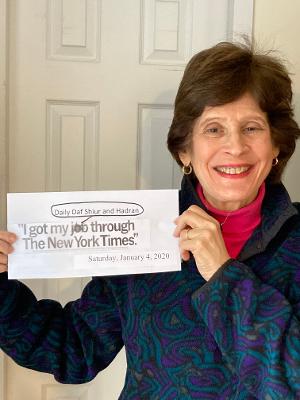
“I got my job through the NY Times” was an ad campaign when I was growing up. I can headline “I got my daily Daf shiur and Hadran through the NY Times”. I read the January 4, 2020 feature on Reb. Michelle Farber and Hadran and I have been participating ever since. Thanks NY Times & Hadran!
Deborah Aschheim
Deborah Aschheim

New York, United States

Bava Batra 154

רְאָיָה – בְּמַאי? רַב הוּנָא אָמַר: רְאָיָה בְּעֵדִים. רַב חִסְדָּא וְרַבָּה בַּר רַב הוּנָא אָמְרִי: רְאָיָה בְּקִיּוּם הַשְּׁטָר.

The Gemara asks: With regard to the proof that the recipients must bring, in what manner is it brought? Rav Huna says: The proof is presented by bringing witnesses who testify that the giver was healthy. Rav Ḥisda and Rabba bar Rav Huna say: The proof is presented by the ratification of the deed, i.e., the recipients are required only to ascertain that the signatures of the witnesses on the deed are authentic in order to prove that it is not forged.

רַב הוּנָא אָמַר רְאָיָה בְּעֵדִים – קָא מִיפַּלְגִי בִּפְלוּגְתָּא דְּרַבִּי יַעֲקֹב וְרַבִּי נָתָן;

The Gemara explains: Rav Huna says that the proof is presented by bringing witnesses. He maintains that Rabbi Meir and the Rabbis disagree with regard to the issue that is the subject of the dispute of Rabbi Ya’akov and Rabbi Natan in the baraita (153b).

(סִימָן: מַנִּיחַ.) רַבִּי מֵאִיר – כְּרַבִּי נָתָן, וְרַבָּנַן – כְּרַבִּי יַעֲקֹב.

The Gemara notes a mnemonic device that indicates which tannaitic opinions are correlated: Manniaḥ, which represents the letters mem, nun, yod, ḥet, stands for Meir, Natan, Ya’akov, and the Rabbis [ḥakhamim]. This indicates that Rabbi Meir, who says that the giver must bring proof that he was on his deathbed, holds in accordance with the opinion of Rabbi Natan, who maintains that one presumes that the current situation reflects the situation at the time the gift was bestowed. And the Rabbis, who say that the recipients must bring proof that the giver was healthy, hold in accordance with the opinion of Rabbi Ya’akov.

רַב חִסְדָּא וְרַבָּה בַּר רַב הוּנָא אָמְרִי רְאָיָה בְּקִיּוּם הַשְּׁטָר – קָא מִיפַּלְגִי בְּמוֹדֶה בִּשְׁטָר שֶׁכְּתָבוֹ צָרִיךְ לְקַיְּימוֹ; דְּרַבִּי מֵאִיר סָבַר: מוֹדֶה בִּשְׁטָר שֶׁכְּתָבוֹ – אֵינוֹ צָרִיךְ לְקַיְּימוֹ. וְרַבָּנַן סָבְרִי: מוֹדֶה בִּשְׁטָר שֶׁכְּתָבוֹ – צָרִיךְ לְקַיְּימוֹ.

Rav Ḥisda and Rabba bar Rav Huna say that the proof is presented by the ratification of the deed. The Gemara explains: Rav Ḥisda and Rabba bar Rav Huna maintain that Rabbi Meir and the Rabbis disagree with regard to whether when there is a debtor who admits that he wrote a promissory note, the creditor must ratify it in court in order to collect payment. The same ruling would apply to a case where the person on his deathbed admits that he wrote the deed granting the gift. They explain that Rabbi Meir holds that when there is a debtor who admits that he wrote a promissory note, the creditor need not ratify it in court in order to collect payment, and in this case the giver cannot invalidate the deed by claiming that he was on his deathbed. But the Rabbis hold that even when there is a debtor who admits that he wrote a promissory note, the creditor must ratify it in court in order to collect payment.

וְהָא אִיפְּלִיגוּ בַהּ חֲדָא זִימְנָא! דְּתַנְיָא: אֵין נֶאֱמָנִין לְפוֹסְלוֹ, דִּבְרֵי רַבִּי מֵאִיר. וַחֲכָמִים אוֹמְרִים: נֶאֱמָנִין!

The Gemara asks: But didn’t they already disagree with regard to this matter once? As it is taught in a baraita: With regard to witnesses who ratified their signatures but claimed that at the time they signed the document they were not fit to bear witness, their testimony is not deemed credible to invalidate the document; this is the statement of Rabbi Meir. And the Rabbis say: Their testimony is deemed credible.

צְרִיכָא, דְּאִי אִיתְּמַר הָהִיא – בְּהַהִיא קָאָמְרִי רַבָּנַן, מִשּׁוּם דְּאַלִּימֵי עֵדִים וּמַרְעִי שְׁטָרָא; אֲבָל הָכָא – הוּא דְּלָאו כָּל כְּמִינֵּיהּ, אֵימָא לָא;

The Gemara answers: It is necessary to state both cases, because if only that case with regard to witnesses who disqualified their testimony was stated, one might think that the Sages say that their testimony is accepted only in that case, due to the fact that the testimony of witnesses is powerful and they can impair the validity of the document, but here, with regard to him, the giver, who admitted that he wrote the deed but it is not in his power to impair the validity of the deed, I would say that his claim is not accepted.

וְאִי אִיתְּמַר בְּהָא, בְּהָא קָאָמַר רַבִּי מֵאִיר; אֲבָל בְּהָךְ, אֵימָא מוֹדֶה לְהוּ לְרַבָּנַן; צְרִיכָא.

And if only this case, with regard to a debtor who admits that he wrote a promissory note, was stated, one might think that Rabbi Meir says that the giver cannot invalidate the deed only with regard to this case, but with regard to that case, where the witnesses ratified their signatures, I would say that Rabbi Meir concedes to the Rabbis that witnesses can invalidate the deed. Therefore, it is necessary to state the dispute in both cases.

וְכֵן אָמַר רַבָּה: רְאָיָה בְּעֵדִים. אֲמַר לֵיהּ אַבָּיֵי: מַאי טַעְמָא? אִי נֵימָא מִדְּכוּלְּהוּ כְּתִיב בְּהוּ: ״כַּד הֲוָה מְהַלֵּךְ עַל רַגְלוֹהִי בְּשׁוּקָא״, וּבְהָא לָא כְּתִיב בָּהּ – שְׁמַע מִינַּהּ שְׁכִיב מְרַע הָוֵי; אַדְּרַבָּה! מִדְּכוּלְּהוּ כְּתִיב בְּהוּ: ״כַּד קְצִיר וּרְמֵי בְּעַרְסֵיהּ״, וְהָא לָא כְּתִיב בָּהּ, שְׁמַע מִינַּהּ בָּרִיא הָוֵי!

And Rabba also says: With regard to the proof that the recipients must present, it is presented by bringing witnesses who testify that the giver was healthy. Abaye said to him: What is the reason for this? If we say that due to the fact that in all deeds of gift the following formulation is written: When he was walking on his feet in the marketplace, which indicates that the gift was the gift of a healthy person, and in this deed this was not written, therefore one may conclude from the deed that the giver was on his deathbed, that is not correct. On the contrary, one could say that due to the fact that in all deeds concerning the gifts of a person on his deathbed the following is written: When he was sick and lying in his bed, and in this deed this was not written, therefore one may conclude from the deed that the giver was healthy.

אִיכָּא לְמֵימַר הָכִי וְאִיכָּא לְמֵימַר הָכִי, אוֹקִי מָמוֹנָא בְּחֶזְקַת מָרֵיהּ.

Rabba replied: Since one can say this and one can say that, nothing can be concluded from the formulation of the deed. Therefore, due to the uncertainty, establish the property in the possession of its last known owner.

וּבִפְלוּגְתָּא; דְּרַבִּי יוֹחָנָן אָמַר: רְאָיָה בְּעֵדִים, וְרַבִּי שִׁמְעוֹן בֶּן לָקִישׁ אָמַר: רְאָיָה בְּקִיּוּם הַשְּׁטָר.

And this dispute with regard to the statement of the Rabbis is also the subject of a dispute between other amora’im, as Rabbi Yoḥanan says: The proof is presented by bringing witnesses, and Rabbi Shimon ben Lakish says: The proof is presented by the ratification of the deed.

אֵיתִיבֵיהּ רַבִּי יוֹחָנָן לְרַבִּי שִׁמְעוֹן בֶּן לָקִישׁ: מַעֲשֶׂה בִּבְנֵי בְרַק בְּאֶחָד שֶׁמָּכַר בְּנִכְסֵי אָבִיו, וּמֵת, וּבָאוּ בְּנֵי מִשְׁפָּחָה וְעִרְעֲרוּ לוֹמַר: קָטָן הָיָה בִּשְׁעַת מִיתָה, וּבָאוּ וְשָׁאֲלוּ אֶת רַבִּי עֲקִיבָא: מַהוּ לְבוֹדְקוֹ? אָמַר לָהֶם: אִי אַתֶּם רַשָּׁאִים לְנַוְּולוֹ. וְעוֹד, סִימָנִין עֲשׂוּיִין לְהִשְׁתַּנּוֹת לְאַחַר מִיתָה.

Rabbi Yoḥanan raised an objection to Rabbi Shimon ben Lakish from a baraita: There was an incident in Bnei Brak involving one who sold some of his father’s property that he had inherited, and he died, and the members of his family came and contested the sale, saying: He was a minor at the time of his death, and therefore the sale was not valid. And they came and asked Rabbi Akiva: What is the halakha? Is it permitted to exhume the corpse in order to examine it and ascertain whether or not the heir was a minor at the time of his death? Rabbi Akiva said to them: It is not permitted for you to disgrace him for the sake of a monetary claim. And furthermore, signs indicating puberty are likely to change after death, and therefore nothing can be proved by exhuming the body.

בִּשְׁלָמָא לְדִידִי – דְּאָמֵינָא רְאָיָה בְּעֵדִים; כֵּיוָן דְּאָמַר לְלָקוֹחוֹת: ״אַיְיתוֹ עֵדִים״, וְלָא אַשְׁכַּחוּ, הַיְינוּ דְּקָא אֲתוֹ וַאֲמַרוּ לֵיהּ: מַהוּ לְבוֹדְקוֹ. אֶלָּא לְדִידָךְ דְּאָמְרַתְּ: רְאָיָה בְּקִיּוּם הַשְּׁטָר, לְמָה לְהוּ לְבוֹדְקוֹ? לְקַיְּימוּ שְׁטָרַיְיהוּ, וְלוֹקְמוּ בְּנִכְסֵי!

Rabbi Yoḥanan explains: Granted, according to my explanation of the mishna, that I say that the proof must be presented by bringing witnesses, I can explain the baraita. Since Rabbi Akiva said to the buyers: Bring witnesses, and they did not find witnesses, this is the reason that they came and said to him: What is the halakha? Is it permitted to examine him? But according to you, that you say that the proof is presented by ratification of the deed, why do they need to examine him? Let them ratify their deed and they shall be established as owners of the property.

מִי סָבְרַתְּ נִכְסֵי בְּחֶזְקַת בְּנֵי מִשְׁפָּחָה קָיְימִי – וְקָא אָתוּ לָקוֹחוֹת וּמְעַרְעֲרִי? נִכְסֵי בְּחֶזְקַת לָקוֹחוֹת קָיְימִי – וְקָא אָתוּ בְּנֵי מִשְׁפָּחָה וְקָא מְעַרְעֲרִי!

Rabbi Shimon ben Lakish replies: Do you maintain that the property stood in the possession of the members of his family and the buyers came and contested their possession of the property? Rather, the property stood in the possession of the buyers, and the members of his family came and contested the sale. Since they claimed that the deed was invalid, they could not prove their claim by ratifying the deed, but only by bringing witnesses or examining the body.

הָכִי נָמֵי מִסְתַּבְּרָא, מִדְּקָאָמַר לְהוּ: אִי אַתֶּם רַשָּׁאִים לְנַוְּולוֹ, וְאִישְׁתִּיקוּ. אִי אָמְרַתְּ בִּשְׁלָמָא בְּנֵי מִשְׁפָּחָה קָא מְעַרְעֲרִי, מִשּׁוּם הָכִי אִישְׁתִּיקוּ. אֶלָּא אִי אָמְרַתְּ לָקוֹחוֹת קָא מְעַרְעֲרִי, אַמַּאי שָׁתְקִי? לֵימְרוּ לֵיהּ: אֲנַן זוּזֵי יָהֲבִינַן לֵיהּ, לִינַּוַול וְלִינַּוַּול!

This, too, stands to reason, as Rabbi Akiva said to the claimants: You are not permitted to disgrace him, and they were silent. Granted, if you say that the members of his family were contesting the sale, due to that reason they were silent, as they accepted that they should not disgrace their relative. But if you say that the buyers were contesting the claim of the relatives, why were they silent? They should have said to Rabbi Akiva: We gave him money, and if our right to the property cannot be proven without disgracing him, let him be disgraced.

אִי מִשּׁוּם הָא – לָא אִירְיָא; הָכִי קָאָמַר לְהוּ: חֲדָא, דְּאִי אַתֶּם רַשָּׁאִים לְנַוְּולוֹ. וְעוֹד, וְכִי תֵּימְרוּ זוּזֵי שְׁקַל – לִינַּוַול וְלִינַּוַּול; סִימָנִים עֲשׂוּיִין לְהִשְׁתַּנּוֹת לְאַחַר מִיתָה.

The Gemara rejects this argument: If it is due to that reason, i.e., this claim they could have said, there is no conclusive argument. This is what Rabbi Akiva said to them: One reason to prohibit exhuming the body is that you are not permitted to disgrace him. And furthermore, if you should say: He took the money; let him be disgraced, in any event nothing can be proved by exhuming the body, as signs indicating puberty are likely to change after death.

תָּא שְׁמַע: שָׁאַל רַבִּי שִׁמְעוֹן בֶּן לָקִישׁ אֶת רַבִּי יוֹחָנָן, זוֹ שֶׁשְּׁנוּיָה בְּמִשְׁנַת בַּר קַפָּרָא: הֲרֵי שֶׁהָיָה אוֹכֵל שָׂדֶה וּבָא – בְּחֶזְקַת שֶׁהִיא שֶׁלּוֹ, וְקָרָא עָלָיו אֶחָד עַרְעָר לוֹמַר: ״שֶׁלִּי הִיא״, וְהוֹצִיא זֶה אֶת אוֹנוֹ לוֹמַר: ״שֶׁמְּכַרְתָּהּ לִי״ אוֹ ״שֶׁנְּתַתָּהּ לִי בְּמַתָּנָה״, אִם אָמַר: ״אֵינִי מַכִּיר בִּשְׁטָר זֶה מֵעוֹלָם״ – יִתְקַיֵּים הַשְּׁטָר בְּחוֹתְמָיו.

The Gemara suggests: Come and hear a proof: Rabbi Shimon ben Lakish asked Rabbi Yoḥanan about that which is taught in the Mishna of bar Kappara: There was one who was continually enjoying the profits from a field, and it was the presumption that it was his, and someone contested his claim, saying: It is mine. And that person, who was profiting from the field, produced a deed, in order to say: It is mine, as you sold this field to me, or: It is mine, as you gave me this field as a gift. If the one who protested his claim said: I do not recognize that deed as one that I have ever written, the deed must be ratified through its signatures.

אִם אָמַר: ״שְׁטַר פַּסִּים הוּא זֶה״ אוֹ ״שְׁטַר אֲמָנָה״; ״שֶׁמָּכַרְתִּי לָךְ, וְלֹא נָתַתָּ לִי דָּמִים״ – אִם יֵשׁ עֵדִים, הַלֵּךְ אַחַר עֵדִים; וְאִם לָאו – הַלֵּךְ אַחַר הַשְּׁטָר.

If the one who protested his claim said: This is a document of appeasement [shtar passim], a document written only so that the holder should appear wealthy, or a document of trust, which means that I sold the field to you and provided you with the deed, trusting you to provide payment, and since you did not give me the money the sale is void, then if there are witnesses, follow the testimony of the witnesses, and if not, follow the deed.

לֵימָא רַבִּי מֵאִיר הִיא, דְּאָמַר: מוֹדֶה בִּשְׁטָר שֶׁכְּתָבוֹ – אֵינוֹ צָרִיךְ לְקַיְּימוֹ; וְלָא רַבָּנַן?

Rabbi Shimon ben Lakish concludes: According to your explanation, the Rabbis maintain that even if the deed is ratified the claimant cannot take possession of the property without bringing witnesses. If so, shall we say that this baraita is in accordance with the opinion of Rabbi Meir, who says that when there is a debtor who admits that he wrote a promissory note, the creditor is not required to ratify it in court in order to collect payment, and it is not in accordance with the opinion of the Rabbis?

אֲמַר לֵיהּ: לָא; שֶׁאֲנִי אוֹמֵר: דִּבְרֵי הַכֹּל – מוֹדֶה בִּשְׁטָר שֶׁכְּתָבוֹ, אֵינוֹ צָרִיךְ לְקַיְּימוֹ. וְהָא מִיפְלָג פְּלִיגִי! דִּתְנַן: אֵין נֶאֱמָנִין לְפוֹסְלוֹ, דִּבְרֵי רַבִּי מֵאִיר. וַחֲכָמִים אוֹמְרִים: נֶאֱמָנִין!

Rabbi Yoḥanan said to Rabbi Shimon ben Lakish: No, it is not so. As I say that everyone agrees that in the case of a debtor who admits that he wrote a promissory note, the creditor is not required to ratify it in court in order to collect payment. Rabbi Shimon ben Lakish asked: But don’t they disagree, as we learned in a baraita: With regard to witnesses who ratified their signatures but claimed that they were not fit to bear witness when they signed the deed, their testimony is not deemed credible to invalidate the document; this is the statement of Rabbi Meir. And the Rabbis say: Their testimony is deemed credible.

אֲמַר לֵיהּ: אִי עֵדִים אַלִּימֵי וּמַרְעִי שְׁטָרָא, אִיהוּ כָּל כְּמִינֵּיהּ?! אֲמַר לֵיהּ, וַהֲלֹא מִשִּׁמְךָ אָמְרוּ: יָפֶה עִרְעֲרוּ בְּנֵי מִשְׁפָּחָה! אֲמַר לֵיהּ: זוֹ – אֶלְעָזָר אֲמָרָהּ; אֲנִי לֹא אָמַרְתִּי דָּבָר זֶה מֵעוֹלָם.

Rabbi Yoḥanan said to Rabbi Shimon ben Lakish: Even if the testimony of witnesses is powerful and they impair the validity of the deed, which they admit to have written, with regard to him, the giver, is it in his power to impair the validity of a deed that he admits to have written? Rabbi Shimon ben Lakish said to Rabbi Yoḥanan: But wasn’t it stated in your name with regard to the aforementioned incident in Bnei Brak: The members of his family contested the claim correctly, even though they admitted that the deed was authentic? This means that the claimant is required to ratify the deed. Rabbi Yoḥanan said to Rabbi Shimon ben Lakish: That statement was stated in my name by Rabbi Elazar, my disciple, but I never said that statement.

אָמַר רַבִּי זֵירָא: אִם יִכְפּוֹר רַבִּי יוֹחָנָן בְּרַבִּי אֶלְעָזָר תַּלְמִידוֹ, יִכְפּוֹר בְּרַבִּי יַנַּאי רַבּוֹ? דְּאָמַר רַבִּי יַנַּאי אָמַר רַבִּי: מוֹדֶה בִּשְׁטָר שֶׁכְּתָבוֹ – אֵינוֹ צָרִיךְ לְקַיְּימוֹ. וַאֲמַר לֵיהּ רַבִּי יוֹחָנָן: רַבִּי, לֹא מִשְׁנָתֵנוּ הִיא זוֹ? וַחֲכָמִים אוֹמְרִים: הַמּוֹצִיא מֵחֲבֵירוֹ – עָלָיו הָרְאָיָה. אֵין רְאָיָה אֶלָּא בְּקִיּוּם הַשְּׁטָר!

Rabbi Zeira says: If Rabbi Yoḥanan denies the statement of Rabbi Elazar, his disciple, will Rabbi Yoḥanan also deny that which he said to Rabbi Yannai, his teacher? This is as Rabbi Yannai says that Rabbi Yehuda HaNasi says: When there is a debtor who admits that he wrote a promissory note, the creditor is not required to ratify it in court in order to collect the payment. And Rabbi Yoḥanan said to Rabbi Yannai: My teacher, is this not the case discussed in our mishna, which states to the contrary: And the Rabbis say: The burden of proof rests upon the claimant? Rabbi Yoḥanan concludes: The proof mentioned in this mishna is nothing other than ratification of the deed. This indicates that Rabbi Yoḥanan maintains that according to the opinion of the Rabbis, the recipient is required to ratify the deed. If so, why does he state that everyone agrees that the recipient is not required to ratify the deed?

בְּרַם, נִרְאִין דִּבְרֵי רַבֵּינוּ יוֹסֵף – דְּאָמַר רַבֵּינוּ יוֹסֵף אָמַר רַב יְהוּדָה אָמַר שְׁמוּאֵל: זוֹ דִּבְרֵי חֲכָמִים, אֲבָל רַבִּי מֵאִיר אוֹמֵר: מוֹדֶה בִּשְׁטָר שֶׁכְּתָבוֹ, שֶׁצָּרִיךְ לְקַיְּימוֹ. וּמַאי דִּבְרֵי הַכֹּל? דְּרַבָּנַן לְגַבֵּי רַבִּי מֵאִיר – דִּבְרֵי הַכֹּל הִיא.

Rabbi Zeira explains: Indeed, the statement of our teacher, Rav Yosef, appears to be correct, as our teacher Rav Yosef says that Rav Yehuda says that Shmuel says: The opinions here should be reversed. This, the baraita taught by bar Kappara, according to which the deed does not require ratification, is the statement of the Rabbis. But Rabbi Meir says that when there is a debtor who admits that he wrote a promissory note, the creditor is not required to ratify it in court in order to collect payment. And what is the meaning of Rabbi Yoḥanan’s statement that everyone agrees that in this case, the recipient is not required to ratify the deed? Rabbi Yoḥanan means that this is the statement of the Rabbis, and a statement of the Rabbis that is disputed only by Rabbi Meir is tantamount to a statement accepted by all.

וְהָא אִיפְּכָא תְּנַן, וַחֲכָמִים אוֹמְרִים: הַמּוֹצִיא מֵחֲבֵירוֹ – עָלָיו הָרְאָיָה! אֵיפוֹךְ. וְהָא תַּנְיָא: אֵין נֶאֱמָנִין לְפוֹסְלוֹ, דִּבְרֵי רַבִּי מֵאִיר. וַחֲכָמִים אוֹמְרִים: נֶאֱמָנִין! אֵיפוֹךְ.

The Gemara asks: But didn’t we learn the opposite in the mishna: And the Rabbis say that the burden of proof rests upon the claimant? This means that the recipient is required to ratify the deed. The Gemara replies: Reverse the opinions in the mishna. The Gemara asks: But isn’t it taught in a baraita: With regard to witnesses who ratified their signatures but claimed that they were not fit to bear witness, their testimony is not deemed credible to invalidate the document; this is the statement of Rabbi Meir. And the Rabbis say: Their testimony is deemed credible. This indicates that according to the Rabbis the document requires ratification. The Gemara answers: Here too, reverse the opinions.

וְהָא רַבִּי יוֹחָנָן ״רְאָיָה בְּעֵדִים״ קָאָמַר! אֵיפוֹךְ. לֵימָא לֵיפוֹךְ נָמֵי תְּיוּבְתָּא? לָא,

The Gemara asks: But doesn’t Rabbi Yoḥanan say with regard to the proof that the recipient is required to bring, that the proof is presented by bringing witnesses who testify that the giver was healthy, and not by ratifying the deed? The Gemara answers: Reverse the opinions of Rabbi Yoḥanan and Rabbi Shimon ben Lakish. Rabbi Yoḥanan maintains that the recipient is required to prove his claim only by ratifying the deed, whereas Rabbi Shimon ben Lakish maintains that the recipient is required to bring witnesses. The Gemara asks: Shall we say that we should also reverse the objection that Rabbi Yoḥanan raised to Rabbi Shimon ben Lakish previously, and say that Rabbi Shimon ben Lakish raised the objection to Rabbi Yoḥanan? The Gemara answers: No, that is unnecessary.

Want to follow content and continue where you left off?

Create an account today to track your progress, mark what you’ve learned, and follow the shiurim that speak to you.

Clear all items from this list?

This will remove ALL the items in this section. You will lose any progress or history connected to them. This is irreversible.

Cancel
Yes, clear all

Are you sure you want to delete this item?

You will lose any progress or history connected to this item.

Cancel
Yes, delete