Search

Bava Batra 167

Want to dedicate learning? Get started here:

podcast placeholder

0:00
0:00


Summary

Today’s daf is sponsored by Gila Pollack in loving memory of her father, Moshe Pollack, on his 7th yahrzeit. “He is missed greatly by all his children, grandchildren and great-grandchildren.”

Abaye suggests never to sign at the bottom of a blank page, someone can forge a document by adding a line saying that the person who signed borrowed money from them. Since a document signed by the borrower is admissible in court and can be collected from ‘free’ (not liened) property, this forged document could be used. Abaye also suggests not to put numbers from three to ten at the end of a line as the letters yud and nun can be added to turn 3 into 30, 4 into 40, and so forth.

Two cases were brought before Abaye where one erased part of a letter or added a letter to change the document’s meaning. As this messed up the spacing, Abaye realized the issue and forced the one who tampered with the document to confess. In another case, someone forged Rava’s signature and Rava realized it was forged as his name appeared before Rav Acha bar Ada, the other witness, and since Rav Acha was more senior, Rava never would have signed before him, out of respect.

The Mishna lists several cases of documents written for arrangements between two people. In each case, the Mishna explains who can write the document not in the presence of the other, and who cannot. It also explains who is the one obligated to pay for the document to be written.

The first case listed regards a get, divorce document, and a receipt that the woman received her ketuba money. The Mishna adds that the scribe must recognize them to ensure that the person will not pass the document to someone else to use for collecting money. The reason for this is that the man can the get written not for himself but to give to a different woman to claim her ketuba money, even though she may still be married and the woman can get a receipt written to give to a different man who can claim he already paid his wife her ketuba money. Rav explains that the need for the scribe to recognize is for the man for the get and the woman for the receipt for the reason described above. However, some rabbis were sitting with Abaye and questioned why Rav did not require the scribe to recognize both, since even if the scribe knows the man/woman, it is still possible the man will pass it to a woman/man married to a man/woman with the same name? Abaye responds that Rav actually required the scribe to know them both. However, there is still a possibility that the man/woman can pass the document on to someone who has the same name as their wife/husband and the spouse has the same name as them. That possibility is avoided by a ruling that if two couples in the same town share the same names, they can only get divorced in the presence of both couples.

Bava Batra 167

וּמְשַׁוֵּי לְהוּ זוּזִי; מַאי אָמְרַתְּ – שֵׁית מְאָה אִיסְתֵּירֵי וְזוּזָא, שֵׁית מְאָה זוּזֵי וְחַד זוּזָא? יַד בַּעַל הַשְּׁטָר עַל הַתַּחְתּוֹנָה.

and change them into a smaller number of dinars. Therefore, what can you say? The highest and lowest remaining possibilities are: Six hundred istira and a dinar, and six hundred dinars and one more dinar. The guiding principle is that the holder of the document is at a disadvantage, and the lesser of these two values is assumed.

אָמַר אַבָּיֵי: הַאי מַאן דְּבָעֵי לְמַחְוֵי חֲתִימוּת יְדֵיהּ בְּבֵי דִינָא, לָא לַחְוֵי בְּסוֹף מְגִילְּתָא; דִּלְמָא מַשְׁכַּח לַהּ אַחֵר וְכָתֵיב דְּמַסֵּיק בֵּיהּ זוּזִי, וּתְנַן: הוֹצִיא עָלָיו כְּתַב יָדוֹ שֶׁהוּא חַיָּיב לוֹ – גּוֹבֶה מִנְּכָסִים בְּנֵי חוֹרִין.

§ Abaye said: With regard to this one who needs to show his signature in court for the purpose of corroborating his signature on a document, he should not show it by writing it at the end of the parchment, lest another, unscrupulous, person find the parchment and write above the signature that the signatory owes him money. And such a document would be valid, as we learned in a mishna (175b): If one presents to a debtor a document in the handwriting of the debtor stating that he owes money to him, but without witnesses signed on the document, the creditor can collect only from unsold property, i.e., property that is currently in the possession of the debtor.

הָהוּא בַּזְבָּינָא דַּאֲתָא לְקַמֵּיהּ דְּאַבָּיֵי, אֲמַר לֵיהּ: נַיחְזֵי לִי מָר חֲתִימוּת יְדֵיהּ, דְּכִי אָתוּ רַבָּנַן מַחְווּ לִי, מְעַבַּרְנָא לְהוּ בְּלָא מִכְסָא. אַחְוִי לֵיהּ בְּרֵישׁ מְגִילְּתָא. הֲוָה קָא נָגֵיד בֵּיהּ, אֲמַר לֵיהּ: כְּבָר קַדְמוּךָ רַבָּנַן.

The Gemara relates: There was a certain Jewish tax collector who came before Abaye and said to him: Let the Master show me his signature on a piece of paper to keep in my records, as when rabbis come to me and show me a note with your signature on it, attesting to the fact that they are Torah scholars, I let them pass without paying the tax. Abaye showed him his signature at the top of the parchment, though the unscrupulous tax collector kept pulling the parchment away from Abaye so that the signature would be at the bottom. Abaye noticed this and said to him: The Sages have already anticipated people such as you and advised that one should never write his signature at the bottom of a paper.

אָמַר אַבָּיֵי: מִתְּלָת וְעַד עֲשַׂר – לָא לִכְתּוֹב בְּסוֹף שִׁיטָה, דִּלְמָא מְזַיֵּיף וְכָתֵב. וְאִי אִיתְרְמִי לֵיהּ, נַיהְדְּרֵיהּ לְדִבּוּרֵיהּ תְּרֵין תְּלָתָא זִימְנֵי, אִי אֶפְשָׁר דְּלָא מִיתְרְמֵי לֵיהּ בְּאֶמְצַע שִׁיטָה.

§ Abaye said: When writing a promissory note, one should not write any number from three until ten at the end of a line, lest someone commit forgery and write an extension to the number, since it is at the end of the line. In Hebrew and Aramaic, the words for the numbers three through nine can be changed to thirty through ninety, respectively, by appending to them the suffix in, written with the letters yod and nun. Ten can be changed to twenty in a similar manner. And if by chance it occurs for him that these numbers fall out at the end of a line, he should repeat his words two or three times, stating and restating the agreement in question, as it is impossible that the number will not eventually occur for him in the middle of a line. When there is a contradiction, it is the final mention of the amount that is authoritative, as the mishna teaches.

הָהוּא דַּהֲוָה כְּתִיב בֵּיהּ: ״תִּילְתָּא בְּפַרְדֵּיסָא״. אֲזַל מַחְקֵיהּ לְגַגֵּיהּ דְּבֵית וְכַרְעֵיהּ, וְשַׁוְּיֵהּ ״וּפַרְדֵּיסָא״, אֲתָא לְקַמֵּיהּ דְּאַבָּיֵי, אֲמַר לֵיהּ: מַאי טַעְמָא רְוִיחַ לֵיהּ עָלְמָא לְהַאי וָיו? כַּפְתֵיהּ וְאוֹדִי.

The Gemara relates: There was a certain bill of sale in which it was written that the item sold was: In my garden, one-third of the orchard. The purchaser went and erased the roof and the foot of the beit of the term: Of the orchard [befardeisa], and thereby changed the prefix beit into a vav, yielding: In my garden one-third, and the orchard [ufardeisa], indicating that the sale included one-third of the garden in addition to all of the orchard. The document came before Abaye, who said to the purchaser: What is the reason that there is so much space around this vav? Since the letter vav is narrower than the letter beit, a larger space between letters emerged as compared to the spacing of letters in the rest of the document. Abaye bound the purchaser, i.e., he subjected him to physical coercion, and he admitted to the forgery.

הָהוּא דַּהֲוָה כְּתִב בֵּיהּ: ״מְנָת רְאוּבֵן וְשִׁמְעוֹן אַחֵי״. הֲוָה לְהוּ אַחָא דִּשְׁמֵיהּ ״אַחַי״, אֲזַל כְּתַב בֵּיהּ וָיו, וְשַׁוְּיֵהּ ״וְאַחַי״. אֲתָא לְקַמֵּיהּ דְּאַבָּיֵי, אֲמַר לֵיהּ: מַאי טַעְמָא דְּחִיק לֵיהּ עָלְמָא לְהַאי וָיו כּוּלֵּי הַאי? כַּפְתֵיהּ וְאוֹדִי.

The Gemara relates: There was a certain bill of sale in which it was written that the item being sold was: The portions of Reuven and Shimon, brothers [aḥei]. Reuven and Shimon happened to have a brother whose name was Aḥai, which, when writing without vowels, is spelled identically to aḥei. The purchaser went and wrote a conjunctive vav in the document before the word aḥei, and changed the wording into: The portions of Reuven and Shimon and Aḥai. The document came before Abaye, who said to the purchaser: What is the reason that it is so crowded around this vav? By inserting the extra vav, a smaller space between letters emerged as compared to the spacing of letters in the rest of the document. Abaye bound the purchaser, i.e., he subjected him to physical coercion, and he admitted the forgery.

הָהוּא שְׁטָרָא דַּהֲוָה חֲתִים עֲלֵיהּ רָבָא וְרַב אַחָא בַּר אַדָּא. אֲתָא לְקַמֵּיהּ דְּרָבָא, אֲמַר לֵיהּ: דֵּין חֲתִימוּת יְדָא דִּידִי הִיא, מִיהוּ קַמֵּיהּ דְּרַב אַחָא בַּר אַדָּא לָא חֲתִימִי לִי מֵעוֹלָם! כַּפְתֵיהּ וְאוֹדִי. אֲמַר לֵיהּ: בִּשְׁלָמָא דִּידִי – זַיֵּיפְתְּ, אֶלָּא דְּרַב אַחָא בַּר אַדָּא, דְּרָתֵית יְדֵיהּ – הֵיכִי עֲבַדְתְּ? אָמַר: אַנַּחִי יְדַאי אַמִּצְרָא. וְאָמְרִי לַהּ: קָם אַזַּרְנוּקָא וּכְתַב.

The Gemara relates: There was a certain document upon which the signatures of Rava and Rav Aḥa bar Adda were signed. The one holding the document came before Rava, who said to him: This is my signature, but I never signed any document before Rav Aḥa bar Adda. Rava bound the holder of the document, i.e., he subjected him to physical coercion, and he admitted the forgery. Rava said to him: Granted, you were able to forge my signature, but how did you perform a forgery of Rav Aḥa bar Adda’s signature, since his hands shake and as a result his signature is distinctive? The man said: I placed my hands on the rope of a narrow footbridge [amitzra], and was thereby able to duplicate Rav Aḥa’s signature. And some say that the forgery was accomplished when the forger stood upon a wobbly water skin [azarnuka] and wrote the signature.

מַתְנִי׳ כּוֹתְבִין גֵּט לָאִישׁ – אַף עַל פִּי שֶׁאֵין אִשְׁתּוֹ עִמּוֹ, וְהַשּׁוֹבָר לָאִשָּׁה – אַף עַל פִּי שֶׁאֵין בַּעְלָהּ עִמָּהּ; וּבִלְבַד שֶׁיְּהֵא מַכִּירָן. וְהַבַּעַל נוֹתֵן שָׂכָר.

MISHNA: A scribe may write a bill of divorce for a man who requests one, even if his wife is not with him to give her consent when he presents his request, as there is no possibility that he will misuse the document. And a scribe may write a receipt for a woman upon her request, attesting to the payment of her marriage contract, even if her husband is not with her to give his consent. This is true provided that the scribe recognizes the parties requesting the document, to prevent misrepresentation. And for both documents, the husband gives the scribe his wages.

כּוֹתְבִין שְׁטָר לַלֹּוֶה – אַף עַל פִּי שֶׁאֵין מַלְוֶה עִמּוֹ, וְאֵין כּוֹתְבִין לַמַּלְוֶה – עַד שֶׁיְּהֵא לֹוֶה עִמּוֹ. וְהַלֹּוֶה נוֹתֵן שָׂכָר.

A scribe may write a promissory note for a debtor who requests one, even if the creditor is not with him when he requests the document, but a scribe may not write a promissory note for a creditor who requests it unless the debtor is with him and consents. And it is the debtor who gives the scribe his wages.

כּוֹתְבִין שְׁטָר לַמּוֹכֵר – אַף עַל פִּי שֶׁאֵין לוֹקֵחַ עִמּוֹ, וְאֵין כּוֹתְבִין לַלּוֹקֵחַ – עַד שֶׁיְּהֵא מוֹכֵר עִמּוֹ. וְהַלּוֹקֵחַ נוֹתֵן שָׂכָר.

A scribe may write a bill of sale for a seller of a field who requests one even if the purchaser is not with him when he presents his request, but a scribe may not write a bill of sale for a purchaser who requests it unless the seller is with him and consents. And it is the purchaser who gives the scribe his wages.

אֵין כּוֹתְבִין שְׁטָרֵי אֵירוּסִין וְנִשּׂוּאִין אֶלָּא מִדַּעַת שְׁנֵיהֶם, וְהֶחָתָן נוֹתֵן שָׂכָר.

A scribe may not write documents of betrothal and documents of marriage except with the consent of both parties, the groom and the bride. And it is the groom who gives the scribe his wages.

אֵין כּוֹתְבִין שְׁטַר אֲרִיסוּת וְקַבְּלָנוּת אֶלָּא מִדַּעַת שְׁנֵיהֶם, וְהַמְקַבֵּל נוֹתֵן שָׂכָר.

A scribe may not write contracts for sharecroppers and contractors except with the consent of both parties, i.e., the sharecropper or contractor and the one who hires him. And it is the sharecropper or contractor who gives the scribe his wages.

אֵין כּוֹתְבִין שְׁטָרֵי בֵּירוּרִין וְכׇל מַעֲשֵׂה בֵּית דִּין – אֶלָּא מִדַּעַת שְׁנֵיהֶם, וּשְׁנֵיהֶם נוֹתְנִין שָׂכָר. רַבָּן שִׁמְעוֹן בֶּן גַּמְלִיאֵל אוֹמֵר: לִשְׁנֵיהֶם כּוֹתְבִין שְׁנַיִם – לָזֶה לְעַצְמוֹ וְלָזֶה לְעַצְמוֹ.

A scribe may not write documents testifying to arbitration agreements or any other court enactment except with the consent of both parties to the litigation. And both parties give the scribe his wages. Rabban Shimon ben Gamliel says: The scribe writes two documents for the two parties, one for this one by himself, and one for that one by himself.

גְּמָ׳ מַאי ״וּבִלְבַד שֶׁיְּהֵא מַכִּירָן״? אָמַר רַב יְהוּדָה אָמַר רַב: וּבִלְבַד שֶׁיְּהֵא מַכִּיר שֵׁם הָאִישׁ בַּגֵּט, וְשֵׁם הָאִשָּׁה בַּשּׁוֹבָר.

GEMARA: What is meant by: Provided that the scribe recognizes the parties requesting the document? Rav Yehuda says that Rav says: It means provided that he recognizes the man’s name in the case of the bill of divorce and the woman’s name in the case of the receipt.

יָתֵיב רַב סָפְרָא וְרַב אַחָא בַּר הוּנָא וְרַב הוּנָא בַּר חִינָּנָא, וְיָתֵיב אַבָּיֵי גַּבַּיְיהוּ, וְיָתְבִי וְקָמִיבַּעְיָא לְהוּ: שֵׁם הָאִישׁ בַּגֵּט – אִין, שֵׁם הָאִשָּׁה – לָא?! שֵׁם הָאִשָּׁה בַּשּׁוֹבָר – אִין, שֵׁם הָאִישׁ – לָא?!

The Gemara relates: Rav Safra and Rav Aḥa bar Huna and Rav Huna bar Ḥinnana were sitting, and Abaye was sitting near them. And as they were sitting, they raised a dilemma: Did Rav mean that with regard to the man’s name in the case of bill of divorce bill, yes, it must be known to the scribe, but the woman’s name need not be known to the scribe? And did he mean that with regard to the woman’s name in the case of the receipt, yes, it must be known to the scribe, but the man’s name need not be known to the scribe?

וְלֵיחוּשׁ דִּלְמָא כָּתֵב גִּיטָּא, וְאָזֵיל וּמַמְטֵי לֵיהּ לְאִיתְּתֵיהּ דְּהַיְאךְ!

But if so, let there be a concern that perhaps the man who made the request writes the bill of divorce and intends to go and give it to the wife of another man with the same name.

וְזִמְנִין אָזְלָא כָּתְבָה אִשָּׁה שׁוֹבָר, וְיָהֲבָה לְגַבְרָא דְּלָאו דִּילַהּ!

And similarly, in the case of the receipt let there be a concern that there will be times when the woman writes the receipt and intends to give it to a man who is not her husband, whose wife shares her name.

אֲמַר לְהוּ אַבָּיֵי, הָכִי אָמַר רַב: שֵׁם הָאִישׁ בַּגֵּט – וְהוּא הַדִּין לְשֵׁם הָאִשָּׁה. שֵׁם הָאִשָּׁה בַּשּׁוֹבָר – וְהוּא הַדִּין לְשֵׁם הָאִישׁ.

Abaye said to them: You are not understanding Rav’s statement correctly. This is what Rav says: The man’s name in the case of the bill of divorce must be known to the scribe, and the same is true of the woman’s name, which must also be known to the scribe. And the woman’s name in the case of the receipt must be known to the scribe, and the same is true of the man’s name, which must also be known to the scribe.

וְלֵיחוּשׁ לִשְׁנֵי יוֹסֵף בֶּן שִׁמְעוֹן הַדָּרִים בְּעִיר אַחַת – דִּלְמָא כָּתֵיב גִּיטָּא, וְאָזֵיל וּמַמְטֵי לֵיהּ לְאִיתְּתֵיהּ דְּהַיְאךְ! אֲמַר לְהוּ רַב אַחָא בַּר הוּנָא, הָכִי אָמַר רַב: שְׁנֵי יוֹסֵף בֶּן שִׁמְעוֹן הַדָּרִים בְּעִיר אַחַת – אֵין מְגָרְשִׁין נְשׁוֹתֵיהֶן אֶלָּא זֶה בִּפְנֵי זֶה.

They continued their line of questioning: And even if both names are known to the scribe, let there be a concern for the possibility of two men with the same name, such as two men named Yosef ben Shimon, who live in one city and whose wives share the same name as well, and perhaps the man who made the request will write the bill of divorce and intend to go and give it to the wife of the other man who bears the same name as him. Rav Aḥa bar Huna said to them in reply that this is what Rav says: If there are two men named Yosef ben Shimon who live in one city and are married to women who share the same name, they may divorce their wives only in the presence of one another.

וְלֵיחוּשׁ דִּלְמָא אָזֵיל לְמָתָא אַחְרִיתָא וּמַחְזֵיק לֵיהּ לִשְׁמֵיהּ בְּיוֹסֵף בֶּן שִׁמְעוֹן, וְכָתֵיב גִּיטָּא וּמַמְטֵי לֵיהּ לְאִיתְּתֵיהּ דְּהַיְאךְ!

They continued to ask: But even if the scribe knows the man’s name and the name of the man’s wife, let there be a concern that perhaps someone will go to another city and establish a false name for himself as Yosef ben Shimon, and he will write the bill of divorce and give it to the wife of the other man, whose name really is Yosef ben Shimon.

אֲמַר לְהוּ רַב הוּנָא בַּר חִינָּנָא, הָכִי אָמַר רַב: כׇּל שֶׁהוּחְזַק שְׁמוֹ בָּעִיר שְׁלֹשִׁים יוֹם – אֵין חוֹשְׁשִׁין לוֹ.

Rav Huna bar Ḥinnana said to them that this is what Rav says: With regard to anyone whose name has been established in a city for thirty days, there is no concern harbored about him that his name is false. It is assumed that this is his true name.

לָא אִיתַּחְזַק, מַאי? אָמַר אַבָּיֵי: דְּקָרוּ לֵיהּ וְעָנֵי. רַב זְבִיד אָמַר: רַמָּאָה – בְּרַמָּאוּתֵיהּ זְהִיר.

They continued to ask: What if his name has not been established for thirty days? How can a newcomer in a town have a bill of divorce drawn up for him? Abaye said: It is sufficient that people call him by the name he claims for himself and he responds to that call. Rav Zevid said: A liar is careful about upholding his lies, and just because he responds to being called by a particular name does not prove he is telling the truth. A newcomer would therefore have to wait thirty days before requesting that a scribe write him a bill of divorce.

הָהוּא תְּבָרָא דַּהֲוָה חֲתִים עֲלַהּ רַב יִרְמְיָה בַּר אַבָּא. אָתְיָא לְקַמֵּיהּ הָהִיא אִיתְּתָא, אֲמַרָה לֵיהּ: לָאו אֲנָא הֲוַאי. אָמַר, אֲנָא נָמֵי אֲמַרִי לְהוּ: לָאו אִיהִי הִיא, וַאֲמַרוּ לִי: מִיקָּשׁ הוּא דְּקַשָּׁא לַהּ – וּבְגַר לַהּ קָלָא.

§ There was a certain receipt of payment of a marriage contract upon which Rav Yirmeya bar Abba was signed as a witness. That woman, whose name matched the name on the receipt, came before Rav Yirmeya, seeking to collect payment of her marriage contract. Rav Yirmeya recognized her name, but not her appearance. The woman said to him: It was not I whose name was on the receipt that you signed, but another woman with the same name; I have not collected payment of my marriage contract. Rav Yirmeya said: I, too, said to the other witnesses signed on the document: The woman for whom we signed the receipt is not she. But they said to me: It is in fact the same woman, but she has aged and her voice has matured and changed, and that is why you do not recognize her.

אָמַר אַבָּיֵי, אַף עַל גַּב דַּאֲמוּר רַבָּנַן:

Abaye said that although the Sages said:

New to Talmud?

Check out our resources designed to help you navigate a page of Talmud – and study at the pace, level and style that fits you. 

The Hadran Women’s Tapestry

Meet the diverse women learning Gemara at Hadran and hear their stories. 

After reading the book, “ If All The Seas Were Ink “ by Ileana Kurshan I started studying Talmud. I searched and studied with several teachers until I found Michelle Farber. I have been studying with her for two years. I look forward every day to learn from her.

Janine Rubens
Janine Rubens

Virginia, United States

Having never learned Talmud before, I started Daf Yomi in hopes of connecting to the Rabbinic tradition, sharing a daily idea on Instagram (@dafyomiadventures). With Hadran and Sefaria, I slowly gained confidence in my skills and understanding. Now, part of the Pardes Jewish Educators Program, I can’t wait to bring this love of learning with me as I continue to pass it on to my future students.

Hannah-G-pic
Hannah Greenberg

Pennsylvania, United States

I began to learn this cycle of Daf Yomi after my husband passed away 2 1/2 years ago. It seemed a good way to connect to him. Even though I don’t know whether he would have encouraged women learning Gemara, it would have opened wonderful conversations. It also gives me more depth for understanding my frum children and grandchildren. Thank you Hadran and Rabbanit Michelle Farber!!

Harriet Hartman
Harriet Hartman

Tzur Hadassah, Israel

Retirement and Covid converged to provide me with the opportunity to commit to daily Talmud study in October 2020. I dove into the middle of Eruvin and continued to navigate Seder Moed, with Rabannit Michelle as my guide. I have developed more confidence in my learning as I completed each masechet and look forward to completing the Daf Yomi cycle so that I can begin again!

Rhona Fink
Rhona Fink

San Diego, United States

The first month I learned Daf Yomi by myself in secret, because I wasn’t sure how my husband would react, but after the siyyum on Masechet Brachot I discovered Hadran and now sometimes my husband listens to the daf with me. He and I also learn mishnayot together and are constantly finding connections between the different masechtot.

Laura Warshawsky
Laura Warshawsky

Silver Spring, Maryland, United States

After all the hype on the 2020 siyum I became inspired by a friend to begin learning as the new cycle began.with no background in studying Talmud it was a bit daunting in the beginning. my husband began at the same time so we decided to study on shabbat together. The reaction from my 3 daughters has been fantastic. They are very proud. It’s been a great challenge for my brain which is so healthy!

Stacey Goodstein Ashtamker

Modi’in, Israel

In early January of 2020, I learned about Siyyum HaShas and Daf Yomi via Tablet Magazine’s brief daily podcast about the Daf. I found it compelling and fascinating. Soon I discovered Hadran; since then I have learned the Daf daily with Rabbanit Michelle Cohen Farber. The Daf has permeated my every hour, and has transformed and magnified my place within the Jewish Universe.

Lisa Berkelhammer
Lisa Berkelhammer

San Francisco, CA , United States

Ive been learning Gmara since 5th grade and always loved it. Have always wanted to do Daf Yomi and now with Michelle Farber’s online classes it made it much easier to do! Really enjoying the experience thank you!!

Lisa Lawrence
Lisa Lawrence

Neve Daniel, Israel

I started learning Daf Yomi inspired by תָּפַסְתָּ מְרוּבֶּה לֹא תָּפַסְתָּ, תָּפַסְתָּ מוּעָט תָּפַסְתָּ. I thought I’d start the first page, and then see. I was swept up into the enthusiasm of the Hadran Siyum, and from there the momentum kept building. Rabbanit Michelle’s shiur gives me an anchor, a connection to an incredible virtual community, and an energy to face whatever the day brings.

Medinah Korn
Medinah Korn

בית שמש, Israel

I tried Daf Yomi in the middle of the last cycle after realizing I could listen to Michelle’s shiurim online. It lasted all of 2 days! Then the new cycle started just days before my father’s first yahrzeit and my youngest daughter’s bat mitzvah. It seemed the right time for a new beginning. My family, friends, colleagues are immensely supportive!

Catriella-Freedman-jpeg
Catriella Freedman

Zichron Yaakov, Israel

I had tried to start after being inspired by the hadran siyum, but did not manage to stick to it. However, just before masechet taanit, our rav wrote a message to the shul WhatsApp encouraging people to start with masechet taanit, so I did! And this time, I’m hooked! I listen to the shiur every day , and am also trying to improve my skills.

Laura Major
Laura Major

Yad Binyamin, Israel

It’s hard to believe it has been over two years. Daf yomi has changed my life in so many ways and has been sustaining during this global sea change. Each day means learning something new, digging a little deeper, adding another lens, seeing worlds with new eyes. Daf has also fostered new friendships and deepened childhood connections, as long time friends have unexpectedly become havruta.

Joanna Rom
Joanna Rom

Northwest Washington, United States

Michelle has been an inspiration for years, but I only really started this cycle after the moving and uplifting siyum in Jerusalem. It’s been an wonderful to learn and relearn the tenets of our religion and to understand how the extraordinary efforts of a band of people to preserve Judaism after the fall of the beit hamikdash is still bearing fruits today. I’m proud to be part of the chain!

Judith Weil
Judith Weil

Raanana, Israel

Margo
I started my Talmud journey in 7th grade at Akiba Jewish Day School in Chicago. I started my Daf Yomi journey after hearing Erica Brown speak at the Hadran Siyum about marking the passage of time through Daf Yomi.

Carolyn
I started my Talmud journey post-college in NY with a few classes. I started my Daf Yomi journey after the Hadran Siyum, which inspired both my son and myself.

Carolyn Hochstadter and Margo Kossoff Shizgal

Merion Station,  USA

Beit Shemesh, Israel

I began to learn this cycle of Daf Yomi after my husband passed away 2 1/2 years ago. It seemed a good way to connect to him. Even though I don’t know whether he would have encouraged women learning Gemara, it would have opened wonderful conversations. It also gives me more depth for understanding my frum children and grandchildren. Thank you Hadran and Rabbanit Michelle Farber!!

Harriet Hartman
Harriet Hartman

Tzur Hadassah, Israel

I learned Mishnayot more than twenty years ago and started with Gemara much later in life. Although I never managed to learn Daf Yomi consistently, I am learning since some years Gemara in depth and with much joy. Since last year I am studying at the International Halakha Scholars Program at the WIHL. I often listen to Rabbanit Farbers Gemara shiurim to understand better a specific sugyiah. I am grateful for the help and inspiration!

Shoshana Ruerup
Shoshana Ruerup

Berlin, Germany

I had no formal learning in Talmud until I began my studies in the Joint Program where in 1976 I was one of the few, if not the only, woman talmud major. It was superior training for law school and enabled me to approach my legal studies with a foundation . In 2018, I began daf yomi listening to Rabbanit MIchelle’s pod cast and my daily talmud studies are one of the highlights of my life.

Krivosha_Terri_Bio
Terri Krivosha

Minneapolis, United States

Retirement and Covid converged to provide me with the opportunity to commit to daily Talmud study in October 2020. I dove into the middle of Eruvin and continued to navigate Seder Moed, with Rabannit Michelle as my guide. I have developed more confidence in my learning as I completed each masechet and look forward to completing the Daf Yomi cycle so that I can begin again!

Rhona Fink
Rhona Fink

San Diego, United States

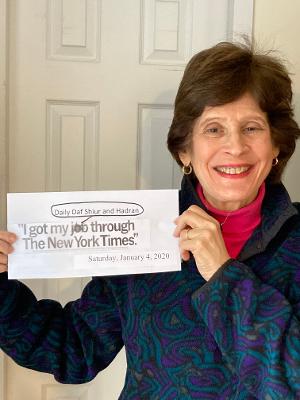
“I got my job through the NY Times” was an ad campaign when I was growing up. I can headline “I got my daily Daf shiur and Hadran through the NY Times”. I read the January 4, 2020 feature on Reb. Michelle Farber and Hadran and I have been participating ever since. Thanks NY Times & Hadran!
Deborah Aschheim
Deborah Aschheim

New York, United States

I started to listen to Michelle’s podcasts four years ago. The minute I started I was hooked. I’m so excited to learn the entire Talmud, and think I will continue always. I chose the quote “while a woman is engaged in conversation she also holds the spindle”. (Megillah 14b). It reminds me of all of the amazing women I learn with every day who multi-task, think ahead and accomplish so much.

Julie Mendelsohn
Julie Mendelsohn

Zichron Yakov, Israel

Bava Batra 167

וּמְשַׁוֵּי לְהוּ זוּזִי; מַאי אָמְרַתְּ – שֵׁית מְאָה אִיסְתֵּירֵי וְזוּזָא, שֵׁית מְאָה זוּזֵי וְחַד זוּזָא? יַד בַּעַל הַשְּׁטָר עַל הַתַּחְתּוֹנָה.

and change them into a smaller number of dinars. Therefore, what can you say? The highest and lowest remaining possibilities are: Six hundred istira and a dinar, and six hundred dinars and one more dinar. The guiding principle is that the holder of the document is at a disadvantage, and the lesser of these two values is assumed.

אָמַר אַבָּיֵי: הַאי מַאן דְּבָעֵי לְמַחְוֵי חֲתִימוּת יְדֵיהּ בְּבֵי דִינָא, לָא לַחְוֵי בְּסוֹף מְגִילְּתָא; דִּלְמָא מַשְׁכַּח לַהּ אַחֵר וְכָתֵיב דְּמַסֵּיק בֵּיהּ זוּזִי, וּתְנַן: הוֹצִיא עָלָיו כְּתַב יָדוֹ שֶׁהוּא חַיָּיב לוֹ – גּוֹבֶה מִנְּכָסִים בְּנֵי חוֹרִין.

§ Abaye said: With regard to this one who needs to show his signature in court for the purpose of corroborating his signature on a document, he should not show it by writing it at the end of the parchment, lest another, unscrupulous, person find the parchment and write above the signature that the signatory owes him money. And such a document would be valid, as we learned in a mishna (175b): If one presents to a debtor a document in the handwriting of the debtor stating that he owes money to him, but without witnesses signed on the document, the creditor can collect only from unsold property, i.e., property that is currently in the possession of the debtor.

הָהוּא בַּזְבָּינָא דַּאֲתָא לְקַמֵּיהּ דְּאַבָּיֵי, אֲמַר לֵיהּ: נַיחְזֵי לִי מָר חֲתִימוּת יְדֵיהּ, דְּכִי אָתוּ רַבָּנַן מַחְווּ לִי, מְעַבַּרְנָא לְהוּ בְּלָא מִכְסָא. אַחְוִי לֵיהּ בְּרֵישׁ מְגִילְּתָא. הֲוָה קָא נָגֵיד בֵּיהּ, אֲמַר לֵיהּ: כְּבָר קַדְמוּךָ רַבָּנַן.

The Gemara relates: There was a certain Jewish tax collector who came before Abaye and said to him: Let the Master show me his signature on a piece of paper to keep in my records, as when rabbis come to me and show me a note with your signature on it, attesting to the fact that they are Torah scholars, I let them pass without paying the tax. Abaye showed him his signature at the top of the parchment, though the unscrupulous tax collector kept pulling the parchment away from Abaye so that the signature would be at the bottom. Abaye noticed this and said to him: The Sages have already anticipated people such as you and advised that one should never write his signature at the bottom of a paper.

אָמַר אַבָּיֵי: מִתְּלָת וְעַד עֲשַׂר – לָא לִכְתּוֹב בְּסוֹף שִׁיטָה, דִּלְמָא מְזַיֵּיף וְכָתֵב. וְאִי אִיתְרְמִי לֵיהּ, נַיהְדְּרֵיהּ לְדִבּוּרֵיהּ תְּרֵין תְּלָתָא זִימְנֵי, אִי אֶפְשָׁר דְּלָא מִיתְרְמֵי לֵיהּ בְּאֶמְצַע שִׁיטָה.

§ Abaye said: When writing a promissory note, one should not write any number from three until ten at the end of a line, lest someone commit forgery and write an extension to the number, since it is at the end of the line. In Hebrew and Aramaic, the words for the numbers three through nine can be changed to thirty through ninety, respectively, by appending to them the suffix in, written with the letters yod and nun. Ten can be changed to twenty in a similar manner. And if by chance it occurs for him that these numbers fall out at the end of a line, he should repeat his words two or three times, stating and restating the agreement in question, as it is impossible that the number will not eventually occur for him in the middle of a line. When there is a contradiction, it is the final mention of the amount that is authoritative, as the mishna teaches.

הָהוּא דַּהֲוָה כְּתִיב בֵּיהּ: ״תִּילְתָּא בְּפַרְדֵּיסָא״. אֲזַל מַחְקֵיהּ לְגַגֵּיהּ דְּבֵית וְכַרְעֵיהּ, וְשַׁוְּיֵהּ ״וּפַרְדֵּיסָא״, אֲתָא לְקַמֵּיהּ דְּאַבָּיֵי, אֲמַר לֵיהּ: מַאי טַעְמָא רְוִיחַ לֵיהּ עָלְמָא לְהַאי וָיו? כַּפְתֵיהּ וְאוֹדִי.

The Gemara relates: There was a certain bill of sale in which it was written that the item sold was: In my garden, one-third of the orchard. The purchaser went and erased the roof and the foot of the beit of the term: Of the orchard [befardeisa], and thereby changed the prefix beit into a vav, yielding: In my garden one-third, and the orchard [ufardeisa], indicating that the sale included one-third of the garden in addition to all of the orchard. The document came before Abaye, who said to the purchaser: What is the reason that there is so much space around this vav? Since the letter vav is narrower than the letter beit, a larger space between letters emerged as compared to the spacing of letters in the rest of the document. Abaye bound the purchaser, i.e., he subjected him to physical coercion, and he admitted to the forgery.

הָהוּא דַּהֲוָה כְּתִב בֵּיהּ: ״מְנָת רְאוּבֵן וְשִׁמְעוֹן אַחֵי״. הֲוָה לְהוּ אַחָא דִּשְׁמֵיהּ ״אַחַי״, אֲזַל כְּתַב בֵּיהּ וָיו, וְשַׁוְּיֵהּ ״וְאַחַי״. אֲתָא לְקַמֵּיהּ דְּאַבָּיֵי, אֲמַר לֵיהּ: מַאי טַעְמָא דְּחִיק לֵיהּ עָלְמָא לְהַאי וָיו כּוּלֵּי הַאי? כַּפְתֵיהּ וְאוֹדִי.

The Gemara relates: There was a certain bill of sale in which it was written that the item being sold was: The portions of Reuven and Shimon, brothers [aḥei]. Reuven and Shimon happened to have a brother whose name was Aḥai, which, when writing without vowels, is spelled identically to aḥei. The purchaser went and wrote a conjunctive vav in the document before the word aḥei, and changed the wording into: The portions of Reuven and Shimon and Aḥai. The document came before Abaye, who said to the purchaser: What is the reason that it is so crowded around this vav? By inserting the extra vav, a smaller space between letters emerged as compared to the spacing of letters in the rest of the document. Abaye bound the purchaser, i.e., he subjected him to physical coercion, and he admitted the forgery.

הָהוּא שְׁטָרָא דַּהֲוָה חֲתִים עֲלֵיהּ רָבָא וְרַב אַחָא בַּר אַדָּא. אֲתָא לְקַמֵּיהּ דְּרָבָא, אֲמַר לֵיהּ: דֵּין חֲתִימוּת יְדָא דִּידִי הִיא, מִיהוּ קַמֵּיהּ דְּרַב אַחָא בַּר אַדָּא לָא חֲתִימִי לִי מֵעוֹלָם! כַּפְתֵיהּ וְאוֹדִי. אֲמַר לֵיהּ: בִּשְׁלָמָא דִּידִי – זַיֵּיפְתְּ, אֶלָּא דְּרַב אַחָא בַּר אַדָּא, דְּרָתֵית יְדֵיהּ – הֵיכִי עֲבַדְתְּ? אָמַר: אַנַּחִי יְדַאי אַמִּצְרָא. וְאָמְרִי לַהּ: קָם אַזַּרְנוּקָא וּכְתַב.

The Gemara relates: There was a certain document upon which the signatures of Rava and Rav Aḥa bar Adda were signed. The one holding the document came before Rava, who said to him: This is my signature, but I never signed any document before Rav Aḥa bar Adda. Rava bound the holder of the document, i.e., he subjected him to physical coercion, and he admitted the forgery. Rava said to him: Granted, you were able to forge my signature, but how did you perform a forgery of Rav Aḥa bar Adda’s signature, since his hands shake and as a result his signature is distinctive? The man said: I placed my hands on the rope of a narrow footbridge [amitzra], and was thereby able to duplicate Rav Aḥa’s signature. And some say that the forgery was accomplished when the forger stood upon a wobbly water skin [azarnuka] and wrote the signature.

מַתְנִי׳ כּוֹתְבִין גֵּט לָאִישׁ – אַף עַל פִּי שֶׁאֵין אִשְׁתּוֹ עִמּוֹ, וְהַשּׁוֹבָר לָאִשָּׁה – אַף עַל פִּי שֶׁאֵין בַּעְלָהּ עִמָּהּ; וּבִלְבַד שֶׁיְּהֵא מַכִּירָן. וְהַבַּעַל נוֹתֵן שָׂכָר.

MISHNA: A scribe may write a bill of divorce for a man who requests one, even if his wife is not with him to give her consent when he presents his request, as there is no possibility that he will misuse the document. And a scribe may write a receipt for a woman upon her request, attesting to the payment of her marriage contract, even if her husband is not with her to give his consent. This is true provided that the scribe recognizes the parties requesting the document, to prevent misrepresentation. And for both documents, the husband gives the scribe his wages.

כּוֹתְבִין שְׁטָר לַלֹּוֶה – אַף עַל פִּי שֶׁאֵין מַלְוֶה עִמּוֹ, וְאֵין כּוֹתְבִין לַמַּלְוֶה – עַד שֶׁיְּהֵא לֹוֶה עִמּוֹ. וְהַלֹּוֶה נוֹתֵן שָׂכָר.

A scribe may write a promissory note for a debtor who requests one, even if the creditor is not with him when he requests the document, but a scribe may not write a promissory note for a creditor who requests it unless the debtor is with him and consents. And it is the debtor who gives the scribe his wages.

כּוֹתְבִין שְׁטָר לַמּוֹכֵר – אַף עַל פִּי שֶׁאֵין לוֹקֵחַ עִמּוֹ, וְאֵין כּוֹתְבִין לַלּוֹקֵחַ – עַד שֶׁיְּהֵא מוֹכֵר עִמּוֹ. וְהַלּוֹקֵחַ נוֹתֵן שָׂכָר.

A scribe may write a bill of sale for a seller of a field who requests one even if the purchaser is not with him when he presents his request, but a scribe may not write a bill of sale for a purchaser who requests it unless the seller is with him and consents. And it is the purchaser who gives the scribe his wages.

אֵין כּוֹתְבִין שְׁטָרֵי אֵירוּסִין וְנִשּׂוּאִין אֶלָּא מִדַּעַת שְׁנֵיהֶם, וְהֶחָתָן נוֹתֵן שָׂכָר.

A scribe may not write documents of betrothal and documents of marriage except with the consent of both parties, the groom and the bride. And it is the groom who gives the scribe his wages.

אֵין כּוֹתְבִין שְׁטַר אֲרִיסוּת וְקַבְּלָנוּת אֶלָּא מִדַּעַת שְׁנֵיהֶם, וְהַמְקַבֵּל נוֹתֵן שָׂכָר.

A scribe may not write contracts for sharecroppers and contractors except with the consent of both parties, i.e., the sharecropper or contractor and the one who hires him. And it is the sharecropper or contractor who gives the scribe his wages.

אֵין כּוֹתְבִין שְׁטָרֵי בֵּירוּרִין וְכׇל מַעֲשֵׂה בֵּית דִּין – אֶלָּא מִדַּעַת שְׁנֵיהֶם, וּשְׁנֵיהֶם נוֹתְנִין שָׂכָר. רַבָּן שִׁמְעוֹן בֶּן גַּמְלִיאֵל אוֹמֵר: לִשְׁנֵיהֶם כּוֹתְבִין שְׁנַיִם – לָזֶה לְעַצְמוֹ וְלָזֶה לְעַצְמוֹ.

A scribe may not write documents testifying to arbitration agreements or any other court enactment except with the consent of both parties to the litigation. And both parties give the scribe his wages. Rabban Shimon ben Gamliel says: The scribe writes two documents for the two parties, one for this one by himself, and one for that one by himself.

גְּמָ׳ מַאי ״וּבִלְבַד שֶׁיְּהֵא מַכִּירָן״? אָמַר רַב יְהוּדָה אָמַר רַב: וּבִלְבַד שֶׁיְּהֵא מַכִּיר שֵׁם הָאִישׁ בַּגֵּט, וְשֵׁם הָאִשָּׁה בַּשּׁוֹבָר.

GEMARA: What is meant by: Provided that the scribe recognizes the parties requesting the document? Rav Yehuda says that Rav says: It means provided that he recognizes the man’s name in the case of the bill of divorce and the woman’s name in the case of the receipt.

יָתֵיב רַב סָפְרָא וְרַב אַחָא בַּר הוּנָא וְרַב הוּנָא בַּר חִינָּנָא, וְיָתֵיב אַבָּיֵי גַּבַּיְיהוּ, וְיָתְבִי וְקָמִיבַּעְיָא לְהוּ: שֵׁם הָאִישׁ בַּגֵּט – אִין, שֵׁם הָאִשָּׁה – לָא?! שֵׁם הָאִשָּׁה בַּשּׁוֹבָר – אִין, שֵׁם הָאִישׁ – לָא?!

The Gemara relates: Rav Safra and Rav Aḥa bar Huna and Rav Huna bar Ḥinnana were sitting, and Abaye was sitting near them. And as they were sitting, they raised a dilemma: Did Rav mean that with regard to the man’s name in the case of bill of divorce bill, yes, it must be known to the scribe, but the woman’s name need not be known to the scribe? And did he mean that with regard to the woman’s name in the case of the receipt, yes, it must be known to the scribe, but the man’s name need not be known to the scribe?

וְלֵיחוּשׁ דִּלְמָא כָּתֵב גִּיטָּא, וְאָזֵיל וּמַמְטֵי לֵיהּ לְאִיתְּתֵיהּ דְּהַיְאךְ!

But if so, let there be a concern that perhaps the man who made the request writes the bill of divorce and intends to go and give it to the wife of another man with the same name.

וְזִמְנִין אָזְלָא כָּתְבָה אִשָּׁה שׁוֹבָר, וְיָהֲבָה לְגַבְרָא דְּלָאו דִּילַהּ!

And similarly, in the case of the receipt let there be a concern that there will be times when the woman writes the receipt and intends to give it to a man who is not her husband, whose wife shares her name.

אֲמַר לְהוּ אַבָּיֵי, הָכִי אָמַר רַב: שֵׁם הָאִישׁ בַּגֵּט – וְהוּא הַדִּין לְשֵׁם הָאִשָּׁה. שֵׁם הָאִשָּׁה בַּשּׁוֹבָר – וְהוּא הַדִּין לְשֵׁם הָאִישׁ.

Abaye said to them: You are not understanding Rav’s statement correctly. This is what Rav says: The man’s name in the case of the bill of divorce must be known to the scribe, and the same is true of the woman’s name, which must also be known to the scribe. And the woman’s name in the case of the receipt must be known to the scribe, and the same is true of the man’s name, which must also be known to the scribe.

וְלֵיחוּשׁ לִשְׁנֵי יוֹסֵף בֶּן שִׁמְעוֹן הַדָּרִים בְּעִיר אַחַת – דִּלְמָא כָּתֵיב גִּיטָּא, וְאָזֵיל וּמַמְטֵי לֵיהּ לְאִיתְּתֵיהּ דְּהַיְאךְ! אֲמַר לְהוּ רַב אַחָא בַּר הוּנָא, הָכִי אָמַר רַב: שְׁנֵי יוֹסֵף בֶּן שִׁמְעוֹן הַדָּרִים בְּעִיר אַחַת – אֵין מְגָרְשִׁין נְשׁוֹתֵיהֶן אֶלָּא זֶה בִּפְנֵי זֶה.

They continued their line of questioning: And even if both names are known to the scribe, let there be a concern for the possibility of two men with the same name, such as two men named Yosef ben Shimon, who live in one city and whose wives share the same name as well, and perhaps the man who made the request will write the bill of divorce and intend to go and give it to the wife of the other man who bears the same name as him. Rav Aḥa bar Huna said to them in reply that this is what Rav says: If there are two men named Yosef ben Shimon who live in one city and are married to women who share the same name, they may divorce their wives only in the presence of one another.

וְלֵיחוּשׁ דִּלְמָא אָזֵיל לְמָתָא אַחְרִיתָא וּמַחְזֵיק לֵיהּ לִשְׁמֵיהּ בְּיוֹסֵף בֶּן שִׁמְעוֹן, וְכָתֵיב גִּיטָּא וּמַמְטֵי לֵיהּ לְאִיתְּתֵיהּ דְּהַיְאךְ!

They continued to ask: But even if the scribe knows the man’s name and the name of the man’s wife, let there be a concern that perhaps someone will go to another city and establish a false name for himself as Yosef ben Shimon, and he will write the bill of divorce and give it to the wife of the other man, whose name really is Yosef ben Shimon.

אֲמַר לְהוּ רַב הוּנָא בַּר חִינָּנָא, הָכִי אָמַר רַב: כׇּל שֶׁהוּחְזַק שְׁמוֹ בָּעִיר שְׁלֹשִׁים יוֹם – אֵין חוֹשְׁשִׁין לוֹ.

Rav Huna bar Ḥinnana said to them that this is what Rav says: With regard to anyone whose name has been established in a city for thirty days, there is no concern harbored about him that his name is false. It is assumed that this is his true name.

לָא אִיתַּחְזַק, מַאי? אָמַר אַבָּיֵי: דְּקָרוּ לֵיהּ וְעָנֵי. רַב זְבִיד אָמַר: רַמָּאָה – בְּרַמָּאוּתֵיהּ זְהִיר.

They continued to ask: What if his name has not been established for thirty days? How can a newcomer in a town have a bill of divorce drawn up for him? Abaye said: It is sufficient that people call him by the name he claims for himself and he responds to that call. Rav Zevid said: A liar is careful about upholding his lies, and just because he responds to being called by a particular name does not prove he is telling the truth. A newcomer would therefore have to wait thirty days before requesting that a scribe write him a bill of divorce.

הָהוּא תְּבָרָא דַּהֲוָה חֲתִים עֲלַהּ רַב יִרְמְיָה בַּר אַבָּא. אָתְיָא לְקַמֵּיהּ הָהִיא אִיתְּתָא, אֲמַרָה לֵיהּ: לָאו אֲנָא הֲוַאי. אָמַר, אֲנָא נָמֵי אֲמַרִי לְהוּ: לָאו אִיהִי הִיא, וַאֲמַרוּ לִי: מִיקָּשׁ הוּא דְּקַשָּׁא לַהּ – וּבְגַר לַהּ קָלָא.

§ There was a certain receipt of payment of a marriage contract upon which Rav Yirmeya bar Abba was signed as a witness. That woman, whose name matched the name on the receipt, came before Rav Yirmeya, seeking to collect payment of her marriage contract. Rav Yirmeya recognized her name, but not her appearance. The woman said to him: It was not I whose name was on the receipt that you signed, but another woman with the same name; I have not collected payment of my marriage contract. Rav Yirmeya said: I, too, said to the other witnesses signed on the document: The woman for whom we signed the receipt is not she. But they said to me: It is in fact the same woman, but she has aged and her voice has matured and changed, and that is why you do not recognize her.

אָמַר אַבָּיֵי, אַף עַל גַּב דַּאֲמוּר רַבָּנַן:

Abaye said that although the Sages said:

Want to follow content and continue where you left off?

Create an account today to track your progress, mark what you’ve learned, and follow the shiurim that speak to you.

Clear all items from this list?

This will remove ALL the items in this section. You will lose any progress or history connected to them. This is irreversible.

Cancel
Yes, clear all

Are you sure you want to delete this item?

You will lose any progress or history connected to this item.

Cancel
Yes, delete