








It is permitted to slaughter an animal that is in danger of imminent death as long as the animal stays alive until the end of the shechita. From where do we derive that it is permitted to slaughter an animal in this state?
Chullin 37

January 03, 2019 | כ״ו בטבת תשע״ט
Share this shiur:
Want to dedicate learning? Get started here:
Chullin 37
מַאי? כִּי מַהְנְיָא חִבַּת הַקֹּדֶשׁ לִפְסוּלָא דְּגוּפֵיהּ, אֲבָל לְמִימְנֵא בֵּיהּ רִאשׁוֹן וְשֵׁנִי לָא, אוֹ דִּלְמָא לָא שְׁנָא? תֵּיקוּ.
The Gemara asks: What is the resolution of the dilemma raised by Rabbi Shimon ben Lakish: When regard for sanctity is effective in rendering an item susceptible to impurity, is it only to disqualify that item itself, but to count the descending levels of first-degree impurity and second-degree impurity, it is not effective; or perhaps once it is rendered susceptible to impurity there is no difference whether it is rendered susceptible by means of regard for sanctity or by means of contact with liquids? The Gemara answers: The dilemma shall stand unresolved.
מַתְנִי׳ הַשּׁוֹחֵט אֶת הַמְסוּכֶּנֶת, רַבָּן שִׁמְעוֹן בֶּן גַּמְלִיאֵל אוֹמֵר: עַד שֶׁתְּפַרְכֵּס בַּיָּד וּבָרֶגֶל. רַבִּי אֱלִיעֶזֶר אוֹמֵר: דַּיָּהּ אִם זִינְּקָה. אָמַר רַבִּי שִׁמְעוֹן: הַשּׁוֹחֵט בַּלַּיְלָה, וּלְמָחָר הִשְׁכִּים וּמָצָא כְּתָלִים מְלֵאִים דָּם – כְּשֵׁרָה, שֶׁזִּינְּקָה, וּכְמִדַּת רַבִּי אֱלִיעֶזֶר. וַחֲכָמִים אוֹמְרִים: עַד שֶׁתְּפַרְכֵּס אוֹ בַיָּד אוֹ בָרֶגֶל, אוֹ עַד שֶׁתְּכַשְׁכֵּשׁ בִּזְנָבָהּ.
MISHNA: In the case of one who slaughters an animal that is in danger of imminent death, Rabban Shimon ben Gamliel says: The slaughter is valid only in a case where after the slaughter it convulses with its foreleg and with its hind leg. Rabbi Eliezer says: It is sufficient if blood spurted from the neck. Rabbi Shimon says: In the case of one who slaughters at night and the next day he awoke and found walls full of blood, the slaughter is valid, as it is clear that the blood spurted, and this is in accordance with the rule of Rabbi Eliezer. And the Rabbis say: It is valid only in a case where it convulses with its foreleg or with its hind leg, or in a case where it wags its tail.
אֶחָד בְּהֵמָה דַּקָּה וְאֶחָד בְּהֵמָה גַּסָּה, בְּהֵמָה דַּקָּה שֶׁפָּשְׁטָה יָדָהּ וְלֹא הֶחְזִירָה – פְּסוּלָה, שֶׁאֵינָהּ אֶלָּא הוֹצָאַת נֶפֶשׁ בִּלְבָד. בַּמֶּה דְּבָרִים אֲמוּרִים? שֶׁהָיְתָה בְּחֶזְקַת מְסוּכֶּנֶת, אֲבָל אִם הָיְתָה בְּחֶזְקַת בְּרִיאָה, אֲפִילּוּ אֵין בָּהּ אֶחָד מִכׇּל הַסִּימָנִים הַלָּלוּ – כְּשֵׁרָה.
This is the halakha with regard to both a small animal, e.g., a sheep, and a large animal, e.g., a cow, that is in danger of imminent death. The slaughter of a small animal that when being slaughtered extended its foreleg that was bent and did not restore it to the bent position is not valid, as extending the foreleg is only part of the natural course of removal of the animal’s soul from its body and not a convulsion indicating life. In what case is this statement said? It is in a case where the presumptive status of the animal was that it was in danger of imminent death. But if its presumptive status was that it was healthy, then even if there were none of these indicators, the slaughter is valid.
גְּמָ׳ מְסוּכֶּנֶת מִמַּאי דְּשַׁרְיָא? וּמִמַּאי תִּיסַּק אַדַּעְתִּין דַּאֲסִירָא? דִּכְתִיב: ״זֹאת הַחַיָּה אֲשֶׁר תֹּאכְלוּ״, חַיָּה אֱכוֹל, וְשֶׁאֵינָהּ חַיָּה לֹא תֹּאכַל. וְהָא מְסוּכֶּנֶת אֵינָהּ חַיָּה?
GEMARA: The Gemara asks: From where is it known that the flesh of an animal in danger of imminent death is permitted by means of slaughter? The Gemara responds with a question: And from where would it enter your mind that it is prohibited? The Gemara explains that one may have thought it is prohibited, as it is written: “These are the living beings [haḥayya] that you may eat among all the animals that are on the earth” (Leviticus 11:2). One might have thought that the verse is saying: Eat an animal that is fit to live [ḥayya], but do not eat an animal that is not fit to live. And this animal in danger of imminent death is not fit to live.
מִדְּאָמַר רַחֲמָנָא נְבֵלָה לֹא תֹּאכֵל, מִכְּלָל דִּמְסוּכֶּנֶת שַׁרְיָא, דְּאִי סָלְקָא דַעְתָּךְ מְסוּכֶּנֶת אֲסִירָא – הַשְׁתָּא מֵחַיִּים אֲסִירָא, לְאַחַר מִיתָה מִיבְּעֵי?
The fact that its meat is permitted is derived from the fact that the Merciful One states that you shall not eat an unslaughtered animal carcass, as it is written: “You shall not eat any unslaughtered carcass” (Deuteronomy 14:21); one learns by inference that eating the meat of an animal in danger of imminent death is permitted. As, if it enters your mind that eating the meat of an animal in danger of imminent death is prohibited, now if an animal is prohibited while alive, is it necessary to state that it is prohibited after death?
וְדִלְמָא הַיְינוּ נְבֵלָה הַיְינוּ מְסוּכֶּנֶת? לָא סָלְקָא דַּעְתָּךְ, דִּכְתִיב: ״וְכִי יָמוּת מִן הַבְּהֵמָה אֲשֶׁר הִיא לָכֶם לְאׇכְלָה הַנֹּגֵעַ בְּנִבְלָתָהּ״, לְאַחַר מִיתָה הוּא דְּקַרְיַיהּ רַחֲמָנָא נְבֵלָה, מֵחַיִּים לָא אִקְּרַי נְבֵלָה.
The Gemara rejects that proof. And that is not a legitimate inference, as perhaps the halakhic status of an unslaughtered carcass is the same as that of an animal in danger of imminent death, and the prohibition: “You shall not eat any unslaughtered carcass,” includes both. The Gemara answers: It would not enter your mind to say so, as it is written: “And if any animal of which you may eat dies, one who touches its carcass shall be impure until the evening” (Leviticus 11:39). This indicates that it is after death that the Merciful One calls the animal a carcass; while alive, the animal is not called a carcass.
וְדִלְמָא לְעוֹלָם אֵימָא לָךְ: הַיְינוּ נְבֵלָה הַיְינוּ מְסוּכֶּנֶת, מֵחַיִּים – בַּעֲשֵׂה, לְאַחַר מִיתָה – בְּלָאו.
The Gemara questions that understanding. And perhaps, actually I will say to you: The halakhic status of an unslaughtered carcass is the same as that of an animal in danger of imminent death, but if one slaughters the animal in danger of imminent death while alive, he would be in violation of a positive mitzva: “These are the living beings that you may eat” (Leviticus 11:2), whereas after its death, he would be in violation of a prohibition: “You shall not eat any unslaughtered carcass” (Deuteronomy 14:21).
אֶלָּא, מִדְּאָמַר רַחֲמָנָא טְרֵפָה לֹא תֹּאכַל – מִכְּלָל דִּמְסוּכֶּנֶת שַׁרְיָא, דְּאִי סָלְקָא דַעְתָּךְ מְסוּכֶּנֶת אֲסִירָא, הַשְׁתָּא מְסוּכֶּנֶת דְּלָא מְחַסְּרָא אֲסִירָא, טְרֵפָה מִיבַּעְיָא?
Rather, the fact that its meat is permitted is derived from the fact that the Merciful One states you shall not eat an animal with a wound that will cause it to die within twelve months [tereifa], as it is written: “And you shall not eat any animal that was mauled in the field [tereifa]” (Exodus 22:30). From here, one learns by inference that eating the meat of an animal in danger of imminent death is permitted. As, if it enters your mind that eating the meat of an animal in danger of imminent death is prohibited, now that an animal in danger of imminent death that is not lacking any limb is prohibited, is it necessary to state that a tereifa, an animal that was mauled and lacking body parts, is prohibited?
וְדִלְמָא הַיְינוּ טְרֵפָה הַיְינוּ מְסוּכֶּנֶת, וְלַעֲבוֹר עָלָיו בַּעֲשֵׂה וְלֹא תַעֲשֶׂה! אִם כֵּן, נְבֵלָה דִּכְתַב רַחֲמָנָא לְמָה לִי? וּמָה מֵחַיִּים קָאֵי עֲלַהּ בְּלָאו וַעֲשֵׂה, לְאַחַר מִיתָה מִיבַּעְיָא?
The Gemara rejects that proof. And that is not a legitimate inference, as perhaps the halakhic status of a tereifa that is lacking body parts is the same as that of an animal in danger of imminent death that is not lacking body parts, and both are included in the category of tereifa. This would render one who slaughters either to be in violation of both a positive mitzva: “These are the living beings that you may eat,” and a prohibition: “And you shall not eat any animal that was mauled in the field [tereifa].” The Gemara questions that understanding: If so, why do I need the prohibition that the Merciful One writes with regard to an unslaughtered carcass? If while an animal is alive one stands in violation of a prohibition and a positive mitzva, is it necessary to state that it is prohibited after death?
וְדִלְמָא הַיְינוּ נְבֵלָה, הַיְינוּ טְרֵפָה, הַיְינוּ מְסוּכֶּנֶת, וְלַעֲבוֹר עָלָיו בִּשְׁנֵי לָאוִין וַעֲשֵׂה!
The Gemara objects: And that is not a legitimate question, as perhaps the halakhic status of an unslaughtered carcass is the same as a tereifa that is lacking body parts, and is the same as that of an animal in danger of imminent death that is not lacking body parts. Therefore, when the Torah writes the word “carcass,” it is the same as though it had written tereifa and the same as though it had written an animal in danger of imminent death. The Torah prohibits each, and the result will be that he will violate two prohibitions and a positive mitzva.
אֶלָּא מֵהָכָא, ״וְחֵלֶב נְבֵלָה וְחֵלֶב טְרֵפָה יֵעָשֶׂה לְכׇל מְלָאכָה וְאָכֹל לֹא תֹאכְלֻהוּ״, וְאָמַר מָר: לְמַאי הִלְכְתָא אָמְרָה הַתּוֹרָה? יָבֹא אִיסּוּר נְבֵלָה וְיָחוּל עַל אִיסּוּר חֵלֶב, יָבֹא אִיסּוּר טְרֵפָה וְיָחוּל עַל אִיסּוּר חֵלֶב.
Rather, the fact that the meat of an animal in danger of imminent death is permitted is derived from here: “And the fat of a carcass and the fat of a tereifa may be used for any purpose; but you shall not eat it” (Leviticus 7:24). And the Master says: In order to derive what halakha is this verse written? Would one imagine that because it is an unslaughtered carcass or a tereifa its fat would be permitted for consumption? The Torah states: Let the prohibition against eating an unslaughtered carcass come and take effect upon the prohibition against eating forbidden fat, which already exists. One who eats the forbidden fat of an unslaughtered carcass is liable for violation of both prohibitions. Likewise, the word “tereifa” in the verse teaches: Let the prohibition against eating a tereifa come and take effect upon the prohibition against eating forbidden fat, which already exists, so that one who eats the forbidden fat of a tereifa is liable for transgressing both prohibitions.
וְאִי סָלְקָא דַעְתָּךְ טְרֵפָה הַיְינוּ מְסוּכֶּנֶת, לִכְתּוֹב רַחֲמָנָא ״חֵלֶב נְבֵלָה יֵעָשֶׂה לְכׇל מְלָאכָה וְחֵלֶב טְרֵפָה לֹא תֹאכְלוּהוּ״, וַאֲנָא אָמֵינָא: וּמָה מֵחַיִּים אָתֵי אִיסּוּר טְרֵפָה חָיֵיל אַאִיסּוּר חֵלֶב, לְאַחַר מִיתָה מִיבַּעְיָא?!
And if it enters your mind to say that the halakhic status of a tereifa lacking body parts is the same as that of an animal in danger of imminent death, let the Merciful One write: And the fat of a carcass may be used for any purpose, and the fat of a tereifa you shall not eat. The prohibition against eating the forbidden fat should have been written exclusively with regard to a tereifa, and I would say: If while an animal is alive and in danger of imminent death the prohibition against eating a tereifa takes effect upon the prohibition against eating forbidden fat, is it necessary to state that after its death the prohibition against eating an unslaughtered carcass takes effect upon the prohibition against eating forbidden fat?
אֶלָּא, מִדִּכְתַב רַחֲמָנָא ״נְבֵלָה״, מִכְּלָל דִּטְרֵפָה לָאו הַיְינוּ מְסוּכֶּנֶת.
The Gemara concludes: Rather, from the fact that the Merciful One writes that the prohibition against eating an unslaughtered carcass takes effect upon the prohibition against eating forbidden fat, one learns by inference that the tereifa in the verse is not the same as an animal in danger of imminent death. Rather, the tereifa in the verse is an animal that was mauled and is lacking body parts, and it is only that animal that is prohibited after slaughter. Eating an animal in danger of imminent death after slaughter is permitted.
מַתְקֵיף לַהּ מָר בַּר רַב אָשֵׁי: וְדִלְמָא לְעוֹלָם אֵימָא לָךְ הַיְינוּ טְרֵפָה הַיְינוּ מְסוּכֶּנֶת, וּדְקָאָמְרַתְּ: ״נְבֵלָה״ דִּכְתַב רַחֲמָנָא לְמָה לִי? לְהָךְ נְבֵלָה דְּלָא אָתְיָא מִכֹּחַ מְסוּכֶּנֶת. וְהֵיכִי דָּמֵי? שֶׁעֲשָׂאָהּ גִּיסְטְרָא. הָתָם נָמֵי, אִי אֶפְשָׁר דְּלָא הֲוַי מְסוּכֶּנֶת פּוּרְתָּא מִקַּמֵּי דְּלִיפְסֹק לְרוּבָּא.
Mar bar Rav Ashi objects to this: And perhaps, actually I will say to you that the halakhic status of a tereifa is the same as that of an animal in danger of imminent death, and with regard to that which you said: Why do I need the prohibition with regard to an unslaughtered carcass that the Merciful One writes, one can explain that it is necessary for that unslaughtered carcass that does not come as a result of danger of imminent death. And what are the circumstances of that unslaughtered carcass? It is in a case where one rendered the animal like a shard, by cutting it into two widthwise. The Gemara rejects that distinction: There too, in the case where one rendered the animal like a shard, it is impossible that the animal was not at least somewhat in danger of imminent death before he cut the majority of the animal.
וְאִיבָּעֵית אֵימָא, אִם כֵּן לֵימָא ״חֵלֶב נְבֵלָה וּטְרֵפָה״, ״חֵלֶב״ ״חֵלֶב״ לְמָה לִי? זוֹ הִיא שֶׁאֵין חֶלְבָּהּ חָלוּק מִבְּשָׂרָהּ, וְיֵשׁ לְךָ אַחֶרֶת שֶׁחֶלְבָּהּ חָלוּק מִבְּשָׂרָהּ, וְאֵיזוֹ זוֹ? מְסוּכֶּנֶת.
And if you wish, say instead that there is a different source for the fact that the meat of an animal in danger of imminent death is permitted. If it is so that an animal in danger of imminent death is included in the category of tereifa, let the verse say: The fat of an unslaughtered carcass and a tereifa. Why do I need it to be written: “Fat of a carcass and the fat of a tereifa”? The term “fat” is repeated to teach that it is this case where the status of its fat is not distinct from the status of its meat, and both are prohibited; but you have another case where the status of its fat, which is forbidden, is distinct from the status of its meat, which is permitted. And which case is that? That is the case of an animal in danger of imminent death.
וְאִיבָּעֵית אֵימָא מֵהָכָא, ״וָאֹמַר אֲהָהּ ה׳ אֱלֹהִים הִנֵּה נַפְשִׁי לֹא מְטֻמָּאָה וּנְבֵלָה וּטְרֵפָה לֹא אָכַלְתִּי מִנְּעוּרַי וְעַד עַתָּה וְלֹא בָא בְּפִי בְּשַׂר פִּגּוּל״.
And if you wish, say instead that it is derived from here: “Then I said: Ah, Lord God, my soul has not become impure; and from my youth until now I have not eaten an unslaughtered carcass or a tereifa, and no piggul flesh came into my mouth” (Ezekiel 4:14).
״הִנֵּה נַפְשִׁי לֹא מְטֻמָּאָה״ – שֶׁלֹּא הִרְהַרְתִּי בַּיּוֹם לָבֹא לִידֵי טוּמְאָה בַּלַּיְלָה, ״וּנְבֵלָה וּטְרֵפָה לֹא אָכַלְתִּי מִנְּעוּרַי״ – שֶׁלֹּא אָכַלְתִּי בְּשַׂר כּוֹס כּוֹס מֵעוֹלָם, ״וְלֹא בָא בְּפִי בְּשַׂר פִּגּוּל״ – שֶׁלֹּא אָכַלְתִּי מִבְּהֵמָה שֶׁהוֹרָה בָּהּ חָכָם. מִשּׁוּם רַבִּי נָתָן אָמְרוּ: שֶׁלֹּא אָכַלְתִּי מִבְּהֵמָה שֶׁלֹּא הוּרְמוּ מַתְּנוֹתֶיהָ.
The Gemara explains: “My soul has not become impure” means that I did not consider any sinful thoughts during the day that would cause me to come to impurity due to a seminal emission at night. “And from my youth until now I have not eaten an unslaughtered carcass or a tereifa” means that I never ate the flesh of an animal that was in danger of imminent death, leading one to say: Slaughter it, slaughter it quickly, before it dies. “And no piggul flesh came into my mouth” means that I never ate from an animal with regard to which there was uncertainty whether it is forbidden and a Sage issued a ruling to permit it. They said in the name of Rabbi Natan that the last portion of the verse means: That I never ate from an animal whose gifts to which members of the priesthood are entitled, i.e., the foreleg, the jaw, and the maw, were not already separated.
אִי אָמְרַתְּ בִּשְׁלָמָא שַׁרְיָא – הַיְינוּ רְבוּתֵיהּ דִּיחֶזְקֵאל, אֶלָּא אִי אָמְרַתְּ אֲסִירָא – מַאי רְבוּתֵיהּ דִּיחֶזְקֵאל?
The proof is: Granted, if you say that it is permitted to slaughter and eat an animal in imminent danger of death, then that is the greatness of Ezekiel, as, although eating it is permitted, he refrained from doing so. But if you say that it is forbidden to slaughter and eat that animal, what in that action attests to the greatness of Ezekiel? Apparently, it is permitted to slaughter and eat an animal in danger of imminent death.
הֵיכִי דָּמֵי מְסוּכֶּנֶת? אָמַר רַב יְהוּדָה אָמַר רַב: כֹּל שֶׁמַּעֲמִידִין אוֹתָהּ וְאֵינָהּ עוֹמֶדֶת. רַב חֲנִינָא בַּר שֶׁלֶמְיָא מִשְּׁמֵיהּ דְּרַב אָמַר: אֲפִילּוּ אוֹכֶלֶת בְּקָעִיּוֹת. רָמֵי בַּר יְחֶזְקֵאל אָמַר: אֲפִילּוּ אוֹכֶלֶת קוֹרוֹת.
§ The Gemara asks: What are the circumstances of an animal in danger of imminent death? Rav Yehuda said that Rav said: It is any animal with regard to which one stands it on its feet but it does not stand unaided. Rav Ḥanina bar Shelamya in the name of Rav said: That indicator is so clear that even if that animal maintains sufficient strength in its jaw and eats pieces of wood, if it is unable to stand, its status is that of an animal in danger of imminent death. Rami bar Yeḥezkel said: That is the case even if that animal eats beams.
בְּסוּרָא מַתְנֵי הָכִי. בְּפוּמְבְּדִיתָא מַתְנֵי הָכִי: הֵיכִי דָּמְיָא מְסוּכֶּנֶת? אָמַר רַב יְהוּדָה אָמַר רַב: כׇּל שֶׁמַּעֲמִידִין אוֹתָהּ וְאֵינָהּ עוֹמֶדֶת, וַאֲפִילּוּ אוֹכֶלֶת בְּקָעִיּוֹת. רָמֵי בַּר יְחֶזְקֵאל אָמַר: אֲפִילּוּ אוֹכֶלֶת קוֹרוֹת.
In Sura, they would teach the exchange in that manner. In Pumbedita, they would teach the exchange in this manner: What are the circumstances of an animal in danger of imminent death? Rav Yehuda said that Rav said: It is any animal with regard to which one stands it on its feet but it does not stand unaided, even if that animal maintains sufficient strength in its jaw and eats pieces of wood. Rami bar Yeḥezkel said: That indicator is so clear that even if that animal maintains sufficient strength in its jaw and eats beams, if it is unable to stand its status is that of an animal in danger of imminent death.
אַשְׁכְּחִינְהוּ שְׁמוּאֵל לְתַלְמִידִי דְּרַב, אֲמַר לְהוּ: מַאי אָמַר רַב בִּמְסוּכֶּנֶת? אֲמַרוּ לֵיהּ: הָכִי אָמַר רַב:
Shmuel found students of Rav after Rav’s death. He said to them: What did Rav say with regard to an animal in danger of imminent death? They said to him: This is what Rav said:
Follow 
New to Talmud?
Check out our resources designed to help you navigate a page of Talmud – and study at the pace, level and style that fits you.
The Hadran Women’s Tapestry
Meet the diverse women learning Gemara at Hadran and hear their stories.
Shortly after the death of my father, David Malik z”l, I made the commitment to Daf Yomi. While riding to Ben Gurion airport in January, Siyum HaShas was playing on the radio; that was the nudge I needed to get started. The “everyday-ness” of the Daf has been a meaningful spiritual practice, especial after COVID began & I was temporarily unable to say Kaddish at daily in-person minyanim.

Lisa S. Malik
Wynnewood, United States

Jill Shames
Jerusalem, Israel
I read Ilana Kurshan’s “If All the Seas Were Ink” which inspired me. Then the Women’s Siyum in Jerusalem in 2020 convinced me, I knew I had to join! I have loved it- it’s been a constant in my life daily, many of the sugiyot connect to our lives. My family and friends all are so supportive. It’s incredible being part of this community and love how diverse it is! I am so excited to learn more!

Shira Jacobowitz
Jerusalem, Israel
I’ve been wanting to do Daf Yomi for years, but always wanted to start at the beginning and not in the middle of things. When the opportunity came in 2020, I decided: “this is now the time!” I’ve been posting my journey daily on social media, tracking my progress (#DafYomi); now it’s fully integrated into my daily routines. I’ve also inspired my partner to join, too!

Joséphine Altzman
Teaneck, United States
I started learning Daf Yomi because my sister, Ruth Leah Kahan, attended Michelle’s class in person and suggested I listen remotely. She always sat near Michelle and spoke up during class so that I could hear her voice. Our mom had just died unexpectedly and it made me feel connected to hear Ruth Leah’s voice, and now to know we are both listening to the same thing daily, continents apart.

Jessica Shklar
Philadelphia, United States
It happened without intent (so am I yotzei?!) – I watched the women’s siyum live and was so moved by it that the next morning, I tuned in to Rabbanit Michelle’s shiur, and here I am, still learning every day, over 2 years later. Some days it all goes over my head, but others I grasp onto an idea or a story, and I ‘get it’ and that’s the best feeling in the world. So proud to be a Hadran learner.

Jeanne Yael Klempner
Zichron Yaakov, Israel
When I was working and taking care of my children, learning was never on the list. Now that I have more time I have two different Gemora classes and the nach yomi as well as the mishna yomi daily.

Shoshana Shinnar
Jerusalem, Israel
It has been a pleasure keeping pace with this wonderful and scholarly group of women.

Janice Block
Beit Shemesh, Israel
I had tried to start after being inspired by the hadran siyum, but did not manage to stick to it. However, just before masechet taanit, our rav wrote a message to the shul WhatsApp encouraging people to start with masechet taanit, so I did! And this time, I’m hooked! I listen to the shiur every day , and am also trying to improve my skills.

Laura Major
Yad Binyamin, Israel
A beautiful world of Talmudic sages now fill my daily life with discussion and debate.
bringing alive our traditions and texts that has brought new meaning to my life.
I am a מגילת אסתר reader for women . the words in the Mishna of מסכת megillah 17a
הקורא את המגילה למפרע לא יצא were powerful to me.
I hope to have the zchut to complete the cycle for my 70th birthday.

Sheila Hauser
Jerusalem, Israel
I tried Daf Yomi in the middle of the last cycle after realizing I could listen to Michelle’s shiurim online. It lasted all of 2 days! Then the new cycle started just days before my father’s first yahrzeit and my youngest daughter’s bat mitzvah. It seemed the right time for a new beginning. My family, friends, colleagues are immensely supportive!

Catriella Freedman
Zichron Yaakov, Israel
I started learning Daf Yomi to fill what I saw as a large gap in my Jewish education. I also hope to inspire my three daughters to ensure that they do not allow the same Talmud-sized gap to form in their own educations. I am so proud to be a part of the Hadran community, and I have loved learning so many of the stories and halachot that we have seen so far. I look forward to continuing!

Dora Chana Haar
Oceanside NY, United States
A friend mentioned that she was starting Daf Yomi in January 2020. I had heard of it and thought, why not? I decided to try it – go day by day and not think about the seven plus year commitment. Fast forward today, over two years in and I can’t imagine my life without Daf Yomi. It’s part of my morning ritual. If I have a busy day ahead of me I set my alarm to get up early to finish the day’s daf

Debbie Fitzerman
Ontario, Canada
I start learning Daf Yomi in January 2020. The daily learning with Rabbanit Michelle has kept me grounded in this very uncertain time. Despite everything going on – the Pandemic, my personal life, climate change, war, etc… I know I can count on Hadran’s podcast to bring a smile to my face.

Deb Engel
Los Angeles, United States
After all the hype on the 2020 siyum I became inspired by a friend to begin learning as the new cycle began.with no background in studying Talmud it was a bit daunting in the beginning. my husband began at the same time so we decided to study on shabbat together. The reaction from my 3 daughters has been fantastic. They are very proud. It’s been a great challenge for my brain which is so healthy!

Stacey Goodstein Ashtamker
Modi’in, Israel
I heard about the syium in January 2020 & I was excited to start learning then the pandemic started. Learning Daf became something to focus on but also something stressful. As the world changed around me & my family I had to adjust my expectations for myself & the world. Daf Yomi & the Hadran podcast has been something I look forward to every day. It gives me a moment of centering & Judaism daily.

Talia Haykin
Denver, United States
I started to listen to Michelle’s podcasts four years ago. The minute I started I was hooked. I’m so excited to learn the entire Talmud, and think I will continue always. I chose the quote “while a woman is engaged in conversation she also holds the spindle”. (Megillah 14b). It reminds me of all of the amazing women I learn with every day who multi-task, think ahead and accomplish so much.

Julie Mendelsohn
Zichron Yakov, Israel
I am a Reform rabbi and took Talmud courses in rabbinical school, but I knew there was so much more to learn. It felt inauthentic to serve as a rabbi without having read the entire Talmud, so when the opportunity arose to start Daf Yomi in 2020, I dove in! Thanks to Hadran, Daf Yomi has enriched my understanding of rabbinic Judaism and deepened my love of Jewish text & tradition. Todah rabbah!

Rabbi Nicki Greninger
California, United States
With Rabbanit Dr. Naomi Cohen in the Women’s Talmud class, over 30 years ago. It was a “known” class and it was accepted, because of who taught. Since then I have also studied with Avigail Gross-Gelman and Dr. Gabriel Hazut for about a year). Years ago, in a shiur in my shul, I did know about Persians doing 3 things with their clothes on. They opened the shiur to woman after that!

Sharon Mink
Haifa, Israel
Margo
I started my Talmud journey in 7th grade at Akiba Jewish Day School in Chicago. I started my Daf Yomi journey after hearing Erica Brown speak at the Hadran Siyum about marking the passage of time through Daf Yomi.
Carolyn
I started my Talmud journey post-college in NY with a few classes. I started my Daf Yomi journey after the Hadran Siyum, which inspired both my son and myself.
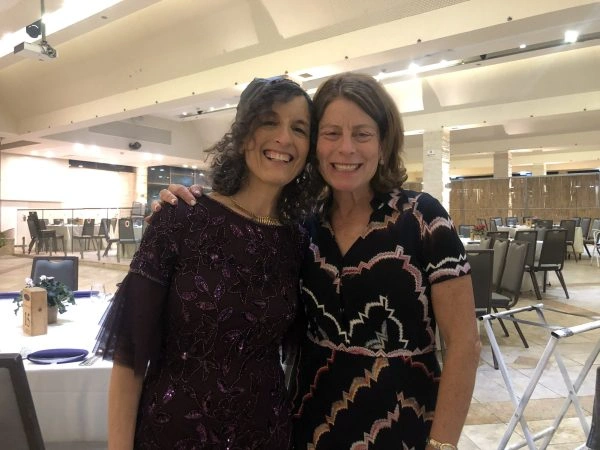
Carolyn Hochstadter and Margo Kossoff Shizgal
Merion Station, USA
Beit Shemesh, Israel
Chullin 37
מַאי? כִּי מַהְנְיָא חִבַּת הַקֹּדֶשׁ לִפְסוּלָא דְּגוּפֵיהּ, אֲבָל לְמִימְנֵא בֵּיהּ רִאשׁוֹן וְשֵׁנִי לָא, אוֹ דִּלְמָא לָא שְׁנָא? תֵּיקוּ.
The Gemara asks: What is the resolution of the dilemma raised by Rabbi Shimon ben Lakish: When regard for sanctity is effective in rendering an item susceptible to impurity, is it only to disqualify that item itself, but to count the descending levels of first-degree impurity and second-degree impurity, it is not effective; or perhaps once it is rendered susceptible to impurity there is no difference whether it is rendered susceptible by means of regard for sanctity or by means of contact with liquids? The Gemara answers: The dilemma shall stand unresolved.
מַתְנִי׳ הַשּׁוֹחֵט אֶת הַמְסוּכֶּנֶת, רַבָּן שִׁמְעוֹן בֶּן גַּמְלִיאֵל אוֹמֵר: עַד שֶׁתְּפַרְכֵּס בַּיָּד וּבָרֶגֶל. רַבִּי אֱלִיעֶזֶר אוֹמֵר: דַּיָּהּ אִם זִינְּקָה. אָמַר רַבִּי שִׁמְעוֹן: הַשּׁוֹחֵט בַּלַּיְלָה, וּלְמָחָר הִשְׁכִּים וּמָצָא כְּתָלִים מְלֵאִים דָּם – כְּשֵׁרָה, שֶׁזִּינְּקָה, וּכְמִדַּת רַבִּי אֱלִיעֶזֶר. וַחֲכָמִים אוֹמְרִים: עַד שֶׁתְּפַרְכֵּס אוֹ בַיָּד אוֹ בָרֶגֶל, אוֹ עַד שֶׁתְּכַשְׁכֵּשׁ בִּזְנָבָהּ.
MISHNA: In the case of one who slaughters an animal that is in danger of imminent death, Rabban Shimon ben Gamliel says: The slaughter is valid only in a case where after the slaughter it convulses with its foreleg and with its hind leg. Rabbi Eliezer says: It is sufficient if blood spurted from the neck. Rabbi Shimon says: In the case of one who slaughters at night and the next day he awoke and found walls full of blood, the slaughter is valid, as it is clear that the blood spurted, and this is in accordance with the rule of Rabbi Eliezer. And the Rabbis say: It is valid only in a case where it convulses with its foreleg or with its hind leg, or in a case where it wags its tail.
אֶחָד בְּהֵמָה דַּקָּה וְאֶחָד בְּהֵמָה גַּסָּה, בְּהֵמָה דַּקָּה שֶׁפָּשְׁטָה יָדָהּ וְלֹא הֶחְזִירָה – פְּסוּלָה, שֶׁאֵינָהּ אֶלָּא הוֹצָאַת נֶפֶשׁ בִּלְבָד. בַּמֶּה דְּבָרִים אֲמוּרִים? שֶׁהָיְתָה בְּחֶזְקַת מְסוּכֶּנֶת, אֲבָל אִם הָיְתָה בְּחֶזְקַת בְּרִיאָה, אֲפִילּוּ אֵין בָּהּ אֶחָד מִכׇּל הַסִּימָנִים הַלָּלוּ – כְּשֵׁרָה.
This is the halakha with regard to both a small animal, e.g., a sheep, and a large animal, e.g., a cow, that is in danger of imminent death. The slaughter of a small animal that when being slaughtered extended its foreleg that was bent and did not restore it to the bent position is not valid, as extending the foreleg is only part of the natural course of removal of the animal’s soul from its body and not a convulsion indicating life. In what case is this statement said? It is in a case where the presumptive status of the animal was that it was in danger of imminent death. But if its presumptive status was that it was healthy, then even if there were none of these indicators, the slaughter is valid.
גְּמָ׳ מְסוּכֶּנֶת מִמַּאי דְּשַׁרְיָא? וּמִמַּאי תִּיסַּק אַדַּעְתִּין דַּאֲסִירָא? דִּכְתִיב: ״זֹאת הַחַיָּה אֲשֶׁר תֹּאכְלוּ״, חַיָּה אֱכוֹל, וְשֶׁאֵינָהּ חַיָּה לֹא תֹּאכַל. וְהָא מְסוּכֶּנֶת אֵינָהּ חַיָּה?
GEMARA: The Gemara asks: From where is it known that the flesh of an animal in danger of imminent death is permitted by means of slaughter? The Gemara responds with a question: And from where would it enter your mind that it is prohibited? The Gemara explains that one may have thought it is prohibited, as it is written: “These are the living beings [haḥayya] that you may eat among all the animals that are on the earth” (Leviticus 11:2). One might have thought that the verse is saying: Eat an animal that is fit to live [ḥayya], but do not eat an animal that is not fit to live. And this animal in danger of imminent death is not fit to live.
מִדְּאָמַר רַחֲמָנָא נְבֵלָה לֹא תֹּאכֵל, מִכְּלָל דִּמְסוּכֶּנֶת שַׁרְיָא, דְּאִי סָלְקָא דַעְתָּךְ מְסוּכֶּנֶת אֲסִירָא – הַשְׁתָּא מֵחַיִּים אֲסִירָא, לְאַחַר מִיתָה מִיבְּעֵי?
The fact that its meat is permitted is derived from the fact that the Merciful One states that you shall not eat an unslaughtered animal carcass, as it is written: “You shall not eat any unslaughtered carcass” (Deuteronomy 14:21); one learns by inference that eating the meat of an animal in danger of imminent death is permitted. As, if it enters your mind that eating the meat of an animal in danger of imminent death is prohibited, now if an animal is prohibited while alive, is it necessary to state that it is prohibited after death?
וְדִלְמָא הַיְינוּ נְבֵלָה הַיְינוּ מְסוּכֶּנֶת? לָא סָלְקָא דַּעְתָּךְ, דִּכְתִיב: ״וְכִי יָמוּת מִן הַבְּהֵמָה אֲשֶׁר הִיא לָכֶם לְאׇכְלָה הַנֹּגֵעַ בְּנִבְלָתָהּ״, לְאַחַר מִיתָה הוּא דְּקַרְיַיהּ רַחֲמָנָא נְבֵלָה, מֵחַיִּים לָא אִקְּרַי נְבֵלָה.
The Gemara rejects that proof. And that is not a legitimate inference, as perhaps the halakhic status of an unslaughtered carcass is the same as that of an animal in danger of imminent death, and the prohibition: “You shall not eat any unslaughtered carcass,” includes both. The Gemara answers: It would not enter your mind to say so, as it is written: “And if any animal of which you may eat dies, one who touches its carcass shall be impure until the evening” (Leviticus 11:39). This indicates that it is after death that the Merciful One calls the animal a carcass; while alive, the animal is not called a carcass.
וְדִלְמָא לְעוֹלָם אֵימָא לָךְ: הַיְינוּ נְבֵלָה הַיְינוּ מְסוּכֶּנֶת, מֵחַיִּים – בַּעֲשֵׂה, לְאַחַר מִיתָה – בְּלָאו.
The Gemara questions that understanding. And perhaps, actually I will say to you: The halakhic status of an unslaughtered carcass is the same as that of an animal in danger of imminent death, but if one slaughters the animal in danger of imminent death while alive, he would be in violation of a positive mitzva: “These are the living beings that you may eat” (Leviticus 11:2), whereas after its death, he would be in violation of a prohibition: “You shall not eat any unslaughtered carcass” (Deuteronomy 14:21).
אֶלָּא, מִדְּאָמַר רַחֲמָנָא טְרֵפָה לֹא תֹּאכַל – מִכְּלָל דִּמְסוּכֶּנֶת שַׁרְיָא, דְּאִי סָלְקָא דַעְתָּךְ מְסוּכֶּנֶת אֲסִירָא, הַשְׁתָּא מְסוּכֶּנֶת דְּלָא מְחַסְּרָא אֲסִירָא, טְרֵפָה מִיבַּעְיָא?
Rather, the fact that its meat is permitted is derived from the fact that the Merciful One states you shall not eat an animal with a wound that will cause it to die within twelve months [tereifa], as it is written: “And you shall not eat any animal that was mauled in the field [tereifa]” (Exodus 22:30). From here, one learns by inference that eating the meat of an animal in danger of imminent death is permitted. As, if it enters your mind that eating the meat of an animal in danger of imminent death is prohibited, now that an animal in danger of imminent death that is not lacking any limb is prohibited, is it necessary to state that a tereifa, an animal that was mauled and lacking body parts, is prohibited?
וְדִלְמָא הַיְינוּ טְרֵפָה הַיְינוּ מְסוּכֶּנֶת, וְלַעֲבוֹר עָלָיו בַּעֲשֵׂה וְלֹא תַעֲשֶׂה! אִם כֵּן, נְבֵלָה דִּכְתַב רַחֲמָנָא לְמָה לִי? וּמָה מֵחַיִּים קָאֵי עֲלַהּ בְּלָאו וַעֲשֵׂה, לְאַחַר מִיתָה מִיבַּעְיָא?
The Gemara rejects that proof. And that is not a legitimate inference, as perhaps the halakhic status of a tereifa that is lacking body parts is the same as that of an animal in danger of imminent death that is not lacking body parts, and both are included in the category of tereifa. This would render one who slaughters either to be in violation of both a positive mitzva: “These are the living beings that you may eat,” and a prohibition: “And you shall not eat any animal that was mauled in the field [tereifa].” The Gemara questions that understanding: If so, why do I need the prohibition that the Merciful One writes with regard to an unslaughtered carcass? If while an animal is alive one stands in violation of a prohibition and a positive mitzva, is it necessary to state that it is prohibited after death?
וְדִלְמָא הַיְינוּ נְבֵלָה, הַיְינוּ טְרֵפָה, הַיְינוּ מְסוּכֶּנֶת, וְלַעֲבוֹר עָלָיו בִּשְׁנֵי לָאוִין וַעֲשֵׂה!
The Gemara objects: And that is not a legitimate question, as perhaps the halakhic status of an unslaughtered carcass is the same as a tereifa that is lacking body parts, and is the same as that of an animal in danger of imminent death that is not lacking body parts. Therefore, when the Torah writes the word “carcass,” it is the same as though it had written tereifa and the same as though it had written an animal in danger of imminent death. The Torah prohibits each, and the result will be that he will violate two prohibitions and a positive mitzva.
אֶלָּא מֵהָכָא, ״וְחֵלֶב נְבֵלָה וְחֵלֶב טְרֵפָה יֵעָשֶׂה לְכׇל מְלָאכָה וְאָכֹל לֹא תֹאכְלֻהוּ״, וְאָמַר מָר: לְמַאי הִלְכְתָא אָמְרָה הַתּוֹרָה? יָבֹא אִיסּוּר נְבֵלָה וְיָחוּל עַל אִיסּוּר חֵלֶב, יָבֹא אִיסּוּר טְרֵפָה וְיָחוּל עַל אִיסּוּר חֵלֶב.
Rather, the fact that the meat of an animal in danger of imminent death is permitted is derived from here: “And the fat of a carcass and the fat of a tereifa may be used for any purpose; but you shall not eat it” (Leviticus 7:24). And the Master says: In order to derive what halakha is this verse written? Would one imagine that because it is an unslaughtered carcass or a tereifa its fat would be permitted for consumption? The Torah states: Let the prohibition against eating an unslaughtered carcass come and take effect upon the prohibition against eating forbidden fat, which already exists. One who eats the forbidden fat of an unslaughtered carcass is liable for violation of both prohibitions. Likewise, the word “tereifa” in the verse teaches: Let the prohibition against eating a tereifa come and take effect upon the prohibition against eating forbidden fat, which already exists, so that one who eats the forbidden fat of a tereifa is liable for transgressing both prohibitions.
וְאִי סָלְקָא דַעְתָּךְ טְרֵפָה הַיְינוּ מְסוּכֶּנֶת, לִכְתּוֹב רַחֲמָנָא ״חֵלֶב נְבֵלָה יֵעָשֶׂה לְכׇל מְלָאכָה וְחֵלֶב טְרֵפָה לֹא תֹאכְלוּהוּ״, וַאֲנָא אָמֵינָא: וּמָה מֵחַיִּים אָתֵי אִיסּוּר טְרֵפָה חָיֵיל אַאִיסּוּר חֵלֶב, לְאַחַר מִיתָה מִיבַּעְיָא?!
And if it enters your mind to say that the halakhic status of a tereifa lacking body parts is the same as that of an animal in danger of imminent death, let the Merciful One write: And the fat of a carcass may be used for any purpose, and the fat of a tereifa you shall not eat. The prohibition against eating the forbidden fat should have been written exclusively with regard to a tereifa, and I would say: If while an animal is alive and in danger of imminent death the prohibition against eating a tereifa takes effect upon the prohibition against eating forbidden fat, is it necessary to state that after its death the prohibition against eating an unslaughtered carcass takes effect upon the prohibition against eating forbidden fat?
אֶלָּא, מִדִּכְתַב רַחֲמָנָא ״נְבֵלָה״, מִכְּלָל דִּטְרֵפָה לָאו הַיְינוּ מְסוּכֶּנֶת.
The Gemara concludes: Rather, from the fact that the Merciful One writes that the prohibition against eating an unslaughtered carcass takes effect upon the prohibition against eating forbidden fat, one learns by inference that the tereifa in the verse is not the same as an animal in danger of imminent death. Rather, the tereifa in the verse is an animal that was mauled and is lacking body parts, and it is only that animal that is prohibited after slaughter. Eating an animal in danger of imminent death after slaughter is permitted.
מַתְקֵיף לַהּ מָר בַּר רַב אָשֵׁי: וְדִלְמָא לְעוֹלָם אֵימָא לָךְ הַיְינוּ טְרֵפָה הַיְינוּ מְסוּכֶּנֶת, וּדְקָאָמְרַתְּ: ״נְבֵלָה״ דִּכְתַב רַחֲמָנָא לְמָה לִי? לְהָךְ נְבֵלָה דְּלָא אָתְיָא מִכֹּחַ מְסוּכֶּנֶת. וְהֵיכִי דָּמֵי? שֶׁעֲשָׂאָהּ גִּיסְטְרָא. הָתָם נָמֵי, אִי אֶפְשָׁר דְּלָא הֲוַי מְסוּכֶּנֶת פּוּרְתָּא מִקַּמֵּי דְּלִיפְסֹק לְרוּבָּא.
Mar bar Rav Ashi objects to this: And perhaps, actually I will say to you that the halakhic status of a tereifa is the same as that of an animal in danger of imminent death, and with regard to that which you said: Why do I need the prohibition with regard to an unslaughtered carcass that the Merciful One writes, one can explain that it is necessary for that unslaughtered carcass that does not come as a result of danger of imminent death. And what are the circumstances of that unslaughtered carcass? It is in a case where one rendered the animal like a shard, by cutting it into two widthwise. The Gemara rejects that distinction: There too, in the case where one rendered the animal like a shard, it is impossible that the animal was not at least somewhat in danger of imminent death before he cut the majority of the animal.
וְאִיבָּעֵית אֵימָא, אִם כֵּן לֵימָא ״חֵלֶב נְבֵלָה וּטְרֵפָה״, ״חֵלֶב״ ״חֵלֶב״ לְמָה לִי? זוֹ הִיא שֶׁאֵין חֶלְבָּהּ חָלוּק מִבְּשָׂרָהּ, וְיֵשׁ לְךָ אַחֶרֶת שֶׁחֶלְבָּהּ חָלוּק מִבְּשָׂרָהּ, וְאֵיזוֹ זוֹ? מְסוּכֶּנֶת.
And if you wish, say instead that there is a different source for the fact that the meat of an animal in danger of imminent death is permitted. If it is so that an animal in danger of imminent death is included in the category of tereifa, let the verse say: The fat of an unslaughtered carcass and a tereifa. Why do I need it to be written: “Fat of a carcass and the fat of a tereifa”? The term “fat” is repeated to teach that it is this case where the status of its fat is not distinct from the status of its meat, and both are prohibited; but you have another case where the status of its fat, which is forbidden, is distinct from the status of its meat, which is permitted. And which case is that? That is the case of an animal in danger of imminent death.
וְאִיבָּעֵית אֵימָא מֵהָכָא, ״וָאֹמַר אֲהָהּ ה׳ אֱלֹהִים הִנֵּה נַפְשִׁי לֹא מְטֻמָּאָה וּנְבֵלָה וּטְרֵפָה לֹא אָכַלְתִּי מִנְּעוּרַי וְעַד עַתָּה וְלֹא בָא בְּפִי בְּשַׂר פִּגּוּל״.
And if you wish, say instead that it is derived from here: “Then I said: Ah, Lord God, my soul has not become impure; and from my youth until now I have not eaten an unslaughtered carcass or a tereifa, and no piggul flesh came into my mouth” (Ezekiel 4:14).
״הִנֵּה נַפְשִׁי לֹא מְטֻמָּאָה״ – שֶׁלֹּא הִרְהַרְתִּי בַּיּוֹם לָבֹא לִידֵי טוּמְאָה בַּלַּיְלָה, ״וּנְבֵלָה וּטְרֵפָה לֹא אָכַלְתִּי מִנְּעוּרַי״ – שֶׁלֹּא אָכַלְתִּי בְּשַׂר כּוֹס כּוֹס מֵעוֹלָם, ״וְלֹא בָא בְּפִי בְּשַׂר פִּגּוּל״ – שֶׁלֹּא אָכַלְתִּי מִבְּהֵמָה שֶׁהוֹרָה בָּהּ חָכָם. מִשּׁוּם רַבִּי נָתָן אָמְרוּ: שֶׁלֹּא אָכַלְתִּי מִבְּהֵמָה שֶׁלֹּא הוּרְמוּ מַתְּנוֹתֶיהָ.
The Gemara explains: “My soul has not become impure” means that I did not consider any sinful thoughts during the day that would cause me to come to impurity due to a seminal emission at night. “And from my youth until now I have not eaten an unslaughtered carcass or a tereifa” means that I never ate the flesh of an animal that was in danger of imminent death, leading one to say: Slaughter it, slaughter it quickly, before it dies. “And no piggul flesh came into my mouth” means that I never ate from an animal with regard to which there was uncertainty whether it is forbidden and a Sage issued a ruling to permit it. They said in the name of Rabbi Natan that the last portion of the verse means: That I never ate from an animal whose gifts to which members of the priesthood are entitled, i.e., the foreleg, the jaw, and the maw, were not already separated.
אִי אָמְרַתְּ בִּשְׁלָמָא שַׁרְיָא – הַיְינוּ רְבוּתֵיהּ דִּיחֶזְקֵאל, אֶלָּא אִי אָמְרַתְּ אֲסִירָא – מַאי רְבוּתֵיהּ דִּיחֶזְקֵאל?
The proof is: Granted, if you say that it is permitted to slaughter and eat an animal in imminent danger of death, then that is the greatness of Ezekiel, as, although eating it is permitted, he refrained from doing so. But if you say that it is forbidden to slaughter and eat that animal, what in that action attests to the greatness of Ezekiel? Apparently, it is permitted to slaughter and eat an animal in danger of imminent death.
הֵיכִי דָּמֵי מְסוּכֶּנֶת? אָמַר רַב יְהוּדָה אָמַר רַב: כֹּל שֶׁמַּעֲמִידִין אוֹתָהּ וְאֵינָהּ עוֹמֶדֶת. רַב חֲנִינָא בַּר שֶׁלֶמְיָא מִשְּׁמֵיהּ דְּרַב אָמַר: אֲפִילּוּ אוֹכֶלֶת בְּקָעִיּוֹת. רָמֵי בַּר יְחֶזְקֵאל אָמַר: אֲפִילּוּ אוֹכֶלֶת קוֹרוֹת.
§ The Gemara asks: What are the circumstances of an animal in danger of imminent death? Rav Yehuda said that Rav said: It is any animal with regard to which one stands it on its feet but it does not stand unaided. Rav Ḥanina bar Shelamya in the name of Rav said: That indicator is so clear that even if that animal maintains sufficient strength in its jaw and eats pieces of wood, if it is unable to stand, its status is that of an animal in danger of imminent death. Rami bar Yeḥezkel said: That is the case even if that animal eats beams.
בְּסוּרָא מַתְנֵי הָכִי. בְּפוּמְבְּדִיתָא מַתְנֵי הָכִי: הֵיכִי דָּמְיָא מְסוּכֶּנֶת? אָמַר רַב יְהוּדָה אָמַר רַב: כׇּל שֶׁמַּעֲמִידִין אוֹתָהּ וְאֵינָהּ עוֹמֶדֶת, וַאֲפִילּוּ אוֹכֶלֶת בְּקָעִיּוֹת. רָמֵי בַּר יְחֶזְקֵאל אָמַר: אֲפִילּוּ אוֹכֶלֶת קוֹרוֹת.
In Sura, they would teach the exchange in that manner. In Pumbedita, they would teach the exchange in this manner: What are the circumstances of an animal in danger of imminent death? Rav Yehuda said that Rav said: It is any animal with regard to which one stands it on its feet but it does not stand unaided, even if that animal maintains sufficient strength in its jaw and eats pieces of wood. Rami bar Yeḥezkel said: That indicator is so clear that even if that animal maintains sufficient strength in its jaw and eats beams, if it is unable to stand its status is that of an animal in danger of imminent death.
אַשְׁכְּחִינְהוּ שְׁמוּאֵל לְתַלְמִידִי דְּרַב, אֲמַר לְהוּ: מַאי אָמַר רַב בִּמְסוּכֶּנֶת? אֲמַרוּ לֵיהּ: הָכִי אָמַר רַב:
Shmuel found students of Rav after Rav’s death. He said to them: What did Rav say with regard to an animal in danger of imminent death? They said to him: This is what Rav said:
Follow

