Search

Eruvin 70

Want to dedicate learning? Get started here:

English
עברית
podcast placeholder

0:00
0:00


podcast placeholder

0:00
0:00


Summary

This week’s shiurim are sponsored by Rabbi Fredda Cohen in honor of her grandchildren, Violet Noa and Remy Meyer, and their great grandmother bubbie Paula Cohen, on the occasion of her 88th birthday. Yom Huledet Sameach. Today’s shiur is dedicated by Gary Zeitlin in honor of the 5th yahrzeit of Susan Zeitlin z”l, a “kanai” for her family and for yiddishkeit. And by Oren and Rachel Seliger in memory of Rifka Esther bat Sara Gittel and Yeshaya Halevi z”l on her 10th yahrzeit. She was always engaged in learning and went to weekly shiurim. She would be proud of her children learning daf yomi. 

The gemara continues to analyze the cases in the mishna of when relinquishing of rights is effective and when it is not. Abaye asks Rabba whether one needs to relinquish rights to everyone or is it enough to relinquish to one of the people who were part of the eruv? Rabba says one needs to do it to everyone. Abaye disagrees and questions Rabba from a braita and the gemara goes in depth into all the cases in the braita to explain them in general and in accordance with Rabba and Abaye. Rava asks Rav Nachman if one who inherits property on Shabbat can relinquish rights. Rav Nachman says yes, but adds that Shmuel disagrees. Rava brings several sources that seem to go against Rav Nachman. Two are brought in this daf and they are both resolved.

Eruvin 70

לִיגְזַר דִּילְמָא אָתֵי לְבַטּוֹלֵי לְהוּ. קָא מַשְׁמַע לַן.

Let us issue a decree that two residents may not give away their rights in a domain, lest people come to renounce their rights in favor of two residents as well. People might assume that just as two may give away their rights to one, so too may one give away his rights to two. The mishna therefore teaches us that we do not issue such a decree.

וְאֵין נוֹטְלִין רְשׁוּת. לְמָה לִי? לָא צְרִיכָא, אַף עַל גַּב דְּאָמְרִי לֵיהּ: קְנִי עַל מְנָת לְהַקְנוֹת.

We learned in the mishna: But two may not receive rights in a domain. The Gemara poses a question: Why do I need to say this? Isn’t it superfluous? The Gemara answers: No, it is necessary to teach that rights may not be acquired even if the other residents of the courtyard say to one of the two who did not establish an eiruv: Acquire our rights in the courtyard on condition that you transfer them in turn to your friend, the other one who did not establish an eiruv. The mishna teaches that he does not become their agent and cannot transfer the rights to the other person, as he himself cannot receive such rights under these circumstances.

בְּעָא מִינֵּיהּ אַבָּיֵי מֵרַבָּה: חֲמִשָּׁה שֶׁשְּׁרוּיִין בְּחָצֵר אַחַת, וְשָׁכַח אֶחָד מֵהֶן וְלֹא עֵירַב, כְּשֶׁהוּא מְבַטֵּל רְשׁוּתוֹ צָרִיךְ לְבַטֵּל לְכׇל אֶחָד וְאֶחָד אוֹ לָא? אֲמַר לֵיהּ: צָרִיךְ לְבַטֵּל לְכׇל אֶחָד וְאֶחָד.

Abaye raised a dilemma before Rabba: If five people live in the same courtyard, and one of them forgot to join in an eiruv, when he renounces his rights in the courtyard, must he renounce them in favor of each and every one of the others or not? Rabba said to him: He must renounce his rights in favor of each and every one.

אֵיתִיבֵיהּ: אֶחָד שֶׁלֹּא עֵירַב נוֹתֵן רְשׁוּתוֹ לְאֶחָד שֶׁעֵירַב, שְׁנַיִם שֶׁעֵירְבוּ נוֹתְנִין רְשׁוּתָן לְאֶחָד שֶׁלֹּא עֵירַב, וּשְׁנַיִם שֶׁלֹּא עֵירְבוּ נוֹתְנִין רְשׁוּתָן לִשְׁנַיִם שֶׁעֵירְבוּ, אוֹ לְאֶחָד שֶׁלֹּא עֵירַב.

Abaye raised an objection from the following baraita: One resident of a courtyard who did not establish an eiruv may renounce his rights in the courtyard in favor of one who did establish an eiruv. Two courtyard residents who established an eiruv may also renounce their rights in the courtyard in favor of one who did not establish an eiruv. And similarly, two courtyard residents who did not establish an eiruv may renounce their rights in the courtyard in favor of two residents who did establish an eiruv or in favor of one resident who did not establish an eiruv.

אֲבָל לֹא אֶחָד שֶׁעֵירַב נוֹתֵן רְשׁוּתוֹ לְאֶחָד שֶׁלֹּא עֵירַב, וְאֵין שְׁנַיִם שֶׁעֵירְבוּ נוֹתְנִין רְשׁוּתָן לִשְׁנַיִם שֶׁלֹּא עֵירְבוּ, וְאֵין שְׁנַיִם שֶׁלֹּא עֵירְבוּ נוֹתְנִין רְשׁוּתָן לִשְׁנַיִם שֶׁלֹּא עֵירְבוּ.

But one courtyard resident who did establish an eiruv may not renounce his rights in the courtyard in favor of one resident who did not establish an eiruv, nor may two residents who established an eiruv renounce their rights in the courtyard in favor of two other residents who did not establish an eiruv, nor may two residents who did not establish an eiruv renounce their rights in the courtyard in favor of two residents who did not establish an eiruv.

קָתָנֵי מִיהַת רֵישָׁא: אֶחָד שֶׁלֹּא עֵירַב — נוֹתֵן רְשׁוּתוֹ לְאֶחָד שֶׁעֵירַב. הֵיכִי דָמֵי? אִי דְּלֵיכָּא אַחֲרִינָא בַּהֲדֵיהּ, בַּהֲדֵי מַאן עֵירַב?

In any event the first clause is teaching: One resident of a courtyard who did not establish an eiruv may renounce his rights in the courtyard in favor of one who did establish an eiruv. What are the circumstances surrounding this case? If there is no other resident with him, i.e., if there were only two people living in the courtyard, with whom did he, the other resident, establish an eiruv? He could not have established an eiruv on his own.

אֶלָּא פְּשִׁיטָא — דְּאִיכָּא אַחֲרִינָא בַּהֲדֵיהּ, וְקָתָנֵי: לְאֶחָד שֶׁעֵירַב!

Rather, it is obvious that there is another resident with him, apart from the one who failed to establish an eiruv, and yet it states: He may renounce his rights in the courtyard in favor of one who did establish an eiruv, which implies that it is enough for him to renounce his rights in favor of one of the residents. He does not have to renounce his rights in favor of all of them.

וְרַבָּה: הָכָא בְּמַאי עָסְקִינַן, דַּהֲוָה וּמִית.

The Gemara now asks: And how does Rabba understand this teaching? The Gemara answers: Rabba can say as follows: With what are we dealing here? This is a special case, where there was another person in the courtyard with whom he established the eiruv, but that person died in the meantime, leaving only one who established an eiruv, to whom the one who did not establish an eiruv may renounce his rights.

אִי דַּהֲוָה וּמִית — אֵימָא סֵיפָא, אֲבָל אֵין אֶחָד שֶׁעֵירַב נוֹתֵן רְשׁוּתוֹ לְאֶחָד שֶׁלֹּא עֵירַב. וְאִי דַּהֲוָה וּמִית, אַמַּאי לָא!

The Gemara raises a difficulty: If it indeed refers to a case where there was another person, but he died, say an explanation for the latter clause of the baraita: But one courtyard resident who did establish an eiruv may not renounce his rights in favor of one who did not establish an eiruv. Now if it refers to a case where there was at first another person but he died, why may the one courtyard resident not renounce his rights in the courtyard? Now there is only one other person present in the courtyard.

אֶלָּא פְּשִׁיטָא דְּאִיתֵיהּ. וּמִדְּסֵיפָא אִיתֵיהּ, רֵישָׁא נָמֵי אִיתֵיהּ.

Rather, it is obvious that there is another person present, with whom the eiruv was established. And since the latter clause of the baraita deals with a case where there is another person present, the first clause of the baraita must also be dealing with a case where there is another person present.

מִידֵּי אִירְיָא? הָא כִּדְאִיתָא, וְהָא כִּדְאִיתָא.

The Gemara rejects this proof: Is this necessarily the designation in both cases? Must the two clauses necessarily be dealing with the same case? This case as it is, and this case as it is, i.e., each clause deals with a unique set of circumstances, which need not accord with each other.

תֵּדַע, דְּקָתָנֵי סֵיפָא דְּרֵישָׁא: וּשְׁנַיִם שֶׁלֹּא עֵירְבוּ, נוֹתְנִין רְשׁוּתָן לִשְׁנַיִם שֶׁעֵירְבוּ. לִשְׁנַיִם אִין! לְאֶחָד לָא.

The Gemara adds: Know that this baraita does not only deal with one state of affairs, for the last part of the first clause teaches: And two courtyard residents who did not establish an eiruv may renounce their rights in the courtyard in favor of two residents who did establish an eiruv. It can be inferred from this that in favor of two residents, yes, they may renounce their rights, but in favor of one, no, they may not. This clearly indicates that they must renounce their rights in the courtyard in favor of both of them.

וְאַבָּיֵי אָמַר: מַאי ״לִשְׁנַיִם״ — לְאֶחָד מִשְּׁנַיִם. אִי הָכִי לִיתְנֵי: לְאֶחָד שֶׁעֵירַב אוֹ לְאֶחָד שֶׁלֹּא עֵירַב. קַשְׁיָא.

And Abaye can say: What is the meaning of in favor of two? In favor of one of the two, for this is as effective as renouncing their rights in favor of both of them. The Gemara raises a difficulty: If so, let it teach that the two courtyard residents who did not establish an eiruv may renounce their rights in the courtyard in favor of one resident who established an eiruv or in favor of one resident who did not establish an eiruv, from which one would understand that there are two present, for otherwise there could be no eiruv. The Gemara concludes: This is indeed difficult according to Abaye’s opinion, although it does not completely refute his opinion.

אֶחָד שֶׁלֹּא עֵירַב נוֹתֵן רְשׁוּתוֹ לְאֶחָד שֶׁעֵירַב. לְאַבָּיֵי דְּאִיתֵיהּ, וְקָא מַשְׁמַע לַן: דְּאֵין צָרִיךְ לְבַטֵּל רְשׁוּת לְכׇל אֶחָד וְאֶחָד. לְרַבָּה דַּהֲוָה וּמִית, וְלָא גְּזוּר זִימְנִין דְּאִיתֵיהּ.

The Gemara now explains the need for each clause of the baraita. The baraita opens: One resident of a courtyard who did not establish an eiruv may renounce his rights in favor of one who did establish an eiruv. According to Abaye, this refers to a case where there is another person present, and it teaches us that he need not renounce his rights in the courtyard in favor of each and every one of the others. According to Rabba, this refers to a case where there was another person in the courtyard, with whom he established the eiruv, but that person died in the meantime, and the novel teaching is that the Sages did not issue a decree due to the concern that sometimes that other person is still present.

וּשְׁנַיִם שֶׁעֵירְבוּ נוֹתְנִין רְשׁוּתָן לְאֶחָד שֶׁלֹּא עֵירַב. פְּשִׁיטָא? מַהוּ דְּתֵימָא כֵּיוָן דְּלָא עֵירַב — לִיקְנְסֵיהּ, קָא מַשְׁמַע לַן.

The baraita continues: Two courtyard residents who established an eiruv may renounce their rights in the courtyard in favor of one who did not establish an eiruv. The Gemara poses a question: Isn’t this obvious? What new halakha is being taught here? The Gemara answers: Lest you say that since he did not establish an eiruv, we should penalize him by insisting that he renounce his rights in their favor and not the reverse, therefore the baraita teaches us that it is permitted even for the ones who established an eiruv to renounce their rights in his favor.

וּשְׁנַיִם שֶׁלֹּא עֵירְבוּ נוֹתְנִין רְשׁוּתָן לִשְׁנַיִם שֶׁעֵירְבוּ. לְרַבָּה — תְּנָא סֵיפָא לְגַלּוֹיֵי רֵישָׁא, לְאַבָּיֵי — שְׁנַיִם שֶׁלֹּא עֵירְבוּ אִיצְטְרִיכָא לֵיהּ, סָלְקָא דַּעְתָּךְ אָמֵינָא: לִגְזַר דִּלְמָא אָתֵי לְבַטּוֹלֵי לְהוּ. קָא מַשְׁמַע לַן.

It was further taught in the baraita: And similarly, two courtyard residents who did not establish an eiruv may renounce their rights in the courtyard in favor of two residents who established an eiruv. According to Rabba, the baraita taught the latter clause to shed light on the first clause. As the latter clause teaches that one must renounce rights to every resident in the courtyard, the first clause must refer to the case where the additional resident passed away, for otherwise, he would not be able to renounce his rights to only one of the residents of the courtyard. According to Abaye, it was necessary for the mishna to teach the halakha in the case of two who did not establish an eiruv. For it could enter your mind to say that we should issue a decree determining that the two residents who did not establish an eiruv may not renounce their rights in favor of the two residents who established an eiruv, lest the two who established an eiruv come to renounce their rights in favor of the two who did not. The baraita, therefore, teaches us that we do not issue such a decree.

אוֹ לְאֶחָד שֶׁלֹּא עֵירַב. לְמָה לִי? מַהוּ דְּתֵימָא: הָנֵי מִילֵּי — הֵיכָא דְּמִקְצָתָן עֵירְבוּ וּמִקְצָתָן לֹא עֵירְבוּ. אֲבָל הֵיכָא דְּכוּלָּן לֹא עֵירְבוּ — לִיקְנְסִינְהוּ, כְּדֵי שֶׁלֹּא תִּשְׁתַּכַּח תּוֹרַת עֵירוּב, קָא מַשְׁמַע לַן.

The baraita continues: Or they may renounce their rights in favor of one who did not establish an eiruv. The Gemara poses a question: Why do I need this addition? The Gemara explains: Lest you say that these permissive rulings with regard to renunciation apply only in a case where some of the residents established an eiruv and some of them did not establish an eiruv. But in a case where none of the residents established an eiruv, we should penalize them by not allowing renunciation, so that the halakhic category of eiruv should not be forgotten by those who come after them. The baraita, therefore, teaches us that we are not concerned about this.

אֲבָל אֵין אֶחָד שֶׁעֵירַב נוֹתֵן רְשׁוּתוֹ לְאֶחָד שֶׁלֹּא עֵירַב. לְאַבָּיֵי — תְּנָא סֵיפָא לְגַלּוֹיֵי רֵישָׁא, לְרַבָּה — אַיְּידֵי דִּתְנָא רֵישָׁא תְּנָא נָמֵי סֵיפָא.

We further learned in the baraita: But one courtyard resident who did establish an eiruv may not renounce his rights in the courtyard in favor of one who did not establish an eiruv. According to Abaye, the baraita taught the latter clause to shed light on the first clause, for Abaye proves from here that a person may renounce his rights to one of the two courtyard residents, and need not renounce his rights to both of them. According to Rabba, since the baraita taught the first clause in a certain style, it also taught the latter clause in that same style, but no halakhic conclusion can be garnered from here.

וְאֵין שְׁנַיִם שֶׁעֵירְבוּ נוֹתְנִין רְשׁוּתָן לִשְׁנַיִם שֶׁלֹּא עֵירְבוּ. הָא תּוּ לְמָה לִי? לָא צְרִיכָא, דְּבַטֵּיל לֵיהּ חַד מִינַּיְיהוּ לְחַבְרֵיהּ. מַהוּ דְּתֵימָא: לִשְׁתְּרֵי לֵיהּ, קָא מַשְׁמַע לַן: כֵּיוָן דִּבְעִידָּנָא דְּבַטֵּיל לָא הֲווֹ לֵיהּ שַׁרְיוּתָא בְּהָא חָצֵר — לָא.

The baraita further states: Nor may two residents who established an eiruv renounce their rights in the courtyard in favor of two other residents who did not establish an eiruv. The Gemara raises a difficulty: Why do I need this further matter? Isn’t this statement superfluous? The Gemara answers: No, it is necessary for the case where one of the two who did not establish an eiruv subsequently renounced his rights in favor of his fellow resident. Lest you say that it should now be permitted to carry, as there is only one person left who has any rights in the courtyard and failed to establish an eiruv, therefore it teaches us that since at the time of his renunciation he was not permitted in that courtyard, he may not renounce his rights in it, and therefore carrying is prohibited for both.

וְאֵין שְׁנַיִם שֶׁלֹּא עֵירְבוּ נוֹתְנִין רְשׁוּתָן לִשְׁנַיִם שֶׁלֹּא עֵירְבוּ. הָא תּוּ לְמָה לִי? לָא צְרִיכָא, דְּאָמְרִי: קְנִי עַל מְנָת לְהִקָּנוֹת.

The baraita concludes: Nor may two residents who did not establish an eiruv renounce their rights in the courtyard in favor of two residents who did not establish an eiruv. The Gemara poses the question: Why do I need this additional matter? Isn’t it superfluous? The Gemara answers: No, it is necessary for the case where the other courtyard residents said to one of the first two who did not establish an eiruv: Acquire our rights in the courtyard on condition that you transfer them in turn to your friend, the other one who did not establish an eiruv. They attempted to appoint one of them as an agent to transfer the collective rights to the other. The baraita teaches us that this method is ineffective.

בְּעָא מִינֵּיהּ רָבָא מֵרַב נַחְמָן: יוֹרֵשׁ מַהוּ שֶׁיְּבַטֵּל רְשׁוּת.

Rava raised a dilemma before Rav Naḥman: With regard to an heir, what is the halakha regarding whether he may renounce rights in a courtyard? If a person who had forgotten to establish an eiruv died on Shabbat, may his heir renounce his rights in his stead?

הֵיכָא דְּאִי בָּעֵי לְעָרוֹבֵי מֵאֶתְמוֹל מָצֵי מְעָרֵב — בַּטּוֹלֵי נָמֵי מָצֵי מְבַטֵּל, אֲבָל הַאי כֵּיוָן דְּאִי בָּעֵי לְעָרוֹבֵי מֵאֶתְמוֹל — לָא מָצֵי מְעָרֵב, לָא מָצֵי מְבַטֵּל.

The Gemara explains the two sides of the question: On the one hand, perhaps only in a case where, if the person wanted to establish an eiruv on the previous day he could have established an eiruv, he can also renounce his rights on Shabbat. But this heir, since, if he wanted to establish an eiruv the previous day he could not have established an eiruv, as he was not then a resident of the courtyard, therefore, today he cannot renounce his rights either.

אוֹ דִּלְמָא: יוֹרֵשׁ כַּרְעֵיהּ דַּאֲבוּהּ הוּא?

Or perhaps an heir is like his father’s foot, i.e., he is considered an extension of his father and substitutes for him in all regards, which means that just as his father could have renounced his rights, so can he.

אֲמַר לֵיהּ: אֲנִי אוֹמֵר מְבַטֵּל, וְהָנֵי דְּבֵי שְׁמוּאֵל תָּנוּ אֵין מְבַטֵּל. אֵיתִיבֵיהּ: זֶה הַכְּלָל, כׇּל שֶׁמּוּתָּר לְמִקְצָת שַׁבָּת — הוּתַּר לְכׇל הַשַּׁבָּת, וְכׇל שֶׁנֶּאְסַר לְמִקְצָת שַׁבָּת — נֶאְסַר לְכׇל הַשַּׁבָּת חוּץ מִמְּבַטֵּל רְשׁוּת.

Rav Naḥman said to him: I myself say that an heir can indeed renounce rights in a courtyard, while those scholars of the school of Shmuel taught: He cannot renounce rights in a courtyard. Rava raised an objection to Rav Naḥman from the following baraita: This is the principle: Anything that is permitted for part of Shabbat is permitted for all of Shabbat, and anything that is prohibited for part of Shabbat is prohibited for all of Shabbat, apart from one who renounces his rights in a courtyard, for renunciation can provide an allowance halfway through Shabbat.

כׇּל שֶׁהוּתַּר לְמִקְּצָת שַׁבָּת, מוּתָּר לְכׇל הַשַּׁבָּת — כְּגוֹן עֵירַב דֶּרֶךְ הַפֶּתַח, וְנִסְתַּם הַפֶּתַח. עֵירַב דֶּרֶךְ חַלּוֹן, וְנִסְתַּם חַלּוֹן.

The Gemara now explains each element of the baraita: Anything that is permitted for part of Shabbat is permitted for all of Shabbat. For example, if an eiruv was established between two adjacent courtyards that are connected via an opening between them, and that opening was closed up on Shabbat, the eiruv is valid. Alternately, if an eiruv was established between the two courtyards that are connected via a window opening from one to the other, and that window was closed up on Shabbat, the eiruv is valid. As carrying from one courtyard to another was permitted at the beginning of Shabbat, it is permitted throughout Shabbat.

זֶה הַכְּלָל — לְאֵתוֹיֵי מָבוֹי שֶׁנִּיטְּלוּ קוֹרוֹתָיו אוֹ לְחָיָיו.

The Gemara comments: The words this is the principle come to include the case of an alleyway whose cross beams or side posts were removed on Shabbat, teaching that one may nonetheless use the alleyway, as it had been permitted at the outset of Shabbat.

כׇּל שֶׁנֶּאְסַר לְמִקְצָת שַׁבָּת, נֶאְסַר לְכׇל הַשַּׁבָּת כּוּלָּהּ — כְּגוֹן שְׁנֵי בָתִּים בִּשְׁנֵי צִידֵּי רְשׁוּת הָרַבִּים, וְהִקִּיפוּם גּוֹיִם מְחִיצָה בְּשַׁבָּת.

The Gemara continues its explanation of the baraita: Anything that is prohibited for part of Shabbat is prohibited for all of Shabbat. For example, if there were two houses on two sides of a public domain, which gentiles enclosed with a wall on Shabbat, the enclosed area remains prohibited. Even though a partition of this kind is considered a proper one with regard to Shabbat domains, it is prohibited to carry objects from either house into the enclosed area, even if the owner of the first house renounces his rights in the area in favor of the owner of the second house, as they could not have established an eiruv between them before Shabbat.

זֶה הַכְּלָל לְאֵתוֹיֵי מַאי? לְאֵתוֹיֵי מֵת גּוֹי בְּשַׁבָּת.

The Gemara asks: What do the words this is the principle come to include in this part of the baraita? The Gemara answers: It comes to include the case of a gentile resident of the courtyard who died on Shabbat without having rented out his domain to a Jew for the purpose of an eiruv. In this case, the Jewish neighbors are prohibited from carrying in the courtyard. Because it was prohibited to establish an eiruv the previous day, carrying in the courtyard continues to be prohibited on Shabbat, even though the gentile is now deceased.

וְקָתָנֵי: חוּץ מִמְּבַטֵּל רְשׁוּת. אִיהוּ — אִין, יוֹרֵשׁ — לָא.

And the baraita teaches: Apart from one who renounces his rights in a courtyard, which teaches that a person may renounce his rights in a courtyard even on Shabbat, despite the fact that the courtyard was prohibited prior to his renunciation. The Gemara infers: He himself, i.e., the original owner, yes, he may renounce his rights even on Shabbat, but with regard to his heir, no, he may not renounce his rights on Shabbat, which contradicts Rav Naḥman’s opinion.

אֵימָא: חוּץ מִתּוֹרַת בִּיטּוּל רְשׁוּת.

Rav Naḥman replied: Say that the baraita must be understood as follows: Apart from anyone who falls into the halakhic category of one who renounces his rights in a domain. In other words, the baraita is not referring to a particular person who renounces his rights, but rather to the category of renunciation in general, which includes an heir.

אֵיתִיבֵיהּ: אֶחָד מִבְּנֵי חָצֵר שֶׁמֵּת, וְהִנִּיחַ רְשׁוּתוֹ לְאֶחָד מִן הַשּׁוּק, מִבְּעוֹד יוֹם — אוֹסֵר, מִשֶּׁחָשֵׁיכָה — אֵינוֹ אוֹסֵר.

Rava raised a further objection to the opinion of Rav Naḥman from a different baraita: If a resident of a courtyard died and left his domain, the use of his house, to one from the marketplace, i.e., a non-resident of the courtyard, the following distinction applies: If he died while it was still day, i.e., before Shabbat, the one from the marketplace renders carrying prohibited, for it is assumed that he received his portion before the onset of Shabbat and should have joined in an eiruv with the others. Since he failed to establish an eiruv with the other residents of the courtyard, he renders carrying prohibited in the entire courtyard. If, however, he died after nightfall, he does not render carrying prohibited, for so long as it was permitted to carry for part of Shabbat it remains permitted for the entirety of Shabbat.

וְאֶחָד מִן הַשּׁוּק שֶׁמֵּת וְהִנִּיחַ רְשׁוּתוֹ לְאֶחָד מִבְּנֵי חָצֵר, מִבְּעוֹד יוֹם — אֵינוֹ אוֹסֵר, מִשֶּׁחָשֵׁיכָה — אוֹסֵר.

And alternatively, if one from the marketplace who owned a residence in the courtyard but did not dwell there died and left his domain to a resident of the courtyard who does live there and usually joins in an eiruv with his neighbors, the following distinction applies: If the person from the marketplace died while it was still day, i.e., before Shabbat, the courtyard resident does not render carrying prohibited, as when he establishes his eiruv it includes his new residence as well. If, however, the person from the marketplace died after nightfall without having established an eiruv, the deceased renders carrying prohibited. As this residence was prohibited at the beginning of Shabbat, it can no longer be permitted on that Shabbat.

אַמַּאי אוֹסֵר? נִיבַטֵּיל! מַאי ״אוֹסֵר״ נָמֵי דְּקָתָנֵי — עַד שֶׁיְּבַטֵּל.

Rava’s question is based on the first case discussed in the baraita: According to Rav Naḥman, why does the heir render carrying prohibited in this case? Let him renounce his rights in the courtyard to the other residents, as Rav Naḥman maintains that an heir may renounce rights. Rav Naḥman replied: What is the meaning of the word prohibits that the baraita teaches here? It means he renders carrying prohibited until he renounces his rights, i.e., although there is no way of rectifying the situation by means of an eiruv, it can be corrected by way of renunciation.

תָּא שְׁמַע: יִשְׂרָאֵל וְגֵר שְׁרוּיִין בִּמְגוּרָה אַחַת, וּמֵת גֵּר מִבְּעוֹד יוֹם,

Come and hear a different proof challenging Rav Naḥman’s opinion, from the following baraita: If a Jew and a convert were living in a single residency comprised of several rooms, and the convert died childless while it was still day, such a convert has no heirs, and therefore the first to take possession of his property acquires it.

New to Talmud?

Check out our resources designed to help you navigate a page of Talmud – and study at the pace, level and style that fits you. 

The Hadran Women’s Tapestry

Meet the diverse women learning Gemara at Hadran and hear their stories. 

In July, 2012 I wrote for Tablet about the first all women’s siyum at Matan in Jerusalem, with 100 women. At the time, I thought, I would like to start with the next cycle – listening to a podcast at different times of day makes it possible. It is incredible that after 10 years, so many women are so engaged!

Beth Kissileff
Beth Kissileff

Pittsburgh, United States

I had dreamed of doing daf yomi since I had my first serious Talmud class 18 years ago at Pardes with Rahel Berkovitz, and then a couple of summers with Leah Rosenthal. There is no way I would be able to do it without another wonderful teacher, Michelle, and the Hadran organization. I wake up and am excited to start each day with the next daf.

Beth Elster
Beth Elster

Irvine, United States

I started learning Jan 2020 when I heard the new cycle was starting. I had tried during the last cycle and didn’t make it past a few weeks. Learning online from old men didn’t speak to my soul and I knew Talmud had to be a soul journey for me. Enter Hadran! Talmud from Rabbanit Michelle Farber from a woman’s perspective, a mother’s perspective and a modern perspective. Motivated to continue!

Keren Carter
Keren Carter

Brentwood, California, United States

My curiosity was peaked after seeing posts about the end of the last cycle. I am always looking for opportunities to increase my Jewish literacy & I am someone that is drawn to habit and consistency. Dinnertime includes a “Guess what I learned on the daf” segment for my husband and 18 year old twins. I also love the feelings of connection with my colleagues who are also learning.

Diana Bloom
Diana Bloom

Tampa, United States

It’s hard to believe it has been over two years. Daf yomi has changed my life in so many ways and has been sustaining during this global sea change. Each day means learning something new, digging a little deeper, adding another lens, seeing worlds with new eyes. Daf has also fostered new friendships and deepened childhood connections, as long time friends have unexpectedly become havruta.

Joanna Rom
Joanna Rom

Northwest Washington, United States

Robin Zeiger
Robin Zeiger

Tel Aviv, Israel

A few years back, after reading Ilana Kurshan’s book, “If All The Seas Were Ink,” I began pondering the crazy, outlandish idea of beginning the Daf Yomi cycle. Beginning in December, 2019, a month before the previous cycle ended, I “auditioned” 30 different podcasts in 30 days, and ultimately chose to take the plunge with Hadran and Rabbanit Michelle. Such joy!

Cindy Dolgin
Cindy Dolgin

HUNTINGTON, United States

I started learning Daf in Jan 2020 with Brachot b/c I had never seen the Jewish people united around something so positive, and I wanted to be a part of it. Also, I wanted to broaden my background in Torah Shebal Peh- Maayanot gave me a great gemara education, but I knew that I could hold a conversation in most parts of tanach but almost no TSB. I’m so thankful for Daf and have gained immensely.

Meira Shapiro
Meira Shapiro

NJ, United States

I saw an elderly man at the shul kiddush in early March 2020, celebrating the siyyum of masechet brachot which he had been learning with a young yeshiva student. I thought, if he can do it, I can do it! I began to learn masechet Shabbat the next day, Making up masechet brachot myself, which I had missed. I haven’t missed a day since, thanks to the ease of listening to Hadran’s podcast!
Judith Shapiro
Judith Shapiro

Minnesota, United States

I began my journey with Rabbanit Michelle more than five years ago. My friend came up with a great idea for about 15 of us to learn the daf and one of us would summarize weekly what we learned.
It was fun but after 2-3 months people began to leave. I have continued. Since the cycle began Again I have joined the Teaneck women.. I find it most rewarding in so many ways. Thank you

Dena Heller
Dena Heller

New Jersey, United States

I started learning Jan 2020 when I heard the new cycle was starting. I had tried during the last cycle and didn’t make it past a few weeks. Learning online from old men didn’t speak to my soul and I knew Talmud had to be a soul journey for me. Enter Hadran! Talmud from Rabbanit Michelle Farber from a woman’s perspective, a mother’s perspective and a modern perspective. Motivated to continue!

Keren Carter
Keren Carter

Brentwood, California, United States

In early 2020, I began the process of a stem cell transplant. The required extreme isolation forced me to leave work and normal life but gave me time to delve into Jewish text study. I did not feel isolated. I began Daf Yomi at the start of this cycle, with family members joining me online from my hospital room. I’ve used my newly granted time to to engage, grow and connect through this learning.

Reena Slovin
Reena Slovin

Worcester, United States

I graduated college in December 2019 and received a set of shas as a present from my husband. With my long time dream of learning daf yomi, I had no idea that a new cycle was beginning just one month later, in January 2020. I have been learning the daf ever since with Michelle Farber… Through grad school, my first job, my first baby, and all the other incredible journeys over the past few years!
Sigal Spitzer Flamholz

Bronx, United States

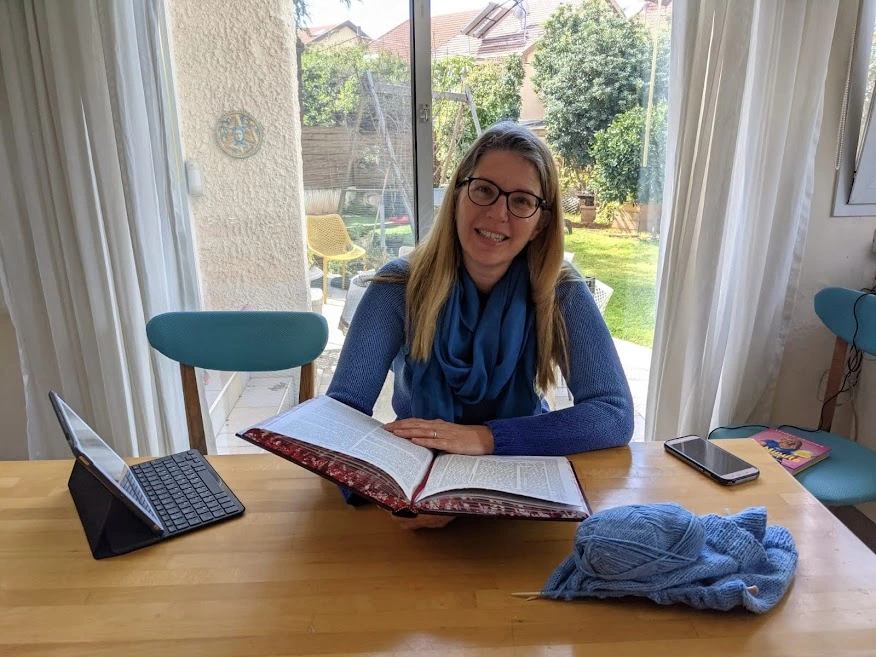
Geri Goldstein got me started learning daf yomi when I was in Israel 2 years ago. It’s been a challenge and I’ve learned a lot though I’m sure I miss a lot. I quilt as I listen and I want to share what I’ve been working on.

Rebecca Stulberg
Rebecca Stulberg

Ottawa, Canada

I started learning with rabbis. I needed to know more than the stories. My first teacher to show me “the way of the Talmud” as well as the stories was Samara Schwartz.
Michelle Farber started the new cycle 2 yrs ago and I jumped on for the ride.
I do not look back.

Jenifer Nech
Jenifer Nech

Houston, United States

I attended the Siyum so that I could tell my granddaughter that I had been there. Then I decided to listen on Spotify and after the siyum of Brachot, Covid and zoom began. It gave structure to my day. I learn with people from all over the world who are now my friends – yet most of us have never met. I can’t imagine life without it. Thank you Rabbanit Michelle.

Emma Rinberg
Emma Rinberg

Raanana, Israel

It’s hard to believe it has been over two years. Daf yomi has changed my life in so many ways and has been sustaining during this global sea change. Each day means learning something new, digging a little deeper, adding another lens, seeing worlds with new eyes. Daf has also fostered new friendships and deepened childhood connections, as long time friends have unexpectedly become havruta.

Joanna Rom
Joanna Rom

Northwest Washington, United States

I began my journey with Rabbanit Michelle more than five years ago. My friend came up with a great idea for about 15 of us to learn the daf and one of us would summarize weekly what we learned.
It was fun but after 2-3 months people began to leave. I have continued. Since the cycle began Again I have joined the Teaneck women.. I find it most rewarding in so many ways. Thank you

Dena Heller
Dena Heller

New Jersey, United States

I was exposed to Talmud in high school, but I was truly inspired after my daughter and I decided to attend the Women’s Siyum Shas in 2020. We knew that this was a historic moment. We were blown away, overcome with emotion at the euphoria of the revolution. Right then, I knew I would continue. My commitment deepened with the every-morning Virtual Beit Midrash on Zoom with R. Michelle.

Adina Hagege
Adina Hagege

Zichron Yaakov, Israel

In my Shana bet at Migdal Oz I attended the Hadran siyum hash”as. Witnessing so many women so passionate about their Torah learning and connection to God, I knew I had to begin with the coming cycle. My wedding (June 24) was two weeks before the siyum of mesechet yoma so I went a little ahead and was able to make a speech and siyum at my kiseh kallah on my wedding day!

Sharona Guggenheim Plumb

Givat Shmuel, Israel

Eruvin 70

לִיגְזַר דִּילְמָא אָתֵי לְבַטּוֹלֵי לְהוּ. קָא מַשְׁמַע לַן.

Let us issue a decree that two residents may not give away their rights in a domain, lest people come to renounce their rights in favor of two residents as well. People might assume that just as two may give away their rights to one, so too may one give away his rights to two. The mishna therefore teaches us that we do not issue such a decree.

וְאֵין נוֹטְלִין רְשׁוּת. לְמָה לִי? לָא צְרִיכָא, אַף עַל גַּב דְּאָמְרִי לֵיהּ: קְנִי עַל מְנָת לְהַקְנוֹת.

We learned in the mishna: But two may not receive rights in a domain. The Gemara poses a question: Why do I need to say this? Isn’t it superfluous? The Gemara answers: No, it is necessary to teach that rights may not be acquired even if the other residents of the courtyard say to one of the two who did not establish an eiruv: Acquire our rights in the courtyard on condition that you transfer them in turn to your friend, the other one who did not establish an eiruv. The mishna teaches that he does not become their agent and cannot transfer the rights to the other person, as he himself cannot receive such rights under these circumstances.

בְּעָא מִינֵּיהּ אַבָּיֵי מֵרַבָּה: חֲמִשָּׁה שֶׁשְּׁרוּיִין בְּחָצֵר אַחַת, וְשָׁכַח אֶחָד מֵהֶן וְלֹא עֵירַב, כְּשֶׁהוּא מְבַטֵּל רְשׁוּתוֹ צָרִיךְ לְבַטֵּל לְכׇל אֶחָד וְאֶחָד אוֹ לָא? אֲמַר לֵיהּ: צָרִיךְ לְבַטֵּל לְכׇל אֶחָד וְאֶחָד.

Abaye raised a dilemma before Rabba: If five people live in the same courtyard, and one of them forgot to join in an eiruv, when he renounces his rights in the courtyard, must he renounce them in favor of each and every one of the others or not? Rabba said to him: He must renounce his rights in favor of each and every one.

אֵיתִיבֵיהּ: אֶחָד שֶׁלֹּא עֵירַב נוֹתֵן רְשׁוּתוֹ לְאֶחָד שֶׁעֵירַב, שְׁנַיִם שֶׁעֵירְבוּ נוֹתְנִין רְשׁוּתָן לְאֶחָד שֶׁלֹּא עֵירַב, וּשְׁנַיִם שֶׁלֹּא עֵירְבוּ נוֹתְנִין רְשׁוּתָן לִשְׁנַיִם שֶׁעֵירְבוּ, אוֹ לְאֶחָד שֶׁלֹּא עֵירַב.

Abaye raised an objection from the following baraita: One resident of a courtyard who did not establish an eiruv may renounce his rights in the courtyard in favor of one who did establish an eiruv. Two courtyard residents who established an eiruv may also renounce their rights in the courtyard in favor of one who did not establish an eiruv. And similarly, two courtyard residents who did not establish an eiruv may renounce their rights in the courtyard in favor of two residents who did establish an eiruv or in favor of one resident who did not establish an eiruv.

אֲבָל לֹא אֶחָד שֶׁעֵירַב נוֹתֵן רְשׁוּתוֹ לְאֶחָד שֶׁלֹּא עֵירַב, וְאֵין שְׁנַיִם שֶׁעֵירְבוּ נוֹתְנִין רְשׁוּתָן לִשְׁנַיִם שֶׁלֹּא עֵירְבוּ, וְאֵין שְׁנַיִם שֶׁלֹּא עֵירְבוּ נוֹתְנִין רְשׁוּתָן לִשְׁנַיִם שֶׁלֹּא עֵירְבוּ.

But one courtyard resident who did establish an eiruv may not renounce his rights in the courtyard in favor of one resident who did not establish an eiruv, nor may two residents who established an eiruv renounce their rights in the courtyard in favor of two other residents who did not establish an eiruv, nor may two residents who did not establish an eiruv renounce their rights in the courtyard in favor of two residents who did not establish an eiruv.

קָתָנֵי מִיהַת רֵישָׁא: אֶחָד שֶׁלֹּא עֵירַב — נוֹתֵן רְשׁוּתוֹ לְאֶחָד שֶׁעֵירַב. הֵיכִי דָמֵי? אִי דְּלֵיכָּא אַחֲרִינָא בַּהֲדֵיהּ, בַּהֲדֵי מַאן עֵירַב?

In any event the first clause is teaching: One resident of a courtyard who did not establish an eiruv may renounce his rights in the courtyard in favor of one who did establish an eiruv. What are the circumstances surrounding this case? If there is no other resident with him, i.e., if there were only two people living in the courtyard, with whom did he, the other resident, establish an eiruv? He could not have established an eiruv on his own.

אֶלָּא פְּשִׁיטָא — דְּאִיכָּא אַחֲרִינָא בַּהֲדֵיהּ, וְקָתָנֵי: לְאֶחָד שֶׁעֵירַב!

Rather, it is obvious that there is another resident with him, apart from the one who failed to establish an eiruv, and yet it states: He may renounce his rights in the courtyard in favor of one who did establish an eiruv, which implies that it is enough for him to renounce his rights in favor of one of the residents. He does not have to renounce his rights in favor of all of them.

וְרַבָּה: הָכָא בְּמַאי עָסְקִינַן, דַּהֲוָה וּמִית.

The Gemara now asks: And how does Rabba understand this teaching? The Gemara answers: Rabba can say as follows: With what are we dealing here? This is a special case, where there was another person in the courtyard with whom he established the eiruv, but that person died in the meantime, leaving only one who established an eiruv, to whom the one who did not establish an eiruv may renounce his rights.

אִי דַּהֲוָה וּמִית — אֵימָא סֵיפָא, אֲבָל אֵין אֶחָד שֶׁעֵירַב נוֹתֵן רְשׁוּתוֹ לְאֶחָד שֶׁלֹּא עֵירַב. וְאִי דַּהֲוָה וּמִית, אַמַּאי לָא!

The Gemara raises a difficulty: If it indeed refers to a case where there was another person, but he died, say an explanation for the latter clause of the baraita: But one courtyard resident who did establish an eiruv may not renounce his rights in favor of one who did not establish an eiruv. Now if it refers to a case where there was at first another person but he died, why may the one courtyard resident not renounce his rights in the courtyard? Now there is only one other person present in the courtyard.

אֶלָּא פְּשִׁיטָא דְּאִיתֵיהּ. וּמִדְּסֵיפָא אִיתֵיהּ, רֵישָׁא נָמֵי אִיתֵיהּ.

Rather, it is obvious that there is another person present, with whom the eiruv was established. And since the latter clause of the baraita deals with a case where there is another person present, the first clause of the baraita must also be dealing with a case where there is another person present.

מִידֵּי אִירְיָא? הָא כִּדְאִיתָא, וְהָא כִּדְאִיתָא.

The Gemara rejects this proof: Is this necessarily the designation in both cases? Must the two clauses necessarily be dealing with the same case? This case as it is, and this case as it is, i.e., each clause deals with a unique set of circumstances, which need not accord with each other.

תֵּדַע, דְּקָתָנֵי סֵיפָא דְּרֵישָׁא: וּשְׁנַיִם שֶׁלֹּא עֵירְבוּ, נוֹתְנִין רְשׁוּתָן לִשְׁנַיִם שֶׁעֵירְבוּ. לִשְׁנַיִם אִין! לְאֶחָד לָא.

The Gemara adds: Know that this baraita does not only deal with one state of affairs, for the last part of the first clause teaches: And two courtyard residents who did not establish an eiruv may renounce their rights in the courtyard in favor of two residents who did establish an eiruv. It can be inferred from this that in favor of two residents, yes, they may renounce their rights, but in favor of one, no, they may not. This clearly indicates that they must renounce their rights in the courtyard in favor of both of them.

וְאַבָּיֵי אָמַר: מַאי ״לִשְׁנַיִם״ — לְאֶחָד מִשְּׁנַיִם. אִי הָכִי לִיתְנֵי: לְאֶחָד שֶׁעֵירַב אוֹ לְאֶחָד שֶׁלֹּא עֵירַב. קַשְׁיָא.

And Abaye can say: What is the meaning of in favor of two? In favor of one of the two, for this is as effective as renouncing their rights in favor of both of them. The Gemara raises a difficulty: If so, let it teach that the two courtyard residents who did not establish an eiruv may renounce their rights in the courtyard in favor of one resident who established an eiruv or in favor of one resident who did not establish an eiruv, from which one would understand that there are two present, for otherwise there could be no eiruv. The Gemara concludes: This is indeed difficult according to Abaye’s opinion, although it does not completely refute his opinion.

אֶחָד שֶׁלֹּא עֵירַב נוֹתֵן רְשׁוּתוֹ לְאֶחָד שֶׁעֵירַב. לְאַבָּיֵי דְּאִיתֵיהּ, וְקָא מַשְׁמַע לַן: דְּאֵין צָרִיךְ לְבַטֵּל רְשׁוּת לְכׇל אֶחָד וְאֶחָד. לְרַבָּה דַּהֲוָה וּמִית, וְלָא גְּזוּר זִימְנִין דְּאִיתֵיהּ.

The Gemara now explains the need for each clause of the baraita. The baraita opens: One resident of a courtyard who did not establish an eiruv may renounce his rights in favor of one who did establish an eiruv. According to Abaye, this refers to a case where there is another person present, and it teaches us that he need not renounce his rights in the courtyard in favor of each and every one of the others. According to Rabba, this refers to a case where there was another person in the courtyard, with whom he established the eiruv, but that person died in the meantime, and the novel teaching is that the Sages did not issue a decree due to the concern that sometimes that other person is still present.

וּשְׁנַיִם שֶׁעֵירְבוּ נוֹתְנִין רְשׁוּתָן לְאֶחָד שֶׁלֹּא עֵירַב. פְּשִׁיטָא? מַהוּ דְּתֵימָא כֵּיוָן דְּלָא עֵירַב — לִיקְנְסֵיהּ, קָא מַשְׁמַע לַן.

The baraita continues: Two courtyard residents who established an eiruv may renounce their rights in the courtyard in favor of one who did not establish an eiruv. The Gemara poses a question: Isn’t this obvious? What new halakha is being taught here? The Gemara answers: Lest you say that since he did not establish an eiruv, we should penalize him by insisting that he renounce his rights in their favor and not the reverse, therefore the baraita teaches us that it is permitted even for the ones who established an eiruv to renounce their rights in his favor.

וּשְׁנַיִם שֶׁלֹּא עֵירְבוּ נוֹתְנִין רְשׁוּתָן לִשְׁנַיִם שֶׁעֵירְבוּ. לְרַבָּה — תְּנָא סֵיפָא לְגַלּוֹיֵי רֵישָׁא, לְאַבָּיֵי — שְׁנַיִם שֶׁלֹּא עֵירְבוּ אִיצְטְרִיכָא לֵיהּ, סָלְקָא דַּעְתָּךְ אָמֵינָא: לִגְזַר דִּלְמָא אָתֵי לְבַטּוֹלֵי לְהוּ. קָא מַשְׁמַע לַן.

It was further taught in the baraita: And similarly, two courtyard residents who did not establish an eiruv may renounce their rights in the courtyard in favor of two residents who established an eiruv. According to Rabba, the baraita taught the latter clause to shed light on the first clause. As the latter clause teaches that one must renounce rights to every resident in the courtyard, the first clause must refer to the case where the additional resident passed away, for otherwise, he would not be able to renounce his rights to only one of the residents of the courtyard. According to Abaye, it was necessary for the mishna to teach the halakha in the case of two who did not establish an eiruv. For it could enter your mind to say that we should issue a decree determining that the two residents who did not establish an eiruv may not renounce their rights in favor of the two residents who established an eiruv, lest the two who established an eiruv come to renounce their rights in favor of the two who did not. The baraita, therefore, teaches us that we do not issue such a decree.

אוֹ לְאֶחָד שֶׁלֹּא עֵירַב. לְמָה לִי? מַהוּ דְּתֵימָא: הָנֵי מִילֵּי — הֵיכָא דְּמִקְצָתָן עֵירְבוּ וּמִקְצָתָן לֹא עֵירְבוּ. אֲבָל הֵיכָא דְּכוּלָּן לֹא עֵירְבוּ — לִיקְנְסִינְהוּ, כְּדֵי שֶׁלֹּא תִּשְׁתַּכַּח תּוֹרַת עֵירוּב, קָא מַשְׁמַע לַן.

The baraita continues: Or they may renounce their rights in favor of one who did not establish an eiruv. The Gemara poses a question: Why do I need this addition? The Gemara explains: Lest you say that these permissive rulings with regard to renunciation apply only in a case where some of the residents established an eiruv and some of them did not establish an eiruv. But in a case where none of the residents established an eiruv, we should penalize them by not allowing renunciation, so that the halakhic category of eiruv should not be forgotten by those who come after them. The baraita, therefore, teaches us that we are not concerned about this.

אֲבָל אֵין אֶחָד שֶׁעֵירַב נוֹתֵן רְשׁוּתוֹ לְאֶחָד שֶׁלֹּא עֵירַב. לְאַבָּיֵי — תְּנָא סֵיפָא לְגַלּוֹיֵי רֵישָׁא, לְרַבָּה — אַיְּידֵי דִּתְנָא רֵישָׁא תְּנָא נָמֵי סֵיפָא.

We further learned in the baraita: But one courtyard resident who did establish an eiruv may not renounce his rights in the courtyard in favor of one who did not establish an eiruv. According to Abaye, the baraita taught the latter clause to shed light on the first clause, for Abaye proves from here that a person may renounce his rights to one of the two courtyard residents, and need not renounce his rights to both of them. According to Rabba, since the baraita taught the first clause in a certain style, it also taught the latter clause in that same style, but no halakhic conclusion can be garnered from here.

וְאֵין שְׁנַיִם שֶׁעֵירְבוּ נוֹתְנִין רְשׁוּתָן לִשְׁנַיִם שֶׁלֹּא עֵירְבוּ. הָא תּוּ לְמָה לִי? לָא צְרִיכָא, דְּבַטֵּיל לֵיהּ חַד מִינַּיְיהוּ לְחַבְרֵיהּ. מַהוּ דְּתֵימָא: לִשְׁתְּרֵי לֵיהּ, קָא מַשְׁמַע לַן: כֵּיוָן דִּבְעִידָּנָא דְּבַטֵּיל לָא הֲווֹ לֵיהּ שַׁרְיוּתָא בְּהָא חָצֵר — לָא.

The baraita further states: Nor may two residents who established an eiruv renounce their rights in the courtyard in favor of two other residents who did not establish an eiruv. The Gemara raises a difficulty: Why do I need this further matter? Isn’t this statement superfluous? The Gemara answers: No, it is necessary for the case where one of the two who did not establish an eiruv subsequently renounced his rights in favor of his fellow resident. Lest you say that it should now be permitted to carry, as there is only one person left who has any rights in the courtyard and failed to establish an eiruv, therefore it teaches us that since at the time of his renunciation he was not permitted in that courtyard, he may not renounce his rights in it, and therefore carrying is prohibited for both.

וְאֵין שְׁנַיִם שֶׁלֹּא עֵירְבוּ נוֹתְנִין רְשׁוּתָן לִשְׁנַיִם שֶׁלֹּא עֵירְבוּ. הָא תּוּ לְמָה לִי? לָא צְרִיכָא, דְּאָמְרִי: קְנִי עַל מְנָת לְהִקָּנוֹת.

The baraita concludes: Nor may two residents who did not establish an eiruv renounce their rights in the courtyard in favor of two residents who did not establish an eiruv. The Gemara poses the question: Why do I need this additional matter? Isn’t it superfluous? The Gemara answers: No, it is necessary for the case where the other courtyard residents said to one of the first two who did not establish an eiruv: Acquire our rights in the courtyard on condition that you transfer them in turn to your friend, the other one who did not establish an eiruv. They attempted to appoint one of them as an agent to transfer the collective rights to the other. The baraita teaches us that this method is ineffective.

בְּעָא מִינֵּיהּ רָבָא מֵרַב נַחְמָן: יוֹרֵשׁ מַהוּ שֶׁיְּבַטֵּל רְשׁוּת.

Rava raised a dilemma before Rav Naḥman: With regard to an heir, what is the halakha regarding whether he may renounce rights in a courtyard? If a person who had forgotten to establish an eiruv died on Shabbat, may his heir renounce his rights in his stead?

הֵיכָא דְּאִי בָּעֵי לְעָרוֹבֵי מֵאֶתְמוֹל מָצֵי מְעָרֵב — בַּטּוֹלֵי נָמֵי מָצֵי מְבַטֵּל, אֲבָל הַאי כֵּיוָן דְּאִי בָּעֵי לְעָרוֹבֵי מֵאֶתְמוֹל — לָא מָצֵי מְעָרֵב, לָא מָצֵי מְבַטֵּל.

The Gemara explains the two sides of the question: On the one hand, perhaps only in a case where, if the person wanted to establish an eiruv on the previous day he could have established an eiruv, he can also renounce his rights on Shabbat. But this heir, since, if he wanted to establish an eiruv the previous day he could not have established an eiruv, as he was not then a resident of the courtyard, therefore, today he cannot renounce his rights either.

אוֹ דִּלְמָא: יוֹרֵשׁ כַּרְעֵיהּ דַּאֲבוּהּ הוּא?

Or perhaps an heir is like his father’s foot, i.e., he is considered an extension of his father and substitutes for him in all regards, which means that just as his father could have renounced his rights, so can he.

אֲמַר לֵיהּ: אֲנִי אוֹמֵר מְבַטֵּל, וְהָנֵי דְּבֵי שְׁמוּאֵל תָּנוּ אֵין מְבַטֵּל. אֵיתִיבֵיהּ: זֶה הַכְּלָל, כׇּל שֶׁמּוּתָּר לְמִקְצָת שַׁבָּת — הוּתַּר לְכׇל הַשַּׁבָּת, וְכׇל שֶׁנֶּאְסַר לְמִקְצָת שַׁבָּת — נֶאְסַר לְכׇל הַשַּׁבָּת חוּץ מִמְּבַטֵּל רְשׁוּת.

Rav Naḥman said to him: I myself say that an heir can indeed renounce rights in a courtyard, while those scholars of the school of Shmuel taught: He cannot renounce rights in a courtyard. Rava raised an objection to Rav Naḥman from the following baraita: This is the principle: Anything that is permitted for part of Shabbat is permitted for all of Shabbat, and anything that is prohibited for part of Shabbat is prohibited for all of Shabbat, apart from one who renounces his rights in a courtyard, for renunciation can provide an allowance halfway through Shabbat.

כׇּל שֶׁהוּתַּר לְמִקְּצָת שַׁבָּת, מוּתָּר לְכׇל הַשַּׁבָּת — כְּגוֹן עֵירַב דֶּרֶךְ הַפֶּתַח, וְנִסְתַּם הַפֶּתַח. עֵירַב דֶּרֶךְ חַלּוֹן, וְנִסְתַּם חַלּוֹן.

The Gemara now explains each element of the baraita: Anything that is permitted for part of Shabbat is permitted for all of Shabbat. For example, if an eiruv was established between two adjacent courtyards that are connected via an opening between them, and that opening was closed up on Shabbat, the eiruv is valid. Alternately, if an eiruv was established between the two courtyards that are connected via a window opening from one to the other, and that window was closed up on Shabbat, the eiruv is valid. As carrying from one courtyard to another was permitted at the beginning of Shabbat, it is permitted throughout Shabbat.

זֶה הַכְּלָל — לְאֵתוֹיֵי מָבוֹי שֶׁנִּיטְּלוּ קוֹרוֹתָיו אוֹ לְחָיָיו.

The Gemara comments: The words this is the principle come to include the case of an alleyway whose cross beams or side posts were removed on Shabbat, teaching that one may nonetheless use the alleyway, as it had been permitted at the outset of Shabbat.

כׇּל שֶׁנֶּאְסַר לְמִקְצָת שַׁבָּת, נֶאְסַר לְכׇל הַשַּׁבָּת כּוּלָּהּ — כְּגוֹן שְׁנֵי בָתִּים בִּשְׁנֵי צִידֵּי רְשׁוּת הָרַבִּים, וְהִקִּיפוּם גּוֹיִם מְחִיצָה בְּשַׁבָּת.

The Gemara continues its explanation of the baraita: Anything that is prohibited for part of Shabbat is prohibited for all of Shabbat. For example, if there were two houses on two sides of a public domain, which gentiles enclosed with a wall on Shabbat, the enclosed area remains prohibited. Even though a partition of this kind is considered a proper one with regard to Shabbat domains, it is prohibited to carry objects from either house into the enclosed area, even if the owner of the first house renounces his rights in the area in favor of the owner of the second house, as they could not have established an eiruv between them before Shabbat.

זֶה הַכְּלָל לְאֵתוֹיֵי מַאי? לְאֵתוֹיֵי מֵת גּוֹי בְּשַׁבָּת.

The Gemara asks: What do the words this is the principle come to include in this part of the baraita? The Gemara answers: It comes to include the case of a gentile resident of the courtyard who died on Shabbat without having rented out his domain to a Jew for the purpose of an eiruv. In this case, the Jewish neighbors are prohibited from carrying in the courtyard. Because it was prohibited to establish an eiruv the previous day, carrying in the courtyard continues to be prohibited on Shabbat, even though the gentile is now deceased.

וְקָתָנֵי: חוּץ מִמְּבַטֵּל רְשׁוּת. אִיהוּ — אִין, יוֹרֵשׁ — לָא.

And the baraita teaches: Apart from one who renounces his rights in a courtyard, which teaches that a person may renounce his rights in a courtyard even on Shabbat, despite the fact that the courtyard was prohibited prior to his renunciation. The Gemara infers: He himself, i.e., the original owner, yes, he may renounce his rights even on Shabbat, but with regard to his heir, no, he may not renounce his rights on Shabbat, which contradicts Rav Naḥman’s opinion.

אֵימָא: חוּץ מִתּוֹרַת בִּיטּוּל רְשׁוּת.

Rav Naḥman replied: Say that the baraita must be understood as follows: Apart from anyone who falls into the halakhic category of one who renounces his rights in a domain. In other words, the baraita is not referring to a particular person who renounces his rights, but rather to the category of renunciation in general, which includes an heir.

אֵיתִיבֵיהּ: אֶחָד מִבְּנֵי חָצֵר שֶׁמֵּת, וְהִנִּיחַ רְשׁוּתוֹ לְאֶחָד מִן הַשּׁוּק, מִבְּעוֹד יוֹם — אוֹסֵר, מִשֶּׁחָשֵׁיכָה — אֵינוֹ אוֹסֵר.

Rava raised a further objection to the opinion of Rav Naḥman from a different baraita: If a resident of a courtyard died and left his domain, the use of his house, to one from the marketplace, i.e., a non-resident of the courtyard, the following distinction applies: If he died while it was still day, i.e., before Shabbat, the one from the marketplace renders carrying prohibited, for it is assumed that he received his portion before the onset of Shabbat and should have joined in an eiruv with the others. Since he failed to establish an eiruv with the other residents of the courtyard, he renders carrying prohibited in the entire courtyard. If, however, he died after nightfall, he does not render carrying prohibited, for so long as it was permitted to carry for part of Shabbat it remains permitted for the entirety of Shabbat.

וְאֶחָד מִן הַשּׁוּק שֶׁמֵּת וְהִנִּיחַ רְשׁוּתוֹ לְאֶחָד מִבְּנֵי חָצֵר, מִבְּעוֹד יוֹם — אֵינוֹ אוֹסֵר, מִשֶּׁחָשֵׁיכָה — אוֹסֵר.

And alternatively, if one from the marketplace who owned a residence in the courtyard but did not dwell there died and left his domain to a resident of the courtyard who does live there and usually joins in an eiruv with his neighbors, the following distinction applies: If the person from the marketplace died while it was still day, i.e., before Shabbat, the courtyard resident does not render carrying prohibited, as when he establishes his eiruv it includes his new residence as well. If, however, the person from the marketplace died after nightfall without having established an eiruv, the deceased renders carrying prohibited. As this residence was prohibited at the beginning of Shabbat, it can no longer be permitted on that Shabbat.

אַמַּאי אוֹסֵר? נִיבַטֵּיל! מַאי ״אוֹסֵר״ נָמֵי דְּקָתָנֵי — עַד שֶׁיְּבַטֵּל.

Rava’s question is based on the first case discussed in the baraita: According to Rav Naḥman, why does the heir render carrying prohibited in this case? Let him renounce his rights in the courtyard to the other residents, as Rav Naḥman maintains that an heir may renounce rights. Rav Naḥman replied: What is the meaning of the word prohibits that the baraita teaches here? It means he renders carrying prohibited until he renounces his rights, i.e., although there is no way of rectifying the situation by means of an eiruv, it can be corrected by way of renunciation.

תָּא שְׁמַע: יִשְׂרָאֵל וְגֵר שְׁרוּיִין בִּמְגוּרָה אַחַת, וּמֵת גֵּר מִבְּעוֹד יוֹם,

Come and hear a different proof challenging Rav Naḥman’s opinion, from the following baraita: If a Jew and a convert were living in a single residency comprised of several rooms, and the convert died childless while it was still day, such a convert has no heirs, and therefore the first to take possession of his property acquires it.

Want to follow content and continue where you left off?

Create an account today to track your progress, mark what you’ve learned, and follow the shiurim that speak to you.

Clear all items from this list?

This will remove ALL the items in this section. You will lose any progress or history connected to them. This is irreversible.

Cancel
Yes, clear all

Are you sure you want to delete this item?

You will lose any progress or history connected to this item.

Cancel
Yes, delete