Search

Kiddushin 14

Want to dedicate learning? Get started here:

English
עברית
podcast placeholder

0:00
0:00


podcast placeholder

0:00
0:00


Summary

From where do we derive the ways in which a yevama is acquired (intercourse) and freed (chalitza or death of the yabam) from her first husband’s brother? From where do we learn that a married woman is not released through chalitza and a yevama is not released by a get? How is a Jewish slave acquired and freed? How is a Jewish maidservant acquired and freed? How is a Jewish slave who gets his ear pierced in order to enable his to stay with his master beyond the six years acquired and freed? There are four types of Jewish slaves mentioned in the Torah – 1. One sold by the court (if he/she stole and did not have the money to repay the owner); 2. One who sold oneself out of poverty to a Jew; 3. One who sold oneself out of poverty to a gentile; 4. a maidservant sold by her father. From where do we derive that each type of Jewish slave is acquired by money?


Kiddushin 14

״יְבָמָהּ יָבֹא עָלֶיהָ וּלְקָחָהּ לוֹ לְאִשָּׁה״. וְאֵימָא, לְכוּלַּהּ מִילְּתָא כְּאִשָּׁה! לָא סָלְקָא דַּעְתָּךְ, דְּתַנְיָא: יָכוֹל יְהוּ כֶּסֶף וּשְׁטָר גּוֹמְרִים בָּהּ, כְּדֶרֶךְ שֶׁהַבִּיאָה גּוֹמֶרֶת בָּהּ? תַּלְמוּד לוֹמַר: ״וְיִבְּמָהּ״ – בִּיאָה גּוֹמֶרֶת בָּהּ וְאֵין כֶּסֶף וּשְׁטָר גּוֹמְרִים בָּהּ.

“Her brother-in-law will engage in sexual intercourse with her and take her to him as a wife, and perform levirate marriage with her” (Deuteronomy 25:5), which indicates that intercourse renders her his wife. The Gemara asks: But one can say that with regard to all matters she is like a wife, and therefore she can also be acquired with money or a document like any other woman. The Gemara answers: It could not enter your mind to say this, as it is taught in a baraita: One might have thought that money and a document can complete the acquisition of a yevama and cause her to be married, in the manner that intercourse completes her acquisition. Therefore, the verse states: “And perform levirate marriage with her” (Deuteronomy 25:5), which indicates that only intercourse completes her acquisition, but money or a document do not complete her acquisition.

וְאֵימָא: מַאי ״וְיִבְּמָהּ״? דִּבְעַל כֻּרְחַהּ מְיַבֵּם. אִם כֵּן, לֵימָא קְרָא: ״וְיִבֵּם״, מַאי ״וְיִבְּמָהּ״? שָׁמְעַתְּ מִינַּהּ תַּרְתֵּי.

The Gemara asks: But one can say: What is the meaning of: “And perform levirate marriage with her”? It teaches that he can perform levirate marriage without her consent, as unlike an ordinary marriage, a levirate marriage does not require the woman’s agreement. The Gemara answers: If so, let the verse say: And perform levirate marriage, and one would understand that the matter depends entirely on him. What is the meaning of: “And perform levirate marriage with her”? Learn two conclusions from this: First, that a levirate marriage can be performed against her will, and second, that the only way to acquire a yevama is through sexual intercourse.

בַּחֲלִיצָה. מְנָלַן? דִּכְתִיב: ״וְנִקְרָא שְׁמוֹ בְּיִשְׂרָאֵל בֵּית חֲלוּץ הַנָּעַל״ – כֵּיוָן שֶׁחָלַץ בָּהּ נַעַל, הוּתְּרָה לְכׇל יִשְׂרָאֵל.

§ The mishna teaches that the yevama acquires herself through ḥalitza. The Gemara asks: From where do we derive this halakha? The Gemara answers: As it is written with regard to levirate marriage, after the yavam has performed ḥalitza: “And his name shall be called in Israel: The house of him who had his shoe removed” (Deuteronomy 25:10). This indicates: Once his shoe is removed by her, she is permitted to all of Israel.

הַאי ״יִשְׂרָאֵל״ לְהָכִי הוּא דַּאֲתָא? הַאי מִיבְּעֵי לֵיהּ לְכִדְתָנֵי רַב שְׁמוּאֵל בַּר יְהוּדָה: ״בְּיִשְׂרָאֵל״ – בְּבֵית דִּין שֶׁל יִשְׂרָאֵל, וְלֹא בְּבֵית דִּין שֶׁל נׇכְרִים! תְּרֵי ״בְּיִשְׂרָאֵל״ כְּתִיבִי.

The Gemara asks: This term Israel,” does it come to teach this halakha? It is required for that which is taught by Rav Shmuel bar Yehuda: The verse says “in Israel to teach that ḥalitza may be performed only in a Jewish court, but not in a gentile court. The Gemara answers that the phrase “in Israel” is written twice in that chapter: “And his name shall be called in Israel” (Deuteronomy 25:10), and: “To establish a name for his brother in Israel” (Deuteronomy 25:7). A different halakha is derived from each of these instances.

וְאַכַּתִּי מִיבְּעֵי לֵיהּ לְכִדְתַנְיָא, אָמַר רַבִּי יְהוּדָה: פַּעַם אַחַת הָיִינוּ יוֹשְׁבִים לִפְנֵי רַבִּי טַרְפוֹן, וּבָאתָה יְבָמָה לַחְלוֹץ, וְאָמַר לָנוּ: עֲנוּ כּוּלְּכֶם וְאִמְרוּ: ״חֲלוּץ הַנַּעַל, חֲלוּץ הַנַּעַל״. הָהוּא, מִ״וְּנִקְרָא שְׁמוֹ״ נָפְקָא.

The Gemara asks: But still, we also require the additional term “in Israelfor that which is taught in a baraita, that Rabbi Yehuda said: Once we were sitting before Rabbi Tarfon and a yevama came to perform ḥalitza. And Rabbi Tarfon said to us after the ḥalitza: All of you should answer and say: The one whose shoe was removed, the one whose shoe was removed. This indicates that the phrase: “And his name shall be called in Israel” (Deuteronomy 25:10), teaches that the matter must be announced and publicized throughout the nation. The Gemara answers: That halakha is not derived from the phrase “in Israel.” Rather, it is derived from: “And his name shall be called,” which indicates that it must be announced that this is his name.

וּבְמִיתַת הַיָּבָם. מְנָלַן? קַל וָחוֹמֶר: וּמָה אֵשֶׁת אִישׁ שֶׁהִיא בְּחֶנֶק – מִיתַת הַבַּעַל מַתִּירָתָהּ, יְבָמָהּ שֶׁהִיא בְּלָאו – לֹא כׇּל שֶׁכֵּן?

§ The mishna further teaches that a yevama is released from levirate marriage and may remarry through the death of the yavam. The Gemara asks: From where do we derive this halakha? The Gemara answers that it is an a fortiori inference: If, with regard to a married woman, who is forbidden to other men by a prohibition punished with strangulation, and yet the death of her husband renders her permitted, is it not all the more so that with regard to a yevama, who is forbidden to other men while the yavam is alive by only a mere prohibition, that the death of the yavam should render her permitted?

מָה לְאֵשֶׁת אִישׁ, שֶׁכֵּן יוֹצְאָה בְּגֵט, תֹּאמַר בְּזוֹ שֶׁאֵינָהּ יוֹצְאָה בְּגֵט! הָא נָמֵי יוֹצְאָה בַּחֲלִיצָה.

The Gemara raises a difficulty against this a fortiori inference: What is unique about a married woman is that she can leave through a bill of divorce as well. Will you say the same with regard to this yevama, who does not leave through a bill of divorce? The Gemara answers: This is an insufficient refutation of the a fortiori inference, as this yevama also leaves through ḥalitza, which serves the same function as a bill of divorce.

אֶלָּא: מָה לְאֵשֶׁת אִישׁ שֶׁכֵּן אוֹסְרָהּ מַתִּירָהּ! אָמַר רַב אָשֵׁי: הָא נָמֵי אוֹסְרָהּ מַתִּירָהּ – יָבָם אוֹסְרָהּ, יָבָם שָׁרֵי לַהּ.

Rather, one can challenge this a fortiori inference in the following manner. What is unique about a married woman is that the one who renders her forbidden to everyone else, i.e., her husband, also renders her permitted when he dies. This is not so with regard to a yevama, as she is rendered forbidden upon the death of her husband. Rav Ashi said: With regard to this yevama as well, he who renders her forbidden is also the one who renders her permitted: The yavam renders her forbidden, because if he was not alive she would automatically be permitted to other men. Likewise, the yavam renders her permitted through ḥalitza.

וּתְהֵא אֵשֶׁת אִישׁ יוֹצְאָה בַּחֲלִיצָה מִקַּל וָחוֹמֶר: וּמָה יְבָמָה שֶׁאֵינָהּ יוֹצְאָה בְּגֵט – יוֹצְאָה בַּחֲלִיצָה, זוֹ, שֶׁיּוֹצְאָה בְּגֵט – אֵינוֹ דִּין שֶׁיּוֹצְאָה בַּחֲלִיצָה? אָמַר קְרָא: ״סֵפֶר כְּרִיתֻת״ – סֵפֶר כּוֹרְתָהּ, וְאֵין דָּבָר אַחֵר כּוֹרְתָהּ.

The Gemara asks: And let a married woman leave a marriage through ḥalitza, as derived by an a fortiori inference: If a yevama, who cannot leave through a bill of divorce, can leave through ḥalitza, is it not logical that this married woman, who can leave through a bill of divorce, can likewise leave through ḥalitza? The Gemara answers: The verse states with regard to a married woman: “A scroll of severance” (Deuteronomy 24:3), which indicates that a scroll, i.e., a written document, severs her from her husband and nothing else severs her from him. While the husband is alive only a bill of divorce can dissolve a marriage.

וּתְהֵא יְבָמָה יוֹצֵאת בְּגֵט מִקַּל וָחוֹמֶר: וּמָה אֵשֶׁת אִישׁ שֶׁאֵין יוֹצְאָה בַּחֲלִיצָה – יוֹצְאָה בְּגֵט, זוֹ שֶׁיּוֹצְאָה בַּחֲלִיצָה – אֵין דִּין שֶׁיּוֹצְאָה בְּגֵט? אָמַר קְרָא: ״כָּכָה״, וְ״כָכָה״ עִיכּוּבָא.

The Gemara further asks: And let a yevama leave through a bill of divorce, as derived by an a fortiori inference: If a married woman, who cannot leave through ḥalitza, can leave through a bill of divorce, is it not logical that this yevama, who can leave through ḥalitza, can also leave through a bill of divorce? The Gemara answers: The verse states: “So shall it be done to the man” (Deuteronomy 25:9), with regard to the ḥalitza of a yevama, and “so” precludes another option.

וְכֹל הֵיכָא דְּאִיכָּא עִיכּוּבָא לָא דָּרְשִׁי קַל וָחוֹמֶר? וְהָא יוֹם הַכִּפּוּרִים דִּכְתִיב: ״גּוֹרָל״, וְ״חוּקָּה״,

The Gemara asks: And is it true that anywhere that there is a term that precludes another option one cannot learn an a fortiori inference? But there is the case of the designation of the goats on Yom Kippur, as it is written: “The goat upon which the lot came up for the Lord” (Leviticus 16:9), and: “This shall be an everlasting statute to you” (Leviticus 16:34), which indicates that everything stated with regard to the mitzvot of Yom Kippur is critical to the performance of the service of the day.

וְתַנְיָא: ״וְעָשָׂהוּ חַטָּאת״ – הַגּוֹרָל עוֹשֶׂה חַטָּאת, וְאֵין הַשֵּׁם עוֹשֶׂה חַטָּאת.

And it is taught in a baraita that the verse states: “Aaron shall bring forward the goat upon which the lot came up for the Lord, and he shall offer it for a sin-offering” (Leviticus 16:9). The verse indicates that the lottery renders it a sin-offering, but a verbal designation of the goat with the status of a sin-offering does not render it a sin-offering.

שֶׁיָּכוֹל, וַהֲלֹא דִּין הוּא: וּמָה בִּמְקוֹם שֶׁלֹּא קִידֵּשׁ הַגּוֹרָל – קִידֵּשׁ הַשֵּׁם, מְקוֹם שֶׁקִּידֵּשׁ הַגּוֹרָל – אֵינוֹ דִּין שֶׁיְּקַדֵּשׁ הַשֵּׁם?

The baraita continues: A verse is necessary to teach this halakha, as one might have thought that the opposite conclusion is correct: Could this not be derived through an a fortiori inference, as follows: Just as in a case in which the use of a lottery does not effect the consecration of the animals with a specific designation, e.g., with regard to a woman who has given birth and must bring two birds, one as a sin-offering and one as a burnt-offering, and nevertheless a verbal designation of the animals with the required status does effect the consecration of them, so too, in a case in which the use of a lottery does effect the consecration of the animals, is it not logically right that a verbal designation of the animals with the required status should effect the consecration of them?

תַּלְמוּד לוֹמַר: ״וְעָשָׂהוּ חַטָּאת״ – הַגּוֹרָל עוֹשֶׂה חַטָּאת וְאֵין הַשֵּׁם עוֹשֶׂה חַטָּאת. וְטַעְמָא דְּמַעֲטֵיהּ קְרָא, הָא לָאו הָכִי דָּרְשִׁינַן קַל וָחוֹמֶר, אַף עַל גַּב דִּכְתִיב בֵּיהּ ״חוּקָּה״!

To counter this reasoning, the verse states with regard to the goat: “He shall offer it for a sin-offering” (Leviticus 16:9), to indicate that the lottery renders it a sin-offering, but a verbal designation of the goat with the status of a sin-offering does not render it a sin-offering. And the reason that a verbal designation is ineffective is that the verse excluded this possibility, from which it may be inferred that if it were not so, one would learn an a fortiori inference, even though it is written with regard to it “statute.” The same logic should apply in the case of ḥalitza, i.e., the term “so” should not prevent one from learning an a fortiori inference, and therefore it might be argued that a yevama can be released through a bill of divorce.

אָמַר קְרָא: ״לָהּ״, ״לָהּ״ – וְלֹא לִיבָמָהּ. וְאֵימָא ״לָהּ״ לִשְׁמָהּ!

Rather, the Gemara explains that here too, there is a limitation derived from a verse. The verse states with regard to a bill of divorce: “And write for her a scroll of severance” (Deuteronomy 24:3). “For her” is a limitation, which teaches: A bill of divorce is effective for a regular woman but not for a yevama. The Gemara asks: But one can say that the phrase “for her” indicates that the bill of divorce must be written for her sake.

תְּרֵי ״לָהּ״ כְּתִיבִי. וְאַכַּתִּי מִיבְּעֵי לֵיהּ חַד ״לָהּ״ לִשְׁמָהּ, וְאִידָּךְ ״לָהּ״ – וְלֹא לָהּ וְלַחֲבֶירְתָּהּ!

The Gemara answers: “For her” is written twice (Deuteronomy 24:1, 3), and therefore both halakhot can be derived. The Gemara asks: And still, one instance of: “For her” is required to teach that the bill of divorce must be written for her sake, and the other “for her” is needed to teach: For her and not both for her and for another, i.e., her rival wife. One bill of divorce cannot be used for two women.

אֶלָּא, אָמַר קְרָא: ״נָעַל״ – נַעַל אִין, מִידֵּי אַחֲרִינָא – לָא.

Rather, the Gemara suggests a different explanation as to why a bill of divorce is ineffective for a yevama. With regard to a yevama the verse states: “The house of him who had his shoe removed” (Deuteronomy 25:10), which teaches: If she is released by the ḥalitza of the shoe, yes, she is released from the yavam, but if she was released by means of something else, no, she is not released.

וְהַאי ״נָעַל״ לְהָכִי הוּא דַּאֲתָא? הַאי מִיבְּעֵי לֵיהּ לְכִדְתַנְיָא: ״נַעֲלוֹ״ – אֵין לִי אֶלָּא נַעֲלוֹ, נַעַל שֶׁל כׇּל אָדָם מְנָא לֵיהּ?

The Gemara asks: But this term “shoe,” does it come to teach this? It is necessary for that which is taught in a baraita: The verse said: “And remove his shoe” (Deuteronomy 25:9). I have derived only that his shoe may be used. From where do I derive that the shoe of any person may also be used for ḥalitza?

תַּלְמוּד לוֹמַר: ״נַעַל״ ״נַעַל״ – רִיבָּה. אִם כֵּן מָה תַּלְמוּד לוֹמַר ״נַעֲלוֹ״? – נַעֲלוֹ הָרָאוּי לוֹ, פְּרָט לְגָדוֹל שֶׁאֵין יָכוֹל לְהַלֵּךְ בּוֹ, פְּרָט לְקָטָן שֶׁאֵין חוֹפֶה אֶת רוֹב רַגְלוֹ, פְּרָט

The verse states “shoe,” and states again in the next verse “shoe,” which includes any other shoe. If so, what is the meaning when the verse states “his shoe,” which is apparently referring to the shoe of that particular man? This teaches that it must be his shoe that is fit for him, excluding a shoe so large that he cannot walk in it, and excluding a shoe so small that it does not cover most of his foot, and excluding

לִמְסוּלְיָם שֶׁאֵין לוֹ עָקֵב! אִם כֵּן נִיכְתּוֹב קְרָא ״נָעַל״, מַאי ״הַנָּעַל״? שָׁמְעַתְּ מִינַּהּ תַּרְתֵּי.

sandals [mesulayim] that have no heels, which do not qualify as shoes. The Gemara answers: If so, that the term is stated only for that purpose, let the verse write “shoe.” What is the meaning of “the shoe”? Learn the two previously stated conclusions from it.

מַתְנִי׳ עֶבֶד עִבְרִי נִקְנֶה בְּכֶסֶף וּבִשְׁטָר, וְקוֹנֶה עַצְמוֹ בְּשָׁנִים, וּבַיּוֹבֵל, וּבְגִרְעוֹן כֶּסֶף. יְתֵירָה עָלָיו אָמָה הָעִבְרִיָּה שֶׁקּוֹנָה אֶת עַצְמָהּ בְּסִימָנִין. הַנִּרְצָע, נִקְנֶה בִּרְצִיעָה, וְקוֹנֶה אֶת עַצְמוֹ בַּיּוֹבֵל, וּבְמִיתַת הָאָדוֹן.

MISHNA: A Hebrew slave can be acquired by his master through money or through a document, and he can acquire himself, i.e., he is emancipated, through years, i.e., when he completes his six years of labor, or through the advent of the Jubilee Year, or through the deduction of money. The slave can redeem himself during the six years by paying for his remaining years of slavery. A Hebrew maidservant has one mode of emancipation more than him, as she acquires herself through signs indicating puberty. A slave who is pierced after serving six years is acquired as a slave for a longer period through piercing his ear with an awl, and he acquires himself through the advent of the Jubilee Year or through the death of the master.

גְּמָ׳ עֶבֶד עִבְרִי נִקְנֶה בְּכֶסֶף. מְנָלַן? אָמַר קְרָא: ״מִכֶּסֶף מִקְנָתוֹ״ – מְלַמֵּד שֶׁנִּקְנֶה בְּכֶסֶף. אַשְׁכְּחַן עֶבֶד עִבְרִי הַנִּמְכָּר לְנׇכְרִי, הוֹאִיל וְכׇל קִנְיָנוֹ בְּכֶסֶף,

GEMARA: The mishna teaches that a Hebrew slave can be acquired through money. The Gemara asks: From where do we derive this halakha? The Gemara answers that the verse states: “Out of the money that he was bought for” (Leviticus 25:51), which teaches that he can be acquired through money. The Gemara asks: We found that a Hebrew slave who is sold to a gentile is acquired with money, which is the case discussed in that verse, but this proves nothing with regard to a Jew sold to a Jew. One could argue that since all of the acquisitions of a gentile are performed only with money, he can likewise purchase a Hebrew slave with money.

נִמְכָּר לְיִשְׂרָאֵל מְנָלַן? אָמַר קְרָא: ״וְהׇפְדֵּה״ – מְלַמֵּד שֶׁמְּגָרַעַת פִּדְיוֹנָהּ, וְיוֹצְאָה.

But from where do we derive that a Hebrew slave can be sold to a Jew with money? The Gemara explains that with regard to a Hebrew maidservant, the verse states: “Then he shall let her be redeemed” (Exodus 21:8), which teaches that if she acquires money and wishes to be emancipated before her time is complete, she deducts a sum from her redemption. The maidservant can deduct the value of time served from her purchase price and pay the remaining amount, and she then is emancipated. This teaches that a Hebrew maidservant is acquired through money, a halakha that applies to a male slave as well.

אַשְׁכְּחַן אָמָה הָעִבְרִיָּה, הוֹאִיל וּמִיקַּדְּשָׁה בְּכֶסֶף – מִיקַּנְיָא בְּכֶסֶף, עֶבֶד עִבְרִי מְנָלַן? אָמַר קְרָא: ״כִּי יִמָּכֵר לְךָ אָחִיךָ הָעִבְרִי אוֹ הָעִבְרִיָּה וַעֲבָדְךָ שֵׁשׁ שָׁנִים״ – מַקִּישׁ עִבְרִי לְעִבְרִיָּה.

The Gemara asks: Although we found this halakha with regard to a Hebrew maidservant, one cannot extrapolate from there to this case, as it is possible that it applies only to a female. The reason for this is that since she is ordinarily betrothed through money, she can also be acquired as a maidservant through money. From where do we derive that a Hebrew slave can likewise be acquired through money? The Gemara answers that the verse states: “If your brother, a Hebrew man, or a Hebrew woman is sold to you, and he shall serve you six years” (Deuteronomy 15:12). This verse juxtaposes a Hebrew man to a Hebrew woman, indicating that the modes through which they are acquired are the same.

אַשְׁכְּחַן מְכָרוּהוּ בֵּית דִּין, הוֹאִיל וְנִמְכָּר בְּעַל כּוֹרְחוֹ, מוֹכֵר עַצְמוֹ מְנָלַן?

The Gemara further asks: We found a source in this verse for a slave who is sold by the court. This verse is referring to a thief who is unable to repay the value of his theft and is sold as a slave so that he can repay his debt. One can therefore argue that this case is unique, since he is sold against his will. From where do we derive that one who sells himself can be sold through money?

יָלֵיף ״שָׂכִיר״ ״שָׂכִיר״. הָנִיחָא לְמַאן דְּיָלֵיף ״שָׂכִיר״ ״שָׂכִיר״, אֶלָּא לְמַאן דְּלָא יָלֵיף ״שָׂכִיר״ ״שָׂכִיר״, מַאי אִיכָּא לְמֵימַר?

The Gemara answers: One derives this through a verbal analogy between the terms “hired worker” and “hired worker.” This term appears both with regard to one who sells himself: “As a hired worker and as a settler he shall be with you” (Leviticus 25:40), and with regard to one who is sold by the court: “For double of the hire of a hired worker he has served you” (Deuteronomy 15:18). The Gemara asks: This works out well according to the one who derives this verbal analogy between the terms “hired worker” and “hired worker.” But according to the one who does not derive the verbal analogy between “hired worker” and “hired worker,” what can be said? From where does he derive that one who sells himself may be purchased with money?

אָמַר קְרָא: ״וְכִי תַשִּׂיג״ – מוּסָף עַל עִנְיָן רִאשׁוֹן, וְיִלְמַד עֶלְיוֹן מִתַּחְתּוֹן.

The Gemara answers: The verse states at the start of the passage dealing with one sold to a gentile: “And if a stranger who is a settler with you becomes rich” (Leviticus 25:47). The conjunction “and” serves to add to the first matter, i.e., the passage discussing one who sells himself to a Jew, as it joins the two issues. And therefore let the above case of one who sells himself to a Jew be derived from the case below of one who is sold to a gentile: Just as one who is sold to a gentile can be acquired with money, so too, one who sells himself to a Jew can be acquired with money.

וּמַאן תַּנָּא דְּלָא יָלֵיף ״שָׂכִיר״ ״שָׂכִיר״? הַאי תַּנָּא הוּא, דְּתַנְיָא: הַמּוֹכֵר עַצְמוֹ נִמְכָּר לְשֵׁשׁ, וְיָתֵר עַל שֵׁשׁ, מְכָרוּהוּ בֵּית דִּין – אֵינוֹ נִמְכָּר אֶלָּא לְשֵׁשׁ.

The Gemara comments: And who is the tanna who does not derive the verbal analogy between “hired worker” and “hired worker”? It is this tanna, as it is taught in a baraita: One who sells himself as a slave is sold for six years, and if he wishes he can be sold for more than six years, whereas one who is sold by the court is sold only for six years, but no more.

הַמּוֹכֵר עַצְמוֹ אֵינוֹ נִרְצָע, מְכָרוּהוּ בֵּית דִּין – נִרְצָע. מוֹכֵר עַצְמוֹ אֵין מַעֲנִיקִים לוֹ, מְכָרוּהוּ בֵּית דִּין – מַעֲנִיקִים לוֹ. הַמּוֹכֵר עַצְמוֹ אֵין רַבּוֹ מוֹסֵר לוֹ שִׁפְחָה כְּנַעֲנִית, מְכָרוּהוּ בֵּית דִּין – רַבּוֹ מוֹסֵר לוֹ שִׁפְחָה כְּנַעֲנִית.

The baraita adds that there are additional differences between these two slaves: One who sells himself may not be pierced with an awl, whereas one who is sold by the court may be pierced with an awl. One who sells himself is not granted a severance gift by his master when he is emancipated, whereas one who is sold by the court is granted a severance gift. With regard to one who sells himself, his master may not provide him with a Canaanite maidservant as a wife to produce slave children, whereas with regard to one sold by the court, his master may provide him with a Canaanite maidservant.

רַבִּי אֶלְעָזָר אוֹמֵר: זֶה וָזֶה אֵינוֹ נִמְכָּר אֶלָּא לְשֵׁשׁ, זֶה וָזֶה נִרְצָע, וָזֶה וָזֶה מַעֲנִיקִים לוֹ, וְזֶה וָזֶה רַבּוֹ מוֹסֵר לוֹ שִׁפְחָה כְּנַעֲנִית. מַאי לָאו בְּהָא קָמִיפַּלְגִי, דְּתַנָּא קַמָּא לָא יָלֵיף ״שָׂכִיר״ ״שָׂכִיר״, וְרַבִּי אֶלְעָזָר יָלֵיף ״שָׂכִיר״ ״שָׂכִיר״?

Rabbi Elazar says that there is no difference between these two types of slaves. Rather, both this slave and that slave may be sold for only six years; both this and that one may be pierced with an awl, both this and that one are granted a severance gift, and in both this case and that case his master may provide him with a Canaanite maidservant. What, is it not the case that they disagree with regard to this, that the first tanna does not derive the verbal analogy between “hired worker” and “hired worker,” and Rabbi Elazar derives the verbal analogy between “hired worker” and “hired worker”? If one holds that the two cases are juxtaposed, one will equate the halakhot of both slaves. This is the opinion of Rabbi Elazar, in contrast to the opinion of the first tanna, who holds that the halakhot of each type of slave are discrete.

אָמַר רַב טָבְיוֹמֵי מִשְּׁמֵיהּ דְּאַבָּיֵי: דְּכוּלֵּי עָלְמָא יָלֵיף ״שְׂכִיר״ ״שָׂכִיר״, וְהָכָא בְּהַאי קְרָא קָמִיפַּלְגִי: מַאי טַעְמָא דְּתַנָּא קַמָּא דְּאָמַר מוֹכֵר עַצְמוֹ נִמְכָּר לְשֵׁשׁ וְיָתֵר עַל שֵׁשׁ? מִיעֵט רַחֲמָנָא גַּבֵּי מְכָרוּהוּ בֵּית דִּין: ״וַעֲבָדְךָ שֵׁשׁ שָׁנִים״ – זֶה, וְלֹא מוֹכֵר עַצְמוֹ.

Rav Tavyumei said in the name of Abaye: That is not so; rather, everyone derives the verbal analogy between “hired worker” and “hired worker,” and here, in the dispute in the baraita, they disagree about this following verse. What is the reasoning of the first tanna, who says that one who sells himself is sold for six years and more than six years? He maintains that with regard to one sold by the court, the Merciful One excludes a certain case by the verse: “If your brother, a Hebrew man, or a Hebrew woman, is sold to you, and he shall serve you six years” (Deuteronomy 15:12). That teaches that only this type of slave serves for six years and no more, but the same does not apply to one who sells himself. If he so stipulates, he may serve for more than six years.

וְאִידָּךְ: ״וַעֲבָדְךָ״ – לְךָ, וְלֹא לְיוֹרֵשׁ.

The Gemara explains: And the other, Rabbi Elazar, learns a different halakha from this verse. “And he shall serve you” means that he works for you and not for an heir other than a son. If a master has no sons, his slave is not transferred as an inheritance to a daughter or to a brother like his other property. If he does have sons, they inherit a Hebrew slave.

וְאִידָּךְ? ״וַעֲבָדְךָ״ אַחֲרִינָא כְּתִיב. וְאִידַּךְ? הַהוּא לְהַרְצָאַת אָדוֹן הוּא דַּאֲתָא.

The Gemara asks: And the other, the first tanna, from where does he derive that a slave is not transferred as an inheritance? The Gemara answers that the phrase, “And he shall serve you,” is written another time, and he derives this halakha from there. The Gemara asks: And the other, Rabbi Elazar, what does he do with that other verse? The Gemara answers: In his opinion that verse comes to appease the master. The verse emphasizes that the servitude is of limited duration to encourage the master to free the slave without hesitation.

מַאי טַעְמָא דְּתַנָּא קַמָּא דְּאָמַר מוֹכֵר עַצְמוֹ אֵינוֹ נִרְצָע? מִדְּמַיעֵט רַחֲמָנָא גַּבֵּי מְכָרוּהוּ בֵּית דִּין: ״וְרָצַע אֲדֹנָיו אֶת אׇזְנוֹ בַּמַּרְצֵעַ״ – אׇזְנוֹ שֶׁלּוֹ, וְלֹא אׇזְנוֹ שֶׁל מוֹכֵר עַצְמוֹ.

The Gemara asks: What is the reasoning of the first tanna, who says that one who sells himself is not pierced with an awl? The Gemara answers: He derives this from the fact that with regard to one sold by the court, the Merciful One excludes a certain case by the verse: “And his master shall pierce his ear with an awl” (Exodus 21:6), which teaches: His ear, of this slave, and not the ear of a slave who sells himself.

New to Talmud?

Check out our resources designed to help you navigate a page of Talmud – and study at the pace, level and style that fits you. 

The Hadran Women’s Tapestry

Meet the diverse women learning Gemara at Hadran and hear their stories. 

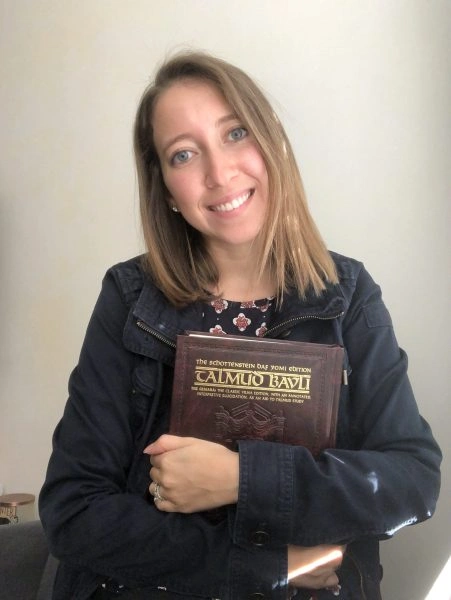
Robin Zeiger
Robin Zeiger

Tel Aviv, Israel

It happened without intent (so am I yotzei?!) – I watched the women’s siyum live and was so moved by it that the next morning, I tuned in to Rabbanit Michelle’s shiur, and here I am, still learning every day, over 2 years later. Some days it all goes over my head, but others I grasp onto an idea or a story, and I ‘get it’ and that’s the best feeling in the world. So proud to be a Hadran learner.

Jeanne Yael Klempner

Zichron Yaakov, Israel

I am grateful for the structure of the Daf Yomi. When I am freer to learn to my heart’s content, I learn other passages in addition. But even in times of difficulty, I always know that I can rely on the structure and social support of Daf Yomi learners all over the world.

I am also grateful for this forum. It is very helpful to learn with a group of enthusiastic and committed women.

Janice Block-2
Janice Block

Beit Shemesh, Israel

Retirement and Covid converged to provide me with the opportunity to commit to daily Talmud study in October 2020. I dove into the middle of Eruvin and continued to navigate Seder Moed, with Rabannit Michelle as my guide. I have developed more confidence in my learning as I completed each masechet and look forward to completing the Daf Yomi cycle so that I can begin again!

Rhona Fink
Rhona Fink

San Diego, United States

Shortly after the death of my father, David Malik z”l, I made the commitment to Daf Yomi. While riding to Ben Gurion airport in January, Siyum HaShas was playing on the radio; that was the nudge I needed to get started. The “everyday-ness” of the Daf has been a meaningful spiritual practice, especial after COVID began & I was temporarily unable to say Kaddish at daily in-person minyanim.

Lisa S. Malik
Lisa S. Malik

Wynnewood, United States

Hadran entered my life after the last Siyum Hashaas, January 2020. I was inspired and challenged simultaneously, having never thought of learning Gemara. With my family’s encouragement, I googled “daf yomi for women”. A perfecr fit!
I especially enjoy when Rabbanit Michelle connects the daf to contemporary issues to share at the shabbat table e.g: looking at the Kohen during duchaning. Toda rabba

Marsha Wasserman
Marsha Wasserman

Jerusalem, Israel

When I was working and taking care of my children, learning was never on the list. Now that I have more time I have two different Gemora classes and the nach yomi as well as the mishna yomi daily.

Shoshana Shinnar
Shoshana Shinnar

Jerusalem, Israel

In July, 2012 I wrote for Tablet about the first all women’s siyum at Matan in Jerusalem, with 100 women. At the time, I thought, I would like to start with the next cycle – listening to a podcast at different times of day makes it possible. It is incredible that after 10 years, so many women are so engaged!

Beth Kissileff
Beth Kissileff

Pittsburgh, United States

My first Talmud class experience was a weekly group in 1971 studying Taanit. In 2007 I resumed Talmud study with a weekly group I continue learning with. January 2020, I was inspired to try learning Daf Yomi. A friend introduced me to Daf Yomi for Women and Rabbanit Michelle Farber, I have kept with this program and look forward, G- willing, to complete the entire Shas with Hadran.
Lorri Lewis
Lorri Lewis

Palo Alto, CA, United States

I started my Daf Yomi journey at the beginning of the COVID19 pandemic.

Karena Perry
Karena Perry

Los Angeles, United States

Years ago, I attended the local Siyum HaShas with my high school class. It was inspiring! Through that cycle and the next one, I studied masekhtot on my own and then did “daf yomi practice.” The amazing Hadran Siyum HaShas event firmed my resolve to “really do” Daf Yomi this time. It has become a family goal. We’ve supported each other through challenges, and now we’re at the Siyum of Seder Moed!

Elisheva Brauner
Elisheva Brauner

Jerusalem, Israel

I have joined the community of daf yomi learners at the start of this cycle. I have studied in different ways – by reading the page, translating the page, attending a local shiur and listening to Rabbanit Farber’s podcasts, depending on circumstances and where I was at the time. The reactions have been positive throughout – with no exception!

Silke Goldberg
Silke Goldberg

Guildford, United Kingdom

I began my journey two years ago at the beginning of this cycle of the daf yomi. It has been an incredible, challenging experience and has given me a new perspective of Torah Sh’baal Peh and the role it plays in our lives

linda kalish-marcus
linda kalish-marcus

Efrat, Israel

In January 2020, my chevruta suggested that we “up our game. Let’s do Daf Yomi” – and she sent me the Hadran link. I lost my job (and went freelance), there was a pandemic, and I am still opening the podcast with my breakfast coffee, or after Shabbat with popcorn. My Aramaic is improving. I will need a new bookcase, though.

Rhondda May
Rhondda May

Atlanta, Georgia, United States

Inspired by Hadran’s first Siyum ha Shas L’Nashim two years ago, I began daf yomi right after for the next cycle. As to this extraordinary journey together with Hadran..as TS Eliot wrote “We must not cease from exploration and the end of all our exploring will be to arrive where we began and to know the place for the first time.

Susan Handelman
Susan Handelman

Jerusalem, Israel

I had never heard of Daf Yomi and after reading the book, The Weight of Ink, I explored more about it. I discovered that it was only 6 months before a whole new cycle started and I was determined to give it a try. I tried to get a friend to join me on the journey but after the first few weeks they all dropped it. I haven’t missed a day of reading and of listening to the podcast.

Anne Rubin
Anne Rubin

Elkins Park, United States

I started to listen to Michelle’s podcasts four years ago. The minute I started I was hooked. I’m so excited to learn the entire Talmud, and think I will continue always. I chose the quote “while a woman is engaged in conversation she also holds the spindle”. (Megillah 14b). It reminds me of all of the amazing women I learn with every day who multi-task, think ahead and accomplish so much.

Julie Mendelsohn
Julie Mendelsohn

Zichron Yakov, Israel

After experiences over the years of asking to join gemara shiurim for men and either being refused by the maggid shiur or being the only women there, sometimes behind a mechitza, I found out about Hadran sometime during the tail end of Masechet Shabbat, I think. Life has been much better since then.

Madeline Cohen
Madeline Cohen

London, United Kingdom

I started my journey on the day I realized that the Siyum was happening in Yerushalayim and I was missing out. What? I told myself. How could I have not known about this? How can I have missed out on this opportunity? I decided that moment, I would start Daf Yomi and Nach Yomi the very next day. I am so grateful to Hadran. I am changed forever because I learn Gemara with women. Thank you.

Linda Brownstein
Linda Brownstein

Mitspe, Israel

I started learning after the siyum hashas for women and my daily learning has been a constant over the last two years. It grounded me during the chaos of Corona while providing me with a community of fellow learners. The Daf can be challenging but it’s filled with life’s lessons, struggles and hope for a better world. It’s not about the destination but rather about the journey. Thank you Hadran!

Dena Lehrman
Dena Lehrman

אפרת, Israel

Kiddushin 14

״יְבָמָהּ יָבֹא עָלֶיהָ וּלְקָחָהּ לוֹ לְאִשָּׁה״. וְאֵימָא, לְכוּלַּהּ מִילְּתָא כְּאִשָּׁה! לָא סָלְקָא דַּעְתָּךְ, דְּתַנְיָא: יָכוֹל יְהוּ כֶּסֶף וּשְׁטָר גּוֹמְרִים בָּהּ, כְּדֶרֶךְ שֶׁהַבִּיאָה גּוֹמֶרֶת בָּהּ? תַּלְמוּד לוֹמַר: ״וְיִבְּמָהּ״ – בִּיאָה גּוֹמֶרֶת בָּהּ וְאֵין כֶּסֶף וּשְׁטָר גּוֹמְרִים בָּהּ.

“Her brother-in-law will engage in sexual intercourse with her and take her to him as a wife, and perform levirate marriage with her” (Deuteronomy 25:5), which indicates that intercourse renders her his wife. The Gemara asks: But one can say that with regard to all matters she is like a wife, and therefore she can also be acquired with money or a document like any other woman. The Gemara answers: It could not enter your mind to say this, as it is taught in a baraita: One might have thought that money and a document can complete the acquisition of a yevama and cause her to be married, in the manner that intercourse completes her acquisition. Therefore, the verse states: “And perform levirate marriage with her” (Deuteronomy 25:5), which indicates that only intercourse completes her acquisition, but money or a document do not complete her acquisition.

וְאֵימָא: מַאי ״וְיִבְּמָהּ״? דִּבְעַל כֻּרְחַהּ מְיַבֵּם. אִם כֵּן, לֵימָא קְרָא: ״וְיִבֵּם״, מַאי ״וְיִבְּמָהּ״? שָׁמְעַתְּ מִינַּהּ תַּרְתֵּי.

The Gemara asks: But one can say: What is the meaning of: “And perform levirate marriage with her”? It teaches that he can perform levirate marriage without her consent, as unlike an ordinary marriage, a levirate marriage does not require the woman’s agreement. The Gemara answers: If so, let the verse say: And perform levirate marriage, and one would understand that the matter depends entirely on him. What is the meaning of: “And perform levirate marriage with her”? Learn two conclusions from this: First, that a levirate marriage can be performed against her will, and second, that the only way to acquire a yevama is through sexual intercourse.

בַּחֲלִיצָה. מְנָלַן? דִּכְתִיב: ״וְנִקְרָא שְׁמוֹ בְּיִשְׂרָאֵל בֵּית חֲלוּץ הַנָּעַל״ – כֵּיוָן שֶׁחָלַץ בָּהּ נַעַל, הוּתְּרָה לְכׇל יִשְׂרָאֵל.

§ The mishna teaches that the yevama acquires herself through ḥalitza. The Gemara asks: From where do we derive this halakha? The Gemara answers: As it is written with regard to levirate marriage, after the yavam has performed ḥalitza: “And his name shall be called in Israel: The house of him who had his shoe removed” (Deuteronomy 25:10). This indicates: Once his shoe is removed by her, she is permitted to all of Israel.

הַאי ״יִשְׂרָאֵל״ לְהָכִי הוּא דַּאֲתָא? הַאי מִיבְּעֵי לֵיהּ לְכִדְתָנֵי רַב שְׁמוּאֵל בַּר יְהוּדָה: ״בְּיִשְׂרָאֵל״ – בְּבֵית דִּין שֶׁל יִשְׂרָאֵל, וְלֹא בְּבֵית דִּין שֶׁל נׇכְרִים! תְּרֵי ״בְּיִשְׂרָאֵל״ כְּתִיבִי.

The Gemara asks: This term Israel,” does it come to teach this halakha? It is required for that which is taught by Rav Shmuel bar Yehuda: The verse says “in Israel to teach that ḥalitza may be performed only in a Jewish court, but not in a gentile court. The Gemara answers that the phrase “in Israel” is written twice in that chapter: “And his name shall be called in Israel” (Deuteronomy 25:10), and: “To establish a name for his brother in Israel” (Deuteronomy 25:7). A different halakha is derived from each of these instances.

וְאַכַּתִּי מִיבְּעֵי לֵיהּ לְכִדְתַנְיָא, אָמַר רַבִּי יְהוּדָה: פַּעַם אַחַת הָיִינוּ יוֹשְׁבִים לִפְנֵי רַבִּי טַרְפוֹן, וּבָאתָה יְבָמָה לַחְלוֹץ, וְאָמַר לָנוּ: עֲנוּ כּוּלְּכֶם וְאִמְרוּ: ״חֲלוּץ הַנַּעַל, חֲלוּץ הַנַּעַל״. הָהוּא, מִ״וְּנִקְרָא שְׁמוֹ״ נָפְקָא.

The Gemara asks: But still, we also require the additional term “in Israelfor that which is taught in a baraita, that Rabbi Yehuda said: Once we were sitting before Rabbi Tarfon and a yevama came to perform ḥalitza. And Rabbi Tarfon said to us after the ḥalitza: All of you should answer and say: The one whose shoe was removed, the one whose shoe was removed. This indicates that the phrase: “And his name shall be called in Israel” (Deuteronomy 25:10), teaches that the matter must be announced and publicized throughout the nation. The Gemara answers: That halakha is not derived from the phrase “in Israel.” Rather, it is derived from: “And his name shall be called,” which indicates that it must be announced that this is his name.

וּבְמִיתַת הַיָּבָם. מְנָלַן? קַל וָחוֹמֶר: וּמָה אֵשֶׁת אִישׁ שֶׁהִיא בְּחֶנֶק – מִיתַת הַבַּעַל מַתִּירָתָהּ, יְבָמָהּ שֶׁהִיא בְּלָאו – לֹא כׇּל שֶׁכֵּן?

§ The mishna further teaches that a yevama is released from levirate marriage and may remarry through the death of the yavam. The Gemara asks: From where do we derive this halakha? The Gemara answers that it is an a fortiori inference: If, with regard to a married woman, who is forbidden to other men by a prohibition punished with strangulation, and yet the death of her husband renders her permitted, is it not all the more so that with regard to a yevama, who is forbidden to other men while the yavam is alive by only a mere prohibition, that the death of the yavam should render her permitted?

מָה לְאֵשֶׁת אִישׁ, שֶׁכֵּן יוֹצְאָה בְּגֵט, תֹּאמַר בְּזוֹ שֶׁאֵינָהּ יוֹצְאָה בְּגֵט! הָא נָמֵי יוֹצְאָה בַּחֲלִיצָה.

The Gemara raises a difficulty against this a fortiori inference: What is unique about a married woman is that she can leave through a bill of divorce as well. Will you say the same with regard to this yevama, who does not leave through a bill of divorce? The Gemara answers: This is an insufficient refutation of the a fortiori inference, as this yevama also leaves through ḥalitza, which serves the same function as a bill of divorce.

אֶלָּא: מָה לְאֵשֶׁת אִישׁ שֶׁכֵּן אוֹסְרָהּ מַתִּירָהּ! אָמַר רַב אָשֵׁי: הָא נָמֵי אוֹסְרָהּ מַתִּירָהּ – יָבָם אוֹסְרָהּ, יָבָם שָׁרֵי לַהּ.

Rather, one can challenge this a fortiori inference in the following manner. What is unique about a married woman is that the one who renders her forbidden to everyone else, i.e., her husband, also renders her permitted when he dies. This is not so with regard to a yevama, as she is rendered forbidden upon the death of her husband. Rav Ashi said: With regard to this yevama as well, he who renders her forbidden is also the one who renders her permitted: The yavam renders her forbidden, because if he was not alive she would automatically be permitted to other men. Likewise, the yavam renders her permitted through ḥalitza.

וּתְהֵא אֵשֶׁת אִישׁ יוֹצְאָה בַּחֲלִיצָה מִקַּל וָחוֹמֶר: וּמָה יְבָמָה שֶׁאֵינָהּ יוֹצְאָה בְּגֵט – יוֹצְאָה בַּחֲלִיצָה, זוֹ, שֶׁיּוֹצְאָה בְּגֵט – אֵינוֹ דִּין שֶׁיּוֹצְאָה בַּחֲלִיצָה? אָמַר קְרָא: ״סֵפֶר כְּרִיתֻת״ – סֵפֶר כּוֹרְתָהּ, וְאֵין דָּבָר אַחֵר כּוֹרְתָהּ.

The Gemara asks: And let a married woman leave a marriage through ḥalitza, as derived by an a fortiori inference: If a yevama, who cannot leave through a bill of divorce, can leave through ḥalitza, is it not logical that this married woman, who can leave through a bill of divorce, can likewise leave through ḥalitza? The Gemara answers: The verse states with regard to a married woman: “A scroll of severance” (Deuteronomy 24:3), which indicates that a scroll, i.e., a written document, severs her from her husband and nothing else severs her from him. While the husband is alive only a bill of divorce can dissolve a marriage.

וּתְהֵא יְבָמָה יוֹצֵאת בְּגֵט מִקַּל וָחוֹמֶר: וּמָה אֵשֶׁת אִישׁ שֶׁאֵין יוֹצְאָה בַּחֲלִיצָה – יוֹצְאָה בְּגֵט, זוֹ שֶׁיּוֹצְאָה בַּחֲלִיצָה – אֵין דִּין שֶׁיּוֹצְאָה בְּגֵט? אָמַר קְרָא: ״כָּכָה״, וְ״כָכָה״ עִיכּוּבָא.

The Gemara further asks: And let a yevama leave through a bill of divorce, as derived by an a fortiori inference: If a married woman, who cannot leave through ḥalitza, can leave through a bill of divorce, is it not logical that this yevama, who can leave through ḥalitza, can also leave through a bill of divorce? The Gemara answers: The verse states: “So shall it be done to the man” (Deuteronomy 25:9), with regard to the ḥalitza of a yevama, and “so” precludes another option.

וְכֹל הֵיכָא דְּאִיכָּא עִיכּוּבָא לָא דָּרְשִׁי קַל וָחוֹמֶר? וְהָא יוֹם הַכִּפּוּרִים דִּכְתִיב: ״גּוֹרָל״, וְ״חוּקָּה״,

The Gemara asks: And is it true that anywhere that there is a term that precludes another option one cannot learn an a fortiori inference? But there is the case of the designation of the goats on Yom Kippur, as it is written: “The goat upon which the lot came up for the Lord” (Leviticus 16:9), and: “This shall be an everlasting statute to you” (Leviticus 16:34), which indicates that everything stated with regard to the mitzvot of Yom Kippur is critical to the performance of the service of the day.

וְתַנְיָא: ״וְעָשָׂהוּ חַטָּאת״ – הַגּוֹרָל עוֹשֶׂה חַטָּאת, וְאֵין הַשֵּׁם עוֹשֶׂה חַטָּאת.

And it is taught in a baraita that the verse states: “Aaron shall bring forward the goat upon which the lot came up for the Lord, and he shall offer it for a sin-offering” (Leviticus 16:9). The verse indicates that the lottery renders it a sin-offering, but a verbal designation of the goat with the status of a sin-offering does not render it a sin-offering.

שֶׁיָּכוֹל, וַהֲלֹא דִּין הוּא: וּמָה בִּמְקוֹם שֶׁלֹּא קִידֵּשׁ הַגּוֹרָל – קִידֵּשׁ הַשֵּׁם, מְקוֹם שֶׁקִּידֵּשׁ הַגּוֹרָל – אֵינוֹ דִּין שֶׁיְּקַדֵּשׁ הַשֵּׁם?

The baraita continues: A verse is necessary to teach this halakha, as one might have thought that the opposite conclusion is correct: Could this not be derived through an a fortiori inference, as follows: Just as in a case in which the use of a lottery does not effect the consecration of the animals with a specific designation, e.g., with regard to a woman who has given birth and must bring two birds, one as a sin-offering and one as a burnt-offering, and nevertheless a verbal designation of the animals with the required status does effect the consecration of them, so too, in a case in which the use of a lottery does effect the consecration of the animals, is it not logically right that a verbal designation of the animals with the required status should effect the consecration of them?

תַּלְמוּד לוֹמַר: ״וְעָשָׂהוּ חַטָּאת״ – הַגּוֹרָל עוֹשֶׂה חַטָּאת וְאֵין הַשֵּׁם עוֹשֶׂה חַטָּאת. וְטַעְמָא דְּמַעֲטֵיהּ קְרָא, הָא לָאו הָכִי דָּרְשִׁינַן קַל וָחוֹמֶר, אַף עַל גַּב דִּכְתִיב בֵּיהּ ״חוּקָּה״!

To counter this reasoning, the verse states with regard to the goat: “He shall offer it for a sin-offering” (Leviticus 16:9), to indicate that the lottery renders it a sin-offering, but a verbal designation of the goat with the status of a sin-offering does not render it a sin-offering. And the reason that a verbal designation is ineffective is that the verse excluded this possibility, from which it may be inferred that if it were not so, one would learn an a fortiori inference, even though it is written with regard to it “statute.” The same logic should apply in the case of ḥalitza, i.e., the term “so” should not prevent one from learning an a fortiori inference, and therefore it might be argued that a yevama can be released through a bill of divorce.

אָמַר קְרָא: ״לָהּ״, ״לָהּ״ – וְלֹא לִיבָמָהּ. וְאֵימָא ״לָהּ״ לִשְׁמָהּ!

Rather, the Gemara explains that here too, there is a limitation derived from a verse. The verse states with regard to a bill of divorce: “And write for her a scroll of severance” (Deuteronomy 24:3). “For her” is a limitation, which teaches: A bill of divorce is effective for a regular woman but not for a yevama. The Gemara asks: But one can say that the phrase “for her” indicates that the bill of divorce must be written for her sake.

תְּרֵי ״לָהּ״ כְּתִיבִי. וְאַכַּתִּי מִיבְּעֵי לֵיהּ חַד ״לָהּ״ לִשְׁמָהּ, וְאִידָּךְ ״לָהּ״ – וְלֹא לָהּ וְלַחֲבֶירְתָּהּ!

The Gemara answers: “For her” is written twice (Deuteronomy 24:1, 3), and therefore both halakhot can be derived. The Gemara asks: And still, one instance of: “For her” is required to teach that the bill of divorce must be written for her sake, and the other “for her” is needed to teach: For her and not both for her and for another, i.e., her rival wife. One bill of divorce cannot be used for two women.

אֶלָּא, אָמַר קְרָא: ״נָעַל״ – נַעַל אִין, מִידֵּי אַחֲרִינָא – לָא.

Rather, the Gemara suggests a different explanation as to why a bill of divorce is ineffective for a yevama. With regard to a yevama the verse states: “The house of him who had his shoe removed” (Deuteronomy 25:10), which teaches: If she is released by the ḥalitza of the shoe, yes, she is released from the yavam, but if she was released by means of something else, no, she is not released.

וְהַאי ״נָעַל״ לְהָכִי הוּא דַּאֲתָא? הַאי מִיבְּעֵי לֵיהּ לְכִדְתַנְיָא: ״נַעֲלוֹ״ – אֵין לִי אֶלָּא נַעֲלוֹ, נַעַל שֶׁל כׇּל אָדָם מְנָא לֵיהּ?

The Gemara asks: But this term “shoe,” does it come to teach this? It is necessary for that which is taught in a baraita: The verse said: “And remove his shoe” (Deuteronomy 25:9). I have derived only that his shoe may be used. From where do I derive that the shoe of any person may also be used for ḥalitza?

תַּלְמוּד לוֹמַר: ״נַעַל״ ״נַעַל״ – רִיבָּה. אִם כֵּן מָה תַּלְמוּד לוֹמַר ״נַעֲלוֹ״? – נַעֲלוֹ הָרָאוּי לוֹ, פְּרָט לְגָדוֹל שֶׁאֵין יָכוֹל לְהַלֵּךְ בּוֹ, פְּרָט לְקָטָן שֶׁאֵין חוֹפֶה אֶת רוֹב רַגְלוֹ, פְּרָט

The verse states “shoe,” and states again in the next verse “shoe,” which includes any other shoe. If so, what is the meaning when the verse states “his shoe,” which is apparently referring to the shoe of that particular man? This teaches that it must be his shoe that is fit for him, excluding a shoe so large that he cannot walk in it, and excluding a shoe so small that it does not cover most of his foot, and excluding

לִמְסוּלְיָם שֶׁאֵין לוֹ עָקֵב! אִם כֵּן נִיכְתּוֹב קְרָא ״נָעַל״, מַאי ״הַנָּעַל״? שָׁמְעַתְּ מִינַּהּ תַּרְתֵּי.

sandals [mesulayim] that have no heels, which do not qualify as shoes. The Gemara answers: If so, that the term is stated only for that purpose, let the verse write “shoe.” What is the meaning of “the shoe”? Learn the two previously stated conclusions from it.

מַתְנִי׳ עֶבֶד עִבְרִי נִקְנֶה בְּכֶסֶף וּבִשְׁטָר, וְקוֹנֶה עַצְמוֹ בְּשָׁנִים, וּבַיּוֹבֵל, וּבְגִרְעוֹן כֶּסֶף. יְתֵירָה עָלָיו אָמָה הָעִבְרִיָּה שֶׁקּוֹנָה אֶת עַצְמָהּ בְּסִימָנִין. הַנִּרְצָע, נִקְנֶה בִּרְצִיעָה, וְקוֹנֶה אֶת עַצְמוֹ בַּיּוֹבֵל, וּבְמִיתַת הָאָדוֹן.

MISHNA: A Hebrew slave can be acquired by his master through money or through a document, and he can acquire himself, i.e., he is emancipated, through years, i.e., when he completes his six years of labor, or through the advent of the Jubilee Year, or through the deduction of money. The slave can redeem himself during the six years by paying for his remaining years of slavery. A Hebrew maidservant has one mode of emancipation more than him, as she acquires herself through signs indicating puberty. A slave who is pierced after serving six years is acquired as a slave for a longer period through piercing his ear with an awl, and he acquires himself through the advent of the Jubilee Year or through the death of the master.

גְּמָ׳ עֶבֶד עִבְרִי נִקְנֶה בְּכֶסֶף. מְנָלַן? אָמַר קְרָא: ״מִכֶּסֶף מִקְנָתוֹ״ – מְלַמֵּד שֶׁנִּקְנֶה בְּכֶסֶף. אַשְׁכְּחַן עֶבֶד עִבְרִי הַנִּמְכָּר לְנׇכְרִי, הוֹאִיל וְכׇל קִנְיָנוֹ בְּכֶסֶף,

GEMARA: The mishna teaches that a Hebrew slave can be acquired through money. The Gemara asks: From where do we derive this halakha? The Gemara answers that the verse states: “Out of the money that he was bought for” (Leviticus 25:51), which teaches that he can be acquired through money. The Gemara asks: We found that a Hebrew slave who is sold to a gentile is acquired with money, which is the case discussed in that verse, but this proves nothing with regard to a Jew sold to a Jew. One could argue that since all of the acquisitions of a gentile are performed only with money, he can likewise purchase a Hebrew slave with money.

נִמְכָּר לְיִשְׂרָאֵל מְנָלַן? אָמַר קְרָא: ״וְהׇפְדֵּה״ – מְלַמֵּד שֶׁמְּגָרַעַת פִּדְיוֹנָהּ, וְיוֹצְאָה.

But from where do we derive that a Hebrew slave can be sold to a Jew with money? The Gemara explains that with regard to a Hebrew maidservant, the verse states: “Then he shall let her be redeemed” (Exodus 21:8), which teaches that if she acquires money and wishes to be emancipated before her time is complete, she deducts a sum from her redemption. The maidservant can deduct the value of time served from her purchase price and pay the remaining amount, and she then is emancipated. This teaches that a Hebrew maidservant is acquired through money, a halakha that applies to a male slave as well.

אַשְׁכְּחַן אָמָה הָעִבְרִיָּה, הוֹאִיל וּמִיקַּדְּשָׁה בְּכֶסֶף – מִיקַּנְיָא בְּכֶסֶף, עֶבֶד עִבְרִי מְנָלַן? אָמַר קְרָא: ״כִּי יִמָּכֵר לְךָ אָחִיךָ הָעִבְרִי אוֹ הָעִבְרִיָּה וַעֲבָדְךָ שֵׁשׁ שָׁנִים״ – מַקִּישׁ עִבְרִי לְעִבְרִיָּה.

The Gemara asks: Although we found this halakha with regard to a Hebrew maidservant, one cannot extrapolate from there to this case, as it is possible that it applies only to a female. The reason for this is that since she is ordinarily betrothed through money, she can also be acquired as a maidservant through money. From where do we derive that a Hebrew slave can likewise be acquired through money? The Gemara answers that the verse states: “If your brother, a Hebrew man, or a Hebrew woman is sold to you, and he shall serve you six years” (Deuteronomy 15:12). This verse juxtaposes a Hebrew man to a Hebrew woman, indicating that the modes through which they are acquired are the same.

אַשְׁכְּחַן מְכָרוּהוּ בֵּית דִּין, הוֹאִיל וְנִמְכָּר בְּעַל כּוֹרְחוֹ, מוֹכֵר עַצְמוֹ מְנָלַן?

The Gemara further asks: We found a source in this verse for a slave who is sold by the court. This verse is referring to a thief who is unable to repay the value of his theft and is sold as a slave so that he can repay his debt. One can therefore argue that this case is unique, since he is sold against his will. From where do we derive that one who sells himself can be sold through money?

יָלֵיף ״שָׂכִיר״ ״שָׂכִיר״. הָנִיחָא לְמַאן דְּיָלֵיף ״שָׂכִיר״ ״שָׂכִיר״, אֶלָּא לְמַאן דְּלָא יָלֵיף ״שָׂכִיר״ ״שָׂכִיר״, מַאי אִיכָּא לְמֵימַר?

The Gemara answers: One derives this through a verbal analogy between the terms “hired worker” and “hired worker.” This term appears both with regard to one who sells himself: “As a hired worker and as a settler he shall be with you” (Leviticus 25:40), and with regard to one who is sold by the court: “For double of the hire of a hired worker he has served you” (Deuteronomy 15:18). The Gemara asks: This works out well according to the one who derives this verbal analogy between the terms “hired worker” and “hired worker.” But according to the one who does not derive the verbal analogy between “hired worker” and “hired worker,” what can be said? From where does he derive that one who sells himself may be purchased with money?

אָמַר קְרָא: ״וְכִי תַשִּׂיג״ – מוּסָף עַל עִנְיָן רִאשׁוֹן, וְיִלְמַד עֶלְיוֹן מִתַּחְתּוֹן.

The Gemara answers: The verse states at the start of the passage dealing with one sold to a gentile: “And if a stranger who is a settler with you becomes rich” (Leviticus 25:47). The conjunction “and” serves to add to the first matter, i.e., the passage discussing one who sells himself to a Jew, as it joins the two issues. And therefore let the above case of one who sells himself to a Jew be derived from the case below of one who is sold to a gentile: Just as one who is sold to a gentile can be acquired with money, so too, one who sells himself to a Jew can be acquired with money.

וּמַאן תַּנָּא דְּלָא יָלֵיף ״שָׂכִיר״ ״שָׂכִיר״? הַאי תַּנָּא הוּא, דְּתַנְיָא: הַמּוֹכֵר עַצְמוֹ נִמְכָּר לְשֵׁשׁ, וְיָתֵר עַל שֵׁשׁ, מְכָרוּהוּ בֵּית דִּין – אֵינוֹ נִמְכָּר אֶלָּא לְשֵׁשׁ.

The Gemara comments: And who is the tanna who does not derive the verbal analogy between “hired worker” and “hired worker”? It is this tanna, as it is taught in a baraita: One who sells himself as a slave is sold for six years, and if he wishes he can be sold for more than six years, whereas one who is sold by the court is sold only for six years, but no more.

הַמּוֹכֵר עַצְמוֹ אֵינוֹ נִרְצָע, מְכָרוּהוּ בֵּית דִּין – נִרְצָע. מוֹכֵר עַצְמוֹ אֵין מַעֲנִיקִים לוֹ, מְכָרוּהוּ בֵּית דִּין – מַעֲנִיקִים לוֹ. הַמּוֹכֵר עַצְמוֹ אֵין רַבּוֹ מוֹסֵר לוֹ שִׁפְחָה כְּנַעֲנִית, מְכָרוּהוּ בֵּית דִּין – רַבּוֹ מוֹסֵר לוֹ שִׁפְחָה כְּנַעֲנִית.

The baraita adds that there are additional differences between these two slaves: One who sells himself may not be pierced with an awl, whereas one who is sold by the court may be pierced with an awl. One who sells himself is not granted a severance gift by his master when he is emancipated, whereas one who is sold by the court is granted a severance gift. With regard to one who sells himself, his master may not provide him with a Canaanite maidservant as a wife to produce slave children, whereas with regard to one sold by the court, his master may provide him with a Canaanite maidservant.

רַבִּי אֶלְעָזָר אוֹמֵר: זֶה וָזֶה אֵינוֹ נִמְכָּר אֶלָּא לְשֵׁשׁ, זֶה וָזֶה נִרְצָע, וָזֶה וָזֶה מַעֲנִיקִים לוֹ, וְזֶה וָזֶה רַבּוֹ מוֹסֵר לוֹ שִׁפְחָה כְּנַעֲנִית. מַאי לָאו בְּהָא קָמִיפַּלְגִי, דְּתַנָּא קַמָּא לָא יָלֵיף ״שָׂכִיר״ ״שָׂכִיר״, וְרַבִּי אֶלְעָזָר יָלֵיף ״שָׂכִיר״ ״שָׂכִיר״?

Rabbi Elazar says that there is no difference between these two types of slaves. Rather, both this slave and that slave may be sold for only six years; both this and that one may be pierced with an awl, both this and that one are granted a severance gift, and in both this case and that case his master may provide him with a Canaanite maidservant. What, is it not the case that they disagree with regard to this, that the first tanna does not derive the verbal analogy between “hired worker” and “hired worker,” and Rabbi Elazar derives the verbal analogy between “hired worker” and “hired worker”? If one holds that the two cases are juxtaposed, one will equate the halakhot of both slaves. This is the opinion of Rabbi Elazar, in contrast to the opinion of the first tanna, who holds that the halakhot of each type of slave are discrete.

אָמַר רַב טָבְיוֹמֵי מִשְּׁמֵיהּ דְּאַבָּיֵי: דְּכוּלֵּי עָלְמָא יָלֵיף ״שְׂכִיר״ ״שָׂכִיר״, וְהָכָא בְּהַאי קְרָא קָמִיפַּלְגִי: מַאי טַעְמָא דְּתַנָּא קַמָּא דְּאָמַר מוֹכֵר עַצְמוֹ נִמְכָּר לְשֵׁשׁ וְיָתֵר עַל שֵׁשׁ? מִיעֵט רַחֲמָנָא גַּבֵּי מְכָרוּהוּ בֵּית דִּין: ״וַעֲבָדְךָ שֵׁשׁ שָׁנִים״ – זֶה, וְלֹא מוֹכֵר עַצְמוֹ.

Rav Tavyumei said in the name of Abaye: That is not so; rather, everyone derives the verbal analogy between “hired worker” and “hired worker,” and here, in the dispute in the baraita, they disagree about this following verse. What is the reasoning of the first tanna, who says that one who sells himself is sold for six years and more than six years? He maintains that with regard to one sold by the court, the Merciful One excludes a certain case by the verse: “If your brother, a Hebrew man, or a Hebrew woman, is sold to you, and he shall serve you six years” (Deuteronomy 15:12). That teaches that only this type of slave serves for six years and no more, but the same does not apply to one who sells himself. If he so stipulates, he may serve for more than six years.

וְאִידָּךְ: ״וַעֲבָדְךָ״ – לְךָ, וְלֹא לְיוֹרֵשׁ.

The Gemara explains: And the other, Rabbi Elazar, learns a different halakha from this verse. “And he shall serve you” means that he works for you and not for an heir other than a son. If a master has no sons, his slave is not transferred as an inheritance to a daughter or to a brother like his other property. If he does have sons, they inherit a Hebrew slave.

וְאִידָּךְ? ״וַעֲבָדְךָ״ אַחֲרִינָא כְּתִיב. וְאִידַּךְ? הַהוּא לְהַרְצָאַת אָדוֹן הוּא דַּאֲתָא.

The Gemara asks: And the other, the first tanna, from where does he derive that a slave is not transferred as an inheritance? The Gemara answers that the phrase, “And he shall serve you,” is written another time, and he derives this halakha from there. The Gemara asks: And the other, Rabbi Elazar, what does he do with that other verse? The Gemara answers: In his opinion that verse comes to appease the master. The verse emphasizes that the servitude is of limited duration to encourage the master to free the slave without hesitation.

מַאי טַעְמָא דְּתַנָּא קַמָּא דְּאָמַר מוֹכֵר עַצְמוֹ אֵינוֹ נִרְצָע? מִדְּמַיעֵט רַחֲמָנָא גַּבֵּי מְכָרוּהוּ בֵּית דִּין: ״וְרָצַע אֲדֹנָיו אֶת אׇזְנוֹ בַּמַּרְצֵעַ״ – אׇזְנוֹ שֶׁלּוֹ, וְלֹא אׇזְנוֹ שֶׁל מוֹכֵר עַצְמוֹ.

The Gemara asks: What is the reasoning of the first tanna, who says that one who sells himself is not pierced with an awl? The Gemara answers: He derives this from the fact that with regard to one sold by the court, the Merciful One excludes a certain case by the verse: “And his master shall pierce his ear with an awl” (Exodus 21:6), which teaches: His ear, of this slave, and not the ear of a slave who sells himself.

Want to follow content and continue where you left off?

Create an account today to track your progress, mark what you’ve learned, and follow the shiurim that speak to you.

Clear all items from this list?

This will remove ALL the items in this section. You will lose any progress or history connected to them. This is irreversible.

Cancel
Yes, clear all

Are you sure you want to delete this item?

You will lose any progress or history connected to this item.

Cancel
Yes, delete