Search

Megillah 3

Want to dedicate learning? Get started here:

English
עברית
podcast placeholder

0:00
0:00


podcast placeholder

0:00
0:00


Summary

Several statements made in the name of either Rabbi Yirmia or Rabbi Chia bar Abba are brought. One related to the letters in the Hebrew alphabet that have a different form when they appear at the end of a word. Was that established by the Prophets? Or earlier? Another explained who first translated the Torah and the Prophets into Aramaic. Unkelos the covert translated the Torah and Yonatan ben Uziel did the Prophets. The earth shook when the Prophets were translated. Why? And why not when the Torah was translated?  Why weren’t the Writings translated? How could it be Unkelos was the first to translate the Torah when it appears already in a drasha on a verse from Nechemia that it was already translated then? Another statement from Rabbi Yirmia or Rabbi Chia bar Abba relates to a verse in Daniel where he saw something that other people with him did not and yet they were frightened and he was not. What exactly transpired there? What can we learn from it? From the words “mishpacha u’mishpacha” in the Megillah, we derive that families of kohanim, Levites and maamadot leave their jobs to hear Megillah. A hierarchy of mitzvot are discussed – what precedes what in terms of importance? A met mitzva, one who has died and there is no one to bury him/her. overrides everything, even a negative commandment, as human dignity overrides everything. Rabbi Yehushua ben Levi brings several statements defining what is considered a “big city” or “walled city.”


Megillah 3

בְּנֵס הָיוּ עוֹמְדִין!

stood by way of a miracle?

אִין, מִהְוָה הֲווֹ, וְלָא הֲווֹ יָדְעִי הֵי בְּאֶמְצַע תֵּיבָה וְהֵי בְּסוֹף תֵּיבָה, וַאֲתוֹ צוֹפִים וְתַקִּינוּ פְּתוּחִין בְּאֶמְצַע תֵּיבָה וּסְתוּמִין בְּסוֹף תֵּיבָה.

The Gemara answers: Yes, two forms of these letters did exist at that time, but the people did not know which one of them was to be used in the middle of the word and which at the end of the word, and the Seers came and established that the open forms are to used be in the middle of the word and the closed forms at the end of the word.

סוֹף סוֹף ״אֵלֶּה הַמִּצְוֹת״, שֶׁאֵין נָבִיא עָתִיד לְחַדֵּשׁ דָּבָר מֵעַתָּה! אֶלָּא שְׁכָחוּם וְחָזְרוּ וְיִסְּדוּם.

The Gemara asks: Ultimately, however, doesn’t the phrase “these are the commandments” (Leviticus 27:34) indicate that a prophet is not permitted to initiate any matter of halakha from now on? Rather, it may be suggested that the final letters already existed at the time of the giving of the Torah, but over the course of time the people forgot them, and the prophets then came and reestablished them.

וְאָמַר רַבִּי יִרְמְיָה וְאִיתֵּימָא רַבִּי חִיָּיא בַּר אַבָּא: תַּרְגּוּם שֶׁל תּוֹרָה — אוּנְקְלוֹס הַגֵּר אֲמָרוֹ מִפִּי רַבִּי אֱלִיעֶזֶר וְרַבִּי יְהוֹשֻׁעַ. תַּרְגּוּם שֶׁל נְבִיאִים — יוֹנָתָן בֶּן עוּזִּיאֵל אֲמָרוֹ מִפִּי חַגַּי זְכַרְיָה וּמַלְאָכִי, וְנִזְדַּעְזְעָה אֶרֶץ יִשְׂרָאֵל אַרְבַּע מֵאוֹת פַּרְסָה עַל אַרְבַּע מֵאוֹת פַּרְסָה. יָצְתָה בַּת קוֹל וְאָמְרָה: מִי הוּא זֶה שֶׁגִּילָּה סְתָרַיי לִבְנֵי אָדָם?

§ The Gemara cites another ruling of Rabbi Yirmeya or Rabbi Ḥiyya bar Abba. Rabbi Yirmeya said, and some say that it was Rabbi Ḥiyya bar Abba who said: The Aramaic translation of the Torah used in the synagogues was composed by Onkelos the convert based on the teachings of Rabbi Eliezer and Rabbi Yehoshua. The Aramaic translation of the Prophets was composed by Yonatan ben Uzziel based on a tradition going back to the last prophets, Haggai, Zechariah, and Malachi. The Gemara relates that when Yonatan ben Uzziel wrote his translation, Eretz Yisrael quaked over an area of four hundred parasangs [parsa] by four hundred parasangs, and a Divine Voice emerged and said: Who is this who has revealed My secrets to mankind?

עָמַד יוֹנָתָן בֶּן עוּזִּיאֵל עַל רַגְלָיו וְאָמַר: אֲנִי הוּא שֶׁגִּלִּיתִי סְתָרֶיךָ לִבְנֵי אָדָם, גָּלוּי וְיָדוּעַ לְפָנֶיךָ שֶׁלֹּא לִכְבוֹדִי עָשִׂיתִי, וְלֹא לִכְבוֹד בֵּית אַבָּא, אֶלָּא לִכְבוֹדְךָ עָשִׂיתִי, שֶׁלֹּא יִרְבּוּ מַחֲלוֹקֹת בְּיִשְׂרָאֵל.

Yonatan ben Uzziel stood up on his feet and said: I am the one who has revealed Your secrets to mankind through my translation. However, it is revealed and known to You that I did this not for my own honor, and not for the honor of the house of my father, but rather it was for Your honor that I did this, so that discord not increase among the Jewish people. In the absence of an accepted translation, people will disagree about the meaning of obscure verses, but with a translation, the meaning will be clear.

וְעוֹד בִּיקֵּשׁ לְגַלּוֹת תַּרְגּוּם שֶׁל כְּתוּבִים, יָצְתָה בַּת קוֹל וְאָמְרָה לוֹ: דַּיֶּיךָּ! מַאי טַעְמָא — מִשּׁוּם דְּאִית בֵּיהּ קֵץ מָשִׁיחַ.

And Yonatan ben Uzziel also sought to reveal a translation of the Writings, but a Divine Voice emerged and said to him: It is enough for you that you translated the Prophets. The Gemara explains: What is the reason that he was denied permission to translate the Writings? Because it has in it a revelation of the end, when the Messiah will arrive. The end is foretold in a cryptic manner in the book of Daniel, and were the book of Daniel translated, the end would become manifestly revealed to all.

וְתַרְגּוּם שֶׁל תּוֹרָה, אוּנְקְלוֹס הַגֵּר אֲמָרוֹ? וְהָא אָמַר רַב אִיקָא בַּר אָבִין אָמַר רַב חֲנַנְאֵל אָמַר רַב: מַאי דִּכְתִיב: ״וַיִּקְרְאוּ בְּסֵפֶר תּוֹרַת הָאֱלֹהִים מְפוֹרָשׁ וְשׂוֹם שֶׂכֶל וַיָּבִינוּ בַּמִּקְרָא״. ״וַיִּקְרְאוּ בְּסֵפֶר תּוֹרַת הָאֱלֹהִים״ — זֶה מִקְרָא; ״מְפוֹרָשׁ״ — זֶה תַּרְגּוּם;

The Gemara asks: Was the translation of the Torah really composed by Onkelos the convert? Didn’t Rav Ika bar Avin say that Rav Ḥananel said that Rav said: What is the meaning of that which is written with respect to the days of Ezra: “And they read in the book, the Torah of God, distinctly; and they gave the sense, and they caused them to understand the reading” (Nehemiah 8:8)? The verse should be understood as follows: “And they read in the book, the Torah of God,” this is the scriptural text; “distinctly,” this is the translation, indicating that they immediately translated the text into Aramaic, as was customary during public Torah readings.

״וְשׂוֹם שֶׂכֶל״ — אֵלּוּ הַפְּסוּקִין; ״וַיָּבִינוּ בַּמִּקְרָא״ — אֵלּוּ פִּיסְקֵי טְעָמִים, וְאָמְרִי לַהּ — אֵלּוּ הַמָּסוֹרֹת! — שְׁכָחוּם וְחָזְרוּ וְיִסְּדוּם.

“And they gave the sense,” these are the divisions of the text into separate verses. “And they caused them to understand the reading,” these are the cantillation notes, through which the meaning of the text is further clarified. And some say that these are the Masoretic traditions with regard to the manner in which each word is to be written. This indicates that the Aramaic translation already existed at the beginning of the Second Temple period, well before the time of Onkelos. The Gemara answers: The ancient Aramaic translation was forgotten and then Onkelos came and reestablished it.

מַאי שְׁנָא דְּאוֹרָיְיתָא דְּלָא אִזְדַּעְזְעָה וְאַדִּנְבִיאֵי אִזְדַּעְזְעָה? דְּאוֹרָיְיתָא — מִיפָּרְשָׁא מִלְּתָא, דִּנְבִיאֵי — אִיכָּא מִילֵּי דְּמִיפָּרְשָׁן וְאִיכָּא מִילֵּי דִּמְסַתְּמָן, דִּכְתִיב: ״בַּיּוֹם הַהוּא יִגְדַּל הַמִּסְפֵּד בִּירוּשָׁלִַם כְּמִסְפַּד הֲדַדְרִימּוֹן בְּבִקְעַת מְגִידּוֹן״,

The Gemara asks: What is different about the translation of Prophets? Why is it that when Onkelos revealed the translation of the Torah, Eretz Yisrael did not quake, and when he revealed the translation of the Prophets, it quaked? The Gemara explains: The meaning of matters discussed in the Torah is clear, and therefore its Aramaic translation did not reveal the meaning of passages that had not been understood previously. Conversely, in the Prophets, there are matters that are clear and there are matters that are obscure, and the Aramaic translation revealed the meaning of obscure passages. The Gemara cites an example of an obscure verse that is clarified by the Aramaic translation: As it is written: “On that day shall there be a great mourning in Jerusalem, like the mourning of Hadadrimmon in the valley of Megiddon” (Zechariah 12:11).

וְאָמַר רַב יוֹסֵף: אִלְמָלֵא תַּרְגּוּמָא דְּהַאי קְרָא — לָא יָדַעְנָא מַאי קָאָמַר: בְּיוֹמָא הַהוּא יִסְגֵּי מִסְפְּדָא בִּירוּשְׁלֶים כְּמִסְפְּדָא דְּאַחְאָב בַּר עָמְרִי דִּקְטַל יָתֵיהּ הֲדַדְרִימּוֹן בֶּן טַבְרִימּוֹן בְּרָמוֹת גִּלְעָד וּכְמִסְפְּדָא דְּיֹאשִׁיָּה בַּר אָמוֹן דִּקְטַל יָתֵיהּ פַּרְעֹה חֲגִירָא בְּבִקְעַת מְגִידּוֹ.

And with regard to that verse, Rav Yosef said: Were it not for the Aramaic translation of this verse, we would not have known what it is saying, as the Bible does not mention any incident involving Hadadrimmon in the valley of Megiddon. The Aramaic translation reads as follows: On that day, the mourning in Jerusalem will be as great as the mourning for Ahab, son of Omri, who was slain by Hadadrimmon, son of Tavrimon, in Ramoth-Gilead, and like the mourning for Josiah, son of Amon, who was slain by Pharaoh the lame in the valley of Megiddon. The translation clarifies that the verse is referring to two separate incidents of mourning, and thereby clarifies the meaning of this verse.

״וְרָאִיתִי אֲנִי דָנִיֵּאל לְבַדִּי אֶת הַמַּרְאָה וְהָאֲנָשִׁים אֲשֶׁר הָיוּ עִמִּי לֹא רָאוּ אֶת הַמַּרְאָה אֲבָל חֲרָדָה גְדוֹלָה נָפְלָה עֲלֵיהֶם וַיִּבְרְחוּ בְּהֵחָבֵא״. מַאן נִינְהוּ אֲנָשִׁים? אָמַר רַבִּי יִרְמְיָה וְאִיתֵּימָא רַבִּי חִיָּיא בַּר אַבָּא: זֶה חַגַּי זְכַרְיָה וּמַלְאָכִי.

§ The Gemara introduces another statement from the same line of tradition. The verse states: “And I, Daniel, alone saw the vision, for the men who were with me did not see the vision; but a great trembling fell upon them, so that they fled to hide themselves” (Daniel 10:7). Who were these men? The term “men” in the Bible indicates important people; who were they? Rabbi Yirmeya said, and some say that it was Rabbi Ḥiyya bar Abba who said: These are the prophets Haggai, Zechariah, and Malachi.

אִינְהוּ עֲדִיפִי מִינֵּיהּ, וְאִיהוּ עֲדִיף מִינַּיְיהוּ. אִינְהוּ עֲדִיפִי מִינֵּיהּ — דְּאִינְהוּ נְבִיאֵי וְאִיהוּ לָאו נָבִיא. אִיהוּ עֲדִיף מִינַּיְיהוּ — דְּאִיהוּ חֲזָא וְאִינְהוּ לָא חֲזוֹ.

The Gemara comments: In certain ways they, the prophets, were greater than him, Daniel, and in certain ways he, Daniel, was greater than them. They were greater than him, as they were prophets and he was not a prophet. Haggai, Zechariah, and Malachi were sent to convey the word of God to the Jewish people, while Daniel was not sent to reveal his visions to others. In another way, however, he was greater than them, as he saw this vision, and they did not see this vision, indicating that his ability to perceive obscure and cryptic visions was greater than theirs.

וְכִי מֵאַחַר דְּלָא חֲזוֹ, מַאי טַעְמָא אִיבְּעִיתוּ? אַף עַל גַּב דְּאִינְהוּ לָא חֲזוֹ, מַזָּלַיְיהוּ חֲזוֹ.

The Gemara asks: Since they did not see the vision, what is the reason that they were frightened? The Gemara answers: Even though they did not see the vision, their guardian angels saw it, and therefore they sensed that there was something fearful there and they fled.

אָמַר רָבִינָא: שְׁמַע מִינַּהּ: הַאי מַאן דְּמִיבְּעִית, אַף עַל גַּב דְּאִיהוּ לָא חָזֵי, מַזָּלֵיהּ חָזֵי. מַאי תַּקַּנְתֵּיהּ? לִיקְרֵי קְרִיאַת שְׁמַע. וְאִי קָאֵים בִּמְקוֹם הַטִּנּוֹפֶת — לִינְשׁוֹף מִדּוּכְתֵּיהּ אַרְבַּע גַּרְמִידֵי. וְאִי לָא — לֵימָא הָכִי: ״עִיזָּא דְּבֵי טַבָּחֵי שַׁמִּינָא מִינַּאי״.

Ravina said: Learn from this incident that with regard to one who is frightened for no apparent reason, although he does not see anything menacing, his guardian angel sees it, and therefore he should take steps in order to escape the danger. The Gemara asks: What is his remedy? He should recite Shema, which will afford him protection. And if he is standing in a place of filth, where it is prohibited to recite verses from the Torah, he should distance himself four cubits from his current location in order to escape the danger. And if he is not able to do so, let him say the following incantation: The goat of the slaughterhouse is fatter than I am, and if a calamity must fall upon something, it should fall upon it.

וְהַשְׁתָּא דְּאָמְרַתְּ ״מְדִינָה וּמְדִינָה וְעִיר וָעִיר״ — לִדְרָשָׁה, ״מִשְׁפָּחָה וּמִשְׁפָּחָה״ לְמַאי אֲתָא? אָמַר רַבִּי יוֹסֵי בַּר חֲנִינָא: לְהָבִיא מִשְׁפְּחוֹת כְּהוּנָּה וּלְוִיָּה, שֶׁמְּבַטְּלִין עֲבוֹדָתָן וּבָאִין לִשְׁמוֹעַ מִקְרָא מְגִילָּה.

§ After this digression, the Gemara returns to the exposition of a verse cited above. Now that you have said that the phrases “every province” and “every city” appear for the purposes of midrashic exposition, for what exposition do the words “every family” appear in that same verse (Esther 9:28)? Rabbi Yosei bar Ḥanina said: These words come to include the priestly and Levitical families, and indicate that they cancel their service in the Temple and come to hear the reading of the Megilla.

דְּאָמַר רַב יְהוּדָה אָמַר רַב: כֹּהֲנִים בַּעֲבוֹדָתָן וּלְוִיִּם בְּדוּכָנָן וְיִשְׂרָאֵל בְּמַעֲמָדָן — כּוּלָּן מְבַטְּלִין עֲבוֹדָתָן וּבָאִין לִשְׁמוֹעַ מִקְרָא מְגִילָּה.

As Rav Yehuda said that Rav said: The priests at their Temple service, the Levites on their platform in the Temple, where they sung the daily psalm, and the Israelites at their watches, i.e., the group of Israelites, corresponding to the priestly watches, who would come to Jerusalem and gather in other locations as representatives of the entire nation to observe or pray for the success of the Temple service, all cancel their service and come to hear the reading of the Megilla.

תַּנְיָא נָמֵי הָכִי: כֹּהֲנִים בַּעֲבוֹדָתָן, וּלְוִיִּם בְּדוּכָנָן, וְיִשְׂרָאֵל בְּמַעֲמָדָן — כּוּלָּן מְבַטְּלִין עֲבוֹדָתָן וּבָאִין לִשְׁמוֹעַ מִקְרָא מְגִילָּה. מִכָּאן סָמְכוּ שֶׁל בֵּית רַבִּי שֶׁמְּבַטְּלִין תַּלְמוּד תּוֹרָה וּבָאִין לִשְׁמוֹעַ מִקְרָא מְגִילָּה, קַל וָחוֹמֶר מֵעֲבוֹדָה: וּמָה עֲבוֹדָה שֶׁהִיא חֲמוּרָה — מְבַטְּלִינַן, תַּלְמוּד תּוֹרָה לֹא כׇּל שֶׁכֵּן.

This is also taught in a baraita: The priests at their service, the Levites on the platform, and the Israelites at their watches, all cancel their service and come to hear the reading of the Megilla. The Sages of the house of Rabbi Yehuda HaNasi relied upon the halakha stated here and determined that one cancels his Torah study and comes to hear the reading of the Megilla. They derived this principle by means of an a fortiori inference from the Temple service: Just as one who is engaged in performing service in the Temple, which is very important, cancels his service in order to hear the Megilla, is it not all the more so obvious that one who is engaged in Torah study cancels his study to hear the Megilla?

וַעֲבוֹדָה חֲמוּרָה מִתַּלְמוּד תּוֹרָה? וְהָכְתִיב: ״וַיְהִי בִּהְיוֹת יְהוֹשֻׁעַ בִּירִיחוֹ וַיִּשָּׂא עֵינָיו וַיַּרְא וְהִנֵּה אִישׁ עוֹמֵד לְנֶגְדּוֹ [וְגוֹ׳] וַיִּשְׁתָּחוּ (לְאַפָּיו)״.

The Gemara asks: Is the Temple service more important than Torah study? Isn’t it written: “And it came to pass when Joshua was by Jericho that he lifted up his eyes and looked, and behold, a man stood over against him with his sword drawn in his hand. And Joshua went over to him and said to him: Are you for us, or for our adversaries? And he said, No, but I am captain of the host of the Lord, I have come now. And Joshua fell on his face to the earth, and bowed down” (Joshua 5:13–14).

וְהֵיכִי עָבֵיד הָכִי? וְהָאָמַר רַבִּי יְהוֹשֻׁעַ בֶּן לֵוִי: אָסוּר לְאָדָם שֶׁיִּתֵּן שָׁלוֹם לַחֲבֵירוֹ בַּלַּיְלָה, חָיְישִׁינַן שֶׁמָּא שֵׁד הוּא! שָׁאנֵי הָתָם דְּאָמַר לֵיהּ: ״כִּי אֲנִי שַׂר צְבָא ה׳״.

The Gemara first seeks to clarify the incident described in the verse. How did Joshua do this, i.e., how could he bow to a figure he did not recognize? Didn’t Rabbi Yehoshua ben Levi say: It is prohibited for a person to greet his fellow at night if he does not recognize him, as we are concerned that perhaps it is a demon? How did Joshua know that it was not a demon? The Gemara answers: There it was different, as the visitor said to him: But I am captain of the host of the Lord.

וְדִלְמָא מְשַׁקְּרִי? גְּמִירִי דְּלָא מַפְּקִי שֵׁם שָׁמַיִם לְבַטָּלָה.

The Gemara asks: Perhaps this was a demon and he lied? The Gemara answers: It is learned as a tradition that demons do not utter the name of Heaven for naught, and therefore since the visitor had mentioned the name of God, Joshua was certain that this was indeed an angel.

אָמַר לוֹ: אֶמֶשׁ בִּטַּלְתֶּם תָּמִיד שֶׁל בֵּין הָעַרְבַּיִם, וְעַכְשָׁיו בִּטַּלְתֶּם תַּלְמוּד תּוֹרָה. אָמַר לוֹ: עַל אֵיזֶה מֵהֶן בָּאתָ? אָמַר לוֹ: ״עַתָּה בָאתִי״, מִיָּד: ״וַיָּלֶן יְהוֹשֻׁעַ בַּלַּיְלָה הַהוּא בְּתוֹךְ הָעֵמֶק״, אָמַר רַבִּי יוֹחָנָן:

As for the angel’s mission, the Gemara explains that the angel said to Joshua: Yesterday, i.e., during the afternoon, you neglected the afternoon daily offering due to the impending battle, and now, at night, you have neglected Torah study, and I have come to rebuke you. Joshua said to him: For which of these sins have you come? He said to him: I have come now, indicating that neglecting Torah study is more severe than neglecting to sacrifice the daily offering. Joshua immediately determined to rectify the matter, as the verses states: “And Joshua lodged that night” (Joshua 8:9) “in the midst of the valley [ha’emek]” (Joshua 8:13), and Rabbi Yoḥanan said:

מְלַמֵּד שֶׁלָּן בְּעוּמְקָהּ שֶׁל הֲלָכָה. וְאָמַר רַב שְׁמוּאֵל בַּר אוּנְיָא: גָּדוֹל תַּלְמוּד תּוֹרָה יוֹתֵר מֵהַקְרָבַת תְּמִידִין, שֶׁנֶּאֱמַר: ״עַתָּה בָאתִי״!

This teaches that he spent the night in the depths [be’umeka] of halakha, i.e., that he spent the night studying Torah with the Jewish people. And Rav Shmuel bar Unya said: Torah study is greater than sacrificing the daily offerings, as it is stated: “I have come now” (Joshua 5:14), indicating that the angel came to rebuke Joshua for neglecting Torah study and not for neglecting the daily offering. Consequently, how did the Sages of the house of Rabbi Yehuda HaNasi determine that the Temple service is more important than Torah study?

לָא קַשְׁיָא: הָא דְּרַבִּים, וְהָא דְּיָחִיד.

The Gemara explains that it is not difficult. This statement, with regard to the story of Joshua, is referring to Torah study by the masses, which is greater than the Temple service. That statement of the Sages of the house of Rabbi Yehuda HaNasi is referring to Torah study by an individual, which is less significant than the Temple service.

וּדְיָחִיד קַל? וְהָתְנַן: נָשִׁים בַּמּוֹעֵד מְעַנּוֹת אֲבָל לֹא מְטַפְּחוֹת, רַבִּי יִשְׁמָעֵאל אוֹמֵר: אִם הָיוּ סְמוּכוֹת לַמִּטָּה — מְטַפְּחוֹת. בְּרָאשֵׁי חֳדָשִׁים בַּחֲנוּכָּה וּבְפוּרִים, מְעַנּוֹת וּמְטַפְּחוֹת בָּזֶה וּבָזֶה, אֲבָל לֹא מְקוֹנְנוֹת.

The Gemara asks: Is the Torah study of an individual a light matter? Didn’t we learn in a mishna: On the intermediate days of a Festival, women may lament the demise of the deceased in unison, but they may not clap their hands in mourning? Rabbi Yishmael says: Those that are close to the bier may clap. On the New Moon, on Hanukkah, and on Purim, which are not mandated by Torah law, they may both lament and clap their hands in mourning. However, on both groups of days, they may not wail responsively, a form of wailing where one woman wails and the others repeat after her.

וְאָמַר רַבָּה בַּר הוּנָא: אֵין מוֹעֵד בִּפְנֵי תַּלְמִיד חָכָם — כׇּל שֶׁכֵּן חֲנוּכָּה וּפוּרִים.

And Rabba bar Huna said: All these regulations were said with regard to an ordinary person, but there are no restrictions on expressions of mourning on the intermediate days of a Festival in the presence of a deceased Torah scholar. If a Torah scholar dies on the intermediate days of a Festival, the women may lament, clap, and wail responsively as on any other day, and all the more so on Hanukkah and Purim. This indicates that even the Torah study of an individual is of great importance.

כְּבוֹד תּוֹרָה קָאָמְרַתְּ. כְּבוֹד תּוֹרָה דְּיָחִיד — חָמוּר, תַּלְמוּד תּוֹרָה דְּיָחִיד — קַל.

The Gemara rejects this argument: You speak of the honor that must be shown to the Torah, and indeed, the honor that must be shown to the Torah in the case of an individual Torah scholar is important; but the Torah study of an individual in itself is light and is less significant than the Temple service.

אָמַר רָבָא, פְּשִׁיטָא לִי: עֲבוֹדָה וּמִקְרָא מְגִילָּה — מִקְרָא מְגִילָּה עֲדִיף, מִדְּרַבִּי יוֹסֵי בַּר חֲנִינָא. תַּלְמוּד תּוֹרָה וּמִקְרָא מְגִילָּה — מִקְרָא מְגִילָּה עֲדִיף, מִדְּסָמְכוּ שֶׁל בֵּית רַבִּי.

§ Rava said: It is obvious to me that if one must choose between Temple service and reading the Megilla, reading the Megilla takes precedence, based upon the exposition of Rabbi Yosei bar Ḥanina with regard to the phrase “every family” (Esther 9:28). Similarly, if one must choose between Torah study and reading the Megilla, reading the Megilla takes precedence, based upon the fact that the Sages of the house of Rabbi Yehuda HaNasi relied on Rabbi Yosei bar Ḥanina’s exposition to rule that one interrupts Torah study to hear the reading of the Megilla.

תַּלְמוּד תּוֹרָה וּמֵת מִצְוָה — מֵת מִצְוָה עֲדִיף, מִדְּתַנְיָא: מְבַטְּלִין תַּלְמוּד תּוֹרָה לְהוֹצָאַת מֵת, וּלְהַכְנָסַת כַּלָּה. עֲבוֹדָה וּמֵת מִצְוָה — מֵת מִצְוָה עֲדִיף, מִ״וּלְאַחוֹתוֹ״.

Furthermore, it is obvious that if one must choose between Torah study and tending to a corpse with no one to bury it [met mitzva], the task of burying the met mitzva takes precedence. This is derived from that which is taught in a baraita: One cancels his Torah study to bring out a corpse for burial, and to join a wedding procession and bring in the bride. Similarly, if one must choose between the Temple service and tending to a met mitzva, tending to the met mitzva takes precedence, based upon the halakha derived from the term “or for his sister” (Numbers 6:7).

דְּתַנְיָא: ״וּלְאַחוֹתוֹ״ מַה תַּלְמוּד לוֹמַר? הֲרֵי שֶׁהָיָה הוֹלֵךְ לִשְׁחוֹט אֶת פִּסְחוֹ וְלָמוּל אֶת בְּנוֹ, וְשָׁמַע שֶׁמֵּת לוֹ מֵת, יָכוֹל יִטַּמָּא —

As it is taught in a baraita with regard to verses addressing the laws of a nazirite: “All the days that he consecrates himself to the Lord, he shall not come near to a dead body. For his father, or for his mother, for his brother, or for his sister, he shall not make himself ritually impure for them when they die” (Numbers 6:6–7). What is the meaning when the verse states “or for his sister”? The previous verse, which states that the nazirite may not come near a dead body, already prohibits him from becoming impure through contact with his sister. Therefore, the second verse is understood to be teaching a different halakha: One who was going to slaughter his Paschal lamb or to circumcise his son, and he heard that a relative of his died, one might have thought that he should return and become ritually impure with the impurity imparted by a corpse.

אָמַרְתָּ: ״לֹא יִטַּמָּא״. יָכוֹל כְּשֵׁם שֶׁאֵינוֹ מִיטַּמֵּא לַאֲחוֹתוֹ, כָּךְ אֵינוֹ מִיטַּמֵּא לְמֵת מִצְוָה — תַּלְמוּד לוֹמַר: ״וּלְאַחוֹתוֹ״. לַאֲחוֹתוֹ הוּא דְּאֵינוֹ מִיטַּמֵּא, אֲבָל מִיטַּמֵּא לְמֵת מִצְוָה.

You said: He shall not become impure; the death of his relative will not override so significant a mitzva from the Torah. One might have thought: Just as he does not become impure for his sister, so he does not become impure for a corpse with no one to bury it [met mitzva]. The verse states: “Or for his sister”; he may not become impure for his sister, as someone else can attend to her burial, but he does become impure for a met mitzva.

בָּעֵי רָבָא: מִקְרָא מְגִילָּה וּמֵת מִצְוָה הֵי מִינַּיְיהוּ עֲדִיף? מִקְרָא מְגִילָּה עֲדִיף מִשּׁוּם פַּרְסוֹמֵי נִיסָּא, אוֹ דִּלְמָא מֵת מִצְוָה עֲדִיף מִשּׁוּם כְּבוֹד הַבְּרִיּוֹת? בָּתַר דְּבַעְיָא הֲדַר פַּשְׁטַהּ: מֵת מִצְוָה עֲדִיף, דְּאָמַר מָר: גָּדוֹל כְּבוֹד הַבְּרִיּוֹת שֶׁדּוֹחֶה אֶת לֹא תַעֲשֶׂה שֶׁבַּתּוֹרָה.

On the basis of these premises, Rava raised a dilemma: If one must choose between reading the Megilla and tending to a met mitzva, which of them takes precedence? Does reading the Megilla take precedence due to the value of publicizing the miracle, or perhaps burying the met mitzva takes precedence due to the value of preserving human dignity? After he raised the dilemma, Rava then resolved it on his own and ruled that attending to a met mitzva takes precedence, as the Master said: Great is human dignity, as it overrides a prohibition in the Torah. Consequently, it certainly overrides the duty to read the Megilla, despite the fact that reading the Megilla publicizes the miracle.

גּוּפָא, אָמַר רַבִּי יְהוֹשֻׁעַ בֶּן לֵוִי: כְּרַךְ, וְכׇל הַסָּמוּךְ לוֹ, וְכׇל הַנִּרְאֶה עִמּוֹ — נִדּוֹן כִּכְרַךְ. תָּנָא: סָמוּךְ — אַף עַל פִּי שֶׁאֵינוֹ נִרְאֶה, נִרְאֶה — אַף עַל פִּי שֶׁאֵינוֹ סָמוּךְ.

§ The Gemara examines the matter itself cited in the course of the previous discussion. Rabbi Yehoshua ben Levi said: A walled city, and all settlements adjacent to it, and all settlements that can be seen with it, i.e., that can be seen from the walled city, are considered like the walled city, and the Megilla is read on the fifteenth. It was taught in the Tosefta: This is the halakha with regard to a settlement adjacent to a walled city, although it cannot be seen from it, and also a place that can be seen from the walled city, although it is not adjacent to it.

בִּשְׁלָמָא נִרְאֶה אַף עַל פִּי שֶׁאֵינוֹ סָמוּךְ, מַשְׁכַּחַתְּ לַהּ כְּגוֹן דְּיָתְבָה בְּרֹאשׁ הָהָר. אֶלָּא סָמוּךְ אַף עַל פִּי שֶׁאֵינוֹ נִרְאֶה הֵיכִי מַשְׁכַּחַתְּ לַהּ? אָמַר רַבִּי יִרְמְיָה: שֶׁיּוֹשֶׁבֶת בַּנַּחַל.

The Gemara examines the Tosefta: Granted that with regard to a place that can be seen from the walled city, although it is not adjacent to it, you find it where the place is located on the top of a mountain, and therefore it can be seen from the walled city, although it is at some distance from it. However, with regard to a settlement that is adjacent to a walled city although it cannot be seen from it, how can you find these circumstances? Rabbi Yirmeya said: You find it, for example, where the place is located in a valley, and therefore it is possible that it cannot be seen from the walled city, although it is very close to it.

וְאָמַר רַבִּי יְהוֹשֻׁעַ בֶּן לֵוִי: כְּרַךְ שֶׁיָּשַׁב וּלְבַסּוֹף הוּקַּף — נִדּוֹן כִּכְפָר. מַאי טַעְמָא? דִּכְתִיב: ״וְאִישׁ כִּי יִמְכּוֹר בֵּית מוֹשַׁב עִיר חוֹמָה״, שֶׁהוּקַּף וּלְבַסּוֹף יָשַׁב, וְלֹא שֶׁיָּשַׁב וּלְבַסּוֹף הוּקַּף.

And Rabbi Yehoshua ben Levi said: A walled city that was initially settled and only later surrounded by a wall is considered a village rather than a walled city. What is the reason? As it is written: “And if a man sells a residential house in a walled city” (Leviticus 25:29). The wording of the verse indicates that it is referring to a place that was first surrounded by a wall and only later settled, and not to a place that was first settled and only later surrounded by a wall.

וְאָמַר רַבִּי יְהוֹשֻׁעַ בֶּן לֵוִי: כְּרַךְ שֶׁאֵין בּוֹ עֲשָׂרָה בַּטְלָנִין — נִדּוֹן כִּכְפָר. מַאי קָא מַשְׁמַע לַן? תְּנֵינָא: אֵיזוֹ הִיא עִיר גְּדוֹלָה — כֹּל שֶׁיֵּשׁ בָּהּ עֲשָׂרָה בַּטְלָנִין. פָּחוֹת מִכָּאן, הֲרֵי זֶה כְּפָר? כְּרַךְ אִיצְטְרִיךְ לֵיהּ, אַף עַל גַּב דְּמִיקַּלְעִי לֵיהּ מֵעָלְמָא.

And Rabbi Yehoshua ben Levi said: A walled city that does not have ten idlers, i.e., individuals who do not work and are available to attend to communal needs, is treated as a village. The Gemara asks: What is he teaching us? We already learned in a mishna (5a): What is a large city? Any city in which there are ten idlers; however, if there are fewer than that, it is a village. The Gemara answers: Nevertheless, it was necessary for Rabbi Yehoshua ben Levi to teach this halakha with regard to a large city, to indicate that even if idlers happen to come there from elsewhere, since they are not local residents, it is still considered a village.

וְאָמַר רַבִּי יְהוֹשֻׁעַ בֶּן לֵוִי: כְּרַךְ שֶׁחָרַב וּלְבַסּוֹף יָשַׁב נִדּוֹן כִּכְרַךְ. מַאי חָרַב? אִילֵּימָא חָרְבוּ חוֹמוֹתָיו: יָשַׁב — אִין, לֹא יָשַׁב — לָא? וְהָא תַּנְיָא, רַבִּי אֱלִיעֶזֶר בַּר יוֹסֵי אוֹמֵר: ״אֲשֶׁר לוֹא חוֹמָה״, אַף עַל פִּי שֶׁאֵין לוֹ עַכְשָׁיו וְהָיָה לוֹ קוֹדֶם לָכֵן.

And Rabbi Yehoshua ben Levi also said: A walled city that was destroyed and then later settled is considered a city. The Gemara asks: What is meant by the term destroyed? If we say that the city’s walls were destroyed, and Rabbi Yehoshua ben Levi comes to teach us that if it was settled, yes it is treated as a walled city, but if it was not settled, it is not treated that way, there is a difficulty. Isn’t it taught in a baraita that Rabbi Eliezer bar Yosei says: The verse states: “Which has [lo] a wall (Leviticus 25:30),” and the word lo is written with an alef, which means no, but in context the word lo is used as though it was written with a vav, meaning that it has a wall. This indicates that even though the city does not have a wall now, as the wall was destroyed, if it had a wall before, it retains its status as a walled city.

אֶלָּא מַאי ״חָרַב״ — שֶׁחָרַב מֵעֲשָׂרָה בַּטְלָנִין.

Rather, what is meant by the term destroyed? That it was destroyed in the sense that it no longer has ten idlers, and therefore it is treated like a village. However, once it has ten idlers again, it is treated like a city.

וְאָמַר רַבִּי יְהוֹשֻׁעַ בֶּן לֵוִי:

And Rabbi Yehoshua ben Levi said:

New to Talmud?

Check out our resources designed to help you navigate a page of Talmud – and study at the pace, level and style that fits you. 

The Hadran Women’s Tapestry

Meet the diverse women learning Gemara at Hadran and hear their stories. 

With Rabbanit Dr. Naomi Cohen in the Women’s Talmud class, over 30 years ago. It was a “known” class and it was accepted, because of who taught. Since then I have also studied with Avigail Gross-Gelman and Dr. Gabriel Hazut for about a year). Years ago, in a shiur in my shul, I did know about Persians doing 3 things with their clothes on. They opened the shiur to woman after that!

Sharon Mink
Sharon Mink

Haifa, Israel

I began my Daf Yomi journey on January 5, 2020. I had never learned Talmud before. Initially it struck me as a bunch of inane and arcane details with mind bending logic. I am now smitten. Rabbanit Farber brings the page to life and I am eager to learn with her every day!

Lori Stark
Lori Stark

Highland Park, United States

I saw an elderly man at the shul kiddush in early March 2020, celebrating the siyyum of masechet brachot which he had been learning with a young yeshiva student. I thought, if he can do it, I can do it! I began to learn masechet Shabbat the next day, Making up masechet brachot myself, which I had missed. I haven’t missed a day since, thanks to the ease of listening to Hadran’s podcast!
Judith Shapiro
Judith Shapiro

Minnesota, United States

I decided to learn one masechet, Brachot, but quickly fell in love and never stopped! It has been great, everyone is always asking how it’s going and chering me on, and my students are always making sure I did the day’s daf.

Yafit Fishbach
Yafit Fishbach

Memphis, Tennessee, United States

In my Shana bet at Migdal Oz I attended the Hadran siyum hash”as. Witnessing so many women so passionate about their Torah learning and connection to God, I knew I had to begin with the coming cycle. My wedding (June 24) was two weeks before the siyum of mesechet yoma so I went a little ahead and was able to make a speech and siyum at my kiseh kallah on my wedding day!

Sharona Guggenheim Plumb

Givat Shmuel, Israel

In early 2020, I began the process of a stem cell transplant. The required extreme isolation forced me to leave work and normal life but gave me time to delve into Jewish text study. I did not feel isolated. I began Daf Yomi at the start of this cycle, with family members joining me online from my hospital room. I’ve used my newly granted time to to engage, grow and connect through this learning.

Reena Slovin
Reena Slovin

Worcester, United States

Margo
I started my Talmud journey in 7th grade at Akiba Jewish Day School in Chicago. I started my Daf Yomi journey after hearing Erica Brown speak at the Hadran Siyum about marking the passage of time through Daf Yomi.

Carolyn
I started my Talmud journey post-college in NY with a few classes. I started my Daf Yomi journey after the Hadran Siyum, which inspired both my son and myself.

Carolyn Hochstadter and Margo Kossoff Shizgal

Merion Station,  USA

Beit Shemesh, Israel

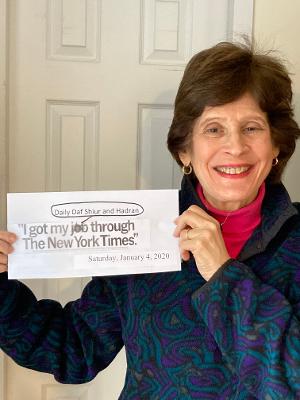
“I got my job through the NY Times” was an ad campaign when I was growing up. I can headline “I got my daily Daf shiur and Hadran through the NY Times”. I read the January 4, 2020 feature on Reb. Michelle Farber and Hadran and I have been participating ever since. Thanks NY Times & Hadran!
Deborah Aschheim
Deborah Aschheim

New York, United States

I was moved to tears by the Hadran Siyyum HaShas. I have learned Torah all my life, but never connected to learning Gemara on a regular basis until then. Seeing the sheer joy Talmud Torah at the siyyum, I felt compelled to be part of it, and I haven’t missed a day!
It’s not always easy, but it is so worthwhile, and it has strengthened my love of learning. It is part of my life now.

Michelle Lewis
Michelle Lewis

Beit Shemesh, Israel

I started to listen to Michelle’s podcasts four years ago. The minute I started I was hooked. I’m so excited to learn the entire Talmud, and think I will continue always. I chose the quote “while a woman is engaged in conversation she also holds the spindle”. (Megillah 14b). It reminds me of all of the amazing women I learn with every day who multi-task, think ahead and accomplish so much.

Julie Mendelsohn
Julie Mendelsohn

Zichron Yakov, Israel

I learned daf more off than on 40 years ago. At the beginning of the current cycle, I decided to commit to learning daf regularly. Having Rabanit Michelle available as a learning partner has been amazing. Sometimes I learn with Hadran, sometimes with my husband, and sometimes on my own. It’s been fun to be part of an extended learning community.

Miriam Pollack
Miriam Pollack

Honolulu, Hawaii, United States

I heard the new Daf Yomi cycle was starting and I was curious, so I searched online for a women’s class and was pleasently surprised to find Rabanit Michelle’s great class reviews in many online articles. It has been a splendid journey. It is a way to fill my days with Torah, learning so many amazing things I have never heard before during my Tanach learning at High School. Thanks so much .

Martha Tarazi
Martha Tarazi

Panama, Panama

I started learning Daf Yomi inspired by תָּפַסְתָּ מְרוּבֶּה לֹא תָּפַסְתָּ, תָּפַסְתָּ מוּעָט תָּפַסְתָּ. I thought I’d start the first page, and then see. I was swept up into the enthusiasm of the Hadran Siyum, and from there the momentum kept building. Rabbanit Michelle’s shiur gives me an anchor, a connection to an incredible virtual community, and an energy to face whatever the day brings.

Medinah Korn
Medinah Korn

בית שמש, Israel

When the new cycle began, I thought, If not now, when? I’d just turned 72. I feel like a tourist on a tour bus passing astonishing scenery each day. Rabbanit Michelle is my beloved tour guide. When the cycle ends, I’ll be 80. I pray that I’ll have strength and mind to continue the journey to glimpse a little more. My grandchildren think having a daf-learning savta is cool!

Wendy Dickstein
Wendy Dickstein

Jerusalem, Israel

I started learning Daf Yomi in January 2020 after watching my grandfather, Mayer Penstein z”l, finish shas with the previous cycle. My grandfather made learning so much fun was so proud that his grandchildren wanted to join him. I was also inspired by Ilana Kurshan’s book, If All the Seas Were Ink. Two years in, I can say that it has enriched my life in so many ways.

Leeza Hirt Wilner
Leeza Hirt Wilner

New York, United States

I am grateful for the structure of the Daf Yomi. When I am freer to learn to my heart’s content, I learn other passages in addition. But even in times of difficulty, I always know that I can rely on the structure and social support of Daf Yomi learners all over the world.

I am also grateful for this forum. It is very helpful to learn with a group of enthusiastic and committed women.

Janice Block-2
Janice Block

Beit Shemesh, Israel

The start of my journey is not so exceptional. I was between jobs and wanted to be sure to get out every day (this was before corona). Well, I was hooked after about a month and from then on only looked for work-from-home jobs so I could continue learning the Daf. Daf has been a constant in my life, though hurricanes, death, illness/injury, weddings. My new friends are Rav, Shmuel, Ruth, Joanna.
Judi Felber
Judi Felber

Raanana, Israel

When I began the previous cycle, I promised myself that if I stuck with it, I would reward myself with a trip to Israel. Little did I know that the trip would involve attending the first ever women’s siyum and being inspired by so many learners. I am now over 2 years into my second cycle and being part of this large, diverse, fascinating learning family has enhanced my learning exponentially.

Shira Krebs
Shira Krebs

Minnesota, United States

Retirement and Covid converged to provide me with the opportunity to commit to daily Talmud study in October 2020. I dove into the middle of Eruvin and continued to navigate Seder Moed, with Rabannit Michelle as my guide. I have developed more confidence in my learning as I completed each masechet and look forward to completing the Daf Yomi cycle so that I can begin again!

Rhona Fink
Rhona Fink

San Diego, United States

I started my Daf Yomi journey at the beginning of the COVID19 pandemic.

Karena Perry
Karena Perry

Los Angeles, United States

Megillah 3

בְּנֵס הָיוּ עוֹמְדִין!

stood by way of a miracle?

אִין, מִהְוָה הֲווֹ, וְלָא הֲווֹ יָדְעִי הֵי בְּאֶמְצַע תֵּיבָה וְהֵי בְּסוֹף תֵּיבָה, וַאֲתוֹ צוֹפִים וְתַקִּינוּ פְּתוּחִין בְּאֶמְצַע תֵּיבָה וּסְתוּמִין בְּסוֹף תֵּיבָה.

The Gemara answers: Yes, two forms of these letters did exist at that time, but the people did not know which one of them was to be used in the middle of the word and which at the end of the word, and the Seers came and established that the open forms are to used be in the middle of the word and the closed forms at the end of the word.

סוֹף סוֹף ״אֵלֶּה הַמִּצְוֹת״, שֶׁאֵין נָבִיא עָתִיד לְחַדֵּשׁ דָּבָר מֵעַתָּה! אֶלָּא שְׁכָחוּם וְחָזְרוּ וְיִסְּדוּם.

The Gemara asks: Ultimately, however, doesn’t the phrase “these are the commandments” (Leviticus 27:34) indicate that a prophet is not permitted to initiate any matter of halakha from now on? Rather, it may be suggested that the final letters already existed at the time of the giving of the Torah, but over the course of time the people forgot them, and the prophets then came and reestablished them.

וְאָמַר רַבִּי יִרְמְיָה וְאִיתֵּימָא רַבִּי חִיָּיא בַּר אַבָּא: תַּרְגּוּם שֶׁל תּוֹרָה — אוּנְקְלוֹס הַגֵּר אֲמָרוֹ מִפִּי רַבִּי אֱלִיעֶזֶר וְרַבִּי יְהוֹשֻׁעַ. תַּרְגּוּם שֶׁל נְבִיאִים — יוֹנָתָן בֶּן עוּזִּיאֵל אֲמָרוֹ מִפִּי חַגַּי זְכַרְיָה וּמַלְאָכִי, וְנִזְדַּעְזְעָה אֶרֶץ יִשְׂרָאֵל אַרְבַּע מֵאוֹת פַּרְסָה עַל אַרְבַּע מֵאוֹת פַּרְסָה. יָצְתָה בַּת קוֹל וְאָמְרָה: מִי הוּא זֶה שֶׁגִּילָּה סְתָרַיי לִבְנֵי אָדָם?

§ The Gemara cites another ruling of Rabbi Yirmeya or Rabbi Ḥiyya bar Abba. Rabbi Yirmeya said, and some say that it was Rabbi Ḥiyya bar Abba who said: The Aramaic translation of the Torah used in the synagogues was composed by Onkelos the convert based on the teachings of Rabbi Eliezer and Rabbi Yehoshua. The Aramaic translation of the Prophets was composed by Yonatan ben Uzziel based on a tradition going back to the last prophets, Haggai, Zechariah, and Malachi. The Gemara relates that when Yonatan ben Uzziel wrote his translation, Eretz Yisrael quaked over an area of four hundred parasangs [parsa] by four hundred parasangs, and a Divine Voice emerged and said: Who is this who has revealed My secrets to mankind?

עָמַד יוֹנָתָן בֶּן עוּזִּיאֵל עַל רַגְלָיו וְאָמַר: אֲנִי הוּא שֶׁגִּלִּיתִי סְתָרֶיךָ לִבְנֵי אָדָם, גָּלוּי וְיָדוּעַ לְפָנֶיךָ שֶׁלֹּא לִכְבוֹדִי עָשִׂיתִי, וְלֹא לִכְבוֹד בֵּית אַבָּא, אֶלָּא לִכְבוֹדְךָ עָשִׂיתִי, שֶׁלֹּא יִרְבּוּ מַחֲלוֹקֹת בְּיִשְׂרָאֵל.

Yonatan ben Uzziel stood up on his feet and said: I am the one who has revealed Your secrets to mankind through my translation. However, it is revealed and known to You that I did this not for my own honor, and not for the honor of the house of my father, but rather it was for Your honor that I did this, so that discord not increase among the Jewish people. In the absence of an accepted translation, people will disagree about the meaning of obscure verses, but with a translation, the meaning will be clear.

וְעוֹד בִּיקֵּשׁ לְגַלּוֹת תַּרְגּוּם שֶׁל כְּתוּבִים, יָצְתָה בַּת קוֹל וְאָמְרָה לוֹ: דַּיֶּיךָּ! מַאי טַעְמָא — מִשּׁוּם דְּאִית בֵּיהּ קֵץ מָשִׁיחַ.

And Yonatan ben Uzziel also sought to reveal a translation of the Writings, but a Divine Voice emerged and said to him: It is enough for you that you translated the Prophets. The Gemara explains: What is the reason that he was denied permission to translate the Writings? Because it has in it a revelation of the end, when the Messiah will arrive. The end is foretold in a cryptic manner in the book of Daniel, and were the book of Daniel translated, the end would become manifestly revealed to all.

וְתַרְגּוּם שֶׁל תּוֹרָה, אוּנְקְלוֹס הַגֵּר אֲמָרוֹ? וְהָא אָמַר רַב אִיקָא בַּר אָבִין אָמַר רַב חֲנַנְאֵל אָמַר רַב: מַאי דִּכְתִיב: ״וַיִּקְרְאוּ בְּסֵפֶר תּוֹרַת הָאֱלֹהִים מְפוֹרָשׁ וְשׂוֹם שֶׂכֶל וַיָּבִינוּ בַּמִּקְרָא״. ״וַיִּקְרְאוּ בְּסֵפֶר תּוֹרַת הָאֱלֹהִים״ — זֶה מִקְרָא; ״מְפוֹרָשׁ״ — זֶה תַּרְגּוּם;

The Gemara asks: Was the translation of the Torah really composed by Onkelos the convert? Didn’t Rav Ika bar Avin say that Rav Ḥananel said that Rav said: What is the meaning of that which is written with respect to the days of Ezra: “And they read in the book, the Torah of God, distinctly; and they gave the sense, and they caused them to understand the reading” (Nehemiah 8:8)? The verse should be understood as follows: “And they read in the book, the Torah of God,” this is the scriptural text; “distinctly,” this is the translation, indicating that they immediately translated the text into Aramaic, as was customary during public Torah readings.

״וְשׂוֹם שֶׂכֶל״ — אֵלּוּ הַפְּסוּקִין; ״וַיָּבִינוּ בַּמִּקְרָא״ — אֵלּוּ פִּיסְקֵי טְעָמִים, וְאָמְרִי לַהּ — אֵלּוּ הַמָּסוֹרֹת! — שְׁכָחוּם וְחָזְרוּ וְיִסְּדוּם.

“And they gave the sense,” these are the divisions of the text into separate verses. “And they caused them to understand the reading,” these are the cantillation notes, through which the meaning of the text is further clarified. And some say that these are the Masoretic traditions with regard to the manner in which each word is to be written. This indicates that the Aramaic translation already existed at the beginning of the Second Temple period, well before the time of Onkelos. The Gemara answers: The ancient Aramaic translation was forgotten and then Onkelos came and reestablished it.

מַאי שְׁנָא דְּאוֹרָיְיתָא דְּלָא אִזְדַּעְזְעָה וְאַדִּנְבִיאֵי אִזְדַּעְזְעָה? דְּאוֹרָיְיתָא — מִיפָּרְשָׁא מִלְּתָא, דִּנְבִיאֵי — אִיכָּא מִילֵּי דְּמִיפָּרְשָׁן וְאִיכָּא מִילֵּי דִּמְסַתְּמָן, דִּכְתִיב: ״בַּיּוֹם הַהוּא יִגְדַּל הַמִּסְפֵּד בִּירוּשָׁלִַם כְּמִסְפַּד הֲדַדְרִימּוֹן בְּבִקְעַת מְגִידּוֹן״,

The Gemara asks: What is different about the translation of Prophets? Why is it that when Onkelos revealed the translation of the Torah, Eretz Yisrael did not quake, and when he revealed the translation of the Prophets, it quaked? The Gemara explains: The meaning of matters discussed in the Torah is clear, and therefore its Aramaic translation did not reveal the meaning of passages that had not been understood previously. Conversely, in the Prophets, there are matters that are clear and there are matters that are obscure, and the Aramaic translation revealed the meaning of obscure passages. The Gemara cites an example of an obscure verse that is clarified by the Aramaic translation: As it is written: “On that day shall there be a great mourning in Jerusalem, like the mourning of Hadadrimmon in the valley of Megiddon” (Zechariah 12:11).

וְאָמַר רַב יוֹסֵף: אִלְמָלֵא תַּרְגּוּמָא דְּהַאי קְרָא — לָא יָדַעְנָא מַאי קָאָמַר: בְּיוֹמָא הַהוּא יִסְגֵּי מִסְפְּדָא בִּירוּשְׁלֶים כְּמִסְפְּדָא דְּאַחְאָב בַּר עָמְרִי דִּקְטַל יָתֵיהּ הֲדַדְרִימּוֹן בֶּן טַבְרִימּוֹן בְּרָמוֹת גִּלְעָד וּכְמִסְפְּדָא דְּיֹאשִׁיָּה בַּר אָמוֹן דִּקְטַל יָתֵיהּ פַּרְעֹה חֲגִירָא בְּבִקְעַת מְגִידּוֹ.

And with regard to that verse, Rav Yosef said: Were it not for the Aramaic translation of this verse, we would not have known what it is saying, as the Bible does not mention any incident involving Hadadrimmon in the valley of Megiddon. The Aramaic translation reads as follows: On that day, the mourning in Jerusalem will be as great as the mourning for Ahab, son of Omri, who was slain by Hadadrimmon, son of Tavrimon, in Ramoth-Gilead, and like the mourning for Josiah, son of Amon, who was slain by Pharaoh the lame in the valley of Megiddon. The translation clarifies that the verse is referring to two separate incidents of mourning, and thereby clarifies the meaning of this verse.

״וְרָאִיתִי אֲנִי דָנִיֵּאל לְבַדִּי אֶת הַמַּרְאָה וְהָאֲנָשִׁים אֲשֶׁר הָיוּ עִמִּי לֹא רָאוּ אֶת הַמַּרְאָה אֲבָל חֲרָדָה גְדוֹלָה נָפְלָה עֲלֵיהֶם וַיִּבְרְחוּ בְּהֵחָבֵא״. מַאן נִינְהוּ אֲנָשִׁים? אָמַר רַבִּי יִרְמְיָה וְאִיתֵּימָא רַבִּי חִיָּיא בַּר אַבָּא: זֶה חַגַּי זְכַרְיָה וּמַלְאָכִי.

§ The Gemara introduces another statement from the same line of tradition. The verse states: “And I, Daniel, alone saw the vision, for the men who were with me did not see the vision; but a great trembling fell upon them, so that they fled to hide themselves” (Daniel 10:7). Who were these men? The term “men” in the Bible indicates important people; who were they? Rabbi Yirmeya said, and some say that it was Rabbi Ḥiyya bar Abba who said: These are the prophets Haggai, Zechariah, and Malachi.

אִינְהוּ עֲדִיפִי מִינֵּיהּ, וְאִיהוּ עֲדִיף מִינַּיְיהוּ. אִינְהוּ עֲדִיפִי מִינֵּיהּ — דְּאִינְהוּ נְבִיאֵי וְאִיהוּ לָאו נָבִיא. אִיהוּ עֲדִיף מִינַּיְיהוּ — דְּאִיהוּ חֲזָא וְאִינְהוּ לָא חֲזוֹ.

The Gemara comments: In certain ways they, the prophets, were greater than him, Daniel, and in certain ways he, Daniel, was greater than them. They were greater than him, as they were prophets and he was not a prophet. Haggai, Zechariah, and Malachi were sent to convey the word of God to the Jewish people, while Daniel was not sent to reveal his visions to others. In another way, however, he was greater than them, as he saw this vision, and they did not see this vision, indicating that his ability to perceive obscure and cryptic visions was greater than theirs.

וְכִי מֵאַחַר דְּלָא חֲזוֹ, מַאי טַעְמָא אִיבְּעִיתוּ? אַף עַל גַּב דְּאִינְהוּ לָא חֲזוֹ, מַזָּלַיְיהוּ חֲזוֹ.

The Gemara asks: Since they did not see the vision, what is the reason that they were frightened? The Gemara answers: Even though they did not see the vision, their guardian angels saw it, and therefore they sensed that there was something fearful there and they fled.

אָמַר רָבִינָא: שְׁמַע מִינַּהּ: הַאי מַאן דְּמִיבְּעִית, אַף עַל גַּב דְּאִיהוּ לָא חָזֵי, מַזָּלֵיהּ חָזֵי. מַאי תַּקַּנְתֵּיהּ? לִיקְרֵי קְרִיאַת שְׁמַע. וְאִי קָאֵים בִּמְקוֹם הַטִּנּוֹפֶת — לִינְשׁוֹף מִדּוּכְתֵּיהּ אַרְבַּע גַּרְמִידֵי. וְאִי לָא — לֵימָא הָכִי: ״עִיזָּא דְּבֵי טַבָּחֵי שַׁמִּינָא מִינַּאי״.

Ravina said: Learn from this incident that with regard to one who is frightened for no apparent reason, although he does not see anything menacing, his guardian angel sees it, and therefore he should take steps in order to escape the danger. The Gemara asks: What is his remedy? He should recite Shema, which will afford him protection. And if he is standing in a place of filth, where it is prohibited to recite verses from the Torah, he should distance himself four cubits from his current location in order to escape the danger. And if he is not able to do so, let him say the following incantation: The goat of the slaughterhouse is fatter than I am, and if a calamity must fall upon something, it should fall upon it.

וְהַשְׁתָּא דְּאָמְרַתְּ ״מְדִינָה וּמְדִינָה וְעִיר וָעִיר״ — לִדְרָשָׁה, ״מִשְׁפָּחָה וּמִשְׁפָּחָה״ לְמַאי אֲתָא? אָמַר רַבִּי יוֹסֵי בַּר חֲנִינָא: לְהָבִיא מִשְׁפְּחוֹת כְּהוּנָּה וּלְוִיָּה, שֶׁמְּבַטְּלִין עֲבוֹדָתָן וּבָאִין לִשְׁמוֹעַ מִקְרָא מְגִילָּה.

§ After this digression, the Gemara returns to the exposition of a verse cited above. Now that you have said that the phrases “every province” and “every city” appear for the purposes of midrashic exposition, for what exposition do the words “every family” appear in that same verse (Esther 9:28)? Rabbi Yosei bar Ḥanina said: These words come to include the priestly and Levitical families, and indicate that they cancel their service in the Temple and come to hear the reading of the Megilla.

דְּאָמַר רַב יְהוּדָה אָמַר רַב: כֹּהֲנִים בַּעֲבוֹדָתָן וּלְוִיִּם בְּדוּכָנָן וְיִשְׂרָאֵל בְּמַעֲמָדָן — כּוּלָּן מְבַטְּלִין עֲבוֹדָתָן וּבָאִין לִשְׁמוֹעַ מִקְרָא מְגִילָּה.

As Rav Yehuda said that Rav said: The priests at their Temple service, the Levites on their platform in the Temple, where they sung the daily psalm, and the Israelites at their watches, i.e., the group of Israelites, corresponding to the priestly watches, who would come to Jerusalem and gather in other locations as representatives of the entire nation to observe or pray for the success of the Temple service, all cancel their service and come to hear the reading of the Megilla.

תַּנְיָא נָמֵי הָכִי: כֹּהֲנִים בַּעֲבוֹדָתָן, וּלְוִיִּם בְּדוּכָנָן, וְיִשְׂרָאֵל בְּמַעֲמָדָן — כּוּלָּן מְבַטְּלִין עֲבוֹדָתָן וּבָאִין לִשְׁמוֹעַ מִקְרָא מְגִילָּה. מִכָּאן סָמְכוּ שֶׁל בֵּית רַבִּי שֶׁמְּבַטְּלִין תַּלְמוּד תּוֹרָה וּבָאִין לִשְׁמוֹעַ מִקְרָא מְגִילָּה, קַל וָחוֹמֶר מֵעֲבוֹדָה: וּמָה עֲבוֹדָה שֶׁהִיא חֲמוּרָה — מְבַטְּלִינַן, תַּלְמוּד תּוֹרָה לֹא כׇּל שֶׁכֵּן.

This is also taught in a baraita: The priests at their service, the Levites on the platform, and the Israelites at their watches, all cancel their service and come to hear the reading of the Megilla. The Sages of the house of Rabbi Yehuda HaNasi relied upon the halakha stated here and determined that one cancels his Torah study and comes to hear the reading of the Megilla. They derived this principle by means of an a fortiori inference from the Temple service: Just as one who is engaged in performing service in the Temple, which is very important, cancels his service in order to hear the Megilla, is it not all the more so obvious that one who is engaged in Torah study cancels his study to hear the Megilla?

וַעֲבוֹדָה חֲמוּרָה מִתַּלְמוּד תּוֹרָה? וְהָכְתִיב: ״וַיְהִי בִּהְיוֹת יְהוֹשֻׁעַ בִּירִיחוֹ וַיִּשָּׂא עֵינָיו וַיַּרְא וְהִנֵּה אִישׁ עוֹמֵד לְנֶגְדּוֹ [וְגוֹ׳] וַיִּשְׁתָּחוּ (לְאַפָּיו)״.

The Gemara asks: Is the Temple service more important than Torah study? Isn’t it written: “And it came to pass when Joshua was by Jericho that he lifted up his eyes and looked, and behold, a man stood over against him with his sword drawn in his hand. And Joshua went over to him and said to him: Are you for us, or for our adversaries? And he said, No, but I am captain of the host of the Lord, I have come now. And Joshua fell on his face to the earth, and bowed down” (Joshua 5:13–14).

וְהֵיכִי עָבֵיד הָכִי? וְהָאָמַר רַבִּי יְהוֹשֻׁעַ בֶּן לֵוִי: אָסוּר לְאָדָם שֶׁיִּתֵּן שָׁלוֹם לַחֲבֵירוֹ בַּלַּיְלָה, חָיְישִׁינַן שֶׁמָּא שֵׁד הוּא! שָׁאנֵי הָתָם דְּאָמַר לֵיהּ: ״כִּי אֲנִי שַׂר צְבָא ה׳״.

The Gemara first seeks to clarify the incident described in the verse. How did Joshua do this, i.e., how could he bow to a figure he did not recognize? Didn’t Rabbi Yehoshua ben Levi say: It is prohibited for a person to greet his fellow at night if he does not recognize him, as we are concerned that perhaps it is a demon? How did Joshua know that it was not a demon? The Gemara answers: There it was different, as the visitor said to him: But I am captain of the host of the Lord.

וְדִלְמָא מְשַׁקְּרִי? גְּמִירִי דְּלָא מַפְּקִי שֵׁם שָׁמַיִם לְבַטָּלָה.

The Gemara asks: Perhaps this was a demon and he lied? The Gemara answers: It is learned as a tradition that demons do not utter the name of Heaven for naught, and therefore since the visitor had mentioned the name of God, Joshua was certain that this was indeed an angel.

אָמַר לוֹ: אֶמֶשׁ בִּטַּלְתֶּם תָּמִיד שֶׁל בֵּין הָעַרְבַּיִם, וְעַכְשָׁיו בִּטַּלְתֶּם תַּלְמוּד תּוֹרָה. אָמַר לוֹ: עַל אֵיזֶה מֵהֶן בָּאתָ? אָמַר לוֹ: ״עַתָּה בָאתִי״, מִיָּד: ״וַיָּלֶן יְהוֹשֻׁעַ בַּלַּיְלָה הַהוּא בְּתוֹךְ הָעֵמֶק״, אָמַר רַבִּי יוֹחָנָן:

As for the angel’s mission, the Gemara explains that the angel said to Joshua: Yesterday, i.e., during the afternoon, you neglected the afternoon daily offering due to the impending battle, and now, at night, you have neglected Torah study, and I have come to rebuke you. Joshua said to him: For which of these sins have you come? He said to him: I have come now, indicating that neglecting Torah study is more severe than neglecting to sacrifice the daily offering. Joshua immediately determined to rectify the matter, as the verses states: “And Joshua lodged that night” (Joshua 8:9) “in the midst of the valley [ha’emek]” (Joshua 8:13), and Rabbi Yoḥanan said:

מְלַמֵּד שֶׁלָּן בְּעוּמְקָהּ שֶׁל הֲלָכָה. וְאָמַר רַב שְׁמוּאֵל בַּר אוּנְיָא: גָּדוֹל תַּלְמוּד תּוֹרָה יוֹתֵר מֵהַקְרָבַת תְּמִידִין, שֶׁנֶּאֱמַר: ״עַתָּה בָאתִי״!

This teaches that he spent the night in the depths [be’umeka] of halakha, i.e., that he spent the night studying Torah with the Jewish people. And Rav Shmuel bar Unya said: Torah study is greater than sacrificing the daily offerings, as it is stated: “I have come now” (Joshua 5:14), indicating that the angel came to rebuke Joshua for neglecting Torah study and not for neglecting the daily offering. Consequently, how did the Sages of the house of Rabbi Yehuda HaNasi determine that the Temple service is more important than Torah study?

לָא קַשְׁיָא: הָא דְּרַבִּים, וְהָא דְּיָחִיד.

The Gemara explains that it is not difficult. This statement, with regard to the story of Joshua, is referring to Torah study by the masses, which is greater than the Temple service. That statement of the Sages of the house of Rabbi Yehuda HaNasi is referring to Torah study by an individual, which is less significant than the Temple service.

וּדְיָחִיד קַל? וְהָתְנַן: נָשִׁים בַּמּוֹעֵד מְעַנּוֹת אֲבָל לֹא מְטַפְּחוֹת, רַבִּי יִשְׁמָעֵאל אוֹמֵר: אִם הָיוּ סְמוּכוֹת לַמִּטָּה — מְטַפְּחוֹת. בְּרָאשֵׁי חֳדָשִׁים בַּחֲנוּכָּה וּבְפוּרִים, מְעַנּוֹת וּמְטַפְּחוֹת בָּזֶה וּבָזֶה, אֲבָל לֹא מְקוֹנְנוֹת.

The Gemara asks: Is the Torah study of an individual a light matter? Didn’t we learn in a mishna: On the intermediate days of a Festival, women may lament the demise of the deceased in unison, but they may not clap their hands in mourning? Rabbi Yishmael says: Those that are close to the bier may clap. On the New Moon, on Hanukkah, and on Purim, which are not mandated by Torah law, they may both lament and clap their hands in mourning. However, on both groups of days, they may not wail responsively, a form of wailing where one woman wails and the others repeat after her.

וְאָמַר רַבָּה בַּר הוּנָא: אֵין מוֹעֵד בִּפְנֵי תַּלְמִיד חָכָם — כׇּל שֶׁכֵּן חֲנוּכָּה וּפוּרִים.

And Rabba bar Huna said: All these regulations were said with regard to an ordinary person, but there are no restrictions on expressions of mourning on the intermediate days of a Festival in the presence of a deceased Torah scholar. If a Torah scholar dies on the intermediate days of a Festival, the women may lament, clap, and wail responsively as on any other day, and all the more so on Hanukkah and Purim. This indicates that even the Torah study of an individual is of great importance.

כְּבוֹד תּוֹרָה קָאָמְרַתְּ. כְּבוֹד תּוֹרָה דְּיָחִיד — חָמוּר, תַּלְמוּד תּוֹרָה דְּיָחִיד — קַל.

The Gemara rejects this argument: You speak of the honor that must be shown to the Torah, and indeed, the honor that must be shown to the Torah in the case of an individual Torah scholar is important; but the Torah study of an individual in itself is light and is less significant than the Temple service.

אָמַר רָבָא, פְּשִׁיטָא לִי: עֲבוֹדָה וּמִקְרָא מְגִילָּה — מִקְרָא מְגִילָּה עֲדִיף, מִדְּרַבִּי יוֹסֵי בַּר חֲנִינָא. תַּלְמוּד תּוֹרָה וּמִקְרָא מְגִילָּה — מִקְרָא מְגִילָּה עֲדִיף, מִדְּסָמְכוּ שֶׁל בֵּית רַבִּי.

§ Rava said: It is obvious to me that if one must choose between Temple service and reading the Megilla, reading the Megilla takes precedence, based upon the exposition of Rabbi Yosei bar Ḥanina with regard to the phrase “every family” (Esther 9:28). Similarly, if one must choose between Torah study and reading the Megilla, reading the Megilla takes precedence, based upon the fact that the Sages of the house of Rabbi Yehuda HaNasi relied on Rabbi Yosei bar Ḥanina’s exposition to rule that one interrupts Torah study to hear the reading of the Megilla.

תַּלְמוּד תּוֹרָה וּמֵת מִצְוָה — מֵת מִצְוָה עֲדִיף, מִדְּתַנְיָא: מְבַטְּלִין תַּלְמוּד תּוֹרָה לְהוֹצָאַת מֵת, וּלְהַכְנָסַת כַּלָּה. עֲבוֹדָה וּמֵת מִצְוָה — מֵת מִצְוָה עֲדִיף, מִ״וּלְאַחוֹתוֹ״.

Furthermore, it is obvious that if one must choose between Torah study and tending to a corpse with no one to bury it [met mitzva], the task of burying the met mitzva takes precedence. This is derived from that which is taught in a baraita: One cancels his Torah study to bring out a corpse for burial, and to join a wedding procession and bring in the bride. Similarly, if one must choose between the Temple service and tending to a met mitzva, tending to the met mitzva takes precedence, based upon the halakha derived from the term “or for his sister” (Numbers 6:7).

דְּתַנְיָא: ״וּלְאַחוֹתוֹ״ מַה תַּלְמוּד לוֹמַר? הֲרֵי שֶׁהָיָה הוֹלֵךְ לִשְׁחוֹט אֶת פִּסְחוֹ וְלָמוּל אֶת בְּנוֹ, וְשָׁמַע שֶׁמֵּת לוֹ מֵת, יָכוֹל יִטַּמָּא —

As it is taught in a baraita with regard to verses addressing the laws of a nazirite: “All the days that he consecrates himself to the Lord, he shall not come near to a dead body. For his father, or for his mother, for his brother, or for his sister, he shall not make himself ritually impure for them when they die” (Numbers 6:6–7). What is the meaning when the verse states “or for his sister”? The previous verse, which states that the nazirite may not come near a dead body, already prohibits him from becoming impure through contact with his sister. Therefore, the second verse is understood to be teaching a different halakha: One who was going to slaughter his Paschal lamb or to circumcise his son, and he heard that a relative of his died, one might have thought that he should return and become ritually impure with the impurity imparted by a corpse.

אָמַרְתָּ: ״לֹא יִטַּמָּא״. יָכוֹל כְּשֵׁם שֶׁאֵינוֹ מִיטַּמֵּא לַאֲחוֹתוֹ, כָּךְ אֵינוֹ מִיטַּמֵּא לְמֵת מִצְוָה — תַּלְמוּד לוֹמַר: ״וּלְאַחוֹתוֹ״. לַאֲחוֹתוֹ הוּא דְּאֵינוֹ מִיטַּמֵּא, אֲבָל מִיטַּמֵּא לְמֵת מִצְוָה.

You said: He shall not become impure; the death of his relative will not override so significant a mitzva from the Torah. One might have thought: Just as he does not become impure for his sister, so he does not become impure for a corpse with no one to bury it [met mitzva]. The verse states: “Or for his sister”; he may not become impure for his sister, as someone else can attend to her burial, but he does become impure for a met mitzva.

בָּעֵי רָבָא: מִקְרָא מְגִילָּה וּמֵת מִצְוָה הֵי מִינַּיְיהוּ עֲדִיף? מִקְרָא מְגִילָּה עֲדִיף מִשּׁוּם פַּרְסוֹמֵי נִיסָּא, אוֹ דִּלְמָא מֵת מִצְוָה עֲדִיף מִשּׁוּם כְּבוֹד הַבְּרִיּוֹת? בָּתַר דְּבַעְיָא הֲדַר פַּשְׁטַהּ: מֵת מִצְוָה עֲדִיף, דְּאָמַר מָר: גָּדוֹל כְּבוֹד הַבְּרִיּוֹת שֶׁדּוֹחֶה אֶת לֹא תַעֲשֶׂה שֶׁבַּתּוֹרָה.

On the basis of these premises, Rava raised a dilemma: If one must choose between reading the Megilla and tending to a met mitzva, which of them takes precedence? Does reading the Megilla take precedence due to the value of publicizing the miracle, or perhaps burying the met mitzva takes precedence due to the value of preserving human dignity? After he raised the dilemma, Rava then resolved it on his own and ruled that attending to a met mitzva takes precedence, as the Master said: Great is human dignity, as it overrides a prohibition in the Torah. Consequently, it certainly overrides the duty to read the Megilla, despite the fact that reading the Megilla publicizes the miracle.

גּוּפָא, אָמַר רַבִּי יְהוֹשֻׁעַ בֶּן לֵוִי: כְּרַךְ, וְכׇל הַסָּמוּךְ לוֹ, וְכׇל הַנִּרְאֶה עִמּוֹ — נִדּוֹן כִּכְרַךְ. תָּנָא: סָמוּךְ — אַף עַל פִּי שֶׁאֵינוֹ נִרְאֶה, נִרְאֶה — אַף עַל פִּי שֶׁאֵינוֹ סָמוּךְ.

§ The Gemara examines the matter itself cited in the course of the previous discussion. Rabbi Yehoshua ben Levi said: A walled city, and all settlements adjacent to it, and all settlements that can be seen with it, i.e., that can be seen from the walled city, are considered like the walled city, and the Megilla is read on the fifteenth. It was taught in the Tosefta: This is the halakha with regard to a settlement adjacent to a walled city, although it cannot be seen from it, and also a place that can be seen from the walled city, although it is not adjacent to it.

בִּשְׁלָמָא נִרְאֶה אַף עַל פִּי שֶׁאֵינוֹ סָמוּךְ, מַשְׁכַּחַתְּ לַהּ כְּגוֹן דְּיָתְבָה בְּרֹאשׁ הָהָר. אֶלָּא סָמוּךְ אַף עַל פִּי שֶׁאֵינוֹ נִרְאֶה הֵיכִי מַשְׁכַּחַתְּ לַהּ? אָמַר רַבִּי יִרְמְיָה: שֶׁיּוֹשֶׁבֶת בַּנַּחַל.

The Gemara examines the Tosefta: Granted that with regard to a place that can be seen from the walled city, although it is not adjacent to it, you find it where the place is located on the top of a mountain, and therefore it can be seen from the walled city, although it is at some distance from it. However, with regard to a settlement that is adjacent to a walled city although it cannot be seen from it, how can you find these circumstances? Rabbi Yirmeya said: You find it, for example, where the place is located in a valley, and therefore it is possible that it cannot be seen from the walled city, although it is very close to it.

וְאָמַר רַבִּי יְהוֹשֻׁעַ בֶּן לֵוִי: כְּרַךְ שֶׁיָּשַׁב וּלְבַסּוֹף הוּקַּף — נִדּוֹן כִּכְפָר. מַאי טַעְמָא? דִּכְתִיב: ״וְאִישׁ כִּי יִמְכּוֹר בֵּית מוֹשַׁב עִיר חוֹמָה״, שֶׁהוּקַּף וּלְבַסּוֹף יָשַׁב, וְלֹא שֶׁיָּשַׁב וּלְבַסּוֹף הוּקַּף.

And Rabbi Yehoshua ben Levi said: A walled city that was initially settled and only later surrounded by a wall is considered a village rather than a walled city. What is the reason? As it is written: “And if a man sells a residential house in a walled city” (Leviticus 25:29). The wording of the verse indicates that it is referring to a place that was first surrounded by a wall and only later settled, and not to a place that was first settled and only later surrounded by a wall.

וְאָמַר רַבִּי יְהוֹשֻׁעַ בֶּן לֵוִי: כְּרַךְ שֶׁאֵין בּוֹ עֲשָׂרָה בַּטְלָנִין — נִדּוֹן כִּכְפָר. מַאי קָא מַשְׁמַע לַן? תְּנֵינָא: אֵיזוֹ הִיא עִיר גְּדוֹלָה — כֹּל שֶׁיֵּשׁ בָּהּ עֲשָׂרָה בַּטְלָנִין. פָּחוֹת מִכָּאן, הֲרֵי זֶה כְּפָר? כְּרַךְ אִיצְטְרִיךְ לֵיהּ, אַף עַל גַּב דְּמִיקַּלְעִי לֵיהּ מֵעָלְמָא.

And Rabbi Yehoshua ben Levi said: A walled city that does not have ten idlers, i.e., individuals who do not work and are available to attend to communal needs, is treated as a village. The Gemara asks: What is he teaching us? We already learned in a mishna (5a): What is a large city? Any city in which there are ten idlers; however, if there are fewer than that, it is a village. The Gemara answers: Nevertheless, it was necessary for Rabbi Yehoshua ben Levi to teach this halakha with regard to a large city, to indicate that even if idlers happen to come there from elsewhere, since they are not local residents, it is still considered a village.

וְאָמַר רַבִּי יְהוֹשֻׁעַ בֶּן לֵוִי: כְּרַךְ שֶׁחָרַב וּלְבַסּוֹף יָשַׁב נִדּוֹן כִּכְרַךְ. מַאי חָרַב? אִילֵּימָא חָרְבוּ חוֹמוֹתָיו: יָשַׁב — אִין, לֹא יָשַׁב — לָא? וְהָא תַּנְיָא, רַבִּי אֱלִיעֶזֶר בַּר יוֹסֵי אוֹמֵר: ״אֲשֶׁר לוֹא חוֹמָה״, אַף עַל פִּי שֶׁאֵין לוֹ עַכְשָׁיו וְהָיָה לוֹ קוֹדֶם לָכֵן.

And Rabbi Yehoshua ben Levi also said: A walled city that was destroyed and then later settled is considered a city. The Gemara asks: What is meant by the term destroyed? If we say that the city’s walls were destroyed, and Rabbi Yehoshua ben Levi comes to teach us that if it was settled, yes it is treated as a walled city, but if it was not settled, it is not treated that way, there is a difficulty. Isn’t it taught in a baraita that Rabbi Eliezer bar Yosei says: The verse states: “Which has [lo] a wall (Leviticus 25:30),” and the word lo is written with an alef, which means no, but in context the word lo is used as though it was written with a vav, meaning that it has a wall. This indicates that even though the city does not have a wall now, as the wall was destroyed, if it had a wall before, it retains its status as a walled city.

אֶלָּא מַאי ״חָרַב״ — שֶׁחָרַב מֵעֲשָׂרָה בַּטְלָנִין.

Rather, what is meant by the term destroyed? That it was destroyed in the sense that it no longer has ten idlers, and therefore it is treated like a village. However, once it has ten idlers again, it is treated like a city.

וְאָמַר רַבִּי יְהוֹשֻׁעַ בֶּן לֵוִי:

And Rabbi Yehoshua ben Levi said:

Want to follow content and continue where you left off?

Create an account today to track your progress, mark what you’ve learned, and follow the shiurim that speak to you.

Clear all items from this list?

This will remove ALL the items in this section. You will lose any progress or history connected to them. This is irreversible.

Cancel
Yes, clear all

Are you sure you want to delete this item?

You will lose any progress or history connected to this item.

Cancel
Yes, delete