








In today’s siyum, we discussed asceticism in other cultures and religions as well as Levinas’ approach to Nazirites.
Nazir 66

October 27, 2015 | י״ד בחשון תשע״ו
Share this shiur:
Want to dedicate learning? Get started here:
Nazir 66
אָמַר רָבָא: לָא תֵּימָא סָפֵק חֲזָא סָפֵק לָא חֲזָא. אֶלָּא וַדַּאי חֲזָא, סָפֵק מֵחֲמַת שִׁכְבַת זֶרַע, סָפֵק מֵחֲמַת רְאִיָּיה. כֵּיוָן שֶׁנִּזְקַק לְטוּמְאָה — סְפֵיקוֹ טָמֵא.
Rava said: Do not say that it is uncertain whether he saw a discharge and uncertain whether he did not see one. The uncertainty is not with regard to whether he experienced a discharge at all. Rather, he certainly saw a discharge, but it is uncertain whether the discharge was due to, i.e., defined as, an emission of semen, and it is uncertain whether the discharge was due to the sighting of ziva. In this case, once he has been confirmed as being ritually impure as a zav, his uncertain case is also impure.
שִׁכְבַת זַרְעוֹ טְמֵאָה. לְמַאי? אִילֵימָא לְמַגָּע — מִי גָּרַע מִשִּׁכְבַת זֶרַע דְּטָהוֹר? אֶלָּא זַרְעוֹ שֶׁל זָב מְטַמֵּא בְּמַשָּׂא.
§ The mishna taught that his semen is impure. The Gemara asks: With regard to what halakha is the mishna stating that the semen of a zav is impure? If we say that this is referring to the impurity of contact, i.e., this semen renders one who touches it impure, there is no need to teach this halakha. Is it any worse than the semen of a pure man, which also imparts impurity through contact? Rather, the mishna is teaching that the semen of a zav renders people impure even by carrying, like the impurity of ziva.
מַאן שָׁמְעַתְּ לְהָא דְּאָמַר שִׁכְבַת זֶרַע שֶׁל זָב מְטַמֵּא בְּמַשָּׂא? אִילֵּימָא הַאי תַּנָּא, דְּתַנְיָא, רַבִּי אֱלִיעֶזֶר אוֹמֵר: שִׁכְבַת זַרְעוֹ שֶׁל זָב אֵינוֹ מְטַמֵּא בְּמַשָּׂא, וְרַבִּי יְהוֹשֻׁעַ אוֹמֵר: מְטַמֵּא בְּמַשָּׂא, לְפִי שֶׁאִי אֶפְשָׁר לָהּ בְּלֹא צִיחְצוּחֵי זִיבָה. אֲפִילּוּ רַבִּי יְהוֹשֻׁעַ לָא אָמַר אֶלָּא מִשּׁוּם צִיחְצוּחֵי זִיבָה, אֲבָל בְּעֵינֵיהּ, לָא אָמַר!
The Gemara asks: Who did you hear that said that the semen of a zav renders one impure by carrying? If we say it is this tanna, as it is taught in a baraita that Rabbi Eliezer says: The semen of a zav does not render one impure by carrying, and Rabbi Yehoshua says: It does render one impure by carrying, because it is impossible for his semen to be without droplets of ziva; yet this source is no proof, as even Rabbi Yehoshua said that this semen imparts impurity by carrying only due to the droplets of ziva it contains. However, he did not say that semen in its unadulterated form renders people impure.
אֶלָּא אָמַר רַב אַדָּא בַּר אַהֲבָה: לוֹמַר שֶׁאֵין תּוֹלִין בָּהּ.
Rather, Rav Adda bar Ahava said: The mishna does not mean that the semen of a zav itself renders one impure by carrying. Rather, it comes to say that one does not attribute the ziva to it. Even if the man experienced a discharge within twenty-four hours of his ejaculation of semen, one does not say his discharge was triggered by a general weakening as a result of his seminal emission. Once the man has experienced two discharges of a zav he is an impure zav, and this third discharge is also considered ziva.
סְבַר רַב פָּפָּא קַמֵּיהּ דְּרָבָא לְמֵימַר אַיְּידֵי חוּלְשָׁא הוּא דְּחָזֵי. אָמַר לֵיהּ רָבָא, וְהָתְנַן: גֵּר שֶׁנִּתְגַּיֵּיר מְטַמֵּא מִיָּד בְּזִיבָה! אֲמַר לֵיהּ: אֵין לְךָ חוֹלִי גָּדוֹל מִזֶּה.
When he was before Rava, Rav Pappa thought to say the following explanation for this halakha: Since he sees his discharges out of the weakness brought about from his previous ziva, it can be assumed that any later discharge, even one that follows a seminal emission, is ziva. Rava said to him: But didn’t we learn in a mishna (Zavim 2:3): A convert who has just converted can immediately become impure as a zav. Even if he had a seminal emission as a gentile, subsequently converted, and then experienced the discharge of a zav, one does not associate the discharge of a zav with the earlier emission of semen. Rather, it is treated as the first discharge of a zav. In this case there is no prior weakness of a zav to speak of, and nevertheless the convert is impure as a zav. Rav Pappa said to Rava: There is no greater illness than this. The very acceptance of mitzvot can be considered an illness, as the burden of mitzvot is a weighty matter. For this reason, one does not ascribe a discharge of a zav to the earlier emission of semen.
אֶלָּא, תַּנָּאֵי הִיא. דְּתַנְיָא: שִׁכְבַת זֶרַע שֶׁל זָב מְטַמֵּא בְּמַשָּׂא כׇּל מֵעֵת לְעֵת. וְרַבִּי יוֹסֵי אוֹמֵר: יוֹמוֹ.
The Gemara comments: Rather, the possibility rejected earlier, that the mishna means that semen of a zav imparts impurity by carrying, is a dispute between tanna’im, as it is taught in a baraita: The semen of a zav renders one impure by carrying like the regular discharge of a zav for a twenty-four hour period. In other words, if a zav experienced a seminal emission within twenty-four hours of a ziva, the seminal emission does not impart impurity only through contact in the manner of the semen of a pure individual, but by carrying as well. And Rabbi Yosei says that it imparts impurity by carrying only on its day, i.e., if the seminal emission was before the evening of the day of the ziva. As opposed to Rabbi Eliezer and Rabbi Yehoshua cited earlier, these tanna’im both maintain that the semen of a zav imparts impurity by carrying like ziva does.
בְּמַאי קָמִיפַּלְגִי? בְּדִשְׁמוּאֵל. דִּשְׁמוּאֵל רָמֵי: כְּתִיב: ״כִּי יִהְיֶה בְךָ אִישׁ אֲשֶׁר לֹא יִהְיֶה טָהוֹר מִקְּרֵה לָיְלָה״. וּכְתִיב: ״לִפְנוֹת עֶרֶב יִרְחַץ בַּמָּיִם״.
The Gemara asks: With regard to what do the first tanna and Rabbi Yosei disagree? What is the basis of their dispute? The Gemara answers: They disagree with regard to the following issue discussed by Shmuel, as Shmuel raises a contradiction: It is written: “If there be among you any man who is not pure, by reason of that which chances him by night, then shall he go abroad out of the camp, he shall not come within the camp” (Deuteronomy 23:11). This verse is applied to a zav who experienced a seminal emission. And it is written: “When evening comes on, he shall bathe himself in water, and when the sun is down, he may come within the camp” (Deuteronomy 23:12).
מַאן דְּאָמַר מֵעֵת לְעֵת דָּיֵיק מִ״לִּפְנוֹת עֶרֶב״, וְאִידַּךְ דָּיֵיק ״מִקְּרֵה לָיְלָה״.
The Gemara explains the dispute. The one who says that the semen of a zav imparts impurity by carrying for a twenty-four hour period after experiencing a ziva infers from the phrase “when evening comes on” that the period can involve two evenings, as “comes on” indicates another evening. If so, the semen imparts impurity by carrying for a full twenty-four hour period. And the other Sage, Rabbi Yosei, infers from the expression “by reason of that which chances him by night” that the seminal emission imparts impurity by carrying only until that night, i.e., until the end of the day on which the man experienced the ziva.
וּמַאן דְּאָמַר מִ״לִּפְנוֹת עֶרֶב״, הָכְתִיב ״מִקְּרֵה לָיְלָה״! אָמַר לָךְ, אוֹרְחָא דְקֶרִי לֵמֵתֵיא בְּלֵילְיָא.
The Gemara asks: But according to the one who says that this halakha is derived from “when evening comes on,” isn’t it written: “By reason of that which chances him by night”? The Gemara answers: He could have said to you that this verse affords no proof, as it is referring to the usual case and it is the manner of a seminal emission to occur at night. Consequently, one cannot derive a halakha from this expression.
מַתְנִי׳ נָזִיר הָיָה שְׁמוּאֵל, כְּדִבְרֵי רַבִּי נְהוֹרַאי, שֶׁנֶּאֱמַר ״וּמוֹרָה לֹא יַעֲלֶה עַל רֹאשׁוֹ״. נֶאֱמַר בְּשִׁמְשׁוֹן ״וּמוֹרָה״, וְנֶאֱמַר בִּשְׁמוּאֵל ״וּמוֹרָה״. מָה ״מוֹרָה״ הָאֲמוּרָה בְּשִׁמְשׁוֹן — נָזִיר, אַף ״מוֹרָה״ הָאֲמוּרָה בִּשְׁמוּאֵל — נָזִיר.
MISHNA: The tractate concludes with an aggadic statement about nazirites. Samuel the prophet was a nazirite, in accordance with the statement of Rabbi Nehorai, as it was stated that when Hannah, his mother, prayed for a son, she vowed: “And no mora shall come upon his head” (I Samuel 1:11). How is it derived that mora is an expression of naziriteship? It is stated with regard to Samson: “And no razor [mora] shall come upon his head, for the child shall be a nazirite to God” (Judges 13:5), and it is stated: “And no mora,” with regard to Samuel. Just as the term “mora” that is stated with regard to Samson means that he was a nazirite, so too the term “mora” that is stated with regard to Samuel indicates that he was a nazirite.
אָמַר רַבִּי יוֹסֵי: וַהֲלֹא אֵין מוֹרָה אֶלָּא שֶׁל בָּשָׂר וָדָם! אֲמַר לֵיהּ רַבִּי נְהוֹרַאי: וַהֲלֹא כְּבָר נֶאֱמַר ״וַיֹּאמֶר שְׁמוּאֵל אֵיךְ אֵלֵךְ וְשָׁמַע שָׁאוּל וַהֲרָגָנִי״, שֶׁכְּבָר הָיָה עָלָיו מוֹרָא שֶׁל בָּשָׂר וָדָם.
Rabbi Yosei said: But doesn’t the word “mora” mean nothing other than the fear of flesh and blood? The word should be read as though it were written with an alef, and not a heh, so that it means fear. Rabbi Nehorai said to him: But isn’t it already stated: “And Samuel said: How can I go; if Saul hears it he will kill me” (I Samuel 16:2). This verse indicates that there was fear of flesh and blood upon Samuel. Consequently, the term mora must be understood in accordance with its plain meaning of a razor. If so, Samuel was indeed a nazirite.
גְּמָ׳ אֲמַר לֵיהּ רַב לְחִיָּיא בְּרֵיהּ:
GEMARA: Rav said to his son Ḥiyya:
חֲטוֹף וּבָרֵיךְ. וְכֵן אֲמַר לֵיהּ רַב הוּנָא לְרַבָּה בְּרֵיהּ: חֲטוֹף וּבָרֵיךְ.
Seize the opportunity and quickly recite a blessing over the cup of blessing for the Grace after Meals. And similarly, Rav Huna said to his son, Rabba: Seize the opportunity and recite a blessing.
לְמֵימְרָא דִּמְבָרֵךְ עֲדִיף? וְהָתַנְיָא, רַבִּי יוֹסֵי אוֹמֵר: גָּדוֹל הָעוֹנֶה ״אָמֵן״ יוֹתֵר מִן הַמְבָרֵךְ. וְאָמַר לוֹ רַבִּי נְהוֹרַאי: הַשָּׁמַיִם! כָּךְ הוּא: תֵּדַע שֶׁהֲרֵי גּוּלְיָירִים מִתְגָּרִין בַּמִּלְחָמָה, וְגִבּוֹרִים נוֹצְחִין.
The Gemara asks: Is this to say that one who recites a blessing is preferable to one who answers amen? But isn’t it taught in a baraita that Rabbi Yosei says: The one who answers amen is greater than the one who recites the blessing? And Rabbi Nehorai said to him: By Heavens, it is so. Know that this is true, as the military assistants [gulyarim] descend to the battlefield and initiate the war and the mighty follow them and prevail. The amen that follows a blessing is compared to the mighty who join the war after the assistants, illustrating that answering amen is more significant than reciting the initial blessing.
תַּנָּאֵי הִיא, דְּתַנְיָא: אֶחָד הַמְבָרֵךְ וְאֶחָד הָעוֹנֶה ״אָמֵן״ בַּמַּשְׁמָע, אֶלָּא שֶׁמְּמַהֲרִין לַמְבָרֵךְ תְּחִילָּה.
The Gemara responds: This is a dispute between tanna’im, as it is taught in a baraita: Both the one who recites a blessing and the one who answers amen are included among those who “stand up and bless” (Nehemiah 9:5), but one hurries to first reward the one who recites the blessing. This baraita apparently holds that reciting the blessing is greater than answering amen.
אָמַר רַבִּי אֶלְעָזָר אָמַר רַבִּי חֲנִינָא: תַּלְמִידֵי חֲכָמִים מַרְבִּים שָׁלוֹם בָּעוֹלָם, שֶׁנֶּאֱמַר: ״וְכׇל בָּנַיִךְ לִמּוּדֵי ה׳ וְרַב שְׁלוֹם בָּנָיִךְ״.
Rabbi Elazar said that Rabbi Ḥanina said: Torah scholars increase peace in the world, as it is stated: “And all your children [banayikh] shall be taught of the Lord, and great shall be the peace of your children” (Isaiah 54:13). The Sages interpreted this verse homiletically: Do not read it as: “Your children [banayikh],” but as: Your builders [bonayikh]. Torah scholars are those who build peace for their generation.
הַדְרָן עֲלָךְ הַגּוֹיִם אֵין לָהֶם נְזִירוּת וּסְלִיקָא לַהּ מַסֶּכֶת נָזִיר
Follow 
New to Talmud?
Check out our resources designed to help you navigate a page of Talmud – and study at the pace, level and style that fits you.
The Hadran Women’s Tapestry
Meet the diverse women learning Gemara at Hadran and hear their stories.
I started my journey on the day I realized that the Siyum was happening in Yerushalayim and I was missing out. What? I told myself. How could I have not known about this? How can I have missed out on this opportunity? I decided that moment, I would start Daf Yomi and Nach Yomi the very next day. I am so grateful to Hadran. I am changed forever because I learn Gemara with women. Thank you.
Linda Brownstein
Mitspe, Israel
My curiosity was peaked after seeing posts about the end of the last cycle. I am always looking for opportunities to increase my Jewish literacy & I am someone that is drawn to habit and consistency. Dinnertime includes a “Guess what I learned on the daf” segment for my husband and 18 year old twins. I also love the feelings of connection with my colleagues who are also learning.

Diana Bloom
Tampa, United States
I started learning at the beginning of the cycle after a friend persuaded me that it would be right up my alley. I was lucky enough to learn at Rabbanit Michelle’s house before it started on zoom and it was quickly part of my daily routine. I find it so important to see for myself where halachot were derived, where stories were told and to get more insight into how the Rabbis interacted.

Deborah Dickson
Ra’anana, Israel
I started learning Daf Yomi in January 2020 after watching my grandfather, Mayer Penstein z”l, finish shas with the previous cycle. My grandfather made learning so much fun was so proud that his grandchildren wanted to join him. I was also inspired by Ilana Kurshan’s book, If All the Seas Were Ink. Two years in, I can say that it has enriched my life in so many ways.

Leeza Hirt Wilner
New York, United States
In January 2020, my chevruta suggested that we “up our game. Let’s do Daf Yomi” – and she sent me the Hadran link. I lost my job (and went freelance), there was a pandemic, and I am still opening the podcast with my breakfast coffee, or after Shabbat with popcorn. My Aramaic is improving. I will need a new bookcase, though.
Rhondda May
Atlanta, Georgia, United States
I never thought I’d be able to do Daf Yomi till I saw the video of Hadran’s Siyum HaShas. Now, 2 years later, I’m about to participate in Siyum Seder Mo’ed with my Hadran community. It has been an incredible privilege to learn with Rabbanit Michelle and to get to know so many caring, talented and knowledgeable women. I look forward with great anticipation and excitement to learning Seder Nashim.
Caroline Ben-Ari
Karmiel, Israel
While vacationing in San Diego, Rabbi Leah Herz asked if I’d be interested in being in hevruta with her to learn Daf Yomi through Hadran. Why not? I had loved learning Gemara in college in 1971 but hadn’t returned. With the onset of covid, Daf Yomi and Rabbanit Michelle centered me each day. Thank-you for helping me grow and enter this amazing world of learning.

Meryll Page
Minneapolis, MN, United States
Ive been learning Gmara since 5th grade and always loved it. Have always wanted to do Daf Yomi and now with Michelle Farber’s online classes it made it much easier to do! Really enjoying the experience thank you!!

Lisa Lawrence
Neve Daniel, Israel
I started learning with rabbis. I needed to know more than the stories. My first teacher to show me “the way of the Talmud” as well as the stories was Samara Schwartz.
Michelle Farber started the new cycle 2 yrs ago and I jumped on for the ride.
I do not look back.
Jenifer Nech
Houston, United States
My husband learns Daf, my son learns Daf, my son-in-law learns Daf.
When I read about Hadran’s Siyyum HaShas 2 years ago, I thought- I can learn Daf too!
I had learned Gemara in Hillel HS in NJ, & I remembered loving it.
Rabbanit Michelle & Hadran have opened my eyes & expanding my learning so much in the past few years. We can now discuss Gemara as a family.
This was a life saver during Covid

Renee Braha
Brooklyn, NY, United States
In my Shana bet at Migdal Oz I attended the Hadran siyum hash”as. Witnessing so many women so passionate about their Torah learning and connection to God, I knew I had to begin with the coming cycle. My wedding (June 24) was two weeks before the siyum of mesechet yoma so I went a little ahead and was able to make a speech and siyum at my kiseh kallah on my wedding day!
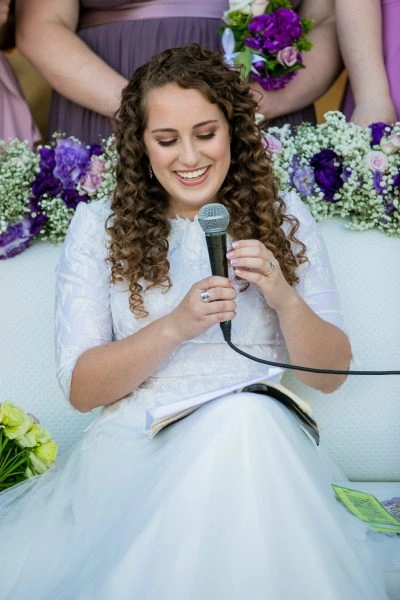
Sharona Guggenheim Plumb
Givat Shmuel, Israel
I tried Daf Yomi in the middle of the last cycle after realizing I could listen to Michelle’s shiurim online. It lasted all of 2 days! Then the new cycle started just days before my father’s first yahrzeit and my youngest daughter’s bat mitzvah. It seemed the right time for a new beginning. My family, friends, colleagues are immensely supportive!
Catriella Freedman
Zichron Yaakov, Israel
I started my journey on the day I realized that the Siyum was happening in Yerushalayim and I was missing out. What? I told myself. How could I have not known about this? How can I have missed out on this opportunity? I decided that moment, I would start Daf Yomi and Nach Yomi the very next day. I am so grateful to Hadran. I am changed forever because I learn Gemara with women. Thank you.
Linda Brownstein
Mitspe, Israel
Studying has changed my life view on הלכה and יהדות and time. It has taught me bonudaries of the human nature and honesty of our sages in their discourse to try and build a nation of caring people .
Goldie Gilad
Kfar Saba, Israel
I read Ilana Kurshan’s “If All the Seas Were Ink” which inspired me. Then the Women’s Siyum in Jerusalem in 2020 convinced me, I knew I had to join! I have loved it- it’s been a constant in my life daily, many of the sugiyot connect to our lives. My family and friends all are so supportive. It’s incredible being part of this community and love how diverse it is! I am so excited to learn more!

Shira Jacobowitz
Jerusalem, Israel
I LOVE learning the Daf. I started with Shabbat. I join the morning Zoom with Reb Michelle and it totally grounds my day. When Corona hit us in Israel, I decided that I would use the Daf to keep myself sane, especially during the days when we could not venture out more than 300 m from our home. Now my husband and I have so much new material to talk about! It really is the best part of my day!

Batsheva Pava
Hashmonaim, Israel
I am a Reform rabbi and took Talmud courses in rabbinical school, but I knew there was so much more to learn. It felt inauthentic to serve as a rabbi without having read the entire Talmud, so when the opportunity arose to start Daf Yomi in 2020, I dove in! Thanks to Hadran, Daf Yomi has enriched my understanding of rabbinic Judaism and deepened my love of Jewish text & tradition. Todah rabbah!
Rabbi Nicki Greninger
California, United States
I began to learn this cycle of Daf Yomi after my husband passed away 2 1/2 years ago. It seemed a good way to connect to him. Even though I don’t know whether he would have encouraged women learning Gemara, it would have opened wonderful conversations. It also gives me more depth for understanding my frum children and grandchildren. Thank you Hadran and Rabbanit Michelle Farber!!

Harriet Hartman
Tzur Hadassah, Israel
I began my journey with Rabbanit Michelle more than five years ago. My friend came up with a great idea for about 15 of us to learn the daf and one of us would summarize weekly what we learned.
It was fun but after 2-3 months people began to leave. I have continued. Since the cycle began Again I have joined the Teaneck women.. I find it most rewarding in so many ways. Thank you
Dena Heller
New Jersey, United States
I had tried to start after being inspired by the hadran siyum, but did not manage to stick to it. However, just before masechet taanit, our rav wrote a message to the shul WhatsApp encouraging people to start with masechet taanit, so I did! And this time, I’m hooked! I listen to the shiur every day , and am also trying to improve my skills.
Laura Major
Yad Binyamin, Israel
Nazir 66
אָמַר רָבָא: לָא תֵּימָא סָפֵק חֲזָא סָפֵק לָא חֲזָא. אֶלָּא וַדַּאי חֲזָא, סָפֵק מֵחֲמַת שִׁכְבַת זֶרַע, סָפֵק מֵחֲמַת רְאִיָּיה. כֵּיוָן שֶׁנִּזְקַק לְטוּמְאָה — סְפֵיקוֹ טָמֵא.
Rava said: Do not say that it is uncertain whether he saw a discharge and uncertain whether he did not see one. The uncertainty is not with regard to whether he experienced a discharge at all. Rather, he certainly saw a discharge, but it is uncertain whether the discharge was due to, i.e., defined as, an emission of semen, and it is uncertain whether the discharge was due to the sighting of ziva. In this case, once he has been confirmed as being ritually impure as a zav, his uncertain case is also impure.
שִׁכְבַת זַרְעוֹ טְמֵאָה. לְמַאי? אִילֵימָא לְמַגָּע — מִי גָּרַע מִשִּׁכְבַת זֶרַע דְּטָהוֹר? אֶלָּא זַרְעוֹ שֶׁל זָב מְטַמֵּא בְּמַשָּׂא.
§ The mishna taught that his semen is impure. The Gemara asks: With regard to what halakha is the mishna stating that the semen of a zav is impure? If we say that this is referring to the impurity of contact, i.e., this semen renders one who touches it impure, there is no need to teach this halakha. Is it any worse than the semen of a pure man, which also imparts impurity through contact? Rather, the mishna is teaching that the semen of a zav renders people impure even by carrying, like the impurity of ziva.
מַאן שָׁמְעַתְּ לְהָא דְּאָמַר שִׁכְבַת זֶרַע שֶׁל זָב מְטַמֵּא בְּמַשָּׂא? אִילֵּימָא הַאי תַּנָּא, דְּתַנְיָא, רַבִּי אֱלִיעֶזֶר אוֹמֵר: שִׁכְבַת זַרְעוֹ שֶׁל זָב אֵינוֹ מְטַמֵּא בְּמַשָּׂא, וְרַבִּי יְהוֹשֻׁעַ אוֹמֵר: מְטַמֵּא בְּמַשָּׂא, לְפִי שֶׁאִי אֶפְשָׁר לָהּ בְּלֹא צִיחְצוּחֵי זִיבָה. אֲפִילּוּ רַבִּי יְהוֹשֻׁעַ לָא אָמַר אֶלָּא מִשּׁוּם צִיחְצוּחֵי זִיבָה, אֲבָל בְּעֵינֵיהּ, לָא אָמַר!
The Gemara asks: Who did you hear that said that the semen of a zav renders one impure by carrying? If we say it is this tanna, as it is taught in a baraita that Rabbi Eliezer says: The semen of a zav does not render one impure by carrying, and Rabbi Yehoshua says: It does render one impure by carrying, because it is impossible for his semen to be without droplets of ziva; yet this source is no proof, as even Rabbi Yehoshua said that this semen imparts impurity by carrying only due to the droplets of ziva it contains. However, he did not say that semen in its unadulterated form renders people impure.
אֶלָּא אָמַר רַב אַדָּא בַּר אַהֲבָה: לוֹמַר שֶׁאֵין תּוֹלִין בָּהּ.
Rather, Rav Adda bar Ahava said: The mishna does not mean that the semen of a zav itself renders one impure by carrying. Rather, it comes to say that one does not attribute the ziva to it. Even if the man experienced a discharge within twenty-four hours of his ejaculation of semen, one does not say his discharge was triggered by a general weakening as a result of his seminal emission. Once the man has experienced two discharges of a zav he is an impure zav, and this third discharge is also considered ziva.
סְבַר רַב פָּפָּא קַמֵּיהּ דְּרָבָא לְמֵימַר אַיְּידֵי חוּלְשָׁא הוּא דְּחָזֵי. אָמַר לֵיהּ רָבָא, וְהָתְנַן: גֵּר שֶׁנִּתְגַּיֵּיר מְטַמֵּא מִיָּד בְּזִיבָה! אֲמַר לֵיהּ: אֵין לְךָ חוֹלִי גָּדוֹל מִזֶּה.
When he was before Rava, Rav Pappa thought to say the following explanation for this halakha: Since he sees his discharges out of the weakness brought about from his previous ziva, it can be assumed that any later discharge, even one that follows a seminal emission, is ziva. Rava said to him: But didn’t we learn in a mishna (Zavim 2:3): A convert who has just converted can immediately become impure as a zav. Even if he had a seminal emission as a gentile, subsequently converted, and then experienced the discharge of a zav, one does not associate the discharge of a zav with the earlier emission of semen. Rather, it is treated as the first discharge of a zav. In this case there is no prior weakness of a zav to speak of, and nevertheless the convert is impure as a zav. Rav Pappa said to Rava: There is no greater illness than this. The very acceptance of mitzvot can be considered an illness, as the burden of mitzvot is a weighty matter. For this reason, one does not ascribe a discharge of a zav to the earlier emission of semen.
אֶלָּא, תַּנָּאֵי הִיא. דְּתַנְיָא: שִׁכְבַת זֶרַע שֶׁל זָב מְטַמֵּא בְּמַשָּׂא כׇּל מֵעֵת לְעֵת. וְרַבִּי יוֹסֵי אוֹמֵר: יוֹמוֹ.
The Gemara comments: Rather, the possibility rejected earlier, that the mishna means that semen of a zav imparts impurity by carrying, is a dispute between tanna’im, as it is taught in a baraita: The semen of a zav renders one impure by carrying like the regular discharge of a zav for a twenty-four hour period. In other words, if a zav experienced a seminal emission within twenty-four hours of a ziva, the seminal emission does not impart impurity only through contact in the manner of the semen of a pure individual, but by carrying as well. And Rabbi Yosei says that it imparts impurity by carrying only on its day, i.e., if the seminal emission was before the evening of the day of the ziva. As opposed to Rabbi Eliezer and Rabbi Yehoshua cited earlier, these tanna’im both maintain that the semen of a zav imparts impurity by carrying like ziva does.
בְּמַאי קָמִיפַּלְגִי? בְּדִשְׁמוּאֵל. דִּשְׁמוּאֵל רָמֵי: כְּתִיב: ״כִּי יִהְיֶה בְךָ אִישׁ אֲשֶׁר לֹא יִהְיֶה טָהוֹר מִקְּרֵה לָיְלָה״. וּכְתִיב: ״לִפְנוֹת עֶרֶב יִרְחַץ בַּמָּיִם״.
The Gemara asks: With regard to what do the first tanna and Rabbi Yosei disagree? What is the basis of their dispute? The Gemara answers: They disagree with regard to the following issue discussed by Shmuel, as Shmuel raises a contradiction: It is written: “If there be among you any man who is not pure, by reason of that which chances him by night, then shall he go abroad out of the camp, he shall not come within the camp” (Deuteronomy 23:11). This verse is applied to a zav who experienced a seminal emission. And it is written: “When evening comes on, he shall bathe himself in water, and when the sun is down, he may come within the camp” (Deuteronomy 23:12).
מַאן דְּאָמַר מֵעֵת לְעֵת דָּיֵיק מִ״לִּפְנוֹת עֶרֶב״, וְאִידַּךְ דָּיֵיק ״מִקְּרֵה לָיְלָה״.
The Gemara explains the dispute. The one who says that the semen of a zav imparts impurity by carrying for a twenty-four hour period after experiencing a ziva infers from the phrase “when evening comes on” that the period can involve two evenings, as “comes on” indicates another evening. If so, the semen imparts impurity by carrying for a full twenty-four hour period. And the other Sage, Rabbi Yosei, infers from the expression “by reason of that which chances him by night” that the seminal emission imparts impurity by carrying only until that night, i.e., until the end of the day on which the man experienced the ziva.
וּמַאן דְּאָמַר מִ״לִּפְנוֹת עֶרֶב״, הָכְתִיב ״מִקְּרֵה לָיְלָה״! אָמַר לָךְ, אוֹרְחָא דְקֶרִי לֵמֵתֵיא בְּלֵילְיָא.
The Gemara asks: But according to the one who says that this halakha is derived from “when evening comes on,” isn’t it written: “By reason of that which chances him by night”? The Gemara answers: He could have said to you that this verse affords no proof, as it is referring to the usual case and it is the manner of a seminal emission to occur at night. Consequently, one cannot derive a halakha from this expression.
מַתְנִי׳ נָזִיר הָיָה שְׁמוּאֵל, כְּדִבְרֵי רַבִּי נְהוֹרַאי, שֶׁנֶּאֱמַר ״וּמוֹרָה לֹא יַעֲלֶה עַל רֹאשׁוֹ״. נֶאֱמַר בְּשִׁמְשׁוֹן ״וּמוֹרָה״, וְנֶאֱמַר בִּשְׁמוּאֵל ״וּמוֹרָה״. מָה ״מוֹרָה״ הָאֲמוּרָה בְּשִׁמְשׁוֹן — נָזִיר, אַף ״מוֹרָה״ הָאֲמוּרָה בִּשְׁמוּאֵל — נָזִיר.
MISHNA: The tractate concludes with an aggadic statement about nazirites. Samuel the prophet was a nazirite, in accordance with the statement of Rabbi Nehorai, as it was stated that when Hannah, his mother, prayed for a son, she vowed: “And no mora shall come upon his head” (I Samuel 1:11). How is it derived that mora is an expression of naziriteship? It is stated with regard to Samson: “And no razor [mora] shall come upon his head, for the child shall be a nazirite to God” (Judges 13:5), and it is stated: “And no mora,” with regard to Samuel. Just as the term “mora” that is stated with regard to Samson means that he was a nazirite, so too the term “mora” that is stated with regard to Samuel indicates that he was a nazirite.
אָמַר רַבִּי יוֹסֵי: וַהֲלֹא אֵין מוֹרָה אֶלָּא שֶׁל בָּשָׂר וָדָם! אֲמַר לֵיהּ רַבִּי נְהוֹרַאי: וַהֲלֹא כְּבָר נֶאֱמַר ״וַיֹּאמֶר שְׁמוּאֵל אֵיךְ אֵלֵךְ וְשָׁמַע שָׁאוּל וַהֲרָגָנִי״, שֶׁכְּבָר הָיָה עָלָיו מוֹרָא שֶׁל בָּשָׂר וָדָם.
Rabbi Yosei said: But doesn’t the word “mora” mean nothing other than the fear of flesh and blood? The word should be read as though it were written with an alef, and not a heh, so that it means fear. Rabbi Nehorai said to him: But isn’t it already stated: “And Samuel said: How can I go; if Saul hears it he will kill me” (I Samuel 16:2). This verse indicates that there was fear of flesh and blood upon Samuel. Consequently, the term mora must be understood in accordance with its plain meaning of a razor. If so, Samuel was indeed a nazirite.
גְּמָ׳ אֲמַר לֵיהּ רַב לְחִיָּיא בְּרֵיהּ:
GEMARA: Rav said to his son Ḥiyya:
חֲטוֹף וּבָרֵיךְ. וְכֵן אֲמַר לֵיהּ רַב הוּנָא לְרַבָּה בְּרֵיהּ: חֲטוֹף וּבָרֵיךְ.
Seize the opportunity and quickly recite a blessing over the cup of blessing for the Grace after Meals. And similarly, Rav Huna said to his son, Rabba: Seize the opportunity and recite a blessing.
לְמֵימְרָא דִּמְבָרֵךְ עֲדִיף? וְהָתַנְיָא, רַבִּי יוֹסֵי אוֹמֵר: גָּדוֹל הָעוֹנֶה ״אָמֵן״ יוֹתֵר מִן הַמְבָרֵךְ. וְאָמַר לוֹ רַבִּי נְהוֹרַאי: הַשָּׁמַיִם! כָּךְ הוּא: תֵּדַע שֶׁהֲרֵי גּוּלְיָירִים מִתְגָּרִין בַּמִּלְחָמָה, וְגִבּוֹרִים נוֹצְחִין.
The Gemara asks: Is this to say that one who recites a blessing is preferable to one who answers amen? But isn’t it taught in a baraita that Rabbi Yosei says: The one who answers amen is greater than the one who recites the blessing? And Rabbi Nehorai said to him: By Heavens, it is so. Know that this is true, as the military assistants [gulyarim] descend to the battlefield and initiate the war and the mighty follow them and prevail. The amen that follows a blessing is compared to the mighty who join the war after the assistants, illustrating that answering amen is more significant than reciting the initial blessing.
תַּנָּאֵי הִיא, דְּתַנְיָא: אֶחָד הַמְבָרֵךְ וְאֶחָד הָעוֹנֶה ״אָמֵן״ בַּמַּשְׁמָע, אֶלָּא שֶׁמְּמַהֲרִין לַמְבָרֵךְ תְּחִילָּה.
The Gemara responds: This is a dispute between tanna’im, as it is taught in a baraita: Both the one who recites a blessing and the one who answers amen are included among those who “stand up and bless” (Nehemiah 9:5), but one hurries to first reward the one who recites the blessing. This baraita apparently holds that reciting the blessing is greater than answering amen.
אָמַר רַבִּי אֶלְעָזָר אָמַר רַבִּי חֲנִינָא: תַּלְמִידֵי חֲכָמִים מַרְבִּים שָׁלוֹם בָּעוֹלָם, שֶׁנֶּאֱמַר: ״וְכׇל בָּנַיִךְ לִמּוּדֵי ה׳ וְרַב שְׁלוֹם בָּנָיִךְ״.
Rabbi Elazar said that Rabbi Ḥanina said: Torah scholars increase peace in the world, as it is stated: “And all your children [banayikh] shall be taught of the Lord, and great shall be the peace of your children” (Isaiah 54:13). The Sages interpreted this verse homiletically: Do not read it as: “Your children [banayikh],” but as: Your builders [bonayikh]. Torah scholars are those who build peace for their generation.
הַדְרָן עֲלָךְ הַגּוֹיִם אֵין לָהֶם נְזִירוּת וּסְלִיקָא לַהּ מַסֶּכֶת נָזִיר
Follow

