Search

Nedarim 43

Want to dedicate learning? Get started here:

English
עברית
podcast placeholder

0:00
0:00


podcast placeholder

0:00
0:00


Summary
Today’s daf is sponsored by Rochie Sommer in celebration of her 2-year anniversary starting daf yomi, “With tremendous thanks to my inspirations, my mom, Meryl Sasnowitz, and our wonderful Rabbanit Michelle.”
Why is it forbidden to not only borrow from but also to lend to someone one is forbidden by a vow to benefit from? If one won’t lend one’s cow to the other and the other vows never to use that cow to plow their field, is it only forbidden for the one who vowed, but others can do it for them? On what does it depend? The Mishna describes a number of different situations where one wants to help another in need when the needy one is forbidden by a vow to benefit from the other – in what way is one able to help in an indirect manner? In the last situation in the Mishna, two people are walking and one is in need of food. The other can put his food down, render it ownerless and the other can then take it. Rabbi Yosi disagrees and doesn’t allow that. Rabbi Yochanan explains the basis for Rabbi Yosi’s opinion – items that are rendered ownerless, only leave the possession of the owner when someone else picks them up, as with a gift. Rabbi Abba raises a difficulty with this, base don a braita, but he himself resolves the difficulty. Rava raises another difficulty and therefore explains Rabbi Yosi’s opinion differently. He understands that the reason is due to an ordinance that rabbis instituted after a case that happened in Beit Horon that is discussed in a Mishna in Nedarim 48a. If one declares items ownerless, one can retract their declaration for up to three days.

Nedarim 43

גְּמָ׳ בִּשְׁלָמָא לֹא יַלְוֶנּוּ — דְּקָא מַהֲנֵי לֵיהּ. אֶלָּא לָא יִלְוֶה הֵימֶנּוּ, מַאי קָא מַהֲנֵי לֵיהּ? וּבִשְׁלָמָא לֹא יִלְוֶה הֵימֶנּוּ וְלֹא יִקַּח הֵימֶנּוּ — דְּקָמִיתְהֲנֵי מִינֵּיהּ, אֶלָּא לֹא יִשְׁאַל הֵימֶנּוּ, מַאי קָא מִיתְהֲנֵי מִינֵּיהּ!

GEMARA: Granted that the person from whom benefit is forbidden may not lend money to the person for whom benefit is forbidden, as he thereby benefits him. However, with regard to the fact that the former may not borrow money from the latter, in what way does he benefit him by borrowing his money? And it could even be said, granted that he may neither borrow money from him nor purchase an item from him, as one benefits in lending money by preserving the value of that money in case the coins deteriorate, and in selling by ridding oneself an item that is difficult to sell. However, with regard to the fact that the person from whom benefit is forbidden may not borrow an item from the person for whom benefit is forbidden, in what way does the lender benefit from him? The borrower returns the same item to the lender.

אָמַר רַבִּי יוֹסֵי בְּרַבִּי חֲנִינָא: כְּגוֹן שֶׁנָּדְרוּ הֲנָאָה זֶה מִזֶּה. אַבָּיֵי אָמַר: גְּזֵירָה לִשְׁאוֹל מִשּׁוּם לְהַשְׁאִיל, וְכֵן בְּכוּלְּהוּ גְּזֵירָה.

Rabbi Yosei, son of Rabbi Ḥanina, said: The mishna is referring to a case where they both vowed that benefit from each other is forbidden. Clearly, then, neither of them may lend to the other or borrow from him. Abaye said: It is possible to explain the mishna as it is written, as referring to a case where only one vowed that benefit from the other is forbidden. However, the Sages issued a decree that it is also prohibited for one to borrow from a person for whom benefit from him is forbidden, due to the concern that he might come to lend to him, as reciprocity is common in these matters. And likewise, that is the explanation in all the cases in the mishna; it is prohibited to borrow money, borrow items, and to purchase items from him due to a rabbinic decree, lest he come to benefit him.

מַתְנִי׳ אָמַר לוֹ: ״הַשְׁאִילֵנִי פָּרָתְךָ״. אָמַר לוֹ: אֵינָהּ פְּנוּיָה. אָמַר: ״קֻוֽנָּם שָׂדִי שֶׁאֲנִי חוֹרֵשׁ בָּהּ לְעוֹלָם״. אִם הָיָה דַּרְכּוֹ לַחְרוֹשׁ — הוּא אָסוּר, וְכׇל אָדָם מוּתָּרִים. וְאִם אֵין דַּרְכּוֹ לַחְרוֹשׁ — הוּא וְכׇל אָדָם אֲסוּרִין.

MISHNA: One said to another: Lend me your cow. The other person said to him: My cow is not available. The one seeking to borrow the cow responded angrily: Plowing my field with this cow is konam forever. If it was his typical manner to plow the field himself, then it is prohibited for him to plow his field with that cow but it is permitted for every other person. If it is not his typical manner to plow the field himself, and he has others plow for him, it is prohibited for him and for every other person to plow his field with that cow, because his intent was to render benefit from plowing with this cow forbidden.

הַמּוּדָּר הֲנָאָה מֵחֲבֵירוֹ וְאֵין לוֹ מַה יֹּאכַל, הוֹלֵךְ אֵצֶל הַחֶנְוָנִי וְאוֹמֵר: אִישׁ פְּלוֹנִי נוֹדֵר מִמֶּנִּי הֲנָאָה וְאֵינִי יוֹדֵעַ מַה אֶעֱשֶׂה. וְהוּא נוֹתֵן לוֹ, וּבָא וְנוֹטֵל מִזֶּה.

In the case of one for whom benefit from another is forbidden by vow and who does not have anything to eat, the one from whom benefit is forbidden goes to the shopkeeper and says to him: So-and-so vowed that benefit from me is forbidden for him and I do not know what I will do. After grasping his intent, the shopkeeper gives food to the one for whom benefit is forbidden, and then the shopkeeper comes and takes payment for the food from that one who spoke to him.

הָיָה בֵּיתוֹ לִבְנוֹת, גְּדֵרוֹ לִגְדּוֹר, שָׂדֵהוּ לִקְצוֹר, הוֹלֵךְ אֵצֶל הַפּוֹעֲלִים וְאוֹמֵר: אִישׁ פְּלוֹנִי מוּדָּר מִמֶּנִּי הֲנָאָה וְאֵינִי יוֹדֵעַ מַה אֶעֱשֶׂה. וְהֵן עוֹשִׂין עִמּוֹ, וּבָאִין וְנוֹטְלִין שָׂכָר מִזֶּה.

Similarly, if the house of one for whom benefit is forbidden by a vow was to be built, his fence to be erected, or his field to be harvested, and laborers were required but he had no money to hire them, the one from whom benefit is forbidden goes to the laborers and says to them: Benefit from me is forbidden by vow to so-and-so and I do not know what I will do. And the laborers perform those tasks with him, and come and take payment for their labor from that person who approached them.

הָיוּ מְהַלְּכִין בַּדֶּרֶךְ וְאֵין לוֹ מַה יֹּאכַל, נוֹתֵן לְאֶחָד לְשׁוּם מַתָּנָה, וְהַלָּה מוּתָּר בָּהּ. אִם אֵין עִמָּהֶם אַחֵר — מַנִּיחַ עַל הַסֶּלַע אוֹ עַל הַגָּדֵר וְאוֹמֵר: הֲרֵי הֵן מוּפְקָרִים לְכׇל מִי שֶׁיַּחְפּוֹץ, וְהַלָּה נוֹטֵל וְאוֹכֵל. וְרַבִּי יוֹסֵי אוֹסֵר.

If the one who vowed to render benefit from him forbidden and the one for whom benefit is forbidden were traveling together along the road and the one for whom benefit is forbidden does not have anything to eat, the one who from whom benefit is forbidden gives food to one other person as a gift, and it is permitted for that person for whom benefit is forbidden to eat the food because it no longer belongs to the one from whom benefit is forbidden. If there is no other person with them, the one who vowed places the food on the nearest rock or on the nearest fence and says: These food items are hereby rendered ownerless and are available to anyone who wants them. Then that person for whom benefit is forbidden takes and eats the food. Rabbi Yosei prohibits doing so.

גְּמָ׳ אָמַר רַבִּי יוֹחָנָן: מַאי טַעְמָא דְּרַבִּי יוֹסֵי? קָסָבַר: הֶפְקֵר כְּמַתָּנָה. מָה מַתָּנָה — עַד דְּאָתְיָא מֵרְשׁוּת נוֹתֵן לִרְשׁוּת מְקַבֵּל, אַף הֶפְקֵר — עַד דְּאָתְיָא לִרְשׁוּת זוֹכֶה.

GEMARA: With regard to the dispute between the Rabbis and Rabbi Yosei whether one from whom benefit is forbidden to another can give the other person food by declaring the food ownerless, Rabbi Yoḥanan said: What is the reason for the opinion of Rabbi Yosei? He holds that the legal status of the process of rendering property ownerless is like that of the acquisition of a gift. Just as acquisition of a gift is not complete until the item comes from the possession of the one who gives the gift into the possession of the one who receives the gift, so too, the process of rendering property ownerless is not complete until the item comes into the possession of the one who acquires it. According to Rabbi Yosei, it is prohibited for the one for whom benefit is forbidden to take the food that was declared ownerless. Since it still belongs to the one from whom benefit is forbidden, by taking the food he derives forbidden benefit from him.

מֵתִיב רַבִּי אַבָּא: וְהַלָּה נוֹטֵל וְאוֹכֵל, וְרַבִּי יוֹסֵי אוֹסֵר. אָמַר רַבִּי יוֹסֵי: אֵימָתַי — בִּזְמַן שֶׁנִּדְרוֹ קוֹדֵם לְהֶפְקֵירוֹ.

Rabbi Abba raises an objection from a baraita: And then that person takes and eats the food; and Rabbi Yosei prohibits doing so. Rabbi Yosei said: When is it prohibited to do so? When his vow predates his declaration that the food is ownerless. In that case, the vow took effect on all his possessions, including those that he later declared ownerless.

אֲבָל אִם הָיָה הֶפְקֵירוֹ קוֹדֵם לְנִדְרוֹ — הֲרֵי זֶה מוּתָּר. וְאִי אָמְרַתְּ עַד דְּאָתֵי לִרְשׁוּת זוֹכֶה, מָה לִי נִדְרוֹ קוֹדֵם לְהֶפְקֵירוֹ, מָה לִי הֶפְקֵירוֹ קוֹדֵם לְנִדְרוֹ?

However, if his declaration that the food is ownerless predates his vow, it is permitted for the other person to eat the food. And if you say that the reason for the opinion of Rabbi Yosei is because the food remains in the possession of the owner until it comes into the possession of the one who acquires it, what is different for me if his vow predates his declaration that the food is ownerless, and what is different for me if his declaration that the food is ownerless predates his vow? In any event, the item remains in the possession of its owner and the one for whom benefit is forbidden benefits from it.

הוּא מוֹתֵיב לַהּ וְהוּא מְשַׁנֵּי לַהּ: כׇּל הַנּוֹדֵר אֵין דַּעְתּוֹ עַל מַה שֶּׁהִפְקִיר.

The Gemara answers: Rabbi Abba raised the objection and he answered that objection. The difference between the cases does not relate to the halakhot of ownerless property; rather, it relates to the nature of vows. The intent of anyone who vows is that the vow not apply to an item that he rendered ownerless. Therefore, when he declares the food ownerless and then vows, he does not intend to include the ownerless food in his vow, and the prohibition does not take effect upon it.

מֵתִיב רָבָא: מִקְצָתָן לָרִאשׁוֹן וְכוּלָּן לַשֵּׁנִי — רִאשׁוֹן קָנָה,

Rava raised an objection: With regard to a person on his deathbed who ordered his executor to distribute all his property, if he recovers, he may retract the gift. However, if he ordered him to distribute only a portion of his property and kept the rest, he cannot retract the gift. If he ordered him to distribute his property to two people and said: A portion of the property is given to the first person and all of the remaining property is given to the second person, then if he recovered, the first person acquired the property that was given him, as it was a partial gift.

שֵׁנִי לֹא קָנָה!

And the second person did not acquire the property that was given him, as it was a gift of all his remaining property, which can be retracted. Although the first person did not yet acquire the property, as the person on his deathbed did not die, the property is no longer considered to be in the possession of the one who owned it. This is clear from the fact that if it were still in his possession, the gift to the second person would not be a gift of all his remaining property. This contradicts the opinion of Rabbi Yoḥanan, who said in explanation of the opinion of Rabbi Yosei: Acquisition of a gift is not complete until the item comes from the possession of the one who gives the gift into the possession of the one who receives the gift.

אֶלָּא אָמַר רָבָא, הַיְינוּ טַעְמָא דְּרַבִּי יוֹסֵי: גְּזֵירָה מִשּׁוּם מַתְּנַת בֵּית חוֹרוֹן.

Rather, Rava said that this is the reason for the opinion of Rabbi Yosei: It is prohibited by rabbinic decree for the one for whom benefit is forbidden to take food that was declared ownerless, due to the gift of Beit Ḥoron. An incident occurred in Beit Ḥoron involving a person who employed artifice and gave a gift to another to circumvent a vow. The Sages ruled that artifice of that sort is forbidden. Here too, when he renounced ownership he merely employed artifice to circumvent the vow.

תַּנְיָא: הַמַּפְקִיר אֶת שָׂדֵהוּ, כׇּל שְׁלֹשָׁה יָמִים — יָכוֹל לַחֲזוֹר בּוֹ, מִכָּאן וְאֵילָךְ — אֵין יָכוֹל לַחֲזוֹר בּוֹ.

It is taught in a baraita: In the case of one who declares his field ownerless, for the entire three days after that declaration he is able to retract it. From this point forward, he is unable to retract the declaration.

New to Talmud?

Check out our resources designed to help you navigate a page of Talmud – and study at the pace, level and style that fits you. 

The Hadran Women’s Tapestry

Meet the diverse women learning Gemara at Hadran and hear their stories. 

I started at the beginning of this cycle. No 1 reason, but here’s 5.
In 2019 I read about the upcoming siyum hashas.
There was a sermon at shul about how anyone can learn Talmud.
Talmud references come up when I am studying. I wanted to know more.
Yentl was on telly. Not a great movie but it’s about studying Talmud.
I went to the Hadran website: A new cycle is starting. I’m gonna do this

Denise Neapolitan
Denise Neapolitan

Cambridge, United Kingdom

I had dreamed of doing daf yomi since I had my first serious Talmud class 18 years ago at Pardes with Rahel Berkovitz, and then a couple of summers with Leah Rosenthal. There is no way I would be able to do it without another wonderful teacher, Michelle, and the Hadran organization. I wake up and am excited to start each day with the next daf.

Beth Elster
Beth Elster

Irvine, United States

What a great experience to learn with Rabbanit Michelle Farber. I began with this cycle in January 2020 and have been comforted by the consistency and energy of this process throughout the isolation period of Covid. Week by week, I feel like I am exploring a treasure chest with sparkling gems and puzzling antiquities. The hunt is exhilarating.

Marian Frankston
Marian Frankston

Pennsylvania, United States

My curiosity was peaked after seeing posts about the end of the last cycle. I am always looking for opportunities to increase my Jewish literacy & I am someone that is drawn to habit and consistency. Dinnertime includes a “Guess what I learned on the daf” segment for my husband and 18 year old twins. I also love the feelings of connection with my colleagues who are also learning.

Diana Bloom
Diana Bloom

Tampa, United States

I started learning Gemara at the Yeshivah of Flatbush. And I resumed ‘ברוך ה decades later with Rabbanit Michele at Hadran. I started from Brachot and have had an exciting, rewarding experience throughout seder Moed!

Anne Mirsky (1)
Anne Mirsky

Maale Adumim, Israel

I started learning on January 5, 2020. When I complete the 7+ year cycle I will be 70 years old. I had been intimidated by those who said that I needed to study Talmud in a traditional way with a chevruta, but I decided the learning was more important to me than the method. Thankful for Daf Yomi for Women helping me catch up when I fall behind, and also being able to celebrate with each Siyum!

Pamela Elisheva
Pamela Elisheva

Bakersfield, United States

I started learning Jan 2020 when I heard the new cycle was starting. I had tried during the last cycle and didn’t make it past a few weeks. Learning online from old men didn’t speak to my soul and I knew Talmud had to be a soul journey for me. Enter Hadran! Talmud from Rabbanit Michelle Farber from a woman’s perspective, a mother’s perspective and a modern perspective. Motivated to continue!

Keren Carter
Keren Carter

Brentwood, California, United States

I read Ilana Kurshan’s “If All the Seas Were Ink” which inspired me. Then the Women’s Siyum in Jerusalem in 2020 convinced me, I knew I had to join! I have loved it- it’s been a constant in my life daily, many of the sugiyot connect to our lives. My family and friends all are so supportive. It’s incredible being part of this community and love how diverse it is! I am so excited to learn more!

Shira Jacobowitz
Shira Jacobowitz

Jerusalem, Israel

In my Shana bet at Migdal Oz I attended the Hadran siyum hash”as. Witnessing so many women so passionate about their Torah learning and connection to God, I knew I had to begin with the coming cycle. My wedding (June 24) was two weeks before the siyum of mesechet yoma so I went a little ahead and was able to make a speech and siyum at my kiseh kallah on my wedding day!

Sharona Guggenheim Plumb

Givat Shmuel, Israel

After all the hype on the 2020 siyum I became inspired by a friend to begin learning as the new cycle began.with no background in studying Talmud it was a bit daunting in the beginning. my husband began at the same time so we decided to study on shabbat together. The reaction from my 3 daughters has been fantastic. They are very proud. It’s been a great challenge for my brain which is so healthy!

Stacey Goodstein Ashtamker

Modi’in, Israel

I started learning Daf Yomi inspired by תָּפַסְתָּ מְרוּבֶּה לֹא תָּפַסְתָּ, תָּפַסְתָּ מוּעָט תָּפַסְתָּ. I thought I’d start the first page, and then see. I was swept up into the enthusiasm of the Hadran Siyum, and from there the momentum kept building. Rabbanit Michelle’s shiur gives me an anchor, a connection to an incredible virtual community, and an energy to face whatever the day brings.

Medinah Korn
Medinah Korn

בית שמש, Israel

While vacationing in San Diego, Rabbi Leah Herz asked if I’d be interested in being in hevruta with her to learn Daf Yomi through Hadran. Why not? I had loved learning Gemara in college in 1971 but hadn’t returned. With the onset of covid, Daf Yomi and Rabbanit Michelle centered me each day. Thank-you for helping me grow and enter this amazing world of learning.
Meryll Page
Meryll Page

Minneapolis, MN, United States

I began my Daf Yomi journey on January 5, 2020. I had never learned Talmud before. Initially it struck me as a bunch of inane and arcane details with mind bending logic. I am now smitten. Rabbanit Farber brings the page to life and I am eager to learn with her every day!

Lori Stark
Lori Stark

Highland Park, United States

Since I started in January of 2020, Daf Yomi has changed my life. It connects me to Jews all over the world, especially learned women. It makes cooking, gardening, and folding laundry into acts of Torah study. Daf Yomi enables me to participate in a conversation with and about our heritage that has been going on for more than 2000 years.

Shira Eliaser
Shira Eliaser

Skokie, IL, United States

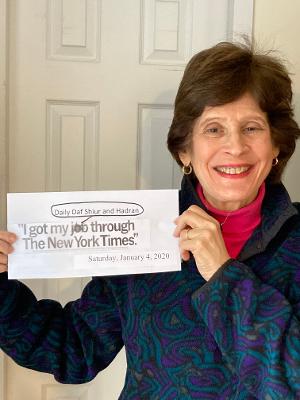
“I got my job through the NY Times” was an ad campaign when I was growing up. I can headline “I got my daily Daf shiur and Hadran through the NY Times”. I read the January 4, 2020 feature on Reb. Michelle Farber and Hadran and I have been participating ever since. Thanks NY Times & Hadran!
Deborah Aschheim
Deborah Aschheim

New York, United States

I started my journey on the day I realized that the Siyum was happening in Yerushalayim and I was missing out. What? I told myself. How could I have not known about this? How can I have missed out on this opportunity? I decided that moment, I would start Daf Yomi and Nach Yomi the very next day. I am so grateful to Hadran. I am changed forever because I learn Gemara with women. Thank you.

Linda Brownstein
Linda Brownstein

Mitspe, Israel

Attending the Siyyum in Jerusalem 26 months ago inspired me to become part of this community of learners. So many aspects of Jewish life have been illuminated by what we have learned in Seder Moed. My day is not complete without daf Yomi. I am so grateful to Rabbanit Michelle and the Hadran Community.

Nancy Kolodny
Nancy Kolodny

Newton, United States

I started the daf at the beginning of this cycle in January 2020. My husband, my children, grandchildren and siblings have been very supportive. As someone who learned and taught Tanach and mefarshim for many years, it has been an amazing adventure to complete the six sedarim of Mishnah, and now to study Talmud on a daily basis along with Rabbanit Michelle and the wonderful women of Hadran.

Rookie Billet
Rookie Billet

Jerusalem, Israel

After reading the book, “ If All The Seas Were Ink “ by Ileana Kurshan I started studying Talmud. I searched and studied with several teachers until I found Michelle Farber. I have been studying with her for two years. I look forward every day to learn from her.

Janine Rubens
Janine Rubens

Virginia, United States

I started learning on January 5, 2020. When I complete the 7+ year cycle I will be 70 years old. I had been intimidated by those who said that I needed to study Talmud in a traditional way with a chevruta, but I decided the learning was more important to me than the method. Thankful for Daf Yomi for Women helping me catch up when I fall behind, and also being able to celebrate with each Siyum!

Pamela Elisheva
Pamela Elisheva

Bakersfield, United States

Nedarim 43

גְּמָ׳ בִּשְׁלָמָא לֹא יַלְוֶנּוּ — דְּקָא מַהֲנֵי לֵיהּ. אֶלָּא לָא יִלְוֶה הֵימֶנּוּ, מַאי קָא מַהֲנֵי לֵיהּ? וּבִשְׁלָמָא לֹא יִלְוֶה הֵימֶנּוּ וְלֹא יִקַּח הֵימֶנּוּ — דְּקָמִיתְהֲנֵי מִינֵּיהּ, אֶלָּא לֹא יִשְׁאַל הֵימֶנּוּ, מַאי קָא מִיתְהֲנֵי מִינֵּיהּ!

GEMARA: Granted that the person from whom benefit is forbidden may not lend money to the person for whom benefit is forbidden, as he thereby benefits him. However, with regard to the fact that the former may not borrow money from the latter, in what way does he benefit him by borrowing his money? And it could even be said, granted that he may neither borrow money from him nor purchase an item from him, as one benefits in lending money by preserving the value of that money in case the coins deteriorate, and in selling by ridding oneself an item that is difficult to sell. However, with regard to the fact that the person from whom benefit is forbidden may not borrow an item from the person for whom benefit is forbidden, in what way does the lender benefit from him? The borrower returns the same item to the lender.

אָמַר רַבִּי יוֹסֵי בְּרַבִּי חֲנִינָא: כְּגוֹן שֶׁנָּדְרוּ הֲנָאָה זֶה מִזֶּה. אַבָּיֵי אָמַר: גְּזֵירָה לִשְׁאוֹל מִשּׁוּם לְהַשְׁאִיל, וְכֵן בְּכוּלְּהוּ גְּזֵירָה.

Rabbi Yosei, son of Rabbi Ḥanina, said: The mishna is referring to a case where they both vowed that benefit from each other is forbidden. Clearly, then, neither of them may lend to the other or borrow from him. Abaye said: It is possible to explain the mishna as it is written, as referring to a case where only one vowed that benefit from the other is forbidden. However, the Sages issued a decree that it is also prohibited for one to borrow from a person for whom benefit from him is forbidden, due to the concern that he might come to lend to him, as reciprocity is common in these matters. And likewise, that is the explanation in all the cases in the mishna; it is prohibited to borrow money, borrow items, and to purchase items from him due to a rabbinic decree, lest he come to benefit him.

מַתְנִי׳ אָמַר לוֹ: ״הַשְׁאִילֵנִי פָּרָתְךָ״. אָמַר לוֹ: אֵינָהּ פְּנוּיָה. אָמַר: ״קֻוֽנָּם שָׂדִי שֶׁאֲנִי חוֹרֵשׁ בָּהּ לְעוֹלָם״. אִם הָיָה דַּרְכּוֹ לַחְרוֹשׁ — הוּא אָסוּר, וְכׇל אָדָם מוּתָּרִים. וְאִם אֵין דַּרְכּוֹ לַחְרוֹשׁ — הוּא וְכׇל אָדָם אֲסוּרִין.

MISHNA: One said to another: Lend me your cow. The other person said to him: My cow is not available. The one seeking to borrow the cow responded angrily: Plowing my field with this cow is konam forever. If it was his typical manner to plow the field himself, then it is prohibited for him to plow his field with that cow but it is permitted for every other person. If it is not his typical manner to plow the field himself, and he has others plow for him, it is prohibited for him and for every other person to plow his field with that cow, because his intent was to render benefit from plowing with this cow forbidden.

הַמּוּדָּר הֲנָאָה מֵחֲבֵירוֹ וְאֵין לוֹ מַה יֹּאכַל, הוֹלֵךְ אֵצֶל הַחֶנְוָנִי וְאוֹמֵר: אִישׁ פְּלוֹנִי נוֹדֵר מִמֶּנִּי הֲנָאָה וְאֵינִי יוֹדֵעַ מַה אֶעֱשֶׂה. וְהוּא נוֹתֵן לוֹ, וּבָא וְנוֹטֵל מִזֶּה.

In the case of one for whom benefit from another is forbidden by vow and who does not have anything to eat, the one from whom benefit is forbidden goes to the shopkeeper and says to him: So-and-so vowed that benefit from me is forbidden for him and I do not know what I will do. After grasping his intent, the shopkeeper gives food to the one for whom benefit is forbidden, and then the shopkeeper comes and takes payment for the food from that one who spoke to him.

הָיָה בֵּיתוֹ לִבְנוֹת, גְּדֵרוֹ לִגְדּוֹר, שָׂדֵהוּ לִקְצוֹר, הוֹלֵךְ אֵצֶל הַפּוֹעֲלִים וְאוֹמֵר: אִישׁ פְּלוֹנִי מוּדָּר מִמֶּנִּי הֲנָאָה וְאֵינִי יוֹדֵעַ מַה אֶעֱשֶׂה. וְהֵן עוֹשִׂין עִמּוֹ, וּבָאִין וְנוֹטְלִין שָׂכָר מִזֶּה.

Similarly, if the house of one for whom benefit is forbidden by a vow was to be built, his fence to be erected, or his field to be harvested, and laborers were required but he had no money to hire them, the one from whom benefit is forbidden goes to the laborers and says to them: Benefit from me is forbidden by vow to so-and-so and I do not know what I will do. And the laborers perform those tasks with him, and come and take payment for their labor from that person who approached them.

הָיוּ מְהַלְּכִין בַּדֶּרֶךְ וְאֵין לוֹ מַה יֹּאכַל, נוֹתֵן לְאֶחָד לְשׁוּם מַתָּנָה, וְהַלָּה מוּתָּר בָּהּ. אִם אֵין עִמָּהֶם אַחֵר — מַנִּיחַ עַל הַסֶּלַע אוֹ עַל הַגָּדֵר וְאוֹמֵר: הֲרֵי הֵן מוּפְקָרִים לְכׇל מִי שֶׁיַּחְפּוֹץ, וְהַלָּה נוֹטֵל וְאוֹכֵל. וְרַבִּי יוֹסֵי אוֹסֵר.

If the one who vowed to render benefit from him forbidden and the one for whom benefit is forbidden were traveling together along the road and the one for whom benefit is forbidden does not have anything to eat, the one who from whom benefit is forbidden gives food to one other person as a gift, and it is permitted for that person for whom benefit is forbidden to eat the food because it no longer belongs to the one from whom benefit is forbidden. If there is no other person with them, the one who vowed places the food on the nearest rock or on the nearest fence and says: These food items are hereby rendered ownerless and are available to anyone who wants them. Then that person for whom benefit is forbidden takes and eats the food. Rabbi Yosei prohibits doing so.

גְּמָ׳ אָמַר רַבִּי יוֹחָנָן: מַאי טַעְמָא דְּרַבִּי יוֹסֵי? קָסָבַר: הֶפְקֵר כְּמַתָּנָה. מָה מַתָּנָה — עַד דְּאָתְיָא מֵרְשׁוּת נוֹתֵן לִרְשׁוּת מְקַבֵּל, אַף הֶפְקֵר — עַד דְּאָתְיָא לִרְשׁוּת זוֹכֶה.

GEMARA: With regard to the dispute between the Rabbis and Rabbi Yosei whether one from whom benefit is forbidden to another can give the other person food by declaring the food ownerless, Rabbi Yoḥanan said: What is the reason for the opinion of Rabbi Yosei? He holds that the legal status of the process of rendering property ownerless is like that of the acquisition of a gift. Just as acquisition of a gift is not complete until the item comes from the possession of the one who gives the gift into the possession of the one who receives the gift, so too, the process of rendering property ownerless is not complete until the item comes into the possession of the one who acquires it. According to Rabbi Yosei, it is prohibited for the one for whom benefit is forbidden to take the food that was declared ownerless. Since it still belongs to the one from whom benefit is forbidden, by taking the food he derives forbidden benefit from him.

מֵתִיב רַבִּי אַבָּא: וְהַלָּה נוֹטֵל וְאוֹכֵל, וְרַבִּי יוֹסֵי אוֹסֵר. אָמַר רַבִּי יוֹסֵי: אֵימָתַי — בִּזְמַן שֶׁנִּדְרוֹ קוֹדֵם לְהֶפְקֵירוֹ.

Rabbi Abba raises an objection from a baraita: And then that person takes and eats the food; and Rabbi Yosei prohibits doing so. Rabbi Yosei said: When is it prohibited to do so? When his vow predates his declaration that the food is ownerless. In that case, the vow took effect on all his possessions, including those that he later declared ownerless.

אֲבָל אִם הָיָה הֶפְקֵירוֹ קוֹדֵם לְנִדְרוֹ — הֲרֵי זֶה מוּתָּר. וְאִי אָמְרַתְּ עַד דְּאָתֵי לִרְשׁוּת זוֹכֶה, מָה לִי נִדְרוֹ קוֹדֵם לְהֶפְקֵירוֹ, מָה לִי הֶפְקֵירוֹ קוֹדֵם לְנִדְרוֹ?

However, if his declaration that the food is ownerless predates his vow, it is permitted for the other person to eat the food. And if you say that the reason for the opinion of Rabbi Yosei is because the food remains in the possession of the owner until it comes into the possession of the one who acquires it, what is different for me if his vow predates his declaration that the food is ownerless, and what is different for me if his declaration that the food is ownerless predates his vow? In any event, the item remains in the possession of its owner and the one for whom benefit is forbidden benefits from it.

הוּא מוֹתֵיב לַהּ וְהוּא מְשַׁנֵּי לַהּ: כׇּל הַנּוֹדֵר אֵין דַּעְתּוֹ עַל מַה שֶּׁהִפְקִיר.

The Gemara answers: Rabbi Abba raised the objection and he answered that objection. The difference between the cases does not relate to the halakhot of ownerless property; rather, it relates to the nature of vows. The intent of anyone who vows is that the vow not apply to an item that he rendered ownerless. Therefore, when he declares the food ownerless and then vows, he does not intend to include the ownerless food in his vow, and the prohibition does not take effect upon it.

מֵתִיב רָבָא: מִקְצָתָן לָרִאשׁוֹן וְכוּלָּן לַשֵּׁנִי — רִאשׁוֹן קָנָה,

Rava raised an objection: With regard to a person on his deathbed who ordered his executor to distribute all his property, if he recovers, he may retract the gift. However, if he ordered him to distribute only a portion of his property and kept the rest, he cannot retract the gift. If he ordered him to distribute his property to two people and said: A portion of the property is given to the first person and all of the remaining property is given to the second person, then if he recovered, the first person acquired the property that was given him, as it was a partial gift.

שֵׁנִי לֹא קָנָה!

And the second person did not acquire the property that was given him, as it was a gift of all his remaining property, which can be retracted. Although the first person did not yet acquire the property, as the person on his deathbed did not die, the property is no longer considered to be in the possession of the one who owned it. This is clear from the fact that if it were still in his possession, the gift to the second person would not be a gift of all his remaining property. This contradicts the opinion of Rabbi Yoḥanan, who said in explanation of the opinion of Rabbi Yosei: Acquisition of a gift is not complete until the item comes from the possession of the one who gives the gift into the possession of the one who receives the gift.

אֶלָּא אָמַר רָבָא, הַיְינוּ טַעְמָא דְּרַבִּי יוֹסֵי: גְּזֵירָה מִשּׁוּם מַתְּנַת בֵּית חוֹרוֹן.

Rather, Rava said that this is the reason for the opinion of Rabbi Yosei: It is prohibited by rabbinic decree for the one for whom benefit is forbidden to take food that was declared ownerless, due to the gift of Beit Ḥoron. An incident occurred in Beit Ḥoron involving a person who employed artifice and gave a gift to another to circumvent a vow. The Sages ruled that artifice of that sort is forbidden. Here too, when he renounced ownership he merely employed artifice to circumvent the vow.

תַּנְיָא: הַמַּפְקִיר אֶת שָׂדֵהוּ, כׇּל שְׁלֹשָׁה יָמִים — יָכוֹל לַחֲזוֹר בּוֹ, מִכָּאן וְאֵילָךְ — אֵין יָכוֹל לַחֲזוֹר בּוֹ.

It is taught in a baraita: In the case of one who declares his field ownerless, for the entire three days after that declaration he is able to retract it. From this point forward, he is unable to retract the declaration.

Want to follow content and continue where you left off?

Create an account today to track your progress, mark what you’ve learned, and follow the shiurim that speak to you.

Clear all items from this list?

This will remove ALL the items in this section. You will lose any progress or history connected to them. This is irreversible.
Cancel
Yes, clear all

Are you sure you want to delete this item?

You will lose any progress or history connected to this item.

Cancel
Yes, delete