Search

Sanhedrin 4

Want to dedicate learning? Get started here:

podcast placeholder

0:00
0:00


Summary

The Gemara suggests that the basis of the debate between the rabbis and Rabbi Yehuda about whether we rule monetary law by three judges or five judges is based on how they extrapolate the verse – is there em l’mikra, we rule by the way it is generally read, or em l’masoret, by the way it is actually written?

According to Rabbi Yochanan there are five rabbis who all hold that when there is a contradiction between the way the text is read/pronounced and the way it is written, we follow the way it is pronounced. Each case where the rabbis ruled in this manner is brought and explained.

Rav Acha bar Yaakov challenges Rabbi Yochanan as he thinks that everyone holds yesh em l’mikra, as everyone follow the way it is generally read, as can be proven from the prohibition of cooking meat with milk. as it is read as milk – chalev – and not forbidden fat – cheilev. This assumption is disproven and a different explanation is brought to explain why everyone agrees in the milk/meat verse.

Sanhedrin 4

וְרַבָּנַן: ״יַרְשִׁיעֻן״ כְּתִיב.

And how would the Rabbis respond to Rabbi Yehuda HaNasi’s proof? They would say that although the term: “Shall condemn” is pronounced as a plural verb, it is written in a way that could also be read in the singular. Consequently, one cannot derive a requirement for more than one judge from there.

אָמַר רַבִּי יִצְחָק בַּר יוֹסֵי אָמַר רַבִּי יוֹחָנָן: רַבִּי, וְרַבִּי יְהוּדָה בֶּן רוֹעֵץ, וּבֵית שַׁמַּאי, וְרַבִּי שִׁמְעוֹן, וְרַבִּי עֲקִיבָא – כּוּלְּהוּ סְבִירָא לְהוּ יֵשׁ אֵם לַמִּקְרָא.

§ The dispute between Rabbi Yehuda HaNasi and the Sages is explained as an example of the more general question of whether the written consonantal text or the vocalization of the Torah is authoritative. As Rabbi Yitzḥak bar Yosei says that Rabbi Yoḥanan says: With regard to Rabbi Yehuda HaNasi, Rabbi Yehuda ben Roetz, Beit Shammai, Rabbi Shimon, and Rabbi Akiva, they all hold that the vocalization of the Torah is authoritative, and that the halakha is therefore decided based on the meaning of the word as pronounced, and not on possible alternative readings of the written text.

רַבִּי, הָא דַּאֲמַרַן.

The Gemara explains the basis for Rabbi Yoḥanan’s assertion with regard to each of the tanna’im that he mentioned: With regard to Rabbi Yehuda HaNasi, the proof is that which we have just said, with regard to the interpretation of the verse: “He whom the court shall condemn” (Exodus 22:8) deriving a requirement for five judges in cases of monetary law based on the vocalized plural pronunciation of the term: “Shall condemn.”

וְרַבִּי יְהוּדָה בֶּן רוֹעֵץ, דְּתַנְיָא: שָׁאֲלוּ תַּלְמִידִים אֶת רַבִּי יְהוּדָה בֶּן רוֹעֵץ: אֶקְרָא אֲנִי ״שִׁבְעִים״, יָכוֹל תְּהֵא יוֹלֶדֶת נְקֵבָה טְמֵאָה שִׁבְעִים?

And with regard to Rabbi Yehuda ben Roetz, it is as it is taught in a baraita: His students asked Rabbi Yehuda ben Roetz: The verse states: “But if she gives birth to a female, then she shall be unclean for two weeks, as in her menstrual impurity; and she shall then continue in the blood of purification for sixty-six days” (Leviticus 12:5). Based on the written consonantal text, I can read the amount of time she is impure as: “Seventy [shivim] days,” and not as: “Two weeks [shevuayim].” One might have thought, therefore, that a woman who gives birth to a female should be impure for seventy days.

אָמַר לָהֶן: טִימֵּא וְטִיהֵר בַּזָּכָר, וְטִימֵּא וְטִיהֵר בַּנְּקֵבָה. מָה כְּשֶׁטִּיהֵר בַּזָּכָר – בַּנְּקֵבָה כִּפְלַיִם, אַף כְּשֶׁטִּימֵּא בַּזָּכָר – בַּנְּקֵבָה כִּפְלַיִם.

Rabbi Yehuda ben Roetz said to them: It can be proven that this is not the halakha, as the Torah deemed her impure and deemed her pure when she gave birth to a male, and deemed her impure and deemed her pure when she gave birth to a female. Just as when it deemed her pure for thirty-three days after the initial period of impurity when she gave birth to a male, when she gives birth to a female she is pure for sixty-six days, which is double the amount of time; so too, when it deemed her impure for seven days when she gave birth to a male, when she gives birth to a female she is also impure for double the amount of time. Consequently, the verse must be read according to the vocalized reading: “Two weeks,” and not according to the consonantal text, which could be read: “Seventy.”

לְאַחַר שֶׁיָּצְאוּ, יָצָא וּמַחֲזִיר אַחֲרֵיהֶם. אָמַר לָהֶן: אִי אַתֶּם זְקוּקִים לְכָךְ. ״שְׁבוּעַיִים״ קָרֵינַן, וְיֵשׁ אֵם לַמִּקְרָא.

After they left, Rabbi Yehuda ben Roetz went out and followed them. He then said to them: You do not need this proof that I gave based on the comparison of the periods of impurity with the periods of purity. Rather, we read the verse as: “Two weeks,” and the vocalization of the Torah is authoritative.

בֵּית שַׁמַּאי, דִּתְנַן: בֵּית שַׁמַּאי אוֹמְרִים, כׇּל הַנִּיתָּנִין עַל מִזְבֵּחַ הַחִיצוֹן שֶׁנְּתָנָן בְּמַתָּנָה אַחַת – כִּיפֵּר, שֶׁנֶּאֱמַר: ״וְדַם זְבָחֶיךָ יִשָּׁפֵךְ״. וּבְחַטָּאת – שְׁתֵּי מַתָּנוֹת. וּבֵית הִלֵּל אוֹמְרִים: אַף בְּחַטָּאת שֶׁנְּתָנָן בְּמַתָּנָה אַחַת – כִּיפֵּר.

With regard to Beit Shammai, the proof that they also hold that the vocalization of the Torah is authoritative is as we learned in a mishna (Zevaḥim 36b): Beit Shammai say: With regard to all offerings whose blood must be presented on the external altar, once the blood has been presented with one presentation the offering has effected atonement, even if more presentations are ideally required, as it is stated: “And the blood of your offerings shall be poured out against the altar of the Lord your God” (Deuteronomy 12:27). This verse teaches that even with regard to a burnt-offering, which requires multiple presentations of the blood, a single presentation is sufficient to render the offering valid after the fact. But with regard to a sin-offering, it is valid only if there were at least two presentations. And Beit Hillel say: Even with regard to a sin-offering that one presented with one presentation, it has effected atonement after the fact.

וְאָמַר רַב הוּנָא: מַאי טַעְמָא דְּבֵית שַׁמַּאי? ״קַרְנֹת״, ״קַרְנֹת״, ״קַרְנֹת״ – הֲרֵי כָּאן שֵׁשׁ: אַרְבַּע לְמִצְוָה, וּשְׁתַּיִם לְעַכֵּב.

And Rav Huna says: What is the reasoning for the opinion of Beit Shammai? The verse states: “And the priest shall take of the blood of the sin-offering with his finger, and put it on the horns of the altar” (Leviticus 4:25); and “The priest shall take of the blood thereof with his finger, and put it on the horns of the altar” (Leviticus 4:30); and again: “The priest shall take of the blood of the sin-offering with his finger, and put it on the horns of the altar” (Leviticus 4:34). As the minimum amount justifying the use of plural, i.e., “horns,” is two, one may conclude that there are six references to the horns of the altar here. Four of them are mentioned for the mitzva, meaning that he should present the blood on all four horns of the altar ab initio, and the other two were mentioned to invalidate the offering if he did not present it on at least two horns.

וּבֵית הִלֵּל אוֹמְרִים: קַרְנוֹת, קַרְנַת, קַרְנַת – הֲרֵי כָּאן אַרְבַּע. שָׁלֹשׁ לְמִצְוָה, וְאַחַת לְעַכֵּב.

And Beit Hillel say: The matter should be understood according to the written consonantal text. The word “horns” is written once plene, with a vav, which means that it must be read in the plural; and the other two times the words “horns” and “horns” are written deficient, without a vav, in a way that can be vocalized in the singular. Therefore, there are four references to horns here. Three of these presentations are written to indicate that they are performed only as a mitzva, i.e., they are performed ab initio, but the offering is valid even absent their presentation. And the remaining one, i.e., the fourth presentation, is written to indicate that its absence invalidates the offering, i.e., the offering is not valid if the blood was not presented against at least one horn of the altar. Evidently, Beit Shammai hold the vocalization is authoritative, whereas Beit Hillel hold the consonantal text is authoritative.

וְאֵימָא: כּוּלְּהוּ לְמִצְוָה? כַּפָּרָה בִּכְדִי לָא אַשְׁכְּחַן!

The Gemara asks: But according to this explanation of Beit Hillel, why not say that all of them are written for the mitzva and none to invalidate, meaning the blood must be presented on all four horns ab initio, but the offering atones after the fact even if it has not been presented at all? The Gemara rejects this possibility: We have not found anywhere in the Torah an example of an offering in which atonement can be achieved with no presentation of the blood of the offering at all.

רַבִּי שִׁמְעוֹן, דְּתַנְיָא: שְׁתַּיִם כְּהִלְכָתָן, וּשְׁלִישִׁית אֲפִילּוּ טֶפַח. רַבִּי שִׁמְעוֹן אוֹמֵר: שָׁלֹשׁ כְּהִלְכָתָן, וּרְבִיעִית אֲפִילּוּ טֶפַח. בְּמַאי קָמִיפַּלְגִי? רַבָּנַן סָבְרִי: יֵשׁ אֵם לַמָּסוֹרֶת, וְרַבִּי שִׁמְעוֹן סָבַר: יֵשׁ אֵם לַמִּקְרָא.

With regard to Rabbi Shimon, it is as it is taught in a baraita that records a dispute among the Sages with regard to the number of walls required in a sukka: There must be two walls in their standard sense, completely closing each of those two sides, and a third wall, which, based on a halakha transmitted to Moses from Sinai, may measure even as little as one handbreadth. Rabbi Shimon says that there must be three walls in their standard sense, and a fourth one that can measure even one handbreadth. The Gemara asks: With regard to what principle do they disagree? The Gemara answers: The Rabbis hold that the tradition of the manner in which the verses in the Torah are written is authoritative, and Rabbi Shimon holds that the vocalization of the Torah is authoritative.

רַבָּנַן סָבְרִי: יֵשׁ אֵם לַמָּסוֹרֶת. ״בַּסֻּכָּת״, ״בַּסֻּכָּת״, ״בַּסֻּכּוֹת״ – הֲרֵי כָּאן אַרְבַּע. דַּל חַד קְרָא לְגוּפֵיהּ, פָּשׁוּ לְהוּ תְּלָת. אֲתַאי הִלְכְתָא, גְרַעְתָּא לִשְׁלִישִׁית, וְאוֹקֵימְתָּא אַטֶּפַח.

The Gemara explains: The Rabbis hold that the tradition of the manner in which the verses are written is authoritative. The Torah states: “You shall reside in sukkot (Leviticus 23:42) spelled deficient, without the letter vav, in a way that can be read in the singular. And later in that verse it also states: “All that are homeborn in Israel shall reside in sukkot spelled the same way. And in the next verse it states: “So that your future generations will know that I caused the children of Israel to reside in sukkot,” this time spelled plene, with a vav, which means it must be plural. Therefore, there are four walls here. Remove one verse, which is needed to teach the mitzva to sit in a sukka itself, and three walls remain. The halakha transmitted to Moses from Sinai, which says that one of the walls may be incomplete, comes and reduces the third and establishes it as a minimum of one handbreadth.

וְרַבִּי שִׁמְעוֹן סָבַר: ״בַּסֻּכֹּת״, ״בַּסֻּכֹּת״, ״בַּסֻּכּוֹת״ – הֲרֵי כָּאן שֵׁשׁ. דַּל חַד קְרָא לְגוּפֵיהּ, פָּשׁוּ לְהוּ אַרְבַּע. אֲתַאי הִלְכְתָא גְרַעְתָּא לִרְבִיעִית, וְאוֹקְמֵיהּ אַטֶּפַח.

And Rabbi Shimon holds that the vocalization is authoritative. Since the verses state: “You shall reside in sukkot,” and: “All that are homeborn in Israel shall reside in sukkot,” and: “So that your future generations will know that I caused the children of Israel to reside in sukkot,” all of which are pronounced as plural nouns, there are six walls here. Remove one verse to teach the mitzva of sukka itself, and four walls remain. The halakha transmitted to Moses from Sinai then comes and reduces the fourth wall, and establishes it at a minimum of one handbreadth. Consequently, it is clear that Rabbi Shimon also holds that the vocalization is authoritative.

רַבִּי עֲקִיבָא, דְּתַנְיָא: רַבִּי עֲקִיבָא אוֹמֵר, מִנַּיִין לִרְבִיעִית דָּם שֶׁיָּצְאָה מִשְּׁנֵי מֵתִים שֶׁמְּטַמֵּא בְּאֹהֶל? שֶׁנֶּאֱמַר: ״עַל כׇּל נַפְשֹׁת מֵת לֹא יָבֹא״ – שְׁתֵּי נְפָשׁוֹת וְשִׁיעוּר אֶחָד. וְרַבָּנַן: ״נפשת״ כְּתִיב.

With regard to Rabbi Akiva, it is as it is taught in a baraita: It is known that a quarter-log of blood that came from a corpse imparts ritual impurity in a tent. And Rabbi Akiva says: From where is it derived that a quarter-log of blood that came out of two separate corpses also imparts ritual impurity in a tent? As it is stated with regard to a priest: “He shall not come upon any dead bodies” (Leviticus 21:11). The word “bodies” is pronounced as a plural word, and since the Torah teaches elsewhere that: “The blood is the life” (Deuteronomy 12:23), this indicates that impurity can be imparted by one measure of blood that came from two bodies. And the Rabbis say: The word “bodies” is written deficient, without a vav, so that it can also be read as a singular word, indicating that a quarter-log of blood imparts impurity in a tent only if it came from a single corpse.

מַתְקֵיף לַהּ רַב אַחָא בַּר יַעֲקֹב: מִי אִיכָּא דְּלֵית לֵיהּ ״יֵשׁ אֵם לַמִּקְרָא״? וְהָתַנְיָא: ״בַּחֲלֵב אִמּוֹ״ – יָכוֹל ״בְּחֵלֶב״?

Rav Aḥa bar Ya’akov objects to Rabbi Yoḥanan’s assertion that all of the above disputes are based on the question of whether the traditional consonantal text or the vocalized text of the Torah is authoritative: Is there a Sage who does not accept the principle that the vocalization of the Torah is authoritative? But isn’t it taught in a baraita: The verse states: “You shall not cook a young goat in its mother’s milk [baḥalev]” (Exodus 23:19). One might have thought the verse should be read as prohibiting the cooking of the young goat in the fat [beḥelev] of the mother, and there is no prohibition against cooking the meat with milk.

אָמַרְתָּ: יֵשׁ אֵם לַמִּקְרָא.

You therefore say in response: The vocalization of the Torah is authoritative, and the verse prohibits cooking the young goat in its mother’s milk.

אֶלָּא, דְּכוּלֵּי עָלְמָא יֵשׁ אֵם לַמִּקְרָא, וְרַבִּי וְרַבָּנַן בְּהָא קָמִיפַּלְגִי: רַבִּי סָבַר ״יַרְשִׁיעֻן אֱלֹהִים״ – אַחֲרִינֵי, וְרַבָּנַן סָבְרִי ״יַרְשִׁיעֻן״ – דְּהַאיְךְ וְהַאי.

Rather, everyone agrees that the vocalization of the Torah is authoritative. But in actuality, Rabbi Yehuda HaNasi and the Rabbis disagree with regard to this: Rabbi Yehuda HaNasi holds that the phrase “the court shall condemn” is referring to other judges, in addition to the three that were derived from the earlier verse, leading to a total of five, whereas the Rabbis hold that the term “shall condemn” means these judges, i.e., those who have already been mentioned, and therefore there are only three.

וְרַבִּי יְהוּדָה בֶּן רוֹעֵץ, לָא פְּלִיגִי רַבָּנַן עֲלֵיהּ.

And with regard to Rabbi Yehuda ben Roetz, who applied the principle: The vocalization of the Torah is authoritative, to the question of the duration of the ritual impurity of a woman who gave birth to a female, it can be explained that the Rabbis do not disagree with him, as everyone agrees that the vocalization of the Torah is authoritative.

בֵּית הִלֵּל, דְּתַנְיָא: ״וְכִפֶּר״, ״וְכִפֶּר״, ״וְכִפֶּר״ – מִפְּנֵי הַדִּין.

With regard to Beit Hillel, who hold that a single presentation of blood is sufficient to atone even when bringing a sin-offering, this is not because they hold the traditional consonantal text is authoritative. Rather, their opinion is as it is taught in a baraita: The verse states with regard to the sin-offering brought by a ruler: “And the priest shall make atonement for him” (Leviticus 4:26), and with regard to a sin-offering of a goat brought by an ordinary person: “And the priest shall make atonement for him” (Leviticus 4:31), and with regard to a sin-offering of a lamb brought by an ordinary person: “And the priest shall make atonement for him” (Leviticus 4:35), repeating this term three times. This repetition is due to the following logical inference:

וַהֲלֹא דִין הוּא: נֶאֱמַר דָּמִים לְמַטָּה, וְנֶאֱמַר דָּמִים לְמַעְלָה. מָה דָּמִים הָאֲמוּרִים לְמַטָּה – שֶׁנְּתָנָן בְּמַתָּנָה אַחַת כִּיפֵּר, אַף דָּמִים הָאֲמוּרִים לְמַעְלָה – שֶׁנְּתָנָן בְּמַתָּנָה אַחַת כִּיפֵּר.

Could this halakha not be derived through an a fortiori inference? There is stated a term of blood below, in the verse written with regard to a bird brought as a sin-offering (see Leviticus 5:9), and there is stated a term of blood above, in the verse written with regard to an animal brought as a sin-offering (see Leviticus 4:25, 31, 35). Just as with regard to the blood that is stated below, when it is presented with one presentation it has effected atonement, so too with regard to the blood that is stated above, when it is presented with one presentation it has effected atonement.

אוֹ כְּלָךְ לְדֶרֶךְ זוֹ: נֶאֱמַר דָּמִים בַּחוּץ, וְנֶאֱמַר דָּמִים בִּפְנִים. מָה דָּמִים הָאֲמוּרִים בִּפְנִים – חִיסֵּר אַחַת מִמַּתָּנוֹת לֹא עָשָׂה וְלֹא כְּלוּם, אַף דָּמִים הָאֲמוּרִים בַּחוּץ – חִיסֵּר אַחַת מִמַּתָּנוֹת לֹא עָשָׂה כְּלוּם.

Or perhaps go this way, offering a different explanation: There is stated a term of blood in the verse written with regard to the external altar, i.e., in the verse written with regard to a sin-offering of an ordinary person that is brought on the external altar in the courtyard (see Leviticus 4:25), and there is stated a term of blood in the verse written with regard to the inner altar, i.e., with regard to a sin-offering of the community or the High Priest, the blood of which is sprinkled on the incense altar inside the Sanctuary (see Leviticus 4:7, 18). Just as with regard to the blood that was stated concerning the inner altar, i.e., if one of the presentations is lacking it has not accomplished anything and the offering is not valid, so too, with regard to the blood that was stated concerning the external altar, if one of the presentations is lacking it has accomplished nothing.

נִרְאֶה לְמִי דּוֹמֶה? דָּנִין חוּץ מִחוּץ, וְאֵין דָּנִין חוּץ מִפְּנִים.

The Gemara analyzes the two possibilities: Let us see to which of the two comparisons this is more similar. It can be claimed: We derive a halakha stated with regard to the external altar from a halakha stated with regard to the external altar, but we do not derive a halakha stated with regard to the external altar from a halakha stated with regard to the inner altar.

אוֹ כְּלָךְ לְדֶרֶךְ זוֹ: דָּנִין חַטָּאת וְאַרְבַּע קְרָנוֹת, מֵחַטָּאת וְאַרְבַּע קְרָנוֹת, וְאַל יוֹכִיחַ זֶה, שֶׁאֵין חַטָּאת וְאַרְבַּע קְרָנוֹת.

Or go this way: We derive a halakha stated with regard to a sin-offering whose blood is to be sprinkled on the four corners of the altar from the halakha stated with regard to a sin-offering whose blood is to be sprinkled on the four corners of the altar, and this sin-offering consisting of a bird, which is not a sin-offering of the type whose blood is to be sprinkled on the four corners of the altar, cannot prove that the halakha is similar with regard to a sin-offering whose blood is to be sprinkled on the four corners of the altar.

תַּלְמוּד לוֹמַר: ״וְכִפֶּר״, ״וְכִפֶּר״, ״וְכִפֶּר״ – מִפְּנֵי הַדִּין. ״כִּיפֵּר״ – אַף עַל פִּי שֶׁלֹּא נָתַן אֶלָּא שְׁלֹשָׁה, ״כִּיפֵּר״ – אַף עַל פִּי שֶׁלֹּא נָתַן אֶלָּא שְׁתַּיִם, ״כִּיפֵּר״ – אַף עַל פִּי שֶׁלֹּא נָתַן אֶלָּא אַחַת.

Since there are two legitimate inferences, the halakha cannot be decided through a logical inference. Therefore, the verse states: “And the priest shall make atonement,” “And the priest shall make atonement,” “And the priest shall make atonement,” three times, due to the logical inference. The verses are interpreted as follows: “The priest shall make atonement,” even though he presented only three presentations, and then a second verse repeats: “The priest shall make atonement,” even though he presented only two presentations, and then a third verse repeats: “The priest shall make atonement,” even though he presented only one presentation. This interpretation is the source of Beit Hillel’s opinion.

וְרַבִּי שִׁמְעוֹן וְרַבָּנַן בְּהָא פְּלִיגִי: רַבִּי שִׁמְעוֹן סָבַר, סְכָכָא לָא בָּעֵי קְרָא. וְרַבָּנַן סָבְרִי, סְכָכָא בָּעֵי קְרָא.

And concerning Rabbi Shimon and the Rabbis, who disagreed with regard to the number of walls required in a sukka, it is with regard to this that they disagree: Rabbi Shimon holds that the basic requirement of placing roofing [sekhakha] on the sukka does not need a verse to teach that it is required, as it is implied by the word sukka. Consequently, the word sukkot appears two times in the text beyond the initial mitzva, teaching a requirement for four walls, and there is a halakha transmitted to Moses from Sinai that reduces the minimum size of one of the walls to a handbreadth. And the Rabbis hold that the requirement of placing roofing does need a verse. Therefore, one of the four derivations is used to teach that requirement, and only three walls remain, one of which is reduced to a handbreadth.

וְרַבִּי עֲקִיבָא וְרַבָּנַן, בְּהָא פְּלִיגִי: רַבִּי עֲקִיבָא סָבַר ״נְפָשֹׁת״ – תַּרְתֵּי מַשְׁמַע, וְרַבָּנַן סָבְרִי ״נְפָשֹׁת״ – דְּעָלְמָא מַשְׁמַע.

And with regard to Rabbi Akiva and the Rabbis, who disagreed about the issue of a quarter-log of blood that emanated from two corpses, it is with regard to this that they disagree: Rabbi Akiva holds that “bodies” in plural indicates two. Consequently, a quarter-log of blood that emanated from two corpses also renders one impure. And the Rabbis hold that “bodies” in plural indicates a general halakha, and no derivation can be made with regard to blood that emanated from two corpses. Both opinions, however, agree that the vocalized text of the Torah is authoritative.

וּדְכוּלֵּי עָלְמָא יֵשׁ אֵם לַמִּקְרָא? וְהָתַנְיָא: ״לְטוֹטֶפֶת״, ״לְטֹטֶפֶת״, ״לְטוֹטָפוֹת״ – הֲרֵי כָּאן אַרְבַּע, דִּבְרֵי רַבִּי יִשְׁמָעֵאל.

The Gemara asks: And does everyone actually hold that the vocalization of the Torah is authoritative? But isn’t it taught in a baraita: With regard to the number of compartments in the phylacteries of the head, the verse states: “It shall be for a sign upon your hand, and for totafot between your eyes” (Exodus 13:16), with the word totafot spelled deficient, without a second vav, in a way that can be read as singular; and again: “They shall be for totafot between your eyes” (Deuteronomy 6:8), spelled as a singular word; and again: “They shall be for totafot between your eyes” (11:18), this time spelled plene, with a second vav, in a manner that must be plural? There are four mentions of totafot here, as the third one is written in the plural and therefore counts as two. Consequently, it is derived that the phylacteries of the head must have four compartments. This is the statement of Rabbi Yishmael.

רַבִּי עֲקִיבָא אוֹמֵר: אֵינוֹ צָרִיךְ, טַט בְּכַתְפִּי שְׁתַּיִם, פַּת בְּאַפְרִיקִי שְׁתַּיִם.

Rabbi Akiva says: There is no need for this proof, as the requirement of four compartments can be derived from the word totafot itself: The word tat in the language of the Katfei means two, and the word pat in the language of Afriki also means two, and therefore totafot can be understood as a compound word meaning: Four. The baraita therefore indicates that Rabbi Yishmael holds that not the vocalization but rather the tradition of the manner in which the verses in the Torah are written is authoritative.

אֶלָּא, לְעוֹלָם פְּלִיגִי. וְהָנֵי מִילֵּי כִּי פְּלִיגִי – הֵיכָא דְּשָׁנֵי קְרָא מִמָּסוֹרֶת. אֲבָל הַאי ״חֵלֶב״ וַ״חֲלֵב״ דְּכִי הֲדָדֵי נִינְהוּ, יֵשׁ אֵם לַמִּקְרָא.

Rather, the explanation that everyone holds that the vocalization of the Torah is authoritative must be rejected, and it must be explained that the Sages actually do disagree whether it is the vocalization of the Torah or the tradition of the manner in which the verses in the Torah are written that is authoritative. And in order to explain the unresolved problem with regard to the baraita about the prohibition of cooking a young goat in its mother’s milk, the explanation is that this statement, that they disagree as to whether the vocalization or the tradition is authoritative, applies where the vocalization of the word differs from the tradition of the manner in which the word is written. But in this case the words milk [ḥalev] and fat [ḥelev] are written in an identical manner, as there is no difference in the writing at all, only in the way they are vocalized. Therefore, all agree that the vocalization of the Torah is authoritative.

וַהֲרֵי ״יִרְאֶה״ ״יֵרָאֶה״ דְּכִי הֲדָדֵי נִינְהוּ, וּפְלִיגִי? דְּתַנְיָא: יוֹחָנָן בֶּן דַּהֲבַאי אוֹמֵר מִשּׁוּם רַבִּי יְהוּדָה בֶּן תֵּימָא: הַסּוֹמֵא בְּאַחַת מֵעֵינָיו – פָּטוּר מִן הָרְאִיָּה, שֶׁנֶּאֱמַר ״יִרְאֶה״ ״יֵרָאֶה״ – כְּדֶרֶךְ שֶׁבָּא לִרְאוֹת כָּךְ בָּא לֵירָאוֹת. מָה לִרְאוֹת בִּשְׁתֵּי עֵינָיו, אַף לֵירָאוֹת בִּשְׁתֵּי עֵינָיו.

The Gemara asks: But the words: “Shall see” and “shall appear” are written in an identical matter, and nevertheless the Sages disagree about which reading is authoritative. As it is taught in a baraita: Yoḥanan ben Dahavai says in the name of Rabbi Yehuda ben Teima: One who is blind in one of his eyes is exempt from the mitzva of appearance, i.e., the obligation to appear in the Temple and to sacrifice an offering on the three pilgrimage Festivals, as it is stated: “Three times in the year all your males shall appear [yera’eh] before the Lord God” (Exodus 23:17). According to the way in which the verse is written, without vocalization, it can be read as yireh, meaning: Shall see, instead of yera’eh, meaning: Shall appear. This teaches that in the same manner that one comes to see, so he comes to appear, i.e., to be seen: Just as the usual way to see is with both of one’s eyes, so too, the obligation to appear applies only to one who comes with the sight of both his eyes.

אֶלָּא אָמַר רַב אַחָא בְּרֵיהּ דְּרַב אִיקָא: אָמַר קְרָא ״לֹא תְבַשֵּׁל גְּדִי״, דֶּרֶךְ בִּישּׁוּל אָסְרָה תּוֹרָה.

It is therefore apparent that even when there is no difference in the way the words are written, some say that the tradition, not the vocalization, is authoritative. Rather, Rav Aḥa, son of Rav Ika, said: The reason all agree that there is a prohibition to cook a young goat in its mother’s milk and not in its mother’s fat is that the verse states: “You shall not cook a young goat” (Exodus 23:19). The verse teaches that the action the Torah prohibited is in the manner of cooking, which is generally done in a liquid such as milk and not in a solid substance such as fat.

תָּנוּ רַבָּנַן: דִּינֵי מָמוֹנוֹת בִּשְׁלֹשָׁה,

§ The Sages taught in a baraita: Cases of monetary law are adjudicated by three judges.

New to Talmud?

Check out our resources designed to help you navigate a page of Talmud – and study at the pace, level and style that fits you. 

The Hadran Women’s Tapestry

Meet the diverse women learning Gemara at Hadran and hear their stories. 

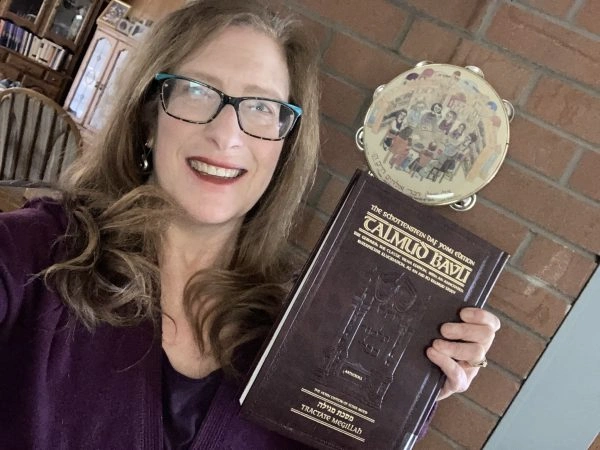
Geri Goldstein got me started learning daf yomi when I was in Israel 2 years ago. It’s been a challenge and I’ve learned a lot though I’m sure I miss a lot. I quilt as I listen and I want to share what I’ve been working on.

Rebecca Stulberg
Rebecca Stulberg

Ottawa, Canada

I started learning Daf Yomi to fill what I saw as a large gap in my Jewish education. I also hope to inspire my three daughters to ensure that they do not allow the same Talmud-sized gap to form in their own educations. I am so proud to be a part of the Hadran community, and I have loved learning so many of the stories and halachot that we have seen so far. I look forward to continuing!
Dora Chana Haar
Dora Chana Haar

Oceanside NY, United States

I’ve been studying Talmud since the ’90s, and decided to take on Daf Yomi two years ago. I wanted to attempt the challenge of a day-to-day, very Jewish activity. Some days are so interesting and some days are so boring. But I’m still here.
Sarene Shanus
Sarene Shanus

Mamaroneck, NY, United States

A few years back, after reading Ilana Kurshan’s book, “If All The Seas Were Ink,” I began pondering the crazy, outlandish idea of beginning the Daf Yomi cycle. Beginning in December, 2019, a month before the previous cycle ended, I “auditioned” 30 different podcasts in 30 days, and ultimately chose to take the plunge with Hadran and Rabbanit Michelle. Such joy!

Cindy Dolgin
Cindy Dolgin

HUNTINGTON, United States

I began my journey with Rabbanit Michelle more than five years ago. My friend came up with a great idea for about 15 of us to learn the daf and one of us would summarize weekly what we learned.
It was fun but after 2-3 months people began to leave. I have continued. Since the cycle began Again I have joined the Teaneck women.. I find it most rewarding in so many ways. Thank you

Dena Heller
Dena Heller

New Jersey, United States

I started learning Gemara at the Yeshivah of Flatbush. And I resumed ‘ברוך ה decades later with Rabbanit Michele at Hadran. I started from Brachot and have had an exciting, rewarding experience throughout seder Moed!

Anne Mirsky (1)
Anne Mirsky

Maale Adumim, Israel

I went to day school in Toronto but really began to learn when I attended Brovenders back in the early 1980’s. Last year after talking to my sister who was learning Daf Yomi, inspired, I looked on the computer and the Hadran site came up. I have been listening to each days shiur in the morning as I work. I emphasis listening since I am not sitting with a Gamara. I listen while I work in my studio.

Rachel Rotenberg
Rachel Rotenberg

Tekoa, Israel

Years ago, I attended the local Siyum HaShas with my high school class. It was inspiring! Through that cycle and the next one, I studied masekhtot on my own and then did “daf yomi practice.” The amazing Hadran Siyum HaShas event firmed my resolve to “really do” Daf Yomi this time. It has become a family goal. We’ve supported each other through challenges, and now we’re at the Siyum of Seder Moed!

Elisheva Brauner
Elisheva Brauner

Jerusalem, Israel

Attending the Siyyum in Jerusalem 26 months ago inspired me to become part of this community of learners. So many aspects of Jewish life have been illuminated by what we have learned in Seder Moed. My day is not complete without daf Yomi. I am so grateful to Rabbanit Michelle and the Hadran Community.

Nancy Kolodny
Nancy Kolodny

Newton, United States

I start learning Daf Yomi in January 2020. The daily learning with Rabbanit Michelle has kept me grounded in this very uncertain time. Despite everything going on – the Pandemic, my personal life, climate change, war, etc… I know I can count on Hadran’s podcast to bring a smile to my face.
Deb Engel
Deb Engel

Los Angeles, United States

As Jewish educator and as a woman, I’m mindful that Talmud has been kept from women for many centuries. Now that we are privileged to learn, and learning is so accessible, it’s my intent to complete Daf Yomi. I am so excited to keep learning with my Hadran community.

Sue Parker Gerson
Sue Parker Gerson

Denver, United States

After enthusing to my friend Ruth Kahan about how much I had enjoyed remote Jewish learning during the earlier part of the pandemic, she challenged me to join her in learning the daf yomi cycle. I had always wanted to do daf yomi but now had no excuse. The beginning was particularly hard as I had never studied Talmud but has become easier, as I have gained some familiarity with it.

Susan-Vishner-Hadran-photo-scaled
Susan Vishner

Brookline, United States

I am grateful for the structure of the Daf Yomi. When I am freer to learn to my heart’s content, I learn other passages in addition. But even in times of difficulty, I always know that I can rely on the structure and social support of Daf Yomi learners all over the world.

I am also grateful for this forum. It is very helpful to learn with a group of enthusiastic and committed women.

Janice Block-2
Janice Block

Beit Shemesh, Israel

3 years ago, I joined Rabbanit Michelle to organize the unprecedented Siyum HaShas event in Jerusalem for thousands of women. The whole experience was so inspiring that I decided then to start learning the daf and see how I would go…. and I’m still at it. I often listen to the Daf on my bike in mornings, surrounded by both the external & the internal beauty of Eretz Yisrael & Am Yisrael!

Lisa Kolodny
Lisa Kolodny

Raanana, Israel

I’ve been studying Talmud since the ’90s, and decided to take on Daf Yomi two years ago. I wanted to attempt the challenge of a day-to-day, very Jewish activity. Some days are so interesting and some days are so boring. But I’m still here.
Sarene Shanus
Sarene Shanus

Mamaroneck, NY, United States

I started with Ze Kollel in Berlin, directed by Jeremy Borowitz for Hillel Deutschland. We read Masechet Megillah chapter 4 and each participant wrote his commentary on a Sugia that particularly impressed him. I wrote six poems about different Sugiot! Fascinated by the discussions on Talmud I continued to learn with Rabanit Michelle Farber and am currently taking part in the Tikun Olam course.
Yael Merlini
Yael Merlini

Berlin, Germany

I was moved to tears by the Hadran Siyyum HaShas. I have learned Torah all my life, but never connected to learning Gemara on a regular basis until then. Seeing the sheer joy Talmud Torah at the siyyum, I felt compelled to be part of it, and I haven’t missed a day!
It’s not always easy, but it is so worthwhile, and it has strengthened my love of learning. It is part of my life now.

Michelle Lewis
Michelle Lewis

Beit Shemesh, Israel

In January 2020 on a Shabbaton to Baltimore I heard about the new cycle of Daf Yomi after the siyum celebration in NYC stadium. I started to read “ a daily dose of Talmud “ and really enjoyed it . It led me to google “ do Orthodox women study Talmud? “ and found HADRAN! Since then I listen to the podcast every morning, participate in classes and siyum. I love to learn, this is amazing! Thank you

Sandrine Simons
Sandrine Simons

Atlanta, United States

I was exposed to Talmud in high school, but I was truly inspired after my daughter and I decided to attend the Women’s Siyum Shas in 2020. We knew that this was a historic moment. We were blown away, overcome with emotion at the euphoria of the revolution. Right then, I knew I would continue. My commitment deepened with the every-morning Virtual Beit Midrash on Zoom with R. Michelle.

Adina Hagege
Adina Hagege

Zichron Yaakov, Israel

Attending the Siyyum in Jerusalem 26 months ago inspired me to become part of this community of learners. So many aspects of Jewish life have been illuminated by what we have learned in Seder Moed. My day is not complete without daf Yomi. I am so grateful to Rabbanit Michelle and the Hadran Community.

Nancy Kolodny
Nancy Kolodny

Newton, United States

Sanhedrin 4

וְרַבָּנַן: ״יַרְשִׁיעֻן״ כְּתִיב.

And how would the Rabbis respond to Rabbi Yehuda HaNasi’s proof? They would say that although the term: “Shall condemn” is pronounced as a plural verb, it is written in a way that could also be read in the singular. Consequently, one cannot derive a requirement for more than one judge from there.

אָמַר רַבִּי יִצְחָק בַּר יוֹסֵי אָמַר רַבִּי יוֹחָנָן: רַבִּי, וְרַבִּי יְהוּדָה בֶּן רוֹעֵץ, וּבֵית שַׁמַּאי, וְרַבִּי שִׁמְעוֹן, וְרַבִּי עֲקִיבָא – כּוּלְּהוּ סְבִירָא לְהוּ יֵשׁ אֵם לַמִּקְרָא.

§ The dispute between Rabbi Yehuda HaNasi and the Sages is explained as an example of the more general question of whether the written consonantal text or the vocalization of the Torah is authoritative. As Rabbi Yitzḥak bar Yosei says that Rabbi Yoḥanan says: With regard to Rabbi Yehuda HaNasi, Rabbi Yehuda ben Roetz, Beit Shammai, Rabbi Shimon, and Rabbi Akiva, they all hold that the vocalization of the Torah is authoritative, and that the halakha is therefore decided based on the meaning of the word as pronounced, and not on possible alternative readings of the written text.

רַבִּי, הָא דַּאֲמַרַן.

The Gemara explains the basis for Rabbi Yoḥanan’s assertion with regard to each of the tanna’im that he mentioned: With regard to Rabbi Yehuda HaNasi, the proof is that which we have just said, with regard to the interpretation of the verse: “He whom the court shall condemn” (Exodus 22:8) deriving a requirement for five judges in cases of monetary law based on the vocalized plural pronunciation of the term: “Shall condemn.”

וְרַבִּי יְהוּדָה בֶּן רוֹעֵץ, דְּתַנְיָא: שָׁאֲלוּ תַּלְמִידִים אֶת רַבִּי יְהוּדָה בֶּן רוֹעֵץ: אֶקְרָא אֲנִי ״שִׁבְעִים״, יָכוֹל תְּהֵא יוֹלֶדֶת נְקֵבָה טְמֵאָה שִׁבְעִים?

And with regard to Rabbi Yehuda ben Roetz, it is as it is taught in a baraita: His students asked Rabbi Yehuda ben Roetz: The verse states: “But if she gives birth to a female, then she shall be unclean for two weeks, as in her menstrual impurity; and she shall then continue in the blood of purification for sixty-six days” (Leviticus 12:5). Based on the written consonantal text, I can read the amount of time she is impure as: “Seventy [shivim] days,” and not as: “Two weeks [shevuayim].” One might have thought, therefore, that a woman who gives birth to a female should be impure for seventy days.

אָמַר לָהֶן: טִימֵּא וְטִיהֵר בַּזָּכָר, וְטִימֵּא וְטִיהֵר בַּנְּקֵבָה. מָה כְּשֶׁטִּיהֵר בַּזָּכָר – בַּנְּקֵבָה כִּפְלַיִם, אַף כְּשֶׁטִּימֵּא בַּזָּכָר – בַּנְּקֵבָה כִּפְלַיִם.

Rabbi Yehuda ben Roetz said to them: It can be proven that this is not the halakha, as the Torah deemed her impure and deemed her pure when she gave birth to a male, and deemed her impure and deemed her pure when she gave birth to a female. Just as when it deemed her pure for thirty-three days after the initial period of impurity when she gave birth to a male, when she gives birth to a female she is pure for sixty-six days, which is double the amount of time; so too, when it deemed her impure for seven days when she gave birth to a male, when she gives birth to a female she is also impure for double the amount of time. Consequently, the verse must be read according to the vocalized reading: “Two weeks,” and not according to the consonantal text, which could be read: “Seventy.”

לְאַחַר שֶׁיָּצְאוּ, יָצָא וּמַחֲזִיר אַחֲרֵיהֶם. אָמַר לָהֶן: אִי אַתֶּם זְקוּקִים לְכָךְ. ״שְׁבוּעַיִים״ קָרֵינַן, וְיֵשׁ אֵם לַמִּקְרָא.

After they left, Rabbi Yehuda ben Roetz went out and followed them. He then said to them: You do not need this proof that I gave based on the comparison of the periods of impurity with the periods of purity. Rather, we read the verse as: “Two weeks,” and the vocalization of the Torah is authoritative.

בֵּית שַׁמַּאי, דִּתְנַן: בֵּית שַׁמַּאי אוֹמְרִים, כׇּל הַנִּיתָּנִין עַל מִזְבֵּחַ הַחִיצוֹן שֶׁנְּתָנָן בְּמַתָּנָה אַחַת – כִּיפֵּר, שֶׁנֶּאֱמַר: ״וְדַם זְבָחֶיךָ יִשָּׁפֵךְ״. וּבְחַטָּאת – שְׁתֵּי מַתָּנוֹת. וּבֵית הִלֵּל אוֹמְרִים: אַף בְּחַטָּאת שֶׁנְּתָנָן בְּמַתָּנָה אַחַת – כִּיפֵּר.

With regard to Beit Shammai, the proof that they also hold that the vocalization of the Torah is authoritative is as we learned in a mishna (Zevaḥim 36b): Beit Shammai say: With regard to all offerings whose blood must be presented on the external altar, once the blood has been presented with one presentation the offering has effected atonement, even if more presentations are ideally required, as it is stated: “And the blood of your offerings shall be poured out against the altar of the Lord your God” (Deuteronomy 12:27). This verse teaches that even with regard to a burnt-offering, which requires multiple presentations of the blood, a single presentation is sufficient to render the offering valid after the fact. But with regard to a sin-offering, it is valid only if there were at least two presentations. And Beit Hillel say: Even with regard to a sin-offering that one presented with one presentation, it has effected atonement after the fact.

וְאָמַר רַב הוּנָא: מַאי טַעְמָא דְּבֵית שַׁמַּאי? ״קַרְנֹת״, ״קַרְנֹת״, ״קַרְנֹת״ – הֲרֵי כָּאן שֵׁשׁ: אַרְבַּע לְמִצְוָה, וּשְׁתַּיִם לְעַכֵּב.

And Rav Huna says: What is the reasoning for the opinion of Beit Shammai? The verse states: “And the priest shall take of the blood of the sin-offering with his finger, and put it on the horns of the altar” (Leviticus 4:25); and “The priest shall take of the blood thereof with his finger, and put it on the horns of the altar” (Leviticus 4:30); and again: “The priest shall take of the blood of the sin-offering with his finger, and put it on the horns of the altar” (Leviticus 4:34). As the minimum amount justifying the use of plural, i.e., “horns,” is two, one may conclude that there are six references to the horns of the altar here. Four of them are mentioned for the mitzva, meaning that he should present the blood on all four horns of the altar ab initio, and the other two were mentioned to invalidate the offering if he did not present it on at least two horns.

וּבֵית הִלֵּל אוֹמְרִים: קַרְנוֹת, קַרְנַת, קַרְנַת – הֲרֵי כָּאן אַרְבַּע. שָׁלֹשׁ לְמִצְוָה, וְאַחַת לְעַכֵּב.

And Beit Hillel say: The matter should be understood according to the written consonantal text. The word “horns” is written once plene, with a vav, which means that it must be read in the plural; and the other two times the words “horns” and “horns” are written deficient, without a vav, in a way that can be vocalized in the singular. Therefore, there are four references to horns here. Three of these presentations are written to indicate that they are performed only as a mitzva, i.e., they are performed ab initio, but the offering is valid even absent their presentation. And the remaining one, i.e., the fourth presentation, is written to indicate that its absence invalidates the offering, i.e., the offering is not valid if the blood was not presented against at least one horn of the altar. Evidently, Beit Shammai hold the vocalization is authoritative, whereas Beit Hillel hold the consonantal text is authoritative.

וְאֵימָא: כּוּלְּהוּ לְמִצְוָה? כַּפָּרָה בִּכְדִי לָא אַשְׁכְּחַן!

The Gemara asks: But according to this explanation of Beit Hillel, why not say that all of them are written for the mitzva and none to invalidate, meaning the blood must be presented on all four horns ab initio, but the offering atones after the fact even if it has not been presented at all? The Gemara rejects this possibility: We have not found anywhere in the Torah an example of an offering in which atonement can be achieved with no presentation of the blood of the offering at all.

רַבִּי שִׁמְעוֹן, דְּתַנְיָא: שְׁתַּיִם כְּהִלְכָתָן, וּשְׁלִישִׁית אֲפִילּוּ טֶפַח. רַבִּי שִׁמְעוֹן אוֹמֵר: שָׁלֹשׁ כְּהִלְכָתָן, וּרְבִיעִית אֲפִילּוּ טֶפַח. בְּמַאי קָמִיפַּלְגִי? רַבָּנַן סָבְרִי: יֵשׁ אֵם לַמָּסוֹרֶת, וְרַבִּי שִׁמְעוֹן סָבַר: יֵשׁ אֵם לַמִּקְרָא.

With regard to Rabbi Shimon, it is as it is taught in a baraita that records a dispute among the Sages with regard to the number of walls required in a sukka: There must be two walls in their standard sense, completely closing each of those two sides, and a third wall, which, based on a halakha transmitted to Moses from Sinai, may measure even as little as one handbreadth. Rabbi Shimon says that there must be three walls in their standard sense, and a fourth one that can measure even one handbreadth. The Gemara asks: With regard to what principle do they disagree? The Gemara answers: The Rabbis hold that the tradition of the manner in which the verses in the Torah are written is authoritative, and Rabbi Shimon holds that the vocalization of the Torah is authoritative.

רַבָּנַן סָבְרִי: יֵשׁ אֵם לַמָּסוֹרֶת. ״בַּסֻּכָּת״, ״בַּסֻּכָּת״, ״בַּסֻּכּוֹת״ – הֲרֵי כָּאן אַרְבַּע. דַּל חַד קְרָא לְגוּפֵיהּ, פָּשׁוּ לְהוּ תְּלָת. אֲתַאי הִלְכְתָא, גְרַעְתָּא לִשְׁלִישִׁית, וְאוֹקֵימְתָּא אַטֶּפַח.

The Gemara explains: The Rabbis hold that the tradition of the manner in which the verses are written is authoritative. The Torah states: “You shall reside in sukkot (Leviticus 23:42) spelled deficient, without the letter vav, in a way that can be read in the singular. And later in that verse it also states: “All that are homeborn in Israel shall reside in sukkot spelled the same way. And in the next verse it states: “So that your future generations will know that I caused the children of Israel to reside in sukkot,” this time spelled plene, with a vav, which means it must be plural. Therefore, there are four walls here. Remove one verse, which is needed to teach the mitzva to sit in a sukka itself, and three walls remain. The halakha transmitted to Moses from Sinai, which says that one of the walls may be incomplete, comes and reduces the third and establishes it as a minimum of one handbreadth.

וְרַבִּי שִׁמְעוֹן סָבַר: ״בַּסֻּכֹּת״, ״בַּסֻּכֹּת״, ״בַּסֻּכּוֹת״ – הֲרֵי כָּאן שֵׁשׁ. דַּל חַד קְרָא לְגוּפֵיהּ, פָּשׁוּ לְהוּ אַרְבַּע. אֲתַאי הִלְכְתָא גְרַעְתָּא לִרְבִיעִית, וְאוֹקְמֵיהּ אַטֶּפַח.

And Rabbi Shimon holds that the vocalization is authoritative. Since the verses state: “You shall reside in sukkot,” and: “All that are homeborn in Israel shall reside in sukkot,” and: “So that your future generations will know that I caused the children of Israel to reside in sukkot,” all of which are pronounced as plural nouns, there are six walls here. Remove one verse to teach the mitzva of sukka itself, and four walls remain. The halakha transmitted to Moses from Sinai then comes and reduces the fourth wall, and establishes it at a minimum of one handbreadth. Consequently, it is clear that Rabbi Shimon also holds that the vocalization is authoritative.

רַבִּי עֲקִיבָא, דְּתַנְיָא: רַבִּי עֲקִיבָא אוֹמֵר, מִנַּיִין לִרְבִיעִית דָּם שֶׁיָּצְאָה מִשְּׁנֵי מֵתִים שֶׁמְּטַמֵּא בְּאֹהֶל? שֶׁנֶּאֱמַר: ״עַל כׇּל נַפְשֹׁת מֵת לֹא יָבֹא״ – שְׁתֵּי נְפָשׁוֹת וְשִׁיעוּר אֶחָד. וְרַבָּנַן: ״נפשת״ כְּתִיב.

With regard to Rabbi Akiva, it is as it is taught in a baraita: It is known that a quarter-log of blood that came from a corpse imparts ritual impurity in a tent. And Rabbi Akiva says: From where is it derived that a quarter-log of blood that came out of two separate corpses also imparts ritual impurity in a tent? As it is stated with regard to a priest: “He shall not come upon any dead bodies” (Leviticus 21:11). The word “bodies” is pronounced as a plural word, and since the Torah teaches elsewhere that: “The blood is the life” (Deuteronomy 12:23), this indicates that impurity can be imparted by one measure of blood that came from two bodies. And the Rabbis say: The word “bodies” is written deficient, without a vav, so that it can also be read as a singular word, indicating that a quarter-log of blood imparts impurity in a tent only if it came from a single corpse.

מַתְקֵיף לַהּ רַב אַחָא בַּר יַעֲקֹב: מִי אִיכָּא דְּלֵית לֵיהּ ״יֵשׁ אֵם לַמִּקְרָא״? וְהָתַנְיָא: ״בַּחֲלֵב אִמּוֹ״ – יָכוֹל ״בְּחֵלֶב״?

Rav Aḥa bar Ya’akov objects to Rabbi Yoḥanan’s assertion that all of the above disputes are based on the question of whether the traditional consonantal text or the vocalized text of the Torah is authoritative: Is there a Sage who does not accept the principle that the vocalization of the Torah is authoritative? But isn’t it taught in a baraita: The verse states: “You shall not cook a young goat in its mother’s milk [baḥalev]” (Exodus 23:19). One might have thought the verse should be read as prohibiting the cooking of the young goat in the fat [beḥelev] of the mother, and there is no prohibition against cooking the meat with milk.

אָמַרְתָּ: יֵשׁ אֵם לַמִּקְרָא.

You therefore say in response: The vocalization of the Torah is authoritative, and the verse prohibits cooking the young goat in its mother’s milk.

אֶלָּא, דְּכוּלֵּי עָלְמָא יֵשׁ אֵם לַמִּקְרָא, וְרַבִּי וְרַבָּנַן בְּהָא קָמִיפַּלְגִי: רַבִּי סָבַר ״יַרְשִׁיעֻן אֱלֹהִים״ – אַחֲרִינֵי, וְרַבָּנַן סָבְרִי ״יַרְשִׁיעֻן״ – דְּהַאיְךְ וְהַאי.

Rather, everyone agrees that the vocalization of the Torah is authoritative. But in actuality, Rabbi Yehuda HaNasi and the Rabbis disagree with regard to this: Rabbi Yehuda HaNasi holds that the phrase “the court shall condemn” is referring to other judges, in addition to the three that were derived from the earlier verse, leading to a total of five, whereas the Rabbis hold that the term “shall condemn” means these judges, i.e., those who have already been mentioned, and therefore there are only three.

וְרַבִּי יְהוּדָה בֶּן רוֹעֵץ, לָא פְּלִיגִי רַבָּנַן עֲלֵיהּ.

And with regard to Rabbi Yehuda ben Roetz, who applied the principle: The vocalization of the Torah is authoritative, to the question of the duration of the ritual impurity of a woman who gave birth to a female, it can be explained that the Rabbis do not disagree with him, as everyone agrees that the vocalization of the Torah is authoritative.

בֵּית הִלֵּל, דְּתַנְיָא: ״וְכִפֶּר״, ״וְכִפֶּר״, ״וְכִפֶּר״ – מִפְּנֵי הַדִּין.

With regard to Beit Hillel, who hold that a single presentation of blood is sufficient to atone even when bringing a sin-offering, this is not because they hold the traditional consonantal text is authoritative. Rather, their opinion is as it is taught in a baraita: The verse states with regard to the sin-offering brought by a ruler: “And the priest shall make atonement for him” (Leviticus 4:26), and with regard to a sin-offering of a goat brought by an ordinary person: “And the priest shall make atonement for him” (Leviticus 4:31), and with regard to a sin-offering of a lamb brought by an ordinary person: “And the priest shall make atonement for him” (Leviticus 4:35), repeating this term three times. This repetition is due to the following logical inference:

וַהֲלֹא דִין הוּא: נֶאֱמַר דָּמִים לְמַטָּה, וְנֶאֱמַר דָּמִים לְמַעְלָה. מָה דָּמִים הָאֲמוּרִים לְמַטָּה – שֶׁנְּתָנָן בְּמַתָּנָה אַחַת כִּיפֵּר, אַף דָּמִים הָאֲמוּרִים לְמַעְלָה – שֶׁנְּתָנָן בְּמַתָּנָה אַחַת כִּיפֵּר.

Could this halakha not be derived through an a fortiori inference? There is stated a term of blood below, in the verse written with regard to a bird brought as a sin-offering (see Leviticus 5:9), and there is stated a term of blood above, in the verse written with regard to an animal brought as a sin-offering (see Leviticus 4:25, 31, 35). Just as with regard to the blood that is stated below, when it is presented with one presentation it has effected atonement, so too with regard to the blood that is stated above, when it is presented with one presentation it has effected atonement.

אוֹ כְּלָךְ לְדֶרֶךְ זוֹ: נֶאֱמַר דָּמִים בַּחוּץ, וְנֶאֱמַר דָּמִים בִּפְנִים. מָה דָּמִים הָאֲמוּרִים בִּפְנִים – חִיסֵּר אַחַת מִמַּתָּנוֹת לֹא עָשָׂה וְלֹא כְּלוּם, אַף דָּמִים הָאֲמוּרִים בַּחוּץ – חִיסֵּר אַחַת מִמַּתָּנוֹת לֹא עָשָׂה כְּלוּם.

Or perhaps go this way, offering a different explanation: There is stated a term of blood in the verse written with regard to the external altar, i.e., in the verse written with regard to a sin-offering of an ordinary person that is brought on the external altar in the courtyard (see Leviticus 4:25), and there is stated a term of blood in the verse written with regard to the inner altar, i.e., with regard to a sin-offering of the community or the High Priest, the blood of which is sprinkled on the incense altar inside the Sanctuary (see Leviticus 4:7, 18). Just as with regard to the blood that was stated concerning the inner altar, i.e., if one of the presentations is lacking it has not accomplished anything and the offering is not valid, so too, with regard to the blood that was stated concerning the external altar, if one of the presentations is lacking it has accomplished nothing.

נִרְאֶה לְמִי דּוֹמֶה? דָּנִין חוּץ מִחוּץ, וְאֵין דָּנִין חוּץ מִפְּנִים.

The Gemara analyzes the two possibilities: Let us see to which of the two comparisons this is more similar. It can be claimed: We derive a halakha stated with regard to the external altar from a halakha stated with regard to the external altar, but we do not derive a halakha stated with regard to the external altar from a halakha stated with regard to the inner altar.

אוֹ כְּלָךְ לְדֶרֶךְ זוֹ: דָּנִין חַטָּאת וְאַרְבַּע קְרָנוֹת, מֵחַטָּאת וְאַרְבַּע קְרָנוֹת, וְאַל יוֹכִיחַ זֶה, שֶׁאֵין חַטָּאת וְאַרְבַּע קְרָנוֹת.

Or go this way: We derive a halakha stated with regard to a sin-offering whose blood is to be sprinkled on the four corners of the altar from the halakha stated with regard to a sin-offering whose blood is to be sprinkled on the four corners of the altar, and this sin-offering consisting of a bird, which is not a sin-offering of the type whose blood is to be sprinkled on the four corners of the altar, cannot prove that the halakha is similar with regard to a sin-offering whose blood is to be sprinkled on the four corners of the altar.

תַּלְמוּד לוֹמַר: ״וְכִפֶּר״, ״וְכִפֶּר״, ״וְכִפֶּר״ – מִפְּנֵי הַדִּין. ״כִּיפֵּר״ – אַף עַל פִּי שֶׁלֹּא נָתַן אֶלָּא שְׁלֹשָׁה, ״כִּיפֵּר״ – אַף עַל פִּי שֶׁלֹּא נָתַן אֶלָּא שְׁתַּיִם, ״כִּיפֵּר״ – אַף עַל פִּי שֶׁלֹּא נָתַן אֶלָּא אַחַת.

Since there are two legitimate inferences, the halakha cannot be decided through a logical inference. Therefore, the verse states: “And the priest shall make atonement,” “And the priest shall make atonement,” “And the priest shall make atonement,” three times, due to the logical inference. The verses are interpreted as follows: “The priest shall make atonement,” even though he presented only three presentations, and then a second verse repeats: “The priest shall make atonement,” even though he presented only two presentations, and then a third verse repeats: “The priest shall make atonement,” even though he presented only one presentation. This interpretation is the source of Beit Hillel’s opinion.

וְרַבִּי שִׁמְעוֹן וְרַבָּנַן בְּהָא פְּלִיגִי: רַבִּי שִׁמְעוֹן סָבַר, סְכָכָא לָא בָּעֵי קְרָא. וְרַבָּנַן סָבְרִי, סְכָכָא בָּעֵי קְרָא.

And concerning Rabbi Shimon and the Rabbis, who disagreed with regard to the number of walls required in a sukka, it is with regard to this that they disagree: Rabbi Shimon holds that the basic requirement of placing roofing [sekhakha] on the sukka does not need a verse to teach that it is required, as it is implied by the word sukka. Consequently, the word sukkot appears two times in the text beyond the initial mitzva, teaching a requirement for four walls, and there is a halakha transmitted to Moses from Sinai that reduces the minimum size of one of the walls to a handbreadth. And the Rabbis hold that the requirement of placing roofing does need a verse. Therefore, one of the four derivations is used to teach that requirement, and only three walls remain, one of which is reduced to a handbreadth.

וְרַבִּי עֲקִיבָא וְרַבָּנַן, בְּהָא פְּלִיגִי: רַבִּי עֲקִיבָא סָבַר ״נְפָשֹׁת״ – תַּרְתֵּי מַשְׁמַע, וְרַבָּנַן סָבְרִי ״נְפָשֹׁת״ – דְּעָלְמָא מַשְׁמַע.

And with regard to Rabbi Akiva and the Rabbis, who disagreed about the issue of a quarter-log of blood that emanated from two corpses, it is with regard to this that they disagree: Rabbi Akiva holds that “bodies” in plural indicates two. Consequently, a quarter-log of blood that emanated from two corpses also renders one impure. And the Rabbis hold that “bodies” in plural indicates a general halakha, and no derivation can be made with regard to blood that emanated from two corpses. Both opinions, however, agree that the vocalized text of the Torah is authoritative.

וּדְכוּלֵּי עָלְמָא יֵשׁ אֵם לַמִּקְרָא? וְהָתַנְיָא: ״לְטוֹטֶפֶת״, ״לְטֹטֶפֶת״, ״לְטוֹטָפוֹת״ – הֲרֵי כָּאן אַרְבַּע, דִּבְרֵי רַבִּי יִשְׁמָעֵאל.

The Gemara asks: And does everyone actually hold that the vocalization of the Torah is authoritative? But isn’t it taught in a baraita: With regard to the number of compartments in the phylacteries of the head, the verse states: “It shall be for a sign upon your hand, and for totafot between your eyes” (Exodus 13:16), with the word totafot spelled deficient, without a second vav, in a way that can be read as singular; and again: “They shall be for totafot between your eyes” (Deuteronomy 6:8), spelled as a singular word; and again: “They shall be for totafot between your eyes” (11:18), this time spelled plene, with a second vav, in a manner that must be plural? There are four mentions of totafot here, as the third one is written in the plural and therefore counts as two. Consequently, it is derived that the phylacteries of the head must have four compartments. This is the statement of Rabbi Yishmael.

רַבִּי עֲקִיבָא אוֹמֵר: אֵינוֹ צָרִיךְ, טַט בְּכַתְפִּי שְׁתַּיִם, פַּת בְּאַפְרִיקִי שְׁתַּיִם.

Rabbi Akiva says: There is no need for this proof, as the requirement of four compartments can be derived from the word totafot itself: The word tat in the language of the Katfei means two, and the word pat in the language of Afriki also means two, and therefore totafot can be understood as a compound word meaning: Four. The baraita therefore indicates that Rabbi Yishmael holds that not the vocalization but rather the tradition of the manner in which the verses in the Torah are written is authoritative.

אֶלָּא, לְעוֹלָם פְּלִיגִי. וְהָנֵי מִילֵּי כִּי פְּלִיגִי – הֵיכָא דְּשָׁנֵי קְרָא מִמָּסוֹרֶת. אֲבָל הַאי ״חֵלֶב״ וַ״חֲלֵב״ דְּכִי הֲדָדֵי נִינְהוּ, יֵשׁ אֵם לַמִּקְרָא.

Rather, the explanation that everyone holds that the vocalization of the Torah is authoritative must be rejected, and it must be explained that the Sages actually do disagree whether it is the vocalization of the Torah or the tradition of the manner in which the verses in the Torah are written that is authoritative. And in order to explain the unresolved problem with regard to the baraita about the prohibition of cooking a young goat in its mother’s milk, the explanation is that this statement, that they disagree as to whether the vocalization or the tradition is authoritative, applies where the vocalization of the word differs from the tradition of the manner in which the word is written. But in this case the words milk [ḥalev] and fat [ḥelev] are written in an identical manner, as there is no difference in the writing at all, only in the way they are vocalized. Therefore, all agree that the vocalization of the Torah is authoritative.

וַהֲרֵי ״יִרְאֶה״ ״יֵרָאֶה״ דְּכִי הֲדָדֵי נִינְהוּ, וּפְלִיגִי? דְּתַנְיָא: יוֹחָנָן בֶּן דַּהֲבַאי אוֹמֵר מִשּׁוּם רַבִּי יְהוּדָה בֶּן תֵּימָא: הַסּוֹמֵא בְּאַחַת מֵעֵינָיו – פָּטוּר מִן הָרְאִיָּה, שֶׁנֶּאֱמַר ״יִרְאֶה״ ״יֵרָאֶה״ – כְּדֶרֶךְ שֶׁבָּא לִרְאוֹת כָּךְ בָּא לֵירָאוֹת. מָה לִרְאוֹת בִּשְׁתֵּי עֵינָיו, אַף לֵירָאוֹת בִּשְׁתֵּי עֵינָיו.

The Gemara asks: But the words: “Shall see” and “shall appear” are written in an identical matter, and nevertheless the Sages disagree about which reading is authoritative. As it is taught in a baraita: Yoḥanan ben Dahavai says in the name of Rabbi Yehuda ben Teima: One who is blind in one of his eyes is exempt from the mitzva of appearance, i.e., the obligation to appear in the Temple and to sacrifice an offering on the three pilgrimage Festivals, as it is stated: “Three times in the year all your males shall appear [yera’eh] before the Lord God” (Exodus 23:17). According to the way in which the verse is written, without vocalization, it can be read as yireh, meaning: Shall see, instead of yera’eh, meaning: Shall appear. This teaches that in the same manner that one comes to see, so he comes to appear, i.e., to be seen: Just as the usual way to see is with both of one’s eyes, so too, the obligation to appear applies only to one who comes with the sight of both his eyes.

אֶלָּא אָמַר רַב אַחָא בְּרֵיהּ דְּרַב אִיקָא: אָמַר קְרָא ״לֹא תְבַשֵּׁל גְּדִי״, דֶּרֶךְ בִּישּׁוּל אָסְרָה תּוֹרָה.

It is therefore apparent that even when there is no difference in the way the words are written, some say that the tradition, not the vocalization, is authoritative. Rather, Rav Aḥa, son of Rav Ika, said: The reason all agree that there is a prohibition to cook a young goat in its mother’s milk and not in its mother’s fat is that the verse states: “You shall not cook a young goat” (Exodus 23:19). The verse teaches that the action the Torah prohibited is in the manner of cooking, which is generally done in a liquid such as milk and not in a solid substance such as fat.

תָּנוּ רַבָּנַן: דִּינֵי מָמוֹנוֹת בִּשְׁלֹשָׁה,

§ The Sages taught in a baraita: Cases of monetary law are adjudicated by three judges.

Want to follow content and continue where you left off?

Create an account today to track your progress, mark what you’ve learned, and follow the shiurim that speak to you.

Clear all items from this list?

This will remove ALL the items in this section. You will lose any progress or history connected to them. This is irreversible.

Cancel
Yes, clear all

Are you sure you want to delete this item?

You will lose any progress or history connected to this item.

Cancel
Yes, delete