Search

Shabbat 57

Want to dedicate learning? Get started here:

English
עברית
podcast placeholder

0:00
0:00


podcast placeholder

0:00
0:00


Summary

Today’s shiur, as well as the whole month of Iyar, is dedicated in memory of Yehuda Aryeh Leib ben Yisachar Dov Barash, Ari Adler, z”l whose yahrzeit is today.

And two birthday dedications – Happy birthday to Deborah Kovsky from Yoni Apap and to Bill Abraham from his wife Malka Abraham who thanks you for all of your support in her Jewish learning.

With which items can a woman not go out with on Shabbat into the public domain? Accoridng to Troah law she can walk out with clothing or ornaments but the rabbis forbade items where there was a concern they would fall off or the women would remove them to show thier friends. The mishna lists items that cannot be worn for the reason mentioned above and also some that would be considered a barrier for the mikveh in which case she would take them off to dip and may then come to carry them. Which materials of strings are problematic if worn in the women’s hair? Which are permissible? On what does it depend?

Shabbat 57

מַתְנִי׳ בַּמָּה אִשָּׁה יוֹצְאָה, וּבַמָּה אֵינָהּ יוֹצְאָה?

The mishna lists items that a woman may or may not carry into, or wear in the public domain on Shabbat. This depends on whether the particular object is considered an ornament, which she may wear, or merely a burden for the woman, which she may not. Even if it is considered an ornament, there is still concern that she might remove it and carry it in her hand in the public domain, which is prohibited by Torah law.

MISHNA: With what items may a woman go out into the public domain on Shabbat and with what items may she not go out?

לֹא תֵּצֵא אִשָּׁה לֹא בְּחוּטֵי צֶמֶר וְלֹא בְּחוּטֵי פִּשְׁתָּן וְלֹא בִּרְצוּעוֹת שֶׁבְּרֹאשָׁהּ. וְלֹא תִּטְבּוֹל בָּהֶן, עַד שֶׁתְּרַפֵּם.

A woman may neither go out with strings of wool, nor with strings of flax, nor with strips of any other materials that a woman braids in the hair of her head. And a woman may not immerse in a ritual bath with them in her hair until she loosens them. When the strings or strips are tight, the water cannot reach her hair unobstructed, invalidating her immersion.

וְלֹא בְּ״טוֹטֶפֶת״ וְלֹא בְּסַרְבִּיטִין בִּזְמַן שֶׁאֵינָן תְּפוּרִים. וְלֹא בְּכָבוּל לִרְשׁוּת הָרַבִּים.

And, likewise, a woman may neither go out with the ornament called totefet, nor with sarvitin that are not sewn into her head covering, nor with a kavul into the public domain.

וְלֹא בְּעִיר שֶׁל זָהָב וְלֹא בְּקַטְלָא וְלֹא בִּנְזָמִים וְלֹא בְּטַבַּעַת שֶׁאֵין עָלֶיהָ חוֹתָם וְלֹא בְּמַחַט שֶׁאֵינָהּ נְקוּבָה.

And, likewise, a woman may neither go out with a city of gold ornament, nor with a katla ornament, nor with nose rings, nor with a ring that has no seal on it, nor with a needle that is not perforated, which are merely for decorative purposes.

וְאִם יָצָאת אֵינָהּ חַיֶּיבֶת חַטָּאת.

And if she unwittingly went out wearing any of these, she is not liable to bring a sin-offering. According to Torah law, a woman is permitted to go out into the public domain wearing ornaments. However, the Sages decreed that a woman may not go out wearing certain ornaments, lest she remove them to show them to another and inadvertently carry them four cubits in the public domain.

גְּמָ׳ טְבִילָה מַאן דְּכַר שְׁמַהּ?

GEMARA: The Gemara asks: Immersion, who mentioned anything about that? The mishna is dealing with the halakhot of Shabbat, so why did it mention the halakhot of immersion?

אָמַר רַב נַחְמָן בַּר יִצְחָק אָמַר רַבָּה בַּר אֲבוּהּ — מַה טַּעַם קָאָמַר: מַה טַּעַם לֹא תֵּצֵא אִשָּׁה לֹא בְּחוּטֵי צֶמֶר וְלֹא בְּחוּטֵי פִּשְׁתָּן — מִפְּנֵי שֶׁאָמְרוּ חֲכָמִים בַּחוֹל לָא תִּטְבּוֹל בָּהֶן עַד שֶׁתְּרַפֵּם. וְכֵיוָן דִּבְחוֹל לָא תִּטְבּוֹל בָּהֶן עַד שֶׁתְּרַפֵּם, בְּשַׁבָּת לֹא תֵּצֵא, דִּילְמָא מִיתְרְמֵי לַהּ טְבִילָה שֶׁל מִצְוָה וְשָׁרְיָא לְהוּ, וְאָתֵי לְאֵתוֹיִינְהוּ אַרְבַּע אַמּוֹת בִּרְשׁוּת הָרַבִּים.

Rav Naḥman bar Yitzḥak said that Rabba bar Avuh said: When the mishna states the halakha, it employs the style known as: What is the reason. The mention of immersion is an explanation, not a superfluous addition. The mishna should be understood as follows: What is the reason that a woman may neither go out with strings of wool nor with strings of flax? It is because the Sages said that on weekdays she may not immerse with them until she loosens them. And since on weekdays she may not immerse with them until she loosens them, on Shabbat she may not go out with them, lest a situation requiring immersion for the purpose of a mitzva come about, and she untie them, and come to carry them four cubits in the public domain.

בְּעָא מִינֵּיהּ רַב כָּהֲנָא מֵרַב: תִּיכֵי חֲלִילָתָא מַאי? אֲמַר לֵיהּ: אָרִיג קָאָמְרַתְּ? כׇּל שֶׁהוּא אָרִיג לֹא גָּזְרוּ. אִיתְּמַר נָמֵי, אָמַר רַב הוּנָא בְּרֵיהּ דְּרַב יְהוֹשֻׁעַ: כׇּל שֶׁהוּא אָרִיג לֹא גָּזְרוּ.

Rav Kahana raised a dilemma before Rav: With regard to strings made into hollow chains, what is the halakha? Is it permissible for women to go out into the public domain with them on Shabbat or not? It depends on whether they are considered an interposition to immersion. Rav said to him: Woven, you say? With regard to anything woven, the Sages did not issue a decree. Because water reaches the hair unobstructed, there is no need to loosen the hollow chain and there is no concern lest she carry it in the public domain. It was also stated that Rav Huna, son of Rav Yehoshua, said: With regard to anything woven, the Sages did not issue a decree.

וְאִיכָּא דְּאָמְרִי, אָמַר רַב הוּנָא בְּרֵיהּ דְּרַב יְהוֹשֻׁעַ: חֲזֵינָא לְאַחְווֹתִי דְּלָא קָפְדָן עֲלַיְיהוּ.

And some say that Rav Huna, son of Rav Yehoshua, said: I saw that my sisters are not particular about removing them, and they bathe even with woven chains tied in their hair. Apparently, water reaches the hair. Therefore, the chain is not an interposition with regard to immersion.

מַאי אִיכָּא בֵּין הַךְ לִישָּׁנָא וּבֵין הַךְ לִישָּׁנָא?

The Gemara asks: What practical difference is there between this version and that version of the resolution of the dilemma?

אִיכָּא בֵּינַיְיהוּ דִּטְנִיפָן. לְהַךְ לִישָּׁנָא דְּאָמַר כׇּל שֶׁהוּא אָרִיג לֹא גָּזְרוּ — הָנֵי נָמֵי אָרִיג נִינְהוּ, וּלְהַךְ לִישָּׁנָא דְּאָמְרַתְּ מִשּׁוּם קְפִידָא — כֵּיוָן דִּטְנִיפָא מִקְפָּד קָפְדָא עֲלַיְיהוּ.

The Gemara explains: There is a practical difference between them in a case where the chains are dirty. According to this version, in which you said: With regard to anything woven, the Sages did not issue a decree, these too are woven. And according to that version, in which you said that it is due to the fact that his sisters were not particular; in this case, since they are dirty, she is particular about them and will certainly remove them when she washes. Therefore, she is required to do so when immersing in a ritual bath as well.

תְּנַן הָתָם: וְאֵלּוּ חוֹצְצִין בָּאָדָם: חוּטֵי צֶמֶר וְחוּטֵי פִּשְׁתָּן וְהָרְצוּעוֹת שֶׁבְּרָאשֵׁי הַבָּנוֹת. רַבִּי יְהוּדָה אוֹמֵר: שֶׁל צֶמֶר וְשֶׁל שֵׂעָר אֵין חוֹצְצִין מִפְּנֵי שֶׁהַמַּיִם בָּאִין בָּהֶן. אָמַר רַב הוּנָא: וְכוּלָּן, בְּרָאשֵׁי הַבָּנוֹת שָׁנִינוּ.

We learned in a mishna in tractate Mikvaot: And these are the objects that interpose for a person: Strings of wool, and strings of flax, and the straps that are on the girls’ heads. Rabbi Yehuda says: Strings of wool and strands of hair do not interpose because the water reaches the hair through them. Rav Huna said: And we learned all these, strings of wool and flax, in a case where they are used to tie the hair on the girls’ heads.

מַתְקִיף לַהּ רַב יוֹסֵף: לְמַעוֹטֵי מַאי? אִילֵּימָא לְמַעוֹטֵי דְּצַוָּאר, וּדְמַאי: אִילֵּימָא לְמַעוֹטֵי דְּצֶמֶר — הַשְׁתָּא רַךְ עַל גַּבֵּי קָשֶׁה חוֹצֵץ, רַךְ עַל גַּבֵּי רַךְ מִיבַּעְיָא?

Rav Yosef strongly objects to this halakha of Rav Huna: To exclude what other places in the body did Rav Huna say this? If you say that it comes to exclude strings tied to the neck, and then, strings made of what material does it exclude? If you say that it comes to exclude strings of wool, now, the mishna stated that soft strings of wool on top of hair, which is relatively hard, interpose and invalidates the immersion. With regard to soft strings on top of the soft flesh of the neck, is it necessary to say that they interpose?

וְאֶלָּא לְמַעוֹטֵי דְּחוּטֵי פִשְׁתָּן. הַשְׁתָּא קָשֶׁה עַל גַּבֵּי קָשֶׁה חוֹצֵץ, קָשֶׁה עַל גַּבֵּי רַךְ מִיבַּעְיָא?

Rather, say that Rav Huna’s statement came to exclude strings of flax. A similar difficulty arises: Now the mishna stated that hard strings of wool on top of hair, which is hard, interposes and invalidates the immersion. If so, with regard to hard strings on top of the soft flesh of the neck, is it necessary to say that they interpose?

אֶלָּא אָמַר רַב יוֹסֵף, הַיְינוּ טַעְמָא דְּרַב הוּנָא: לְפִי שֶׁאֵין אִשָּׁה חוֹנֶקֶת אֶת עַצְמָהּ.

Rather, Rav Yosef said, this is the reason that Rav Huna restricts the concern for interposition to strings tied in her hair and not around her neck: Because a woman does not strangle herself when adorning herself with a string or straps around her neck. Therefore, she never tightens the strings or straps to the extent that water cannot reach the skin.

אֵיתִיבֵיהּ אַבָּיֵי: הַבָּנוֹת יוֹצְאוֹת בְּחוּטִין שֶׁבְּאׇזְנֵיהֶן, אֲבָל לֹא בַּחֲבָקִין שֶׁבְּצַוְּארֵיהֶן. וְאִי אָמְרַתְּ אֵין אִשָּׁה חוֹנֶקֶת עַצְמָהּ, חֲבָקִין שֶׁבְּצַוְּארֵיהֶן אַמַּאי לָא?

Abaye raised an objection to the explanation of Rav Yosef from a baraita: The girls may go out into the public domain on Shabbat with strings in their ears. Young girls would have their ears pierced, but earrings were not placed in their ears until they were older. Instead, they inserted strings so that the holes would not close. However, they may not go out with straps around their necks. And if you say that the principle: A woman does not strangle herself, is halakhically valid, why may they not go out into the public domain with straps around their necks? They are not tied tight and do not constitute an interposition that invalidates immersion.

אָמַר רָבִינָא:

Ravina said:

הָכָא בְּקַטְלָא עָסְקִינַן, דְּאִשָּׁה חוֹנֶקֶת אֶת עַצְמָהּ — דְּנִיחָא לַהּ שֶׁתֵּרָאֶה כְּבַעֲלַת בָּשָׂר.

Here we are dealing with a broad, ornamented strap [katla] hanging around the neck, to which a small bib is attached. A woman does strangle herself with a katla because the strap is broad and tightening it does not cause pain. She tightens it because it pleases her that she will appear fleshy. It was considered beautiful to have flesh protrude from the katla.

רַבִּי יְהוּדָה אוֹמֵר שֶׁל צֶמֶר וְשֶׁל שֵׂעָר אֵין חוֹצְצִין, מִפְּנֵי שֶׁהַמַּיִם בָּאִין בָּהֶן.

In the same mishna in tractate Mikvaot, Rabbi Yehuda says: Strings of wool and strands of hair do not interpose and invalidate the immersion because the water reaches through them.

אָמַר רַב יוֹסֵף אָמַר רַב יְהוּדָה אָמַר שְׁמוּאֵל: הֲלָכָה כְּרַבִּי יְהוּדָה בְּחוּטֵי שֵׂעָר.

Rav Yosef said that Rav Yehuda said that Shmuel said: The halakha is in accordance with the opinion of Rabbi Yehuda with regard to strands of hair. However, the halakha is not in accordance with his opinion with regard to wool strings.

אֲמַר לֵיהּ אַבָּיֵי: הֲלָכָה, מִכְּלָל דִּפְלִיגִי!

Abaye said to him: By saying that the halakha is in accordance with Rav Yehuda, by inference the Rabbis disagree with regard to strands of hair. However, no opinion stating that strands of hair constitute an interposition is cited in the mishna.

וְכִי תֵּימָא, אִי לָאו דְּשָׁמְעֵיהּ לְתַנָּא קַמָּא דְּאַיְּירִי בְּחוּטֵי שֵׂעָר, אִיהוּ נָמֵי לָא הֲוָה מַיְירֵי — וְדִילְמָא ״כְּשֵׁם״ קָאָמַר לְהוּ: כִּי הֵיכִי דְּמוֹדִיתוּ לִי בְּחוּטֵי שֵׂעָר, אוֹדוֹ לִי נָמֵי בְּחוּטֵי צֶמֶר.

And if you say that had we not heard from the first tanna that he is speaking of strands of hair, Rabbi Yehuda would also not have spoken about them. Apparently, the first tanna prohibited strands of hair, and Rabbi Yehuda disagreed with him. Nevertheless, it could be explained otherwise. And, perhaps he prefaced what he was saying to the Rabbis with the phrase: Just as. Just as you agree with me that strands of hair do not interpose, agree with me that strings of wool also do not interpose. The fact that he mentioned strands of hair does not indicate a dispute; on the contrary, it is an attempt to establish a consensus with regard to the halakha.

אִיתְּמַר, אָמַר רַב נַחְמָן אָמַר שְׁמוּאֵל: מוֹדִים חֲכָמִים לְרַבִּי יְהוּדָה בְּחוּטֵי שֵׂעָר.

Indeed, it was stated that Rav Naḥman said that Shmuel said: The Rabbis agree with Rabbi Yehuda with regard to strands of hair.

תַּנְיָא נָמֵי הָכִי: חוּטֵי צֶמֶר חוֹצְצִין, חוּטֵי שֵׂעָר אֵין חוֹצְצִין. רַבִּי יְהוּדָה אוֹמֵר: שֶׁל צֶמֶר וְשֶׁל שֵׂעָר אֵין חוֹצְצִין.

This opinion was also taught in a baraita: Strings of wool interpose. Strands of hair do not interpose. Rabbi Yehuda says: Both strings of wool and strands of hair do not interpose.

אָמַר רַב נַחְמָן בַּר יִצְחָק: מַתְנִיתִין נָמֵי דַּיְקָא, דְּקָתָנֵי: יוֹצְאָה אִשָּׁה בְּחוּטֵי שֵׂעָר, בֵּין מִשֶּׁלָּה בֵּין מִשֶּׁל חֲבֶרְתָּהּ. מַנִּי? אִילֵימָא רַבִּי יְהוּדָה — אֲפִילּוּ חוּטֵי צֶמֶר נָמֵי! אֶלָּא לָאו רַבָּנַן הִיא, וּשְׁמַע מִינַּהּ בְּחוּטֵי שֵׂעָר לָא פְּלִיגִי. שְׁמַע מִינַּהּ.

Rav Naḥman bar Yitzḥak said: The language of the mishna is also precise, as we learned in a mishna in our chapter: A woman may go out with strands of hair whether they are from her own hair or whether they are from the hair of another. Whose opinion is expressed in this mishna? If you say that it is the opinion of Rabbi Yehuda, even strings of wool should also have been permitted. Rather, is it not the opinion of the Rabbis; and conclude from it that with regard to strands of hair, they do not disagree? The Gemara determines: Indeed, conclude from it.

לֹא בְּ״טוֹטֶפֶת״. מַאי ״טוֹטֶפֶת״? אָמַר רַב יוֹסֵף: חוּמַרְתָּא דִקְטִיפְתָּא.

The mishna said that a woman may not go out with the ornament called a totefet. The Gemara asks: What is a totefet? Rav Yosef said: A packet of spices to ward off the evil eye.

אֲמַר לֵיהּ אַבָּיֵי: תִּהְוֵי כְּקָמֵיעַ מוּמְחֶה, וְתִשְׁתְּרֵי!

Abaye said to him: And let the legal status of this packet be like that of an effective amulet, whose effectiveness is proven, and it should be permitted, as an effective amulet may be moved on Shabbat.

אֶלָּא אָמַר רַב יְהוּדָה מִשְּׁמֵיהּ דְּאַבָּיֵי: אֲפוּזְיָינֵי. תַּנְיָא נָמֵי הָכִי: יוֹצְאָה אִשָּׁה בִּסְבָכָה הַמּוּזְהֶבֶת, וּבְטוֹטֶפֶת וּבְסַרְבִּיטִין הַקְּבוּעִין בָּהּ.

Rather, Rav Yehuda said in the name of Abaye: A totefet is an appuzainu, an ornament worn on the forehead. This opinion was also taught in a baraita: A woman may go out with a gilded hairnet worn to hold the hair in place, and with the totefet, and with the sarvitin that are fastened to the hairnet, since a woman would not remove her head covering to show her friend those ornaments.

אֵיזוֹ טוֹטֶפֶת וְאֵיזוֹ סַרְבִּיטִין? אָמַר רַבִּי אֲבָהוּ: טוֹטֶפֶת — הַמּוּקֶּפֶת לָהּ מֵאֹזֶן לְאֹזֶן. סַרְבִּיטִין — הַמַּגִּיעִין לָהּ עַד לְחָיֶיהָ.

And they said: Which is a totefet and which is sarvitin? Rabbi Abbahu said: Totefet is that which goes around her forehead from ear to ear. Sarvitin are those attached to the net that reach down to her cheeks.

אָמַר רַב הוּנָא: עֲנִיּוֹת עוֹשִׂין אוֹתָן שֶׁל מִינֵי צִבְעוֹנִין, עֲשִׁירוֹת עוֹשִׂין אוֹתָן שֶׁל כֶּסֶף וְשֶׁל זָהָב.

Rav Huna said: Poor women make these ornaments from different types of colored materials. Wealthy women make them of silver and of gold.

וְלֹא בְּכָבוּל. אָמַר רַבִּי יַנַּאי: כָּבוּל זֶה אֵינִי יוֹדֵעַ מַהוּ: אִי כַּבְלָא דְעַבְדָּא תְּנַן — אֲבָל כִּיפָּה שֶׁל צֶמֶר שַׁפִּיר דָּמֵי, אוֹ דִילְמָא כִּיפָּה שֶׁל צֶמֶר תְּנַן — וְכָל שֶׁכֵּן כַּבְלָא דְעַבְדָּא.

We learned in the mishna that a woman may not go out with a kavul. Rabbi Yannai said: This kavul, I do not know what it is. Is it the seal of a slave, who would have a seal on his clothing identifying him as a slave, about which we learned in our mishna that it is prohibited, but a cap of wool that a woman places on her hair, she may well go out wearing it? Or, perhaps we learned in our mishna that going out with a cap of wool is prohibited and all the more so that going out with the seal of a slave is prohibited.

אָמַר רַבִּי אֲבָהוּ: מִסְתַּבְּרָא כְּמַאן דְּאָמַר כִּיפָּה שֶׁל צֶמֶר תְּנַן. וְתַנְיָא נָמֵי הָכִי: יוֹצְאָה אִשָּׁה בְּכָבוּל וּבְאִיסְטָמָא לֶחָצֵר, רַבִּי שִׁמְעוֹן בֶּן אֶלְעָזָר אוֹמֵר: אַף בְּכָבוּל לִרְשׁוּת הָרַבִּים. כְּלָל אָמַר רַבִּי שִׁמְעוֹן בֶּן אֶלְעָזָר: כׇּל שֶׁהוּא לְמַטָּה מִן הַשְּׂבָכָה — יוֹצְאִין בּוֹ, כׇּל שֶׁהוּא לְמַעְלָה מִן הַשְּׂבָכָה — אֵין יוֹצְאִין בּוֹ.

Rabbi Abbahu said: It is reasonable to say in accordance with the one who said that we learned about a cap of wool in the mishna. And this opinion was also taught in a baraita: A woman may go out with a kavul and with an istema to the courtyard on Shabbat. Rabbi Shimon ben Elazar says: She may even go out with the kavul into the public domain. Rabbi Shimon ben Elazar stated a principle: Anything that is worn beneath the hairnet, a woman may go out into the public domain with it, since a woman will not uncover her hair even to show off an ornament while in the public domain. Anything that is worn over the hairnet, like an ornamental hat, a woman may not go out with it. From the context and proximity of the halakha dealing with kavul to the statement of Rabbi Shimon ben Elazar, apparently a kavul is a wool cap worn under the net.

מַאי ״אִיסְטָמָא״? אָמַר רַבִּי אֲבָהוּ: בִּיזְיוֹנֵי. מַאי ״בִּיזְיוֹנֵי״? אָמַר אַבָּיֵי אָמַר רַב: כָּלְיָא פָּרוֹחֵי.

Since istema was mentioned in the baraita, the Gemara asks: What is an istema? Rabbi Abbahu said: Istema is a beizyunei. However, Rabbi Abbahu’s explanation employed a term from the Aramaic dialect spoken in Eretz Yisrael, which was not understood in Babylonia. Therefore, they asked there: What is a beizyunei? Abaye said that Rav said: It is a small hat or ribbon used to gather hairs that protrude [kalya paruḥei] from the headdress.

תָּנוּ רַבָּנַן, שְׁלֹשָׁה דְּבָרִים נֶאֶמְרוּ בְּאִיסְטָמָא: אֵין בָּהּ מִשּׁוּם כִּלְאַיִם, וְאֵינָהּ מְטַמְּאָה בִּנְגָעִים, וְאֵין יוֹצְאִין בָּהּ לִרְשׁוּת הָרַבִּים.

The Sages taught in the Tosefta that three things were said with regard to an istema: There is no prohibition of a mixture of diverse kinds, wool and linen, in it. Since it is made of hard felt and not woven together, the prohibition of diverse kinds does not apply to material of that kind. And it does not become impure with the ritual impurity of leprosy. Only woven garments can become impure with leprosy. And women may not go out with it to the public domain on Shabbat.

מִשּׁוּם רַבִּי שִׁמְעוֹן אָמְרוּ: אַף

In the name of Rabbi Shimon they said: Also,

New to Talmud?

Check out our resources designed to help you navigate a page of Talmud – and study at the pace, level and style that fits you. 

The Hadran Women’s Tapestry

Meet the diverse women learning Gemara at Hadran and hear their stories. 

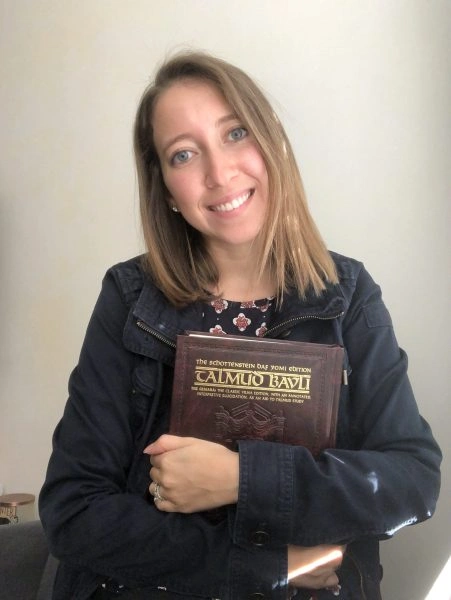
I started learning Daf in Jan 2020 with Brachot b/c I had never seen the Jewish people united around something so positive, and I wanted to be a part of it. Also, I wanted to broaden my background in Torah Shebal Peh- Maayanot gave me a great gemara education, but I knew that I could hold a conversation in most parts of tanach but almost no TSB. I’m so thankful for Daf and have gained immensely.

Meira Shapiro
Meira Shapiro

NJ, United States

I began daf yomi in January 2020 with Brachot. I had made aliya 6 months before, and one of my post-aliya goals was to complete a full cycle. As a life-long Tanach teacher, I wanted to swim from one side of the Yam shel Torah to the other. Daf yomi was also my sanity through COVID. It was the way to marking the progression of time, and feel that I could grow and accomplish while time stopped.

Leah Herzog
Leah Herzog

Givat Zev, Israel

When the new cycle began, I thought, If not now, when? I’d just turned 72. I feel like a tourist on a tour bus passing astonishing scenery each day. Rabbanit Michelle is my beloved tour guide. When the cycle ends, I’ll be 80. I pray that I’ll have strength and mind to continue the journey to glimpse a little more. My grandchildren think having a daf-learning savta is cool!

Wendy Dickstein
Wendy Dickstein

Jerusalem, Israel

What a great experience to learn with Rabbanit Michelle Farber. I began with this cycle in January 2020 and have been comforted by the consistency and energy of this process throughout the isolation period of Covid. Week by week, I feel like I am exploring a treasure chest with sparkling gems and puzzling antiquities. The hunt is exhilarating.

Marian Frankston
Marian Frankston

Pennsylvania, United States

See video

Susan Fisher
Susan Fisher

Raanana, Israel

I started learning at the start of this cycle, and quickly fell in love. It has become such an important part of my day, enriching every part of my life.

Naomi Niederhoffer
Naomi Niederhoffer

Toronto, Canada

I began learning the daf in January 2022. I initially “flew under the radar,” sharing my journey with my husband and a few close friends. I was apprehensive – who, me? Gemara? Now, 2 years in, I feel changed. The rigor of a daily commitment frames my days. The intellectual engagement enhances my knowledge. And the virtual community of learners has become a new family, weaving a glorious tapestry.

Gitta Jaroslawicz-Neufeld

Far Rockaway, United States

I’ve been studying Talmud since the ’90s, and decided to take on Daf Yomi two years ago. I wanted to attempt the challenge of a day-to-day, very Jewish activity. Some days are so interesting and some days are so boring. But I’m still here.
Sarene Shanus
Sarene Shanus

Mamaroneck, NY, United States

I’ve been studying Talmud since the ’90s, and decided to take on Daf Yomi two years ago. I wanted to attempt the challenge of a day-to-day, very Jewish activity. Some days are so interesting and some days are so boring. But I’m still here.
Wendy Rozov
Wendy Rozov

Phoenix, AZ, United States

I was exposed to Talmud in high school, but I was truly inspired after my daughter and I decided to attend the Women’s Siyum Shas in 2020. We knew that this was a historic moment. We were blown away, overcome with emotion at the euphoria of the revolution. Right then, I knew I would continue. My commitment deepened with the every-morning Virtual Beit Midrash on Zoom with R. Michelle.

Adina Hagege
Adina Hagege

Zichron Yaakov, Israel

In January 2020, my chevruta suggested that we “up our game. Let’s do Daf Yomi” – and she sent me the Hadran link. I lost my job (and went freelance), there was a pandemic, and I am still opening the podcast with my breakfast coffee, or after Shabbat with popcorn. My Aramaic is improving. I will need a new bookcase, though.

Rhondda May
Rhondda May

Atlanta, Georgia, United States

In my Shana bet at Migdal Oz I attended the Hadran siyum hash”as. Witnessing so many women so passionate about their Torah learning and connection to God, I knew I had to begin with the coming cycle. My wedding (June 24) was two weeks before the siyum of mesechet yoma so I went a little ahead and was able to make a speech and siyum at my kiseh kallah on my wedding day!

Sharona Guggenheim Plumb

Givat Shmuel, Israel

In January 2020 on a Shabbaton to Baltimore I heard about the new cycle of Daf Yomi after the siyum celebration in NYC stadium. I started to read “ a daily dose of Talmud “ and really enjoyed it . It led me to google “ do Orthodox women study Talmud? “ and found HADRAN! Since then I listen to the podcast every morning, participate in classes and siyum. I love to learn, this is amazing! Thank you

Sandrine Simons
Sandrine Simons

Atlanta, United States

My curiosity was peaked after seeing posts about the end of the last cycle. I am always looking for opportunities to increase my Jewish literacy & I am someone that is drawn to habit and consistency. Dinnertime includes a “Guess what I learned on the daf” segment for my husband and 18 year old twins. I also love the feelings of connection with my colleagues who are also learning.

Diana Bloom
Diana Bloom

Tampa, United States

Robin Zeiger
Robin Zeiger

Tel Aviv, Israel

I saw an elderly man at the shul kiddush in early March 2020, celebrating the siyyum of masechet brachot which he had been learning with a young yeshiva student. I thought, if he can do it, I can do it! I began to learn masechet Shabbat the next day, Making up masechet brachot myself, which I had missed. I haven’t missed a day since, thanks to the ease of listening to Hadran’s podcast!
Judith Shapiro
Judith Shapiro

Minnesota, United States

When I was working and taking care of my children, learning was never on the list. Now that I have more time I have two different Gemora classes and the nach yomi as well as the mishna yomi daily.

Shoshana Shinnar
Shoshana Shinnar

Jerusalem, Israel

Attending the Siyyum in Jerusalem 26 months ago inspired me to become part of this community of learners. So many aspects of Jewish life have been illuminated by what we have learned in Seder Moed. My day is not complete without daf Yomi. I am so grateful to Rabbanit Michelle and the Hadran Community.

Nancy Kolodny
Nancy Kolodny

Newton, United States

Margo
I started my Talmud journey in 7th grade at Akiba Jewish Day School in Chicago. I started my Daf Yomi journey after hearing Erica Brown speak at the Hadran Siyum about marking the passage of time through Daf Yomi.

Carolyn
I started my Talmud journey post-college in NY with a few classes. I started my Daf Yomi journey after the Hadran Siyum, which inspired both my son and myself.

Carolyn Hochstadter and Margo Kossoff Shizgal

Merion Station,  USA

Beit Shemesh, Israel

I learned Talmud as a student in Yeshivat Ramaz and felt at the time that Talmud wasn’t for me. After reading Ilana Kurshan’s book I was intrigued and after watching the great siyum in Yerushalayim it ignited the spark to begin this journey. It has been a transformative life experience for me as a wife, mother, Savta and member of Klal Yisrael.
Elana Storch
Elana Storch

Phoenix, Arizona, United States

Shabbat 57

מַתְנִי׳ בַּמָּה אִשָּׁה יוֹצְאָה, וּבַמָּה אֵינָהּ יוֹצְאָה?

The mishna lists items that a woman may or may not carry into, or wear in the public domain on Shabbat. This depends on whether the particular object is considered an ornament, which she may wear, or merely a burden for the woman, which she may not. Even if it is considered an ornament, there is still concern that she might remove it and carry it in her hand in the public domain, which is prohibited by Torah law.

MISHNA: With what items may a woman go out into the public domain on Shabbat and with what items may she not go out?

לֹא תֵּצֵא אִשָּׁה לֹא בְּחוּטֵי צֶמֶר וְלֹא בְּחוּטֵי פִּשְׁתָּן וְלֹא בִּרְצוּעוֹת שֶׁבְּרֹאשָׁהּ. וְלֹא תִּטְבּוֹל בָּהֶן, עַד שֶׁתְּרַפֵּם.

A woman may neither go out with strings of wool, nor with strings of flax, nor with strips of any other materials that a woman braids in the hair of her head. And a woman may not immerse in a ritual bath with them in her hair until she loosens them. When the strings or strips are tight, the water cannot reach her hair unobstructed, invalidating her immersion.

וְלֹא בְּ״טוֹטֶפֶת״ וְלֹא בְּסַרְבִּיטִין בִּזְמַן שֶׁאֵינָן תְּפוּרִים. וְלֹא בְּכָבוּל לִרְשׁוּת הָרַבִּים.

And, likewise, a woman may neither go out with the ornament called totefet, nor with sarvitin that are not sewn into her head covering, nor with a kavul into the public domain.

וְלֹא בְּעִיר שֶׁל זָהָב וְלֹא בְּקַטְלָא וְלֹא בִּנְזָמִים וְלֹא בְּטַבַּעַת שֶׁאֵין עָלֶיהָ חוֹתָם וְלֹא בְּמַחַט שֶׁאֵינָהּ נְקוּבָה.

And, likewise, a woman may neither go out with a city of gold ornament, nor with a katla ornament, nor with nose rings, nor with a ring that has no seal on it, nor with a needle that is not perforated, which are merely for decorative purposes.

וְאִם יָצָאת אֵינָהּ חַיֶּיבֶת חַטָּאת.

And if she unwittingly went out wearing any of these, she is not liable to bring a sin-offering. According to Torah law, a woman is permitted to go out into the public domain wearing ornaments. However, the Sages decreed that a woman may not go out wearing certain ornaments, lest she remove them to show them to another and inadvertently carry them four cubits in the public domain.

גְּמָ׳ טְבִילָה מַאן דְּכַר שְׁמַהּ?

GEMARA: The Gemara asks: Immersion, who mentioned anything about that? The mishna is dealing with the halakhot of Shabbat, so why did it mention the halakhot of immersion?

אָמַר רַב נַחְמָן בַּר יִצְחָק אָמַר רַבָּה בַּר אֲבוּהּ — מַה טַּעַם קָאָמַר: מַה טַּעַם לֹא תֵּצֵא אִשָּׁה לֹא בְּחוּטֵי צֶמֶר וְלֹא בְּחוּטֵי פִּשְׁתָּן — מִפְּנֵי שֶׁאָמְרוּ חֲכָמִים בַּחוֹל לָא תִּטְבּוֹל בָּהֶן עַד שֶׁתְּרַפֵּם. וְכֵיוָן דִּבְחוֹל לָא תִּטְבּוֹל בָּהֶן עַד שֶׁתְּרַפֵּם, בְּשַׁבָּת לֹא תֵּצֵא, דִּילְמָא מִיתְרְמֵי לַהּ טְבִילָה שֶׁל מִצְוָה וְשָׁרְיָא לְהוּ, וְאָתֵי לְאֵתוֹיִינְהוּ אַרְבַּע אַמּוֹת בִּרְשׁוּת הָרַבִּים.

Rav Naḥman bar Yitzḥak said that Rabba bar Avuh said: When the mishna states the halakha, it employs the style known as: What is the reason. The mention of immersion is an explanation, not a superfluous addition. The mishna should be understood as follows: What is the reason that a woman may neither go out with strings of wool nor with strings of flax? It is because the Sages said that on weekdays she may not immerse with them until she loosens them. And since on weekdays she may not immerse with them until she loosens them, on Shabbat she may not go out with them, lest a situation requiring immersion for the purpose of a mitzva come about, and she untie them, and come to carry them four cubits in the public domain.

בְּעָא מִינֵּיהּ רַב כָּהֲנָא מֵרַב: תִּיכֵי חֲלִילָתָא מַאי? אֲמַר לֵיהּ: אָרִיג קָאָמְרַתְּ? כׇּל שֶׁהוּא אָרִיג לֹא גָּזְרוּ. אִיתְּמַר נָמֵי, אָמַר רַב הוּנָא בְּרֵיהּ דְּרַב יְהוֹשֻׁעַ: כׇּל שֶׁהוּא אָרִיג לֹא גָּזְרוּ.

Rav Kahana raised a dilemma before Rav: With regard to strings made into hollow chains, what is the halakha? Is it permissible for women to go out into the public domain with them on Shabbat or not? It depends on whether they are considered an interposition to immersion. Rav said to him: Woven, you say? With regard to anything woven, the Sages did not issue a decree. Because water reaches the hair unobstructed, there is no need to loosen the hollow chain and there is no concern lest she carry it in the public domain. It was also stated that Rav Huna, son of Rav Yehoshua, said: With regard to anything woven, the Sages did not issue a decree.

וְאִיכָּא דְּאָמְרִי, אָמַר רַב הוּנָא בְּרֵיהּ דְּרַב יְהוֹשֻׁעַ: חֲזֵינָא לְאַחְווֹתִי דְּלָא קָפְדָן עֲלַיְיהוּ.

And some say that Rav Huna, son of Rav Yehoshua, said: I saw that my sisters are not particular about removing them, and they bathe even with woven chains tied in their hair. Apparently, water reaches the hair. Therefore, the chain is not an interposition with regard to immersion.

מַאי אִיכָּא בֵּין הַךְ לִישָּׁנָא וּבֵין הַךְ לִישָּׁנָא?

The Gemara asks: What practical difference is there between this version and that version of the resolution of the dilemma?

אִיכָּא בֵּינַיְיהוּ דִּטְנִיפָן. לְהַךְ לִישָּׁנָא דְּאָמַר כׇּל שֶׁהוּא אָרִיג לֹא גָּזְרוּ — הָנֵי נָמֵי אָרִיג נִינְהוּ, וּלְהַךְ לִישָּׁנָא דְּאָמְרַתְּ מִשּׁוּם קְפִידָא — כֵּיוָן דִּטְנִיפָא מִקְפָּד קָפְדָא עֲלַיְיהוּ.

The Gemara explains: There is a practical difference between them in a case where the chains are dirty. According to this version, in which you said: With regard to anything woven, the Sages did not issue a decree, these too are woven. And according to that version, in which you said that it is due to the fact that his sisters were not particular; in this case, since they are dirty, she is particular about them and will certainly remove them when she washes. Therefore, she is required to do so when immersing in a ritual bath as well.

תְּנַן הָתָם: וְאֵלּוּ חוֹצְצִין בָּאָדָם: חוּטֵי צֶמֶר וְחוּטֵי פִּשְׁתָּן וְהָרְצוּעוֹת שֶׁבְּרָאשֵׁי הַבָּנוֹת. רַבִּי יְהוּדָה אוֹמֵר: שֶׁל צֶמֶר וְשֶׁל שֵׂעָר אֵין חוֹצְצִין מִפְּנֵי שֶׁהַמַּיִם בָּאִין בָּהֶן. אָמַר רַב הוּנָא: וְכוּלָּן, בְּרָאשֵׁי הַבָּנוֹת שָׁנִינוּ.

We learned in a mishna in tractate Mikvaot: And these are the objects that interpose for a person: Strings of wool, and strings of flax, and the straps that are on the girls’ heads. Rabbi Yehuda says: Strings of wool and strands of hair do not interpose because the water reaches the hair through them. Rav Huna said: And we learned all these, strings of wool and flax, in a case where they are used to tie the hair on the girls’ heads.

מַתְקִיף לַהּ רַב יוֹסֵף: לְמַעוֹטֵי מַאי? אִילֵּימָא לְמַעוֹטֵי דְּצַוָּאר, וּדְמַאי: אִילֵּימָא לְמַעוֹטֵי דְּצֶמֶר — הַשְׁתָּא רַךְ עַל גַּבֵּי קָשֶׁה חוֹצֵץ, רַךְ עַל גַּבֵּי רַךְ מִיבַּעְיָא?

Rav Yosef strongly objects to this halakha of Rav Huna: To exclude what other places in the body did Rav Huna say this? If you say that it comes to exclude strings tied to the neck, and then, strings made of what material does it exclude? If you say that it comes to exclude strings of wool, now, the mishna stated that soft strings of wool on top of hair, which is relatively hard, interpose and invalidates the immersion. With regard to soft strings on top of the soft flesh of the neck, is it necessary to say that they interpose?

וְאֶלָּא לְמַעוֹטֵי דְּחוּטֵי פִשְׁתָּן. הַשְׁתָּא קָשֶׁה עַל גַּבֵּי קָשֶׁה חוֹצֵץ, קָשֶׁה עַל גַּבֵּי רַךְ מִיבַּעְיָא?

Rather, say that Rav Huna’s statement came to exclude strings of flax. A similar difficulty arises: Now the mishna stated that hard strings of wool on top of hair, which is hard, interposes and invalidates the immersion. If so, with regard to hard strings on top of the soft flesh of the neck, is it necessary to say that they interpose?

אֶלָּא אָמַר רַב יוֹסֵף, הַיְינוּ טַעְמָא דְּרַב הוּנָא: לְפִי שֶׁאֵין אִשָּׁה חוֹנֶקֶת אֶת עַצְמָהּ.

Rather, Rav Yosef said, this is the reason that Rav Huna restricts the concern for interposition to strings tied in her hair and not around her neck: Because a woman does not strangle herself when adorning herself with a string or straps around her neck. Therefore, she never tightens the strings or straps to the extent that water cannot reach the skin.

אֵיתִיבֵיהּ אַבָּיֵי: הַבָּנוֹת יוֹצְאוֹת בְּחוּטִין שֶׁבְּאׇזְנֵיהֶן, אֲבָל לֹא בַּחֲבָקִין שֶׁבְּצַוְּארֵיהֶן. וְאִי אָמְרַתְּ אֵין אִשָּׁה חוֹנֶקֶת עַצְמָהּ, חֲבָקִין שֶׁבְּצַוְּארֵיהֶן אַמַּאי לָא?

Abaye raised an objection to the explanation of Rav Yosef from a baraita: The girls may go out into the public domain on Shabbat with strings in their ears. Young girls would have their ears pierced, but earrings were not placed in their ears until they were older. Instead, they inserted strings so that the holes would not close. However, they may not go out with straps around their necks. And if you say that the principle: A woman does not strangle herself, is halakhically valid, why may they not go out into the public domain with straps around their necks? They are not tied tight and do not constitute an interposition that invalidates immersion.

אָמַר רָבִינָא:

Ravina said:

הָכָא בְּקַטְלָא עָסְקִינַן, דְּאִשָּׁה חוֹנֶקֶת אֶת עַצְמָהּ — דְּנִיחָא לַהּ שֶׁתֵּרָאֶה כְּבַעֲלַת בָּשָׂר.

Here we are dealing with a broad, ornamented strap [katla] hanging around the neck, to which a small bib is attached. A woman does strangle herself with a katla because the strap is broad and tightening it does not cause pain. She tightens it because it pleases her that she will appear fleshy. It was considered beautiful to have flesh protrude from the katla.

רַבִּי יְהוּדָה אוֹמֵר שֶׁל צֶמֶר וְשֶׁל שֵׂעָר אֵין חוֹצְצִין, מִפְּנֵי שֶׁהַמַּיִם בָּאִין בָּהֶן.

In the same mishna in tractate Mikvaot, Rabbi Yehuda says: Strings of wool and strands of hair do not interpose and invalidate the immersion because the water reaches through them.

אָמַר רַב יוֹסֵף אָמַר רַב יְהוּדָה אָמַר שְׁמוּאֵל: הֲלָכָה כְּרַבִּי יְהוּדָה בְּחוּטֵי שֵׂעָר.

Rav Yosef said that Rav Yehuda said that Shmuel said: The halakha is in accordance with the opinion of Rabbi Yehuda with regard to strands of hair. However, the halakha is not in accordance with his opinion with regard to wool strings.

אֲמַר לֵיהּ אַבָּיֵי: הֲלָכָה, מִכְּלָל דִּפְלִיגִי!

Abaye said to him: By saying that the halakha is in accordance with Rav Yehuda, by inference the Rabbis disagree with regard to strands of hair. However, no opinion stating that strands of hair constitute an interposition is cited in the mishna.

וְכִי תֵּימָא, אִי לָאו דְּשָׁמְעֵיהּ לְתַנָּא קַמָּא דְּאַיְּירִי בְּחוּטֵי שֵׂעָר, אִיהוּ נָמֵי לָא הֲוָה מַיְירֵי — וְדִילְמָא ״כְּשֵׁם״ קָאָמַר לְהוּ: כִּי הֵיכִי דְּמוֹדִיתוּ לִי בְּחוּטֵי שֵׂעָר, אוֹדוֹ לִי נָמֵי בְּחוּטֵי צֶמֶר.

And if you say that had we not heard from the first tanna that he is speaking of strands of hair, Rabbi Yehuda would also not have spoken about them. Apparently, the first tanna prohibited strands of hair, and Rabbi Yehuda disagreed with him. Nevertheless, it could be explained otherwise. And, perhaps he prefaced what he was saying to the Rabbis with the phrase: Just as. Just as you agree with me that strands of hair do not interpose, agree with me that strings of wool also do not interpose. The fact that he mentioned strands of hair does not indicate a dispute; on the contrary, it is an attempt to establish a consensus with regard to the halakha.

אִיתְּמַר, אָמַר רַב נַחְמָן אָמַר שְׁמוּאֵל: מוֹדִים חֲכָמִים לְרַבִּי יְהוּדָה בְּחוּטֵי שֵׂעָר.

Indeed, it was stated that Rav Naḥman said that Shmuel said: The Rabbis agree with Rabbi Yehuda with regard to strands of hair.

תַּנְיָא נָמֵי הָכִי: חוּטֵי צֶמֶר חוֹצְצִין, חוּטֵי שֵׂעָר אֵין חוֹצְצִין. רַבִּי יְהוּדָה אוֹמֵר: שֶׁל צֶמֶר וְשֶׁל שֵׂעָר אֵין חוֹצְצִין.

This opinion was also taught in a baraita: Strings of wool interpose. Strands of hair do not interpose. Rabbi Yehuda says: Both strings of wool and strands of hair do not interpose.

אָמַר רַב נַחְמָן בַּר יִצְחָק: מַתְנִיתִין נָמֵי דַּיְקָא, דְּקָתָנֵי: יוֹצְאָה אִשָּׁה בְּחוּטֵי שֵׂעָר, בֵּין מִשֶּׁלָּה בֵּין מִשֶּׁל חֲבֶרְתָּהּ. מַנִּי? אִילֵימָא רַבִּי יְהוּדָה — אֲפִילּוּ חוּטֵי צֶמֶר נָמֵי! אֶלָּא לָאו רַבָּנַן הִיא, וּשְׁמַע מִינַּהּ בְּחוּטֵי שֵׂעָר לָא פְּלִיגִי. שְׁמַע מִינַּהּ.

Rav Naḥman bar Yitzḥak said: The language of the mishna is also precise, as we learned in a mishna in our chapter: A woman may go out with strands of hair whether they are from her own hair or whether they are from the hair of another. Whose opinion is expressed in this mishna? If you say that it is the opinion of Rabbi Yehuda, even strings of wool should also have been permitted. Rather, is it not the opinion of the Rabbis; and conclude from it that with regard to strands of hair, they do not disagree? The Gemara determines: Indeed, conclude from it.

לֹא בְּ״טוֹטֶפֶת״. מַאי ״טוֹטֶפֶת״? אָמַר רַב יוֹסֵף: חוּמַרְתָּא דִקְטִיפְתָּא.

The mishna said that a woman may not go out with the ornament called a totefet. The Gemara asks: What is a totefet? Rav Yosef said: A packet of spices to ward off the evil eye.

אֲמַר לֵיהּ אַבָּיֵי: תִּהְוֵי כְּקָמֵיעַ מוּמְחֶה, וְתִשְׁתְּרֵי!

Abaye said to him: And let the legal status of this packet be like that of an effective amulet, whose effectiveness is proven, and it should be permitted, as an effective amulet may be moved on Shabbat.

אֶלָּא אָמַר רַב יְהוּדָה מִשְּׁמֵיהּ דְּאַבָּיֵי: אֲפוּזְיָינֵי. תַּנְיָא נָמֵי הָכִי: יוֹצְאָה אִשָּׁה בִּסְבָכָה הַמּוּזְהֶבֶת, וּבְטוֹטֶפֶת וּבְסַרְבִּיטִין הַקְּבוּעִין בָּהּ.

Rather, Rav Yehuda said in the name of Abaye: A totefet is an appuzainu, an ornament worn on the forehead. This opinion was also taught in a baraita: A woman may go out with a gilded hairnet worn to hold the hair in place, and with the totefet, and with the sarvitin that are fastened to the hairnet, since a woman would not remove her head covering to show her friend those ornaments.

אֵיזוֹ טוֹטֶפֶת וְאֵיזוֹ סַרְבִּיטִין? אָמַר רַבִּי אֲבָהוּ: טוֹטֶפֶת — הַמּוּקֶּפֶת לָהּ מֵאֹזֶן לְאֹזֶן. סַרְבִּיטִין — הַמַּגִּיעִין לָהּ עַד לְחָיֶיהָ.

And they said: Which is a totefet and which is sarvitin? Rabbi Abbahu said: Totefet is that which goes around her forehead from ear to ear. Sarvitin are those attached to the net that reach down to her cheeks.

אָמַר רַב הוּנָא: עֲנִיּוֹת עוֹשִׂין אוֹתָן שֶׁל מִינֵי צִבְעוֹנִין, עֲשִׁירוֹת עוֹשִׂין אוֹתָן שֶׁל כֶּסֶף וְשֶׁל זָהָב.

Rav Huna said: Poor women make these ornaments from different types of colored materials. Wealthy women make them of silver and of gold.

וְלֹא בְּכָבוּל. אָמַר רַבִּי יַנַּאי: כָּבוּל זֶה אֵינִי יוֹדֵעַ מַהוּ: אִי כַּבְלָא דְעַבְדָּא תְּנַן — אֲבָל כִּיפָּה שֶׁל צֶמֶר שַׁפִּיר דָּמֵי, אוֹ דִילְמָא כִּיפָּה שֶׁל צֶמֶר תְּנַן — וְכָל שֶׁכֵּן כַּבְלָא דְעַבְדָּא.

We learned in the mishna that a woman may not go out with a kavul. Rabbi Yannai said: This kavul, I do not know what it is. Is it the seal of a slave, who would have a seal on his clothing identifying him as a slave, about which we learned in our mishna that it is prohibited, but a cap of wool that a woman places on her hair, she may well go out wearing it? Or, perhaps we learned in our mishna that going out with a cap of wool is prohibited and all the more so that going out with the seal of a slave is prohibited.

אָמַר רַבִּי אֲבָהוּ: מִסְתַּבְּרָא כְּמַאן דְּאָמַר כִּיפָּה שֶׁל צֶמֶר תְּנַן. וְתַנְיָא נָמֵי הָכִי: יוֹצְאָה אִשָּׁה בְּכָבוּל וּבְאִיסְטָמָא לֶחָצֵר, רַבִּי שִׁמְעוֹן בֶּן אֶלְעָזָר אוֹמֵר: אַף בְּכָבוּל לִרְשׁוּת הָרַבִּים. כְּלָל אָמַר רַבִּי שִׁמְעוֹן בֶּן אֶלְעָזָר: כׇּל שֶׁהוּא לְמַטָּה מִן הַשְּׂבָכָה — יוֹצְאִין בּוֹ, כׇּל שֶׁהוּא לְמַעְלָה מִן הַשְּׂבָכָה — אֵין יוֹצְאִין בּוֹ.

Rabbi Abbahu said: It is reasonable to say in accordance with the one who said that we learned about a cap of wool in the mishna. And this opinion was also taught in a baraita: A woman may go out with a kavul and with an istema to the courtyard on Shabbat. Rabbi Shimon ben Elazar says: She may even go out with the kavul into the public domain. Rabbi Shimon ben Elazar stated a principle: Anything that is worn beneath the hairnet, a woman may go out into the public domain with it, since a woman will not uncover her hair even to show off an ornament while in the public domain. Anything that is worn over the hairnet, like an ornamental hat, a woman may not go out with it. From the context and proximity of the halakha dealing with kavul to the statement of Rabbi Shimon ben Elazar, apparently a kavul is a wool cap worn under the net.

מַאי ״אִיסְטָמָא״? אָמַר רַבִּי אֲבָהוּ: בִּיזְיוֹנֵי. מַאי ״בִּיזְיוֹנֵי״? אָמַר אַבָּיֵי אָמַר רַב: כָּלְיָא פָּרוֹחֵי.

Since istema was mentioned in the baraita, the Gemara asks: What is an istema? Rabbi Abbahu said: Istema is a beizyunei. However, Rabbi Abbahu’s explanation employed a term from the Aramaic dialect spoken in Eretz Yisrael, which was not understood in Babylonia. Therefore, they asked there: What is a beizyunei? Abaye said that Rav said: It is a small hat or ribbon used to gather hairs that protrude [kalya paruḥei] from the headdress.

תָּנוּ רַבָּנַן, שְׁלֹשָׁה דְּבָרִים נֶאֶמְרוּ בְּאִיסְטָמָא: אֵין בָּהּ מִשּׁוּם כִּלְאַיִם, וְאֵינָהּ מְטַמְּאָה בִּנְגָעִים, וְאֵין יוֹצְאִין בָּהּ לִרְשׁוּת הָרַבִּים.

The Sages taught in the Tosefta that three things were said with regard to an istema: There is no prohibition of a mixture of diverse kinds, wool and linen, in it. Since it is made of hard felt and not woven together, the prohibition of diverse kinds does not apply to material of that kind. And it does not become impure with the ritual impurity of leprosy. Only woven garments can become impure with leprosy. And women may not go out with it to the public domain on Shabbat.

מִשּׁוּם רַבִּי שִׁמְעוֹן אָמְרוּ: אַף

In the name of Rabbi Shimon they said: Also,

Want to follow content and continue where you left off?

Create an account today to track your progress, mark what you’ve learned, and follow the shiurim that speak to you.

Clear all items from this list?

This will remove ALL the items in this section. You will lose any progress or history connected to them. This is irreversible.

Cancel
Yes, clear all

Are you sure you want to delete this item?

You will lose any progress or history connected to this item.

Cancel
Yes, delete