Search

Yoma 52

Want to dedicate learning? Get started here:

English
עברית
podcast placeholder

0:00
0:00


podcast placeholder

0:00
0:00


Summary

Today’s daf is sponsored by Judy Shapiro for the upcoming birthdays of her grandchildren: Matan and Yakira in Baltimore, 2nd birthday; and Adin Abraham in Jerusalem, 1st birthday.

What exactly was the question regarding the status of the one cubit partition between the Sanctuary and the Holy of Holies? Ravina explains it and the gemara brings Rabbi Yochanan who quotes a question raised by Yosef Ish Hutzal about two possibilities to reading a verse regarding the partition to prove his reading. The gemara questions this as it is said in a braita that Isi ben Yehuda said there are five verses in the Torah that can be read in two different ways and this verse is not one of them and it is said that Yosef Ish Hutzal is the same person as Isi ben Yehuda. The mishna continues to describe the path the Kohen Gadol takes after reaching the parochet, partition between the Sanctuary and the Holy of Holies. Then it describes how he offered the incense in the Holy of Holies and the path he took to leave when he finished. In the Sanctuary, on the way out, he would recite a short prayer – short, so as not to worry the people outside that were concerned the Kohen Gadol may die upon entering the Holy of Holies. The mishna is confusing as the parochet was only in the Second Temple, but the Ark was only in the First Temple as it was hidden. Why was it hidden and by whom? What else was hidden with it? How can it be explained? There is a debate regarding how the incense is placed on the coals – all at once or gradually. There is also a debate regarding where on the coal pile – closer to the Ark or closer to where the Kohen Gadol is standing?

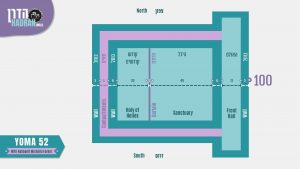
Temple measurements English אנגלית מידות המקדש

Yoma 52

לְמֵיעַל לְהֶדְיָא. וְרַבִּי יוֹסֵי אָמַר לָךְ: חֲבִיבִין יִשְׂרָאֵל שֶׁלֹּא הִצְרִיכָן הַכָּתוּב לְשָׁלִיחַ.

to enter directly, as it is more appropriate for the High Priest to approach the Holy of Holies somewhat circuitously. And in response to this Rabbi Yosei could have said to you: The Jewish people are beloved by God, as the Torah did not require them to make use of an agent, e.g., an angel, to intercede on their behalf. Instead, God hears the nation’s prayers directly. Consequently, the High Priest, who represents the people on Yom Kippur, need not approach in a roundabout fashion.

וְרַבִּי יְהוּדָה נָמֵי, נֵיעוּל בֵּין מְנוֹרָה לְכוֹתֶל! מַשְׁחֲרִי מָאנֵיהּ.

The Gemara asks: But if an indirect approach is a mark of respect, in accordance with the opinion of Rabbi Yehuda, too, let the High Priest enter indirectly between the candelabrum and the wall. The Gemara answers: If the High Priest walks by that route, he might blacken his clothes through the soot left on the wall by the candelabrum.

אָמַר רַבִּי נָתָן: אַמָּה טְרַקְסִין, לֹא הִכְרִיעוּ בּוֹ חֲכָמִים אִי כְּלִפְנִים אִי כְּלַחוּץ.

Rabbi Natan said: With regard to the one-cubit partition, the Sages did not determine its status, whether it was part of the inside of the Holy of Holies or part of the outside area of the Sanctuary.

מַתְקֵיף לַהּ רָבִינָא: מַאי טַעְמָא? אִילֵּימָא מִשּׁוּם דִּכְתִיב: ״וְהַבַּיִת אֲשֶׁר בָּנָה הַמֶּלֶךְ שְׁלֹמֹה לַה׳ שִׁשִּׁים אַמָּה אׇרְכּוֹ וְעֶשְׂרִים רׇחְבּוֹ וּשְׁלֹשִׁים אַמָּה קוֹמָתוֹ״, וּכְתִיב: ״וְאַרְבָּעִים בָּאַמָּה הָיָה הַבָּיִת הוּא הַהֵיכָל לִפְנָי״, וּכְתִיב: ״וְלִפְנֵי הַדְּבִיר עֶשְׂרִים אַמָּה אוֹרֶךְ וְעֶשְׂרִים אַמָּה רוֹחַב וְעֶשְׂרִים אַמָּה קוֹמָתוֹ״, וְלָא יָדְעִינַן אַמָּה טְרַקְסִין אִי מֵהָנֵי עֶשְׂרִים, וְאִי מֵהָנֵי אַרְבָּעִים.

Ravina strongly objects to this opinion: What is the reason for this uncertainty? If we say it is because it is written: “And the House that King Solomon built for the Lord was sixty cubits in length, and its width was twenty cubits, and its height was thirty cubits” (I Kings 6:2), and it is written: “And the House, that is, the Sanctuary, was forty cubits long” (I Kings 6:17), and it is written: “And before the partition twenty cubits in length, and twenty cubits in width, and twenty cubits in height” (I Kings 6:20), and therefore we do not know whether the one-cubit partition was part of these twenty cubits of the Holy of Holies or part of these forty cubits of the Sanctuary, then this problem can be resolved.

וְדִילְמָא לָא מֵהָנֵי עֶשְׂרִין וְלָא מֵהָנֵי אַרְבְּעִין, וַחֲלָלָא קָא חָשֵׁיב, כְּותָלִים לָא קָא חָשֵׁיב. תִּדַּע, דְּכֹל הֵיכָא דְּקָא חָשֵׁיב כְּותָלִים — חָשֵׁיב לֵיהּ לְדִידֵיהּ,

Ravina explains the resolution of the problem: But perhaps it was not part of these twenty cubits nor part of these forty cubits, as in establishing the measurements the verse counts the space but does not count the walls themselves, i.e., the cubit of the wall is not included in either measurement. Know that it is so, as anywhere that the verse counts the area of the walls in addition to the spaces they contain, it also counts the one-cubit partition.

דִּתְנַן: הַהֵיכָל מֵאָה עַל מֵאָה בְּרוּם מֵאָה. כּוֹתֶל אוּלָם חָמֵשׁ, וְהָאוּלָם אַחַת עֶשְׂרֵה, כּוֹתֶל הַהֵיכָל שֵׁשׁ, וְאׇרְכּוֹ אַרְבָּעִים אַמָּה, וְאַמָּה טְרַקְסִין, וְעֶשְׂרִים אַמָּה בֵּית קׇדְשֵׁי הַקֳּדָשִׁים, כּוֹתֶל הַהֵיכָל שֵׁשׁ, וְהַתָּא שֵׁשׁ, וְכוֹתֶל הַתָּא חָמֵשׁ.

Ravina cites a proof for the previous claim. As we learned in a mishna: The Sanctuary was one hundred cubits by one hundred cubits, with a height of one hundred cubits. From east to west, the hundred cubits were divided as follows: The wall of the Entrance Hall was five cubits; and the Entrance Hall itself was eleven cubits; the wall of the Sanctuary was six cubits; the length of the Sanctuary itself was forty cubits; and there was the one-cubit partition; the Hall of the Holy of Holies was another twenty cubits; the outer wall of the Sanctuary was six cubits; and the chamber behind it was six cubits; and the wall of the chamber was five cubits. This mishna proves that when the walls are counted in addition to the spaces, the one-cubit partition is included in the calculation.

אֶלָּא קְדוּשְּׁתֵיהּ אִי כְּלִפְנִים אִי כְּלַחוּץ.

Rather, the uncertainty does not concern the location of the one-cubit partition, which was certainly positioned between the Sanctuary and the Holy of Holies. Instead, the issue is its sanctity, whether it was considered like the inside of the Holy of Holies or like the outside area of the Sanctuary. Since there was no such wall in the Second Temple, the Sages were uncertain with regard to the status of the extra cubit.

וְהַיְינוּ דְּאָמַר רַבִּי יוֹחָנָן, בָּעֵי יוֹסֵף אִישׁ הוּצָל: ״וּדְבִיר בְּתוֹךְ הַבַּיִת מִפְּנִימָה הֵכִין לְתִתֵּן שָׁם אֶת אֲרוֹן בְּרִית ה׳״. אִיבַּעְיָא לְהוּ: הֵיכִי קָאָמַר קְרָא:

§ And this is what Rabbi Yoḥanan said: Yosef of Hutzal raised a dilemma with regard to the verse: “And he prepared a partition in the midst of the House within to set there the Ark of the Covenant of the Lord” (I Kings 6:19). This was his dilemma that was raised before the Sages: With regard to what case is the verse speaking?

״וּדְבִיר בְּתוֹךְ הַבַּיִת מִפְּנִימָה הֵכִין לְתִתֵּן שָׁם״, אוֹ דִילְמָא הָכִי קָאָמַר: ״וּדְבִיר בְּתוֹךְ הַבַּיִת מִפְּנִימָה״?

The Gemara explains the dilemma. Should it be read: And Solomon prepared a partition in the midst of the House within to set there, meaning that he placed the partition within the Temple and behind it he prepared a space to place the Ark, and the partition itself did not possess the sanctity of the Holy of Holies? Or perhaps this is what the verse states: A partition in the midst of the House within, i.e., the verse ends there, while the rest of the text forms a new verse. According to this interpretation, the place of the partition itself was part of the Holy of Holies, and that was where Solomon prepared a place for the Ark.

וּמִי מְסַפְּקָא לֵיהּ? וְהַתַּנְיָא, אִיסִי בֶּן יְהוּדָה אוֹמֵר: חָמֵשׁ מִקְרָאוֹת בַּתּוֹרָה אֵין לָהֶן הֶכְרֵעַ:

The Gemara is surprised at this explanation: And was Yosef of Hutzal really uncertain how to punctuate this verse? But wasn’t it taught in a baraita that Isi ben Yehuda says: There are five verses in the Torah whose meaning cannot be decided, i.e., it is unclear from the text how the verses should be read.

״שְׂאֵת״.

The first example is the term: Se’et (Genesis 4:7). It is unclear whether the verse should be read: “If you do well, shall it not be lifted up [se’et]?” in which case se’et involves forgiveness and pardon; or: “If you do well, but you will lift up [se’et] your sin if you do not do well.” According to this interpretation, se’et is referring to remembrance: If you do not do well, your sin will be remembered.

״מְשׁוּקָּדִים״.

The second uncertain case is the term: Meshukkadim (Exodus 25:34). This verse can be read: “And in the candelabrum four cups made like almond blossoms [meshukkadim]”; or as: “Its knops and its flowers made like almond blossoms [meshukkadim].” In other words, the term meshukkadim can be read either with the first part or the last part of the verse.

״מָחָר״.

Likewise, the term: Maḥar (Exodus 17:9) can be read: “And go out, fight with Amalek tomorrow [maḥar]”. Alternatively, it can mean that Joshua must go out to war with Amalek immediately, and Moses added: “Tomorrow [maḥar] I will stand on the top of the hill” (Exodus 17:9), but today you do not need my prayer. Once again, the issue is whether this term belongs to the beginning or the end of the verse.

״אָרוּר״.

The fourth case is the term: Arur (Genesis 49:7). This verse can be read: “Cursed [arur] be their anger for it was fierce, and their wrath for it was cruel,” on account of Levi and Simeon’s treatment of Shechem. Alternatively, this term, which appears at the beginning of the verse, can be read as the last word of the previous verse: “And in their anger they cut off cursed [arur] oxen” (Genesis 49:6–7). According to this interpretation, “cursed oxen” is referring to the oxen of Shechem, who descended from the accursed Canaan.

״וְקָם״.

Finally, the term: Vekam (Deuteronomy 31:16) can be read as: “Behold, you are about to sleep with your fathers and rise up [vekam]” at the time of the resurrection of the dead; or: “And this people will rise up [vekam] and go astray.”

וְהָתַנְיָא: הוּא יוֹסֵף אִישׁ הוּצָל, הוּא יוֹסֵף הַבַּבְלִי, הוּא אִיסִי בֶּן יְהוּדָה, הוּא אִיסִי בֶּן גּוּר אַרְיֵה, הוּא אִיסִי בֶּן גַּמְלִיאֵל, הוּא אִיסִי בֶּן מַהֲלַלְאֵל, וּמָה שְׁמוֹ — אִיסִי בֶּן עֲקִיבָא שְׁמוֹ. בִּדְאוֹרָיְיתָא — לֵיכָּא, בְּדִנְבִיאֵי — אִיכָּא.

The Gemara explains the objection presented by this baraita. And wasn’t it taught in a baraita that Yosef of Hutzal is the one called Yosef the Babylonian, as Hutzal is a city in Babylonia; and he is also the person called Isi ben Yehuda, as Isi is a shortened form of Yosef; he is Isi ben Gur Arye, a nickname for Yehuda; he is Isi ben Gamliel; he is Isi ben Mahalalel? And what is his real name? Isi ben Akiva is his name. If they are indeed the same person, Isi ben Yehuda, who is Yosef of Hutzal, says that there are only five verses whose punctuation is unclear, whereas here he adds an additional verse. The Gemara explains: In the Torah itself, there are indeed no more than five verses, but in the Prophets there are more examples of equivocal punctuation, one of which is the verse from I Kings.

וּבִדְאוֹרָיְיתָא לֵיכָּא? וְהָא אִיכָּא דְּבָעֵי רַב חִסְדָּא: ״וַיִּשְׁלַח אֶת נַעֲרֵי בְּנֵי יִשְׂרָאֵל וַיַּעֲלוּ עוֹלוֹת כְּבָשִׂים וַיִּזְבְּחוּ זְבָחִים שְׁלָמִים פָּרִים״ — אוֹ דִילְמָא אִידֵּי וְאִידֵּי פָּרִים! לְרַב חִסְדָּא מְסַפְּקָא לֵיהּ, לְאִיסִי בֶּן יְהוּדָה פְּשִׁיטָא לֵיהּ.

The Gemara raises a difficulty: And in the Torah itself, are there no other examples of indeterminate punctuation? But there is this dilemma that Rav Ḥisda raised with regard to the verse: “And he sent the young men of the children of Israel who sacrificed burnt-offerings” (Exodus 24:5); were these burnt-offerings sheep, and when the verse continues: “And sacrificed peace-offerings of bulls to the Lord,” these peace-offerings alone were bulls? Or perhaps these and these were bulls, as the word “bulls” is referring both to the burnt-offerings and the peace-offerings? This is another verse whose punctuation is unclear. The Gemara rejects this contention: This is not difficult; according to Rav Ḥisda it was uncertain how to read the verse, but the interpretation was obvious to Isi ben Yehuda.

מַתְנִי׳ הַחִיצוֹנָה הָיְתָה פְּרוּפָה מִן הַדָּרוֹם, וּפְנִימִית מִן הַצָּפוֹן. מְהַלֵּךְ בֵּינֵיהֶן, עַד שֶׁמַּגִּיעַ לַצָּפוֹן. הִגִּיעַ לַצָּפוֹן — הוֹפֵךְ פָּנָיו לַדָּרוֹם, מְהַלֵּךְ לִשְׂמֹאלוֹ עִם הַפָּרוֹכֶת עַד שֶׁהוּא מַגִּיעַ לָאָרוֹן,

MISHNA: The outer curtain between the Sanctuary and the Holy of Holies was hooked [perufa] slightly open on the south side of the Sanctuary, and the inner curtain hooked slightly open on the north side of the Sanctuary, and therefore the High Priest could not enter the Holy of Holies directly. Rather, he enters through the southern opening and walks between the curtains until he reaches the opening to the north. When he reaches the opening to the north, he enters the Holy of Holies through that opening, turns his face to the south, and walks to his left along the curtain until he reaches the area before the Ark.

הִגִּיעַ לָאָרוֹן — נוֹתֵן אֶת הַמַּחְתָּה בֵּין שְׁנֵי הַבַּדִּים. צָבַר אֶת הַקְּטֹרֶת עַל גַּבֵּי גֶּחָלִים, וְנִתְמַלֵּא כָּל הַבַּיִת כּוּלּוֹ עָשָׁן. יָצָא וּבָא לוֹ בְּדֶרֶךְ בֵּית כְּנִיסָתוֹ, וּמִתְפַּלֵּל תְּפִלָּה קְצָרָה בַּבַּיִת הַחִיצוֹן. וְלֹא הָיָה מַאֲרִיךְ בִּתְפִלָּתוֹ, שֶׁלֹּא לְהַבְעִית אֶת יִשְׂרָאֵל.

When he reaches the Ark, he places the coal pan between the two staves. He piles the incense atop the coals, and the whole chamber in its entirety would fill with smoke. He then exits and comes out the way that he entered. He does not turn around but leaves the Holy of Holies walking while facing the Ark. And he recites a brief prayer in the outer chamber, in the Sanctuary. And he would not extend his prayer there so as not to alarm the Jewish people, who would otherwise conclude that something happened and that he died in the Holy of Holies.

גְּמָ׳ בְּמַאי עָסְקִינַן? אִילֵימָא בְּמִקְדָּשׁ רִאשׁוֹן, מִי הֲווֹ פָּרוֹכֶת? אֶלָּא בְּמִקְדָּשׁ שֵׁנִי, מִי הֲוָה אָרוֹן?

GEMARA: The Gemara asks: With what are we dealing here? To which time period is the mishna referring? If we say it is speaking about the First Temple, were there curtains then? There was only one curtain over the one-cubit partition. Rather, if we say that the mishna is dealing with the Second Temple, was there an Ark there?

וְהָתַנְיָא: מִשֶּׁנִּגְנַז אָרוֹן — נִגְנְזָה עִמּוֹ צִנְצֶנֶת הַמָּן, וּצְלוֹחִית שֶׁמֶן הַמִּשְׁחָה, וּמַקְלוֹ שֶׁל אַהֲרֹן וּשְׁקֵדֶיהָ וּפְרָחֶיהָ, וְאַרְגַּז שֶׁשִּׁגְּרוּ פְּלִשְׁתִּים דּוֹרוֹן לֵאלֹהֵי יִשְׂרָאֵל, שֶׁנֶּאֱמַר: ״וּכְלֵי הַזָּהָב אֲשֶׁר הֲשֵׁיבוֹתֶם לוֹ אָשָׁם תָּשִׂימוּ בָאַרְגַּז מִצִּדּוֹ וְשִׁלַּחְתֶּם אוֹתוֹ וְהָלָךְ״.

The Gemara elaborates: But wasn’t it taught in a baraita that when the Ark was buried, along with it was buried the jar of manna that was next to it, and the flask of oil used for anointing, and Aaron’s staff with its almonds and blossoms, and the chest that the Philistines sent as a gift [doron] to the God of Israel after they captured the Ark and were stricken by several plagues, as it is stated: “And put the jewels of gold that you return to Him for a guilt-offering, in a coffer by its side, and send it away that it may go” (I Samuel 6:8)?

וּמִי גְּנָזוֹ — יֹאשִׁיָּהוּ גְּנָזוֹ. מָה רָאָה שֶׁגְּנָזוֹ? רָאָה שֶׁכָּתוּב: ״יוֹלֵךְ ה׳ אוֹתְךָ וְאֶת מַלְכְּךָ אֲשֶׁר תָּקִים עָלֶיךָ״, עָמַד וּגְנָזוֹ.

§ And who buried the Ark? Josiah, king of Judea, buried it. And what did he see that he decided to bury it? He saw that it is written: “The Lord will bring you, and your king whom you shall set over you, to a nation that you have not known” (Deuteronomy 28:36). Since he knew that the Jewish people would ultimately be exiled, he felt it was better that the Ark should not be disgraced in exile, and therefore he arose and buried it.

שֶׁנֶּאֱמַר: ״וַיֹּאמֶר לַלְוִיִּם הַמְּבִינִים לְכׇל יִשְׂרָאֵל הַקְּדוֹשִׁים לַה׳ תְּנוּ אֶת אֲרוֹן הַקּוֹדֶשׁ בַּבַּיִת אֲשֶׁר בָּנָה שְׁלֹמֹה בֶן דָּוִד מֶלֶךְ יִשְׂרָאֵל אֵין לָכֶם מַשָּׂא בַּכָּתֵף עַתָּה עִבְדוּ אֶת ה׳ אֱלֹהֵיכֶם וְאֵת עַמּוֹ יִשְׂרָאֵל״.

The Gemara cites the source for the tradition that Josiah buried the Ark. As it is stated: “And he said to the Levites who taught all of Israel, who were sacred to the Lord: Put the sacred Ark in the house that Solomon, son of David, king of Israel, built. There shall no more be a burden upon your shoulders; now serve the Lord your God, and His people Israel (I Chronicles 35:3). In other words, from now onward the Levites will no longer carry the Ark on their shoulders, and they should dedicate themselves to their service of singing and locking the gates of the Temple.

וְאָמַר רַבִּי אֶלְעָזָר: אָתְיָא ״שָׁמָּה״ ״שָׁמָּה״, וְאָתְיָא ״דּוֹרוֹת״ ״דּוֹרוֹת״.

And Rabbi Elazar said: The matter is derived by means of a verbal analogy, as it is written with regard to the Ark: “That is by the Ark of the Testimony, before the Ark cover that is above the testimony, there will I meet with you” (Exodus 30:6), and it is written: “Take a jar and put a full omer of manna there, and place it before the Lord for safekeeping throughout your generations” (Exodus 16:33). And it is further derived by verbal analogy from the term “Generations” written here and “generations” written with regard to the oil used for anointing: “This shall be a sacred anointing oil for Me throughout your generations” (Exodus 30:31).

וְאָתְיָא ״מִשְׁמֶרֶת״ ״מִשְׁמֶרֶת״.

Rabbi Elazar continued: And it is likewise derived by verbal analogy from the term “safekeeping” stated here and “safekeeping” stated in connection to the staff of Aaron: “Place back the rod of Aaron before the testimony for safekeeping” (Numbers 17:25). These verbal analogies teach that all of these items were hidden together with the Ark. Evidently, there was no Ark in the Holy of Holies even before the First Temple period ended. How, then, can the mishna speak of the Ark during the Second Temple period?

לְעוֹלָם בְּמִקְדָּשׁ שֵׁנִי, וּמַאי ״הִגִּיעַ לָאָרוֹן״ — מְקוֹם אָרוֹן. וְהָא קָתָנֵי: נָתַן אֶת הַמַּחְתָּה לְבֵין שְׁנֵי הַבַּדִּים! אֵימָא: ״כְּבֵין שְׁנֵי הַבַּדִּים״.

The Gemara answers: Actually, the mishna is referring to the Second Temple, and what is the meaning of the phrase: Reaches the Ark? It means the place of the Ark. The Gemara raises a difficulty: But it is taught that he places the coal pan between the two staves, which indicates that the staves of the Ark were present. The Gemara answers: Emend the text and say: As though it was between the two staves, i.e., in the place where the staves had been located when the Ark was there.

צָבַר אֶת הַקְּטֹרֶת עַל גַּבֵּי גֶּחָלִים. תְּנַן כְּמַאן דְּאָמַר צוֹבְרָהּ. תָּנֵי חֲדָא: צוֹבְרָהּ פְּנִימָה שֶׁהִיא חוּצָה לוֹ. וְתַנְיָא אִידַּךְ: צוֹבְרָהּ חוּצָה שֶׁהִיא פְּנִימָה לוֹ.

§ The mishna taught: He piles the incense atop the coals. The Gemara comments: We learned in the mishna in accordance with the opinion of the one who said that he piles the incense on the coals and does not scatter it there. It was taught in one baraita: He piles the incense in the section of the coal pan closest to the Ark, which is farthest from the High Priest, until he reaches the other side of the coal pan. And it was taught in another baraita: He piles it in the section of the coal pan farthest from the Ark, which is closest to him.

אָמַר אַבָּיֵי: תַּנָּאֵי הִיא. וְאָמַר אַבָּיֵי: מִסְתַּבְּרָא כְּמַאן דְּאָמַר פְּנִימָה שֶׁהִיא חוּצָה לוֹ — דִּתְנַן, מְלַמְּדִין אוֹתוֹ: הִזָּהֵר

Abaye said that this issue is a dispute between tanna’im. And Abaye said: It is reasonable to explain in accordance with the opinion of the one who said that he piles the incense in the section of the coal pan closest to the Ark, which is farthest from him. As we learned in a mishna that they would teach the priest who burns the incense: Be careful

New to Talmud?

Check out our resources designed to help you navigate a page of Talmud – and study at the pace, level and style that fits you. 

The Hadran Women’s Tapestry

Meet the diverse women learning Gemara at Hadran and hear their stories. 

It has been a pleasure keeping pace with this wonderful and scholarly group of women.

Janice Block
Janice Block

Beit Shemesh, Israel

About a year into learning more about Judaism on a path to potential conversion, I saw an article about the upcoming Siyum HaShas in January of 2020. My curiosity was piqued and I immediately started investigating what learning the Daf actually meant. Daily learning? Just what I wanted. Seven and a half years? I love a challenge! So I dove in head first and I’ve enjoyed every moment!!
Nickie Matthews
Nickie Matthews

Blacksburg, United States

While vacationing in San Diego, Rabbi Leah Herz asked if I’d be interested in being in hevruta with her to learn Daf Yomi through Hadran. Why not? I had loved learning Gemara in college in 1971 but hadn’t returned. With the onset of covid, Daf Yomi and Rabbanit Michelle centered me each day. Thank-you for helping me grow and enter this amazing world of learning.
Meryll Page
Meryll Page

Minneapolis, MN, United States

After experiences over the years of asking to join gemara shiurim for men and either being refused by the maggid shiur or being the only women there, sometimes behind a mechitza, I found out about Hadran sometime during the tail end of Masechet Shabbat, I think. Life has been much better since then.

Madeline Cohen
Madeline Cohen

London, United Kingdom

Margo
I started my Talmud journey in 7th grade at Akiba Jewish Day School in Chicago. I started my Daf Yomi journey after hearing Erica Brown speak at the Hadran Siyum about marking the passage of time through Daf Yomi.

Carolyn
I started my Talmud journey post-college in NY with a few classes. I started my Daf Yomi journey after the Hadran Siyum, which inspired both my son and myself.

Carolyn Hochstadter and Margo Kossoff Shizgal

Merion Station,  USA

Beit Shemesh, Israel

A beautiful world of Talmudic sages now fill my daily life with discussion and debate.
bringing alive our traditions and texts that has brought new meaning to my life.
I am a מגילת אסתר reader for women . the words in the Mishna of מסכת megillah 17a
הקורא את המגילה למפרע לא יצא were powerful to me.
I hope to have the zchut to complete the cycle for my 70th birthday.

Sheila Hauser
Sheila Hauser

Jerusalem, Israel

It’s hard to believe it has been over two years. Daf yomi has changed my life in so many ways and has been sustaining during this global sea change. Each day means learning something new, digging a little deeper, adding another lens, seeing worlds with new eyes. Daf has also fostered new friendships and deepened childhood connections, as long time friends have unexpectedly become havruta.

Joanna Rom
Joanna Rom

Northwest Washington, United States

I was inspired to start learning after attending the 2020 siyum in Binyanei Hauma. It has been a great experience for me. It’s amazing to see the origins of stories I’ve heard and rituals I’ve participated in my whole life. Even when I don’t understand the daf itself, I believe that the commitment to learning every day is valuable and has multiple benefits. And there will be another daf tomorrow!

Khaya Eisenberg
Khaya Eisenberg

Jerusalem, Israel

I learned Mishnayot more than twenty years ago and started with Gemara much later in life. Although I never managed to learn Daf Yomi consistently, I am learning since some years Gemara in depth and with much joy. Since last year I am studying at the International Halakha Scholars Program at the WIHL. I often listen to Rabbanit Farbers Gemara shiurim to understand better a specific sugyiah. I am grateful for the help and inspiration!

Shoshana Ruerup
Shoshana Ruerup

Berlin, Germany

My Daf journey began in August 2012 after participating in the Siyum Hashas where I was blessed as an “enabler” of others.  Galvanized into my own learning I recited the Hadran on Shas in January 2020 with Rabbanit Michelle. That Siyum was a highlight in my life.  Now, on round two, Daf has become my spiritual anchor to which I attribute manifold blessings.

Rina Goldberg
Rina Goldberg

Englewood NJ, United States

I had no formal learning in Talmud until I began my studies in the Joint Program where in 1976 I was one of the few, if not the only, woman talmud major. It was superior training for law school and enabled me to approach my legal studies with a foundation . In 2018, I began daf yomi listening to Rabbanit MIchelle’s pod cast and my daily talmud studies are one of the highlights of my life.

Krivosha_Terri_Bio
Terri Krivosha

Minneapolis, United States

I started learning with rabbis. I needed to know more than the stories. My first teacher to show me “the way of the Talmud” as well as the stories was Samara Schwartz.
Michelle Farber started the new cycle 2 yrs ago and I jumped on for the ride.
I do not look back.

Jenifer Nech
Jenifer Nech

Houston, United States

I started learning Daf Yomi inspired by תָּפַסְתָּ מְרוּבֶּה לֹא תָּפַסְתָּ, תָּפַסְתָּ מוּעָט תָּפַסְתָּ. I thought I’d start the first page, and then see. I was swept up into the enthusiasm of the Hadran Siyum, and from there the momentum kept building. Rabbanit Michelle’s shiur gives me an anchor, a connection to an incredible virtual community, and an energy to face whatever the day brings.

Medinah Korn
Medinah Korn

בית שמש, Israel

I had never heard of Daf Yomi and after reading the book, The Weight of Ink, I explored more about it. I discovered that it was only 6 months before a whole new cycle started and I was determined to give it a try. I tried to get a friend to join me on the journey but after the first few weeks they all dropped it. I haven’t missed a day of reading and of listening to the podcast.

Anne Rubin
Anne Rubin

Elkins Park, United States

I started learning daf yomi at the beginning of this cycle. As the pandemic evolved, it’s been so helpful to me to have this discipline every morning to listen to the daf podcast after I’ve read the daf; learning about the relationships between the rabbis and the ways they were constructing our Jewish religion after the destruction of the Temple. I’m grateful to be on this journey!

Mona Fishbane
Mona Fishbane

Teaneck NJ, United States

I started learning Gemara at the Yeshivah of Flatbush. And I resumed ‘ברוך ה decades later with Rabbanit Michele at Hadran. I started from Brachot and have had an exciting, rewarding experience throughout seder Moed!

Anne Mirsky (1)
Anne Mirsky

Maale Adumim, Israel

I started learning at the beginning of the cycle after a friend persuaded me that it would be right up my alley. I was lucky enough to learn at Rabbanit Michelle’s house before it started on zoom and it was quickly part of my daily routine. I find it so important to see for myself where halachot were derived, where stories were told and to get more insight into how the Rabbis interacted.

Deborah Dickson
Deborah Dickson

Ra’anana, Israel

See video

Susan Fisher
Susan Fisher

Raanana, Israel

I started learning after the siyum hashas for women and my daily learning has been a constant over the last two years. It grounded me during the chaos of Corona while providing me with a community of fellow learners. The Daf can be challenging but it’s filled with life’s lessons, struggles and hope for a better world. It’s not about the destination but rather about the journey. Thank you Hadran!

Dena Lehrman
Dena Lehrman

אפרת, Israel

I tried Daf Yomi in the middle of the last cycle after realizing I could listen to Michelle’s shiurim online. It lasted all of 2 days! Then the new cycle started just days before my father’s first yahrzeit and my youngest daughter’s bat mitzvah. It seemed the right time for a new beginning. My family, friends, colleagues are immensely supportive!

Catriella-Freedman-jpeg
Catriella Freedman

Zichron Yaakov, Israel

Yoma 52

לְמֵיעַל לְהֶדְיָא. וְרַבִּי יוֹסֵי אָמַר לָךְ: חֲבִיבִין יִשְׂרָאֵל שֶׁלֹּא הִצְרִיכָן הַכָּתוּב לְשָׁלִיחַ.

to enter directly, as it is more appropriate for the High Priest to approach the Holy of Holies somewhat circuitously. And in response to this Rabbi Yosei could have said to you: The Jewish people are beloved by God, as the Torah did not require them to make use of an agent, e.g., an angel, to intercede on their behalf. Instead, God hears the nation’s prayers directly. Consequently, the High Priest, who represents the people on Yom Kippur, need not approach in a roundabout fashion.

וְרַבִּי יְהוּדָה נָמֵי, נֵיעוּל בֵּין מְנוֹרָה לְכוֹתֶל! מַשְׁחֲרִי מָאנֵיהּ.

The Gemara asks: But if an indirect approach is a mark of respect, in accordance with the opinion of Rabbi Yehuda, too, let the High Priest enter indirectly between the candelabrum and the wall. The Gemara answers: If the High Priest walks by that route, he might blacken his clothes through the soot left on the wall by the candelabrum.

אָמַר רַבִּי נָתָן: אַמָּה טְרַקְסִין, לֹא הִכְרִיעוּ בּוֹ חֲכָמִים אִי כְּלִפְנִים אִי כְּלַחוּץ.

Rabbi Natan said: With regard to the one-cubit partition, the Sages did not determine its status, whether it was part of the inside of the Holy of Holies or part of the outside area of the Sanctuary.

מַתְקֵיף לַהּ רָבִינָא: מַאי טַעְמָא? אִילֵּימָא מִשּׁוּם דִּכְתִיב: ״וְהַבַּיִת אֲשֶׁר בָּנָה הַמֶּלֶךְ שְׁלֹמֹה לַה׳ שִׁשִּׁים אַמָּה אׇרְכּוֹ וְעֶשְׂרִים רׇחְבּוֹ וּשְׁלֹשִׁים אַמָּה קוֹמָתוֹ״, וּכְתִיב: ״וְאַרְבָּעִים בָּאַמָּה הָיָה הַבָּיִת הוּא הַהֵיכָל לִפְנָי״, וּכְתִיב: ״וְלִפְנֵי הַדְּבִיר עֶשְׂרִים אַמָּה אוֹרֶךְ וְעֶשְׂרִים אַמָּה רוֹחַב וְעֶשְׂרִים אַמָּה קוֹמָתוֹ״, וְלָא יָדְעִינַן אַמָּה טְרַקְסִין אִי מֵהָנֵי עֶשְׂרִים, וְאִי מֵהָנֵי אַרְבָּעִים.

Ravina strongly objects to this opinion: What is the reason for this uncertainty? If we say it is because it is written: “And the House that King Solomon built for the Lord was sixty cubits in length, and its width was twenty cubits, and its height was thirty cubits” (I Kings 6:2), and it is written: “And the House, that is, the Sanctuary, was forty cubits long” (I Kings 6:17), and it is written: “And before the partition twenty cubits in length, and twenty cubits in width, and twenty cubits in height” (I Kings 6:20), and therefore we do not know whether the one-cubit partition was part of these twenty cubits of the Holy of Holies or part of these forty cubits of the Sanctuary, then this problem can be resolved.

וְדִילְמָא לָא מֵהָנֵי עֶשְׂרִין וְלָא מֵהָנֵי אַרְבְּעִין, וַחֲלָלָא קָא חָשֵׁיב, כְּותָלִים לָא קָא חָשֵׁיב. תִּדַּע, דְּכֹל הֵיכָא דְּקָא חָשֵׁיב כְּותָלִים — חָשֵׁיב לֵיהּ לְדִידֵיהּ,

Ravina explains the resolution of the problem: But perhaps it was not part of these twenty cubits nor part of these forty cubits, as in establishing the measurements the verse counts the space but does not count the walls themselves, i.e., the cubit of the wall is not included in either measurement. Know that it is so, as anywhere that the verse counts the area of the walls in addition to the spaces they contain, it also counts the one-cubit partition.

דִּתְנַן: הַהֵיכָל מֵאָה עַל מֵאָה בְּרוּם מֵאָה. כּוֹתֶל אוּלָם חָמֵשׁ, וְהָאוּלָם אַחַת עֶשְׂרֵה, כּוֹתֶל הַהֵיכָל שֵׁשׁ, וְאׇרְכּוֹ אַרְבָּעִים אַמָּה, וְאַמָּה טְרַקְסִין, וְעֶשְׂרִים אַמָּה בֵּית קׇדְשֵׁי הַקֳּדָשִׁים, כּוֹתֶל הַהֵיכָל שֵׁשׁ, וְהַתָּא שֵׁשׁ, וְכוֹתֶל הַתָּא חָמֵשׁ.

Ravina cites a proof for the previous claim. As we learned in a mishna: The Sanctuary was one hundred cubits by one hundred cubits, with a height of one hundred cubits. From east to west, the hundred cubits were divided as follows: The wall of the Entrance Hall was five cubits; and the Entrance Hall itself was eleven cubits; the wall of the Sanctuary was six cubits; the length of the Sanctuary itself was forty cubits; and there was the one-cubit partition; the Hall of the Holy of Holies was another twenty cubits; the outer wall of the Sanctuary was six cubits; and the chamber behind it was six cubits; and the wall of the chamber was five cubits. This mishna proves that when the walls are counted in addition to the spaces, the one-cubit partition is included in the calculation.

אֶלָּא קְדוּשְּׁתֵיהּ אִי כְּלִפְנִים אִי כְּלַחוּץ.

Rather, the uncertainty does not concern the location of the one-cubit partition, which was certainly positioned between the Sanctuary and the Holy of Holies. Instead, the issue is its sanctity, whether it was considered like the inside of the Holy of Holies or like the outside area of the Sanctuary. Since there was no such wall in the Second Temple, the Sages were uncertain with regard to the status of the extra cubit.

וְהַיְינוּ דְּאָמַר רַבִּי יוֹחָנָן, בָּעֵי יוֹסֵף אִישׁ הוּצָל: ״וּדְבִיר בְּתוֹךְ הַבַּיִת מִפְּנִימָה הֵכִין לְתִתֵּן שָׁם אֶת אֲרוֹן בְּרִית ה׳״. אִיבַּעְיָא לְהוּ: הֵיכִי קָאָמַר קְרָא:

§ And this is what Rabbi Yoḥanan said: Yosef of Hutzal raised a dilemma with regard to the verse: “And he prepared a partition in the midst of the House within to set there the Ark of the Covenant of the Lord” (I Kings 6:19). This was his dilemma that was raised before the Sages: With regard to what case is the verse speaking?

״וּדְבִיר בְּתוֹךְ הַבַּיִת מִפְּנִימָה הֵכִין לְתִתֵּן שָׁם״, אוֹ דִילְמָא הָכִי קָאָמַר: ״וּדְבִיר בְּתוֹךְ הַבַּיִת מִפְּנִימָה״?

The Gemara explains the dilemma. Should it be read: And Solomon prepared a partition in the midst of the House within to set there, meaning that he placed the partition within the Temple and behind it he prepared a space to place the Ark, and the partition itself did not possess the sanctity of the Holy of Holies? Or perhaps this is what the verse states: A partition in the midst of the House within, i.e., the verse ends there, while the rest of the text forms a new verse. According to this interpretation, the place of the partition itself was part of the Holy of Holies, and that was where Solomon prepared a place for the Ark.

וּמִי מְסַפְּקָא לֵיהּ? וְהַתַּנְיָא, אִיסִי בֶּן יְהוּדָה אוֹמֵר: חָמֵשׁ מִקְרָאוֹת בַּתּוֹרָה אֵין לָהֶן הֶכְרֵעַ:

The Gemara is surprised at this explanation: And was Yosef of Hutzal really uncertain how to punctuate this verse? But wasn’t it taught in a baraita that Isi ben Yehuda says: There are five verses in the Torah whose meaning cannot be decided, i.e., it is unclear from the text how the verses should be read.

״שְׂאֵת״.

The first example is the term: Se’et (Genesis 4:7). It is unclear whether the verse should be read: “If you do well, shall it not be lifted up [se’et]?” in which case se’et involves forgiveness and pardon; or: “If you do well, but you will lift up [se’et] your sin if you do not do well.” According to this interpretation, se’et is referring to remembrance: If you do not do well, your sin will be remembered.

״מְשׁוּקָּדִים״.

The second uncertain case is the term: Meshukkadim (Exodus 25:34). This verse can be read: “And in the candelabrum four cups made like almond blossoms [meshukkadim]”; or as: “Its knops and its flowers made like almond blossoms [meshukkadim].” In other words, the term meshukkadim can be read either with the first part or the last part of the verse.

״מָחָר״.

Likewise, the term: Maḥar (Exodus 17:9) can be read: “And go out, fight with Amalek tomorrow [maḥar]”. Alternatively, it can mean that Joshua must go out to war with Amalek immediately, and Moses added: “Tomorrow [maḥar] I will stand on the top of the hill” (Exodus 17:9), but today you do not need my prayer. Once again, the issue is whether this term belongs to the beginning or the end of the verse.

״אָרוּר״.

The fourth case is the term: Arur (Genesis 49:7). This verse can be read: “Cursed [arur] be their anger for it was fierce, and their wrath for it was cruel,” on account of Levi and Simeon’s treatment of Shechem. Alternatively, this term, which appears at the beginning of the verse, can be read as the last word of the previous verse: “And in their anger they cut off cursed [arur] oxen” (Genesis 49:6–7). According to this interpretation, “cursed oxen” is referring to the oxen of Shechem, who descended from the accursed Canaan.

״וְקָם״.

Finally, the term: Vekam (Deuteronomy 31:16) can be read as: “Behold, you are about to sleep with your fathers and rise up [vekam]” at the time of the resurrection of the dead; or: “And this people will rise up [vekam] and go astray.”

וְהָתַנְיָא: הוּא יוֹסֵף אִישׁ הוּצָל, הוּא יוֹסֵף הַבַּבְלִי, הוּא אִיסִי בֶּן יְהוּדָה, הוּא אִיסִי בֶּן גּוּר אַרְיֵה, הוּא אִיסִי בֶּן גַּמְלִיאֵל, הוּא אִיסִי בֶּן מַהֲלַלְאֵל, וּמָה שְׁמוֹ — אִיסִי בֶּן עֲקִיבָא שְׁמוֹ. בִּדְאוֹרָיְיתָא — לֵיכָּא, בְּדִנְבִיאֵי — אִיכָּא.

The Gemara explains the objection presented by this baraita. And wasn’t it taught in a baraita that Yosef of Hutzal is the one called Yosef the Babylonian, as Hutzal is a city in Babylonia; and he is also the person called Isi ben Yehuda, as Isi is a shortened form of Yosef; he is Isi ben Gur Arye, a nickname for Yehuda; he is Isi ben Gamliel; he is Isi ben Mahalalel? And what is his real name? Isi ben Akiva is his name. If they are indeed the same person, Isi ben Yehuda, who is Yosef of Hutzal, says that there are only five verses whose punctuation is unclear, whereas here he adds an additional verse. The Gemara explains: In the Torah itself, there are indeed no more than five verses, but in the Prophets there are more examples of equivocal punctuation, one of which is the verse from I Kings.

וּבִדְאוֹרָיְיתָא לֵיכָּא? וְהָא אִיכָּא דְּבָעֵי רַב חִסְדָּא: ״וַיִּשְׁלַח אֶת נַעֲרֵי בְּנֵי יִשְׂרָאֵל וַיַּעֲלוּ עוֹלוֹת כְּבָשִׂים וַיִּזְבְּחוּ זְבָחִים שְׁלָמִים פָּרִים״ — אוֹ דִילְמָא אִידֵּי וְאִידֵּי פָּרִים! לְרַב חִסְדָּא מְסַפְּקָא לֵיהּ, לְאִיסִי בֶּן יְהוּדָה פְּשִׁיטָא לֵיהּ.

The Gemara raises a difficulty: And in the Torah itself, are there no other examples of indeterminate punctuation? But there is this dilemma that Rav Ḥisda raised with regard to the verse: “And he sent the young men of the children of Israel who sacrificed burnt-offerings” (Exodus 24:5); were these burnt-offerings sheep, and when the verse continues: “And sacrificed peace-offerings of bulls to the Lord,” these peace-offerings alone were bulls? Or perhaps these and these were bulls, as the word “bulls” is referring both to the burnt-offerings and the peace-offerings? This is another verse whose punctuation is unclear. The Gemara rejects this contention: This is not difficult; according to Rav Ḥisda it was uncertain how to read the verse, but the interpretation was obvious to Isi ben Yehuda.

מַתְנִי׳ הַחִיצוֹנָה הָיְתָה פְּרוּפָה מִן הַדָּרוֹם, וּפְנִימִית מִן הַצָּפוֹן. מְהַלֵּךְ בֵּינֵיהֶן, עַד שֶׁמַּגִּיעַ לַצָּפוֹן. הִגִּיעַ לַצָּפוֹן — הוֹפֵךְ פָּנָיו לַדָּרוֹם, מְהַלֵּךְ לִשְׂמֹאלוֹ עִם הַפָּרוֹכֶת עַד שֶׁהוּא מַגִּיעַ לָאָרוֹן,

MISHNA: The outer curtain between the Sanctuary and the Holy of Holies was hooked [perufa] slightly open on the south side of the Sanctuary, and the inner curtain hooked slightly open on the north side of the Sanctuary, and therefore the High Priest could not enter the Holy of Holies directly. Rather, he enters through the southern opening and walks between the curtains until he reaches the opening to the north. When he reaches the opening to the north, he enters the Holy of Holies through that opening, turns his face to the south, and walks to his left along the curtain until he reaches the area before the Ark.

הִגִּיעַ לָאָרוֹן — נוֹתֵן אֶת הַמַּחְתָּה בֵּין שְׁנֵי הַבַּדִּים. צָבַר אֶת הַקְּטֹרֶת עַל גַּבֵּי גֶּחָלִים, וְנִתְמַלֵּא כָּל הַבַּיִת כּוּלּוֹ עָשָׁן. יָצָא וּבָא לוֹ בְּדֶרֶךְ בֵּית כְּנִיסָתוֹ, וּמִתְפַּלֵּל תְּפִלָּה קְצָרָה בַּבַּיִת הַחִיצוֹן. וְלֹא הָיָה מַאֲרִיךְ בִּתְפִלָּתוֹ, שֶׁלֹּא לְהַבְעִית אֶת יִשְׂרָאֵל.

When he reaches the Ark, he places the coal pan between the two staves. He piles the incense atop the coals, and the whole chamber in its entirety would fill with smoke. He then exits and comes out the way that he entered. He does not turn around but leaves the Holy of Holies walking while facing the Ark. And he recites a brief prayer in the outer chamber, in the Sanctuary. And he would not extend his prayer there so as not to alarm the Jewish people, who would otherwise conclude that something happened and that he died in the Holy of Holies.

גְּמָ׳ בְּמַאי עָסְקִינַן? אִילֵימָא בְּמִקְדָּשׁ רִאשׁוֹן, מִי הֲווֹ פָּרוֹכֶת? אֶלָּא בְּמִקְדָּשׁ שֵׁנִי, מִי הֲוָה אָרוֹן?

GEMARA: The Gemara asks: With what are we dealing here? To which time period is the mishna referring? If we say it is speaking about the First Temple, were there curtains then? There was only one curtain over the one-cubit partition. Rather, if we say that the mishna is dealing with the Second Temple, was there an Ark there?

וְהָתַנְיָא: מִשֶּׁנִּגְנַז אָרוֹן — נִגְנְזָה עִמּוֹ צִנְצֶנֶת הַמָּן, וּצְלוֹחִית שֶׁמֶן הַמִּשְׁחָה, וּמַקְלוֹ שֶׁל אַהֲרֹן וּשְׁקֵדֶיהָ וּפְרָחֶיהָ, וְאַרְגַּז שֶׁשִּׁגְּרוּ פְּלִשְׁתִּים דּוֹרוֹן לֵאלֹהֵי יִשְׂרָאֵל, שֶׁנֶּאֱמַר: ״וּכְלֵי הַזָּהָב אֲשֶׁר הֲשֵׁיבוֹתֶם לוֹ אָשָׁם תָּשִׂימוּ בָאַרְגַּז מִצִּדּוֹ וְשִׁלַּחְתֶּם אוֹתוֹ וְהָלָךְ״.

The Gemara elaborates: But wasn’t it taught in a baraita that when the Ark was buried, along with it was buried the jar of manna that was next to it, and the flask of oil used for anointing, and Aaron’s staff with its almonds and blossoms, and the chest that the Philistines sent as a gift [doron] to the God of Israel after they captured the Ark and were stricken by several plagues, as it is stated: “And put the jewels of gold that you return to Him for a guilt-offering, in a coffer by its side, and send it away that it may go” (I Samuel 6:8)?

וּמִי גְּנָזוֹ — יֹאשִׁיָּהוּ גְּנָזוֹ. מָה רָאָה שֶׁגְּנָזוֹ? רָאָה שֶׁכָּתוּב: ״יוֹלֵךְ ה׳ אוֹתְךָ וְאֶת מַלְכְּךָ אֲשֶׁר תָּקִים עָלֶיךָ״, עָמַד וּגְנָזוֹ.

§ And who buried the Ark? Josiah, king of Judea, buried it. And what did he see that he decided to bury it? He saw that it is written: “The Lord will bring you, and your king whom you shall set over you, to a nation that you have not known” (Deuteronomy 28:36). Since he knew that the Jewish people would ultimately be exiled, he felt it was better that the Ark should not be disgraced in exile, and therefore he arose and buried it.

שֶׁנֶּאֱמַר: ״וַיֹּאמֶר לַלְוִיִּם הַמְּבִינִים לְכׇל יִשְׂרָאֵל הַקְּדוֹשִׁים לַה׳ תְּנוּ אֶת אֲרוֹן הַקּוֹדֶשׁ בַּבַּיִת אֲשֶׁר בָּנָה שְׁלֹמֹה בֶן דָּוִד מֶלֶךְ יִשְׂרָאֵל אֵין לָכֶם מַשָּׂא בַּכָּתֵף עַתָּה עִבְדוּ אֶת ה׳ אֱלֹהֵיכֶם וְאֵת עַמּוֹ יִשְׂרָאֵל״.

The Gemara cites the source for the tradition that Josiah buried the Ark. As it is stated: “And he said to the Levites who taught all of Israel, who were sacred to the Lord: Put the sacred Ark in the house that Solomon, son of David, king of Israel, built. There shall no more be a burden upon your shoulders; now serve the Lord your God, and His people Israel (I Chronicles 35:3). In other words, from now onward the Levites will no longer carry the Ark on their shoulders, and they should dedicate themselves to their service of singing and locking the gates of the Temple.

וְאָמַר רַבִּי אֶלְעָזָר: אָתְיָא ״שָׁמָּה״ ״שָׁמָּה״, וְאָתְיָא ״דּוֹרוֹת״ ״דּוֹרוֹת״.

And Rabbi Elazar said: The matter is derived by means of a verbal analogy, as it is written with regard to the Ark: “That is by the Ark of the Testimony, before the Ark cover that is above the testimony, there will I meet with you” (Exodus 30:6), and it is written: “Take a jar and put a full omer of manna there, and place it before the Lord for safekeeping throughout your generations” (Exodus 16:33). And it is further derived by verbal analogy from the term “Generations” written here and “generations” written with regard to the oil used for anointing: “This shall be a sacred anointing oil for Me throughout your generations” (Exodus 30:31).

וְאָתְיָא ״מִשְׁמֶרֶת״ ״מִשְׁמֶרֶת״.

Rabbi Elazar continued: And it is likewise derived by verbal analogy from the term “safekeeping” stated here and “safekeeping” stated in connection to the staff of Aaron: “Place back the rod of Aaron before the testimony for safekeeping” (Numbers 17:25). These verbal analogies teach that all of these items were hidden together with the Ark. Evidently, there was no Ark in the Holy of Holies even before the First Temple period ended. How, then, can the mishna speak of the Ark during the Second Temple period?

לְעוֹלָם בְּמִקְדָּשׁ שֵׁנִי, וּמַאי ״הִגִּיעַ לָאָרוֹן״ — מְקוֹם אָרוֹן. וְהָא קָתָנֵי: נָתַן אֶת הַמַּחְתָּה לְבֵין שְׁנֵי הַבַּדִּים! אֵימָא: ״כְּבֵין שְׁנֵי הַבַּדִּים״.

The Gemara answers: Actually, the mishna is referring to the Second Temple, and what is the meaning of the phrase: Reaches the Ark? It means the place of the Ark. The Gemara raises a difficulty: But it is taught that he places the coal pan between the two staves, which indicates that the staves of the Ark were present. The Gemara answers: Emend the text and say: As though it was between the two staves, i.e., in the place where the staves had been located when the Ark was there.

צָבַר אֶת הַקְּטֹרֶת עַל גַּבֵּי גֶּחָלִים. תְּנַן כְּמַאן דְּאָמַר צוֹבְרָהּ. תָּנֵי חֲדָא: צוֹבְרָהּ פְּנִימָה שֶׁהִיא חוּצָה לוֹ. וְתַנְיָא אִידַּךְ: צוֹבְרָהּ חוּצָה שֶׁהִיא פְּנִימָה לוֹ.

§ The mishna taught: He piles the incense atop the coals. The Gemara comments: We learned in the mishna in accordance with the opinion of the one who said that he piles the incense on the coals and does not scatter it there. It was taught in one baraita: He piles the incense in the section of the coal pan closest to the Ark, which is farthest from the High Priest, until he reaches the other side of the coal pan. And it was taught in another baraita: He piles it in the section of the coal pan farthest from the Ark, which is closest to him.

אָמַר אַבָּיֵי: תַּנָּאֵי הִיא. וְאָמַר אַבָּיֵי: מִסְתַּבְּרָא כְּמַאן דְּאָמַר פְּנִימָה שֶׁהִיא חוּצָה לוֹ — דִּתְנַן, מְלַמְּדִין אוֹתוֹ: הִזָּהֵר

Abaye said that this issue is a dispute between tanna’im. And Abaye said: It is reasonable to explain in accordance with the opinion of the one who said that he piles the incense in the section of the coal pan closest to the Ark, which is farthest from him. As we learned in a mishna that they would teach the priest who burns the incense: Be careful

Want to follow content and continue where you left off?

Create an account today to track your progress, mark what you’ve learned, and follow the shiurim that speak to you.

Clear all items from this list?

This will remove ALL the items in this section. You will lose any progress or history connected to them. This is irreversible.

Cancel
Yes, clear all

Are you sure you want to delete this item?

You will lose any progress or history connected to this item.

Cancel
Yes, delete