








In the mishna Rabbi Yosi and Rabbi Yosi the son of Rabbi Yehuda debate whether kodshai kodashim can be slaughtered on the whole altar or only on the northern half. Rabbi Yochana derived from here that Rabbi Yosi holds that the altar must have been fully on the northern side of the azara. Rabbi Zeira questions this. He then tries to derive from a mishna that Rabib Yossi holds this way but his proof is rejected.
Zevachim 58

06.10.2018 | כ״ז בסיון תשע״ח
Share this shiur:
Want to dedicate learning? Get started here:
Zevachim 58
מַתְנִי׳ קׇדְשֵׁי קָדָשִׁים שֶׁשְּׁחָטָן בְּרֹאשׁ הַמִּזְבֵּחַ – רַבִּי יוֹסֵי אוֹמֵר: כְּאִילּוּ נִשְׁחֲטוּ בַּצָּפוֹן. רַבִּי יוֹסֵי בְּרַבִּי יְהוּדָה אוֹמֵר: מֵחֲצִי הַמִּזְבֵּחַ וְלַדָּרוֹם – כַּדָּרוֹם, מֵחֲצִי הַמִּזְבֵּחַ וְלַצָּפוֹן – כַּצָּפוֹן.
MISHNA: It was taught in the previous chapter that offerings of the most sacred order are to be slaughtered in the northern section of the Temple courtyard. With regard to offerings of the most sacred order that one slaughtered atop the altar, Rabbi Yosei says: Their status is as though they were slaughtered in the north, and the offerings are therefore valid. Rabbi Yosei, son of Rabbi Yehuda, says: The status of the area from the halfway point of the altar and to the south is like that of the south, and offerings of the most sacred order slaughtered in that area are therefore disqualified. The status of the area from the halfway point of the altar and to the north is like that of the north.
גְּמָ׳ אָמַר רַב אַסִּי אָמַר רַבִּי יוֹחָנָן: אוֹמֵר הָיָה ר׳ יוֹסֵי, כּוּלֵּיהּ מִזְבֵּחַ בְּצָפוֹן קָאֵי. וּמַאי ״כְּאִילּוּ״? מַהוּ דְּתֵימָא בָּעֵינַן ״עַל יָרֵךְ״ – וְלֵיכָּא; קָא מַשְׁמַע לַן.
GEMARA: Rav Asi says that Rabbi Yoḥanan says: Rabbi Yosei used to say: The entire altar stands in the north section of the Temple courtyard. The Gemara asks: And what is the meaning of Rabbi Yosei’s statement that if one slaughtered offerings of the most sacred order atop the altar it is as though they were slaughtered in the north, which indicates that they were not actually slaughtered in the north? The Gemara answers: Rabbi Yosei said this lest you say that we require that the offering be slaughtered “on the side of the altar northward” (Leviticus 1:11), i.e., on the ground beside the altar, and that requirement is not fulfilled when it is slaughtered on top of the altar. Therefore, Rabbi Yosei teaches us that the offering is still valid.
אֲמַר לֵיהּ רַבִּי זֵירָא לְרַב אַסִּי: אֶלָּא מֵעַתָּה, לְרַבִּי יוֹסֵי בְּרַבִּי יְהוּדָה – הָכִי נָמֵי דְּחֶצְיוֹ בְּצָפוֹן וְחֶצְיוֹ בַּדָּרוֹם?!
Rabbi Zeira said to Rav Asi: Rabbi Yoḥanan apparently understands that the reason Rabbi Yosei holds that an offering of the most sacred order slaughtered on the altar is valid is because the entire altar is in the northern section of the Temple courtyard. If that is so, shall one also say that according to Rabbi Yosei, son of Rabbi Yehuda, half of the altar was situated in the north of the Temple courtyard and half of it was situated in the south?
וְכִי תֵּימָא הָכִי נָמֵי; וְהָא אַתְּ הוּא דְּאָמְרַתְּ מִשְּׁמֵיהּ דְּרַבִּי יוֹחָנָן: מוֹדֵי רַבִּי יוֹסֵי בְּרַבִּי יְהוּדָה שֶׁאִם שְׁחָטָן כְּנֶגְדָּן בַּקַּרְקַע – פְּסוּלָה!
And if you would say that indeed that is so, wasn’t it you who said in the name of Rabbi Yoḥanan that Rabbi Yosei, son of Rabbi Yehuda, concedes that if one slaughtered offerings of the most sacred order on the ground opposite the northern half of the altar, the offering is disqualified? Accordingly, Rabbi Yosei, son of Rabbi Yehuda, apparently maintains that the altar is not located in the north at all.
אֲמַר לֵיהּ: הָכִי קָאָמַר רַבִּי יוֹחָנָן – שְׁנֵיהֶם מִקְרָא אֶחָד דָּרְשׁוּ: ״וְזָבַחְתָּ עָלָיו אֶת עֹלֹתֶיךָ וְאֶת שְׁלָמֶיךָ״ –
Rav Asi said to Rabbi Zeira: Rabbi Yoḥanan’s statement with regard to Rabbi Yosei’s opinion is an independent statement rather than an inference from the mishna. And with regard to the dispute in the mishna, this is what Rabbi Yoḥanan says: Both of them derived their opinions from one verse: “An altar of earth you shall make for Me, and you shall slaughter upon it your burnt offerings and your peace offerings” (Exodus 20:21).
רַבִּי יוֹסֵי סָבַר: כּוּלּוֹ לְעוֹלָה וְכוּלּוֹ לִשְׁלָמִים. וְרַבִּי יוֹסֵי בְּרַבִּי יְהוּדָה סָבַר: חֶצְיוֹ לְעוֹלָה וְחֶצְיוֹ לִשְׁלָמִים;
Rabbi Yosei maintains that the verse teaches that all of it, i.e., the entire altar, is fit for slaughtering a burnt offering, and all of it is also fit for slaughtering a peace offering. And Rabbi Yosei, son of Rabbi Yehuda, maintains that the verse teaches that half of it is fit for slaughtering a burnt offering and half of it is fit for slaughtering a peace offering.
דְּאִי סָלְקָא דַעְתָּךְ כּוּלּוֹ לְעוֹלָה כָּשֵׁר, הַשְׁתָּא כּוּלּוֹ לְעוֹלָה – כָּשֵׁר, כּוּלּוֹ לִשְׁלָמִים מִיבַּעְיָא?!
The Gemara explains the reasoning of Rabbi Yosei, son of Rabbi Yehuda: As if it enters your mind that all of it is fit for slaughtering a burnt offering, now that all of it is fit for slaughtering a burnt offering, which must be slaughtered in the northern section of the Temple courtyard (see 53b), is it necessary to teach that it is also fit for slaughtering a peace offering, which may be slaughtered anywhere in the Temple courtyard (see 55a)? The verse therefore must be understood as teaching that half the altar is fit for slaughtering burnt offerings and half is fit for slaughtering peace offerings.
וְאִידָּךְ – אִיצְטְרִיךְ; סָלְקָא דַּעְתָּךְ אָמֵינָא: עוֹלָה הוּא דִּדְחִיק לֵיהּ מָקוֹם; אֲבָל שְׁלָמִים, דְּלָא דְּחִיק לֵיהּ מָקוֹם – אֵימָא לָא; קָא מַשְׁמַע לַן.
The Gemara asks: And how does the other Sage, Rabbi Yosei, respond to this reasoning? The Gemara answers: It was necessary for the verse to mention peace offerings. Otherwise, it could enter your mind to say that the verse allows one to slaughter only a burnt offering atop the altar, as the location where it may be slaughtered on the ground is narrow. But with regard to peace offerings, whose location for slaughter on the ground is not narrow, say that no, one may not slaughter them atop the altar. Therefore, the verse teaches us that peace offerings as well may be slaughtered atop the altar.
גּוּפָא – אָמַר רַב אַסִּי אָמַר רַבִּי יוֹחָנָן: מוֹדֵי רַבִּי יוֹסֵי בְּרַבִּי יְהוּדָה שֶׁאִם שְׁחָטָן כְּנֶגְדָּן בַּקַּרְקַע – פְּסוּלוֹת. אֲמַר לֵיהּ רַב אַחָא מִדִּיפְתִּי לְרָבִינָא: מַאי כְּנֶגְדָּן בַּקַּרְקַע? אִילֵימָא אַמָּה יְסוֹד אַמָּה סוֹבֵב – הַאי גּוּפֵיהּ מִזְבֵּחַ הוּא! וְעוֹד, מַאי ״כְּנֶגְדָּן בַּקַּרְקַע״?
§ The Gemara discusses the matter itself: Rav Asi says that Rabbi Yoḥanan says: Rabbi Yosei, son of Rabbi Yehuda, concedes that if one slaughtered offerings of the most sacred order on the ground opposite the northern half of the altar, the offering is disqualified. Rav Aḥa of Difti said to Ravina: What is the meaning of the phrase: On the ground opposite the northern half of the altar? If we say it means that the offering was sacrificed upon the cubit-wide base of the altar or upon the cubit-wide surrounding ledge of the altar, this itself is part of the altar. And furthermore, what is the meaning of the phrase: On the ground opposite the northern half of the altar? The base and ledge are not on the ground.
וְכִי תֵּימָא דְּעָבֵיד מְחִילּוֹת בַּקַּרְקַע וְשָׁחֵיט בְּהוּ – וְכִי הַאי גַּוְונָא מִי הָוֵי מִזְבֵּחַ?! וְהָתַנְיָא: ״מִזְבַּח אֲדָמָה תַּעֲשֶׂה לִּי״ – שֶׁיְּהֵא מְחוּבָּר (מֵאֲדָמָה) [בַּאֲדָמָה]; שֶׁלֹּא יִבְנֶנּוּ לֹא עַל גַּבֵּי מְחִילּוֹת וְלֹא עַל גַּבֵּי כִּיפִּין.
And if you would say that the case is where one dug tunnels in the ground beneath the altar, and slaughtered the offerings in them, in a case like this would the altar itself be fit for use so that according to Rabbi Yosei, son of Rabbi Yehuda, one may slaughter the offerings of the most sacred order on the altar but not on the ground? But isn’t it taught in a baraita: The verse states: “An altar of earth you shall make for Me” (Exodus 20:21)? This verse indicates that the altar must be attached to the earth, so that one may not build it on top of tunnels nor on top of arches.
לָא צְרִיכָא, דְּבַצְּרֵיהּ בַּצּוֹרֵי.
The Gemara answers: No, it is necessary to have the phrase: On the ground opposite the northern half of the altar, in order to teach the halakha in a case where one minimized the dimensions of the altar and slaughtered the offerings on the ground where the northern half of the altar had previously stood.
אָמַר רַבִּי זֵירָא: אֶפְשָׁר אִיתָא לְהָא דְּרַבִּי יוֹחָנָן, וְלָא תְּנֵינָא לַהּ בְּמַתְנִיתִין?!
§ The Gemara returns to discuss Rabbi Yoḥanan’s statement that according to Rabbi Yosei the entire altar was located in the northern section of the Temple courtyard. The Gemara had mentioned that Rabbi Yoḥanan’s statement is an independent statement, not based on the mishna. Rabbi Zeira said: Is it possible that this statement of Rabbi Yoḥanan is correct and we did not learn it in any mishna?
נְפַק, דַּק וְאַשְׁכַּח – דִּתְנַן: בֵּירְרוּ מִשָּׁם עֲצֵי תְאֵינָה יָפִים לְסַדֵּר מַעֲרָכָה שְׁנִיָּה שֶׁל קְטֹרֶת; כְּנֶגֶד קֶרֶן מַעֲרָבִית דְּרוֹמִית, מָשׁוּךְ מִן הַקֶּרֶן כְּלַפֵּי צָפוֹן אַרְבַּע אַמּוֹת; בְּאוֹמֶד חָמֵשׁ סְאִין גֶּחָלִים. וּבְשַׁבָּת – בְּאוֹמֶד שְׁמוֹנֶה סְאִין גֶּחָלִים, שֶׁשָּׁם הָיוּ נוֹתְנִין שְׁנֵי בְּזִיכֵי לְבוֹנָה שֶׁל לֶחֶם הַפָּנִים.
Rabbi Zeira went out, examined the matter, and discovered a mishna that alludes to Rabbi Yoḥanan’s statement, as we learned in a mishna (Tamid 2:5): The priests selected fine wood of a fig tree from the chamber of firewood, with which to lay out a second arrangement of wood on the altar so that coals from this arrangement could be used for burning the incense. This second arrangement was located opposite the southwest corner of the altar, distanced from the corner northward by four cubits. They would arrange enough wood which, when burned, would produce approximately five se’a of coals. And on Shabbat, there was enough wood to produce approximately eight se’a of coals, as they would place there the two bowls of frankincense of the shewbread.
וּמַאי סִימָנָא? רַבִּי יוֹסֵי הִיא, דְּתַנְיָא,
The Gemara asks: And what is the significance of the mishna’s defining the precise location of the arrangement and the fact that this is where the frankincense is burned? The Gemara embarks on a lengthy discussion to answer this question: This mishna is in accordance with the opinion of Rabbi Yosei, who holds that this arrangement of wood and the burning of the frankincense must be in that precise location, as it is taught in a baraita:
רַבִּי יוֹסֵי אוֹמֵר: זֶה סִימָן – כׇּל הַנִּיטָּל בִּפְנִים לִינָּתֵן בַּחוּץ, אֵינוֹ נוֹתֵן אֶלָּא בְּסָמוּךְ שֶׁאֵין לִפְנִים;
Rabbi Yosei says: This is the principle of where sacrificial items are placed on the inner and outer altars: Any sacrificial item that is taken from the altar located inside the Sanctuary in order to be placed on the altar outside the Sanctuary, in the Temple courtyard, may be placed only on the area of that altar that is near the Sanctuary, so that there is no area closer to the inside of the Sanctuary. It must therefore be placed on the part of the external altar closest to the entrance to the Sanctuary.
וְכׇל הַנִּיטָּל בַּחוּץ לִינָּתֵן לִפְנִים, אֵינוֹ נִיטָּל אֶלָּא בְּסָמוּךְ שֶׁאֵין לִפְנִים.
And any sacrificial item that is taken from the altar outside the Sanctuary, in the Temple courtyard, in order to be placed on the altar located inside the Sanctuary, may be taken only from the area of the external altar that is near the Sanctuary, so that there is no area closer to the inside of the Sanctuary, i.e., from the part of the external altar closest to the entrance to the Sanctuary.
כָּל הַנִּיטָּל בִּפְנִים לִינָּתֵן בַּחוּץ – מַאי נִיהוּ? אִילֵּימָא שִׁירַיִם, בְּהֶדְיָא כְּתִיב בְּהוּ: ״אֶל יְסוֹד מִזְבַּח הָעוֹלָה אֲשֶׁר פֶּתַח אֹהֶל מוֹעֵד״!
The Gemara clarifies: With regard to the statement concerning any sacrificial item that is taken from the altar located inside the Sanctuary in order to be placed on the altar outside the Sanctuary, what are these items? If we say they are the remaining blood of the sin offerings whose blood is presented on the inner altar, there is no reason for Rabbi Yosei to formulate his principle, as it is explicitly written concerning them: “And all the remaining blood of the bull he shall pour out at the base of the altar of the burnt offering, which is at the entrance to the Tent of Meeting” (Leviticus 4:7). This verse describes how the blood of the inner sin offerings that remained after the sprinkling was to be poured out on the base of the west side of the altar, which is the side closest to the entrance to the Sanctuary.
וְתוּ, כֹּל הַנִּיטָּל בַּחוּץ לִינָּתֵן בִּפְנִים – מַאי נִיהוּ? אִילֵּימָא גֶּחָלִים שֶׁל יוֹם הַכִּיפּוּרִים, בְּהֶדְיָא כְּתִיב בְּהוּ: ״וְלָקַח מְלֹא הַמַּחְתָּה גַּחֲלֵי אֵשׁ וְגוֹ׳״!
And furthermore, with regard to the statement about any sacrificial item that is taken from the altar outside the Sanctuary, in the Temple courtyard, in order to be placed on the altar located inside the Sanctuary, what are these items? If we say these are the coals of the Yom Kippur service, which must be taken from the western side of the altar, it is explicitly written concerning them: “And he shall take a coal pan full of coals of fire from off the altar before the Lord” (Leviticus 16:12). The expression “before the Lord” is a reference to the western side of the altar, which is the side closest to the Sanctuary.
אֶלָּא כׇּל הַנִּיטָּל בִּפְנִים לִינָּתֵן בַּחוּץ – שְׁנֵי בְּזִיכֵי לְבוֹנָה שֶׁל לֶחֶם הַפָּנִים, דְּגָמְרִי מִשִּׁירַיִם.
The Gemara continues: Rather, Rabbi Yosei’s statement with regard to any sacrificial item that is taken from the altar located inside the Sanctuary in order to be placed on the altar outside the Sanctuary is referring to the two bowls of frankincense of the shewbread. According to Rabbi Yosei, they must be burned on the western side of the altar, as he derives this halakha from the location on the base of the altar where the remaining blood of the inner sin offerings is poured.
הַנִּיטָּל בַּחוּץ לִינָּתֵן בִּפְנִים – גֶּחָלִים דְּכֹל יוֹמָא וְיוֹמָא, דְּגָמְרָן מִגֶּחָלִים שֶׁל יוֹם הַכִּפּוּרִים.
Rabbi Yosei’s next statement, that any sacrificial item that is taken from the altar outside the Sanctuary in order to be placed on the altar located inside the Sanctuary may be taken only from the area of the external altar that is near the Sanctuary, is referring to the coals that are taken from the external altar each and every day and placed on the inner altar in order to burn the incense. According to Rabbi Yosei these coals must be taken from the western side of the altar, as we derive this halakha from the location on the altar from where the coals of the Yom Kippur service must be taken.
וּמַאי קָסָבַר? אִי קָסָבַר כּוּלֵּיהּ מִזְבֵּחַ בְּדָרוֹם קָאֵי, עֶשְׂרִים וְשֶׁבַע בָּעֵי לְמֵיתֵי!
The Gemara discusses Rabbi Yosei’s opinion that the second arrangement of wood was placed four cubits north of the southwest corner of the altar: And what does Rabbi Yosei hold about the placement of the altar in the Temple courtyard? If he holds that the entire altar stands in the south side of the Temple courtyard, then only the five northernmost cubits of the altar are opposite the entrance to the Sanctuary. Accordingly, in order for the arrangement of wood to be opposite the entrance to the Sanctuary, one is required to move it twenty-seven cubits north of the southwest corner of the altar.
וְאִי נָמֵי קָסָבַר קְדוּשַּׁת הֵיכָל וְאוּלָם חֲדָא הִיא, עֶשְׂרִים וְתַרְתֵּי בָּעֵי מֵיתֵי!
The Gemara continues: And even if Rabbi Yosei holds that the level of sanctity of the Sanctuary and the Entrance Hall is the same, so that the arrangement of wood can be opposite the Entrance Hall, which is ten cubits wider than the Sanctuary, his opinion is still difficult. In order for the arrangement of wood to be opposite the Entrance Hall, one is required to move it twenty-two cubits north of the southwest corner of the altar.
וְאִי קָסָבַר חֶצְיוֹ בַּצָּפוֹן וְחֶצְיוֹ בַּדָּרוֹם, חַד סְרֵי בָּעֵי לְמֵיתֵי! וְאֶלָּא קָסָבַר קְדוּשַּׁת הֵיכָל וְאוּלָם חֲדָא מִילְּתָא הִיא? שֵׁית בָּעֵי לְמֵיתֵי!
The Gemara continues: And even if Rabbi Yosei holds that half of the altar was located in the north side of the Temple courtyard and half in the south, in order for the arrangement of wood to be opposite the entrance to the Sanctuary one is still required to move it eleven cubits to the north of the southwest corner of the altar. And if one suggests that, rather, he holds that the sanctity of the Sanctuary and the Entrance Hall is one matter, i.e., equal, one is still required to move the arrangement of wood six cubits from the southwest corner in order to be opposite the Entrance Hall.
אֶלָּא לָאו מִשּׁוּם דְּקָסָבַר כּוּלֵּיהּ מִזְבֵּחַ בְּצָפוֹן קָאֵי?
Rather, is it not that Rabbi Yosei’s opinion that the arrangement of wood was located four cubits from the altar’s southwest corner is due to the fact that he holds that the entire altar stands in the north side of the Temple courtyard? Accordingly, only the five southernmost cubits of the altar were opposite the entrance to the Sanctuary.
וְהָנֵי אַרְבַּע אַמּוֹת – אַמָּה יְסוֹד, וְאַמָּה סוֹבֵב, וְאַמָּה מָקוֹם קְרָנוֹת, וְאַמָּה מְקוֹם רַגְלֵי הַכֹּהֲנִים; דְּכִי מְסַגּוּ לְקַמֵּיהּ טְפֵי – תּוּ לֵיכָּא פֶּתַח.
And of these four cubits from which the arrangement of wood was distanced from the southwest corner of the altar, one cubit was the base of the altar; and one cubit was the surrounding ledge of the altar; and one cubit was the place where the corners of the altar were located; and another cubit was the place of the feet of the priests, i.e., space for the priests to walk around the perimeter of the surface of the altar in order to perform the sacrificial rites. The arrangement of wood was located specifically in that location, as if one were to move it farther away from the southwest corner of the altar, it would no longer be opposite the entrance to the Sanctuary. This proves that according to Rabbi Yosei, the entire altar was located in the northern side of the Temple courtyard, as stated by Rabbi Yoḥanan.
אָמַר רַב אַדָּא בַּר אַהֲבָה: הָא מַנִּי – רַבִּי יְהוּדָה הִיא. דְּתַנְיָא, רַבִּי יְהוּדָה אוֹמֵר: מִזְבֵּחַ מְמוּצָּע וְעוֹמֵד בְּאֶמְצַע הָעֲזָרָה; ושְׁלֹשִׁים וּשְׁתַּיִם אַמּוֹת הָיוּ לוֹ – עֶשֶׂר אַמּוֹת כְּנֶגֶד פִּתְחוֹ שֶׁל הֵיכָל, אַחַת עֶשְׂרֵה אַמָּה מִיכָּן, וְאַחַת עֶשְׂרֵה אַמָּה מִיכָּן; נִמְצָא מִזְבֵּחַ מְכוָּּון כְּנֶגֶד הֵיכָל.
The Gemara challenges this proof by suggesting an alternative explanation of the mishna in Tamid: Rav Adda bar Ahava said: In accordance with whose opinion is this mishna? It is in accordance with the opinion of Rabbi Yehuda, as it is taught in a baraita: Rabbi Yehuda says: The altar was centered and standing precisely in the middle of the Temple courtyard, and it was thirty-two cubits wide. Ten cubits were opposite the entrance to the Sanctuary, eleven cubits were to this side of the entrance to the Sanctuary, and eleven cubits were to that side of the entrance to the Sanctuary. It turns out that the length of the altar was aligned opposite the width of the Sanctuary, which itself was thirty-two cubits wide.
סוֹף סוֹף, לְרַבִּי יְהוּדָה חַד סְרֵי בָּעֵי לְמֵיתֵי; וְאִי קָסָבַר קְדוּשַּׁת הֵיכָל וְאוּלָם חֲדָא מִילְּתָא הִיא, שֵׁית בָּעֵי לְמֵיתֵי!
The Gemara asks: Ultimately, according to Rabbi Yehuda, one is still required to move the arrangement of wood eleven cubits from the southwest corner in order for it to be opposite the entrance to the Sanctuary. And even if he holds that the sanctity of the Sanctuary and the Entrance Hall is one matter, i.e., equal, one is still required to move the arrangement of wood six cubits in order to be opposite the Entrance Hall. Therefore, the mishna, which states that the arrangement of wood is four cubits north of the southwest corner, cannot be in accordance with the opinion of Rabbi Yehuda.
מִי סָבְרַתְּ הָנֵי אַרְבַּע אַמּוֹת – בַּהֲדֵי אַמָּה יְסוֹד וְאַמָּה סוֹבֵב?! אַרְבַּע אַמּוֹת בַּר מֵאַמָּה יְסוֹד וְאַמָּה סוֹבֵב.
The Gemara responds: Do you hold that these four cubits include the cubit of the base of the altar and the cubit of the surrounding ledge of the altar? Actually, the four cubits are aside from the cubit of the base of the altar and the cubit of the surrounding ledge of the altar. Accordingly, the arrangement of wood was actually a total of six cubits from the southwest corner of the altar, and the mishna can be in accordance with the opinion of Rabbi Yehuda.
וְנוֹקְמַהּ כְּרַבִּי יוֹסֵי, וּבִמְמוּצָּע! מִשּׁוּם דְּרַבִּי יְהוּדָה שְׁמַעְנָא לֵיהּ מְמוּצָּע בְּהֶדְיָא.
The Gemara asks why Rav Adda bar Ahava interpreted the mishna to be in accordance with the opinion of Rabbi Yehuda: But let him interpret it to be in accordance with the opinion of Rabbi Yosei and explain that the altar is located in the center of the Temple courtyard. The Gemara explains: Rav Adda bar Ahava interpreted the mishna to be in accordance with the opinion of Rabbi Yehuda because we heard that Rabbi Yehuda explicitly said that the altar was positioned in the center of the Temple courtyard, whereas we did not hear that Rabbi Yosei maintains such an opinion.
וְרַב שֵׁרֵבְיָא אָמַר: הָא מַנִּי – רַבִּי יוֹסֵי הַגְּלִילִי הִיא. דְּתַנְיָא: רַבִּי יוֹסֵי הַגְּלִילִי אוֹמֵר, מִתּוֹךְ שֶׁנֶּאֱמַר: ״וְנָתַתָּ אֶת הַכִּיּוֹר בֵּין אֹהֶל מוֹעֵד״ וְגוֹמֵר, ״וְאֶת
And Rav Sherevya said: In accordance with whose opinion is this mishna in Tamid, which holds that the entire altar was located in the northern part of the Temple courtyard? It is in accordance with the opinion of Rabbi Yosei HaGelili, as it is taught in a baraita: Rabbi Yosei HaGelili says: Since it is stated: “And you shall set the Basin between the Tent of Meeting and the altar” (Exodus 40:7), and another verse states: “And
Follow 
New to Talmud?
Check out our resources designed to help you navigate a page of Talmud – and study at the pace, level and style that fits you.
The Hadran Women’s Tapestry
Meet the diverse women learning Gemara at Hadran and hear their stories.
I started learning Gemara at the Yeshivah of Flatbush. And I resumed ‘ברוך ה decades later with Rabbanit Michele at Hadran. I started from Brachot and have had an exciting, rewarding experience throughout seder Moed!
Anne Mirsky
Maale Adumim, Israel
When the new cycle began, I thought, If not now, when? I’d just turned 72. I feel like a tourist on a tour bus passing astonishing scenery each day. Rabbanit Michelle is my beloved tour guide. When the cycle ends, I’ll be 80. I pray that I’ll have strength and mind to continue the journey to glimpse a little more. My grandchildren think having a daf-learning savta is cool!

Wendy Dickstein
Jerusalem, Israel
I started learning with rabbis. I needed to know more than the stories. My first teacher to show me “the way of the Talmud” as well as the stories was Samara Schwartz.
Michelle Farber started the new cycle 2 yrs ago and I jumped on for the ride.
I do not look back.

Jenifer Nech
Houston, United States
I never thought I’d be able to do Daf Yomi till I saw the video of Hadran’s Siyum HaShas. Now, 2 years later, I’m about to participate in Siyum Seder Mo’ed with my Hadran community. It has been an incredible privilege to learn with Rabbanit Michelle and to get to know so many caring, talented and knowledgeable women. I look forward with great anticipation and excitement to learning Seder Nashim.
Caroline Ben-Ari
Karmiel, Israel
In January 2020, my chevruta suggested that we “up our game. Let’s do Daf Yomi” – and she sent me the Hadran link. I lost my job (and went freelance), there was a pandemic, and I am still opening the podcast with my breakfast coffee, or after Shabbat with popcorn. My Aramaic is improving. I will need a new bookcase, though.
Rhondda May
Atlanta, Georgia, United States
I heard the new Daf Yomi cycle was starting and I was curious, so I searched online for a women’s class and was pleasently surprised to find Rabanit Michelle’s great class reviews in many online articles. It has been a splendid journey. It is a way to fill my days with Torah, learning so many amazing things I have never heard before during my Tanach learning at High School. Thanks so much .

Martha Tarazi
Panama, Panama
In early January of 2020, I learned about Siyyum HaShas and Daf Yomi via Tablet Magazine’s brief daily podcast about the Daf. I found it compelling and fascinating. Soon I discovered Hadran; since then I have learned the Daf daily with Rabbanit Michelle Cohen Farber. The Daf has permeated my every hour, and has transformed and magnified my place within the Jewish Universe.
Lisa Berkelhammer
San Francisco, CA , United States
A friend mentioned that she was starting Daf Yomi in January 2020. I had heard of it and thought, why not? I decided to try it – go day by day and not think about the seven plus year commitment. Fast forward today, over two years in and I can’t imagine my life without Daf Yomi. It’s part of my morning ritual. If I have a busy day ahead of me I set my alarm to get up early to finish the day’s daf

Debbie Fitzerman
Ontario, Canada
I started to listen to Michelle’s podcasts four years ago. The minute I started I was hooked. I’m so excited to learn the entire Talmud, and think I will continue always. I chose the quote “while a woman is engaged in conversation she also holds the spindle”. (Megillah 14b). It reminds me of all of the amazing women I learn with every day who multi-task, think ahead and accomplish so much.

Julie Mendelsohn
Zichron Yakov, Israel
In my Shana bet at Migdal Oz I attended the Hadran siyum hash”as. Witnessing so many women so passionate about their Torah learning and connection to God, I knew I had to begin with the coming cycle. My wedding (June 24) was two weeks before the siyum of mesechet yoma so I went a little ahead and was able to make a speech and siyum at my kiseh kallah on my wedding day!
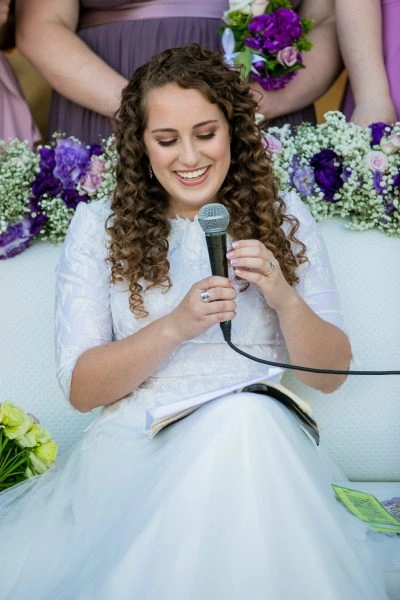
Sharona Guggenheim Plumb
Givat Shmuel, Israel
In early January of 2020, I learned about Siyyum HaShas and Daf Yomi via Tablet Magazine’s brief daily podcast about the Daf. I found it compelling and fascinating. Soon I discovered Hadran; since then I have learned the Daf daily with Rabbanit Michelle Cohen Farber. The Daf has permeated my every hour, and has transformed and magnified my place within the Jewish Universe.
Lisa Berkelhammer
San Francisco, CA , United States
I started learning with rabbis. I needed to know more than the stories. My first teacher to show me “the way of the Talmud” as well as the stories was Samara Schwartz.
Michelle Farber started the new cycle 2 yrs ago and I jumped on for the ride.
I do not look back.
Jenifer Nech
Houston, United States
I had tried to start after being inspired by the hadran siyum, but did not manage to stick to it. However, just before masechet taanit, our rav wrote a message to the shul WhatsApp encouraging people to start with masechet taanit, so I did! And this time, I’m hooked! I listen to the shiur every day , and am also trying to improve my skills.
Laura Major
Yad Binyamin, Israel
In January 2020, my chevruta suggested that we “up our game. Let’s do Daf Yomi” – and she sent me the Hadran link. I lost my job (and went freelance), there was a pandemic, and I am still opening the podcast with my breakfast coffee, or after Shabbat with popcorn. My Aramaic is improving. I will need a new bookcase, though.
Rhondda May
Atlanta, Georgia, United States
Attending the Siyyum in Jerusalem 26 months ago inspired me to become part of this community of learners. So many aspects of Jewish life have been illuminated by what we have learned in Seder Moed. My day is not complete without daf Yomi. I am so grateful to Rabbanit Michelle and the Hadran Community.

Nancy Kolodny
Newton, United States
I started learning Daf in Jan 2020 with Brachot b/c I had never seen the Jewish people united around something so positive, and I wanted to be a part of it. Also, I wanted to broaden my background in Torah Shebal Peh- Maayanot gave me a great gemara education, but I knew that I could hold a conversation in most parts of tanach but almost no TSB. I’m so thankful for Daf and have gained immensely.

Meira Shapiro
NJ, United States
A beautiful world of Talmudic sages now fill my daily life with discussion and debate.
bringing alive our traditions and texts that has brought new meaning to my life.
I am a מגילת אסתר reader for women . the words in the Mishna of מסכת megillah 17a
הקורא את המגילה למפרע לא יצא were powerful to me.
I hope to have the zchut to complete the cycle for my 70th birthday.

Sheila Hauser
Jerusalem, Israel
It happened without intent (so am I yotzei?!) – I watched the women’s siyum live and was so moved by it that the next morning, I tuned in to Rabbanit Michelle’s shiur, and here I am, still learning every day, over 2 years later. Some days it all goes over my head, but others I grasp onto an idea or a story, and I ‘get it’ and that’s the best feeling in the world. So proud to be a Hadran learner.

Jeanne Yael Klempner
Zichron Yaakov, Israel
I started learning Daf Yomi inspired by תָּפַסְתָּ מְרוּבֶּה לֹא תָּפַסְתָּ, תָּפַסְתָּ מוּעָט תָּפַסְתָּ. I thought I’d start the first page, and then see. I was swept up into the enthusiasm of the Hadran Siyum, and from there the momentum kept building. Rabbanit Michelle’s shiur gives me an anchor, a connection to an incredible virtual community, and an energy to face whatever the day brings.

Medinah Korn
בית שמש, Israel
My husband learns Daf, my son learns Daf, my son-in-law learns Daf.
When I read about Hadran’s Siyyum HaShas 2 years ago, I thought- I can learn Daf too!
I had learned Gemara in Hillel HS in NJ, & I remembered loving it.
Rabbanit Michelle & Hadran have opened my eyes & expanding my learning so much in the past few years. We can now discuss Gemara as a family.
This was a life saver during Covid

Renee Braha
Brooklyn, NY, United States
Zevachim 58
מַתְנִי׳ קׇדְשֵׁי קָדָשִׁים שֶׁשְּׁחָטָן בְּרֹאשׁ הַמִּזְבֵּחַ – רַבִּי יוֹסֵי אוֹמֵר: כְּאִילּוּ נִשְׁחֲטוּ בַּצָּפוֹן. רַבִּי יוֹסֵי בְּרַבִּי יְהוּדָה אוֹמֵר: מֵחֲצִי הַמִּזְבֵּחַ וְלַדָּרוֹם – כַּדָּרוֹם, מֵחֲצִי הַמִּזְבֵּחַ וְלַצָּפוֹן – כַּצָּפוֹן.
MISHNA: It was taught in the previous chapter that offerings of the most sacred order are to be slaughtered in the northern section of the Temple courtyard. With regard to offerings of the most sacred order that one slaughtered atop the altar, Rabbi Yosei says: Their status is as though they were slaughtered in the north, and the offerings are therefore valid. Rabbi Yosei, son of Rabbi Yehuda, says: The status of the area from the halfway point of the altar and to the south is like that of the south, and offerings of the most sacred order slaughtered in that area are therefore disqualified. The status of the area from the halfway point of the altar and to the north is like that of the north.
גְּמָ׳ אָמַר רַב אַסִּי אָמַר רַבִּי יוֹחָנָן: אוֹמֵר הָיָה ר׳ יוֹסֵי, כּוּלֵּיהּ מִזְבֵּחַ בְּצָפוֹן קָאֵי. וּמַאי ״כְּאִילּוּ״? מַהוּ דְּתֵימָא בָּעֵינַן ״עַל יָרֵךְ״ – וְלֵיכָּא; קָא מַשְׁמַע לַן.
GEMARA: Rav Asi says that Rabbi Yoḥanan says: Rabbi Yosei used to say: The entire altar stands in the north section of the Temple courtyard. The Gemara asks: And what is the meaning of Rabbi Yosei’s statement that if one slaughtered offerings of the most sacred order atop the altar it is as though they were slaughtered in the north, which indicates that they were not actually slaughtered in the north? The Gemara answers: Rabbi Yosei said this lest you say that we require that the offering be slaughtered “on the side of the altar northward” (Leviticus 1:11), i.e., on the ground beside the altar, and that requirement is not fulfilled when it is slaughtered on top of the altar. Therefore, Rabbi Yosei teaches us that the offering is still valid.
אֲמַר לֵיהּ רַבִּי זֵירָא לְרַב אַסִּי: אֶלָּא מֵעַתָּה, לְרַבִּי יוֹסֵי בְּרַבִּי יְהוּדָה – הָכִי נָמֵי דְּחֶצְיוֹ בְּצָפוֹן וְחֶצְיוֹ בַּדָּרוֹם?!
Rabbi Zeira said to Rav Asi: Rabbi Yoḥanan apparently understands that the reason Rabbi Yosei holds that an offering of the most sacred order slaughtered on the altar is valid is because the entire altar is in the northern section of the Temple courtyard. If that is so, shall one also say that according to Rabbi Yosei, son of Rabbi Yehuda, half of the altar was situated in the north of the Temple courtyard and half of it was situated in the south?
וְכִי תֵּימָא הָכִי נָמֵי; וְהָא אַתְּ הוּא דְּאָמְרַתְּ מִשְּׁמֵיהּ דְּרַבִּי יוֹחָנָן: מוֹדֵי רַבִּי יוֹסֵי בְּרַבִּי יְהוּדָה שֶׁאִם שְׁחָטָן כְּנֶגְדָּן בַּקַּרְקַע – פְּסוּלָה!
And if you would say that indeed that is so, wasn’t it you who said in the name of Rabbi Yoḥanan that Rabbi Yosei, son of Rabbi Yehuda, concedes that if one slaughtered offerings of the most sacred order on the ground opposite the northern half of the altar, the offering is disqualified? Accordingly, Rabbi Yosei, son of Rabbi Yehuda, apparently maintains that the altar is not located in the north at all.
אֲמַר לֵיהּ: הָכִי קָאָמַר רַבִּי יוֹחָנָן – שְׁנֵיהֶם מִקְרָא אֶחָד דָּרְשׁוּ: ״וְזָבַחְתָּ עָלָיו אֶת עֹלֹתֶיךָ וְאֶת שְׁלָמֶיךָ״ –
Rav Asi said to Rabbi Zeira: Rabbi Yoḥanan’s statement with regard to Rabbi Yosei’s opinion is an independent statement rather than an inference from the mishna. And with regard to the dispute in the mishna, this is what Rabbi Yoḥanan says: Both of them derived their opinions from one verse: “An altar of earth you shall make for Me, and you shall slaughter upon it your burnt offerings and your peace offerings” (Exodus 20:21).
רַבִּי יוֹסֵי סָבַר: כּוּלּוֹ לְעוֹלָה וְכוּלּוֹ לִשְׁלָמִים. וְרַבִּי יוֹסֵי בְּרַבִּי יְהוּדָה סָבַר: חֶצְיוֹ לְעוֹלָה וְחֶצְיוֹ לִשְׁלָמִים;
Rabbi Yosei maintains that the verse teaches that all of it, i.e., the entire altar, is fit for slaughtering a burnt offering, and all of it is also fit for slaughtering a peace offering. And Rabbi Yosei, son of Rabbi Yehuda, maintains that the verse teaches that half of it is fit for slaughtering a burnt offering and half of it is fit for slaughtering a peace offering.
דְּאִי סָלְקָא דַעְתָּךְ כּוּלּוֹ לְעוֹלָה כָּשֵׁר, הַשְׁתָּא כּוּלּוֹ לְעוֹלָה – כָּשֵׁר, כּוּלּוֹ לִשְׁלָמִים מִיבַּעְיָא?!
The Gemara explains the reasoning of Rabbi Yosei, son of Rabbi Yehuda: As if it enters your mind that all of it is fit for slaughtering a burnt offering, now that all of it is fit for slaughtering a burnt offering, which must be slaughtered in the northern section of the Temple courtyard (see 53b), is it necessary to teach that it is also fit for slaughtering a peace offering, which may be slaughtered anywhere in the Temple courtyard (see 55a)? The verse therefore must be understood as teaching that half the altar is fit for slaughtering burnt offerings and half is fit for slaughtering peace offerings.
וְאִידָּךְ – אִיצְטְרִיךְ; סָלְקָא דַּעְתָּךְ אָמֵינָא: עוֹלָה הוּא דִּדְחִיק לֵיהּ מָקוֹם; אֲבָל שְׁלָמִים, דְּלָא דְּחִיק לֵיהּ מָקוֹם – אֵימָא לָא; קָא מַשְׁמַע לַן.
The Gemara asks: And how does the other Sage, Rabbi Yosei, respond to this reasoning? The Gemara answers: It was necessary for the verse to mention peace offerings. Otherwise, it could enter your mind to say that the verse allows one to slaughter only a burnt offering atop the altar, as the location where it may be slaughtered on the ground is narrow. But with regard to peace offerings, whose location for slaughter on the ground is not narrow, say that no, one may not slaughter them atop the altar. Therefore, the verse teaches us that peace offerings as well may be slaughtered atop the altar.
גּוּפָא – אָמַר רַב אַסִּי אָמַר רַבִּי יוֹחָנָן: מוֹדֵי רַבִּי יוֹסֵי בְּרַבִּי יְהוּדָה שֶׁאִם שְׁחָטָן כְּנֶגְדָּן בַּקַּרְקַע – פְּסוּלוֹת. אֲמַר לֵיהּ רַב אַחָא מִדִּיפְתִּי לְרָבִינָא: מַאי כְּנֶגְדָּן בַּקַּרְקַע? אִילֵימָא אַמָּה יְסוֹד אַמָּה סוֹבֵב – הַאי גּוּפֵיהּ מִזְבֵּחַ הוּא! וְעוֹד, מַאי ״כְּנֶגְדָּן בַּקַּרְקַע״?
§ The Gemara discusses the matter itself: Rav Asi says that Rabbi Yoḥanan says: Rabbi Yosei, son of Rabbi Yehuda, concedes that if one slaughtered offerings of the most sacred order on the ground opposite the northern half of the altar, the offering is disqualified. Rav Aḥa of Difti said to Ravina: What is the meaning of the phrase: On the ground opposite the northern half of the altar? If we say it means that the offering was sacrificed upon the cubit-wide base of the altar or upon the cubit-wide surrounding ledge of the altar, this itself is part of the altar. And furthermore, what is the meaning of the phrase: On the ground opposite the northern half of the altar? The base and ledge are not on the ground.
וְכִי תֵּימָא דְּעָבֵיד מְחִילּוֹת בַּקַּרְקַע וְשָׁחֵיט בְּהוּ – וְכִי הַאי גַּוְונָא מִי הָוֵי מִזְבֵּחַ?! וְהָתַנְיָא: ״מִזְבַּח אֲדָמָה תַּעֲשֶׂה לִּי״ – שֶׁיְּהֵא מְחוּבָּר (מֵאֲדָמָה) [בַּאֲדָמָה]; שֶׁלֹּא יִבְנֶנּוּ לֹא עַל גַּבֵּי מְחִילּוֹת וְלֹא עַל גַּבֵּי כִּיפִּין.
And if you would say that the case is where one dug tunnels in the ground beneath the altar, and slaughtered the offerings in them, in a case like this would the altar itself be fit for use so that according to Rabbi Yosei, son of Rabbi Yehuda, one may slaughter the offerings of the most sacred order on the altar but not on the ground? But isn’t it taught in a baraita: The verse states: “An altar of earth you shall make for Me” (Exodus 20:21)? This verse indicates that the altar must be attached to the earth, so that one may not build it on top of tunnels nor on top of arches.
לָא צְרִיכָא, דְּבַצְּרֵיהּ בַּצּוֹרֵי.
The Gemara answers: No, it is necessary to have the phrase: On the ground opposite the northern half of the altar, in order to teach the halakha in a case where one minimized the dimensions of the altar and slaughtered the offerings on the ground where the northern half of the altar had previously stood.
אָמַר רַבִּי זֵירָא: אֶפְשָׁר אִיתָא לְהָא דְּרַבִּי יוֹחָנָן, וְלָא תְּנֵינָא לַהּ בְּמַתְנִיתִין?!
§ The Gemara returns to discuss Rabbi Yoḥanan’s statement that according to Rabbi Yosei the entire altar was located in the northern section of the Temple courtyard. The Gemara had mentioned that Rabbi Yoḥanan’s statement is an independent statement, not based on the mishna. Rabbi Zeira said: Is it possible that this statement of Rabbi Yoḥanan is correct and we did not learn it in any mishna?
נְפַק, דַּק וְאַשְׁכַּח – דִּתְנַן: בֵּירְרוּ מִשָּׁם עֲצֵי תְאֵינָה יָפִים לְסַדֵּר מַעֲרָכָה שְׁנִיָּה שֶׁל קְטֹרֶת; כְּנֶגֶד קֶרֶן מַעֲרָבִית דְּרוֹמִית, מָשׁוּךְ מִן הַקֶּרֶן כְּלַפֵּי צָפוֹן אַרְבַּע אַמּוֹת; בְּאוֹמֶד חָמֵשׁ סְאִין גֶּחָלִים. וּבְשַׁבָּת – בְּאוֹמֶד שְׁמוֹנֶה סְאִין גֶּחָלִים, שֶׁשָּׁם הָיוּ נוֹתְנִין שְׁנֵי בְּזִיכֵי לְבוֹנָה שֶׁל לֶחֶם הַפָּנִים.
Rabbi Zeira went out, examined the matter, and discovered a mishna that alludes to Rabbi Yoḥanan’s statement, as we learned in a mishna (Tamid 2:5): The priests selected fine wood of a fig tree from the chamber of firewood, with which to lay out a second arrangement of wood on the altar so that coals from this arrangement could be used for burning the incense. This second arrangement was located opposite the southwest corner of the altar, distanced from the corner northward by four cubits. They would arrange enough wood which, when burned, would produce approximately five se’a of coals. And on Shabbat, there was enough wood to produce approximately eight se’a of coals, as they would place there the two bowls of frankincense of the shewbread.
וּמַאי סִימָנָא? רַבִּי יוֹסֵי הִיא, דְּתַנְיָא,
The Gemara asks: And what is the significance of the mishna’s defining the precise location of the arrangement and the fact that this is where the frankincense is burned? The Gemara embarks on a lengthy discussion to answer this question: This mishna is in accordance with the opinion of Rabbi Yosei, who holds that this arrangement of wood and the burning of the frankincense must be in that precise location, as it is taught in a baraita:
רַבִּי יוֹסֵי אוֹמֵר: זֶה סִימָן – כׇּל הַנִּיטָּל בִּפְנִים לִינָּתֵן בַּחוּץ, אֵינוֹ נוֹתֵן אֶלָּא בְּסָמוּךְ שֶׁאֵין לִפְנִים;
Rabbi Yosei says: This is the principle of where sacrificial items are placed on the inner and outer altars: Any sacrificial item that is taken from the altar located inside the Sanctuary in order to be placed on the altar outside the Sanctuary, in the Temple courtyard, may be placed only on the area of that altar that is near the Sanctuary, so that there is no area closer to the inside of the Sanctuary. It must therefore be placed on the part of the external altar closest to the entrance to the Sanctuary.
וְכׇל הַנִּיטָּל בַּחוּץ לִינָּתֵן לִפְנִים, אֵינוֹ נִיטָּל אֶלָּא בְּסָמוּךְ שֶׁאֵין לִפְנִים.
And any sacrificial item that is taken from the altar outside the Sanctuary, in the Temple courtyard, in order to be placed on the altar located inside the Sanctuary, may be taken only from the area of the external altar that is near the Sanctuary, so that there is no area closer to the inside of the Sanctuary, i.e., from the part of the external altar closest to the entrance to the Sanctuary.
כָּל הַנִּיטָּל בִּפְנִים לִינָּתֵן בַּחוּץ – מַאי נִיהוּ? אִילֵּימָא שִׁירַיִם, בְּהֶדְיָא כְּתִיב בְּהוּ: ״אֶל יְסוֹד מִזְבַּח הָעוֹלָה אֲשֶׁר פֶּתַח אֹהֶל מוֹעֵד״!
The Gemara clarifies: With regard to the statement concerning any sacrificial item that is taken from the altar located inside the Sanctuary in order to be placed on the altar outside the Sanctuary, what are these items? If we say they are the remaining blood of the sin offerings whose blood is presented on the inner altar, there is no reason for Rabbi Yosei to formulate his principle, as it is explicitly written concerning them: “And all the remaining blood of the bull he shall pour out at the base of the altar of the burnt offering, which is at the entrance to the Tent of Meeting” (Leviticus 4:7). This verse describes how the blood of the inner sin offerings that remained after the sprinkling was to be poured out on the base of the west side of the altar, which is the side closest to the entrance to the Sanctuary.
וְתוּ, כֹּל הַנִּיטָּל בַּחוּץ לִינָּתֵן בִּפְנִים – מַאי נִיהוּ? אִילֵּימָא גֶּחָלִים שֶׁל יוֹם הַכִּיפּוּרִים, בְּהֶדְיָא כְּתִיב בְּהוּ: ״וְלָקַח מְלֹא הַמַּחְתָּה גַּחֲלֵי אֵשׁ וְגוֹ׳״!
And furthermore, with regard to the statement about any sacrificial item that is taken from the altar outside the Sanctuary, in the Temple courtyard, in order to be placed on the altar located inside the Sanctuary, what are these items? If we say these are the coals of the Yom Kippur service, which must be taken from the western side of the altar, it is explicitly written concerning them: “And he shall take a coal pan full of coals of fire from off the altar before the Lord” (Leviticus 16:12). The expression “before the Lord” is a reference to the western side of the altar, which is the side closest to the Sanctuary.
אֶלָּא כׇּל הַנִּיטָּל בִּפְנִים לִינָּתֵן בַּחוּץ – שְׁנֵי בְּזִיכֵי לְבוֹנָה שֶׁל לֶחֶם הַפָּנִים, דְּגָמְרִי מִשִּׁירַיִם.
The Gemara continues: Rather, Rabbi Yosei’s statement with regard to any sacrificial item that is taken from the altar located inside the Sanctuary in order to be placed on the altar outside the Sanctuary is referring to the two bowls of frankincense of the shewbread. According to Rabbi Yosei, they must be burned on the western side of the altar, as he derives this halakha from the location on the base of the altar where the remaining blood of the inner sin offerings is poured.
הַנִּיטָּל בַּחוּץ לִינָּתֵן בִּפְנִים – גֶּחָלִים דְּכֹל יוֹמָא וְיוֹמָא, דְּגָמְרָן מִגֶּחָלִים שֶׁל יוֹם הַכִּפּוּרִים.
Rabbi Yosei’s next statement, that any sacrificial item that is taken from the altar outside the Sanctuary in order to be placed on the altar located inside the Sanctuary may be taken only from the area of the external altar that is near the Sanctuary, is referring to the coals that are taken from the external altar each and every day and placed on the inner altar in order to burn the incense. According to Rabbi Yosei these coals must be taken from the western side of the altar, as we derive this halakha from the location on the altar from where the coals of the Yom Kippur service must be taken.
וּמַאי קָסָבַר? אִי קָסָבַר כּוּלֵּיהּ מִזְבֵּחַ בְּדָרוֹם קָאֵי, עֶשְׂרִים וְשֶׁבַע בָּעֵי לְמֵיתֵי!
The Gemara discusses Rabbi Yosei’s opinion that the second arrangement of wood was placed four cubits north of the southwest corner of the altar: And what does Rabbi Yosei hold about the placement of the altar in the Temple courtyard? If he holds that the entire altar stands in the south side of the Temple courtyard, then only the five northernmost cubits of the altar are opposite the entrance to the Sanctuary. Accordingly, in order for the arrangement of wood to be opposite the entrance to the Sanctuary, one is required to move it twenty-seven cubits north of the southwest corner of the altar.
וְאִי נָמֵי קָסָבַר קְדוּשַּׁת הֵיכָל וְאוּלָם חֲדָא הִיא, עֶשְׂרִים וְתַרְתֵּי בָּעֵי מֵיתֵי!
The Gemara continues: And even if Rabbi Yosei holds that the level of sanctity of the Sanctuary and the Entrance Hall is the same, so that the arrangement of wood can be opposite the Entrance Hall, which is ten cubits wider than the Sanctuary, his opinion is still difficult. In order for the arrangement of wood to be opposite the Entrance Hall, one is required to move it twenty-two cubits north of the southwest corner of the altar.
וְאִי קָסָבַר חֶצְיוֹ בַּצָּפוֹן וְחֶצְיוֹ בַּדָּרוֹם, חַד סְרֵי בָּעֵי לְמֵיתֵי! וְאֶלָּא קָסָבַר קְדוּשַּׁת הֵיכָל וְאוּלָם חֲדָא מִילְּתָא הִיא? שֵׁית בָּעֵי לְמֵיתֵי!
The Gemara continues: And even if Rabbi Yosei holds that half of the altar was located in the north side of the Temple courtyard and half in the south, in order for the arrangement of wood to be opposite the entrance to the Sanctuary one is still required to move it eleven cubits to the north of the southwest corner of the altar. And if one suggests that, rather, he holds that the sanctity of the Sanctuary and the Entrance Hall is one matter, i.e., equal, one is still required to move the arrangement of wood six cubits from the southwest corner in order to be opposite the Entrance Hall.
אֶלָּא לָאו מִשּׁוּם דְּקָסָבַר כּוּלֵּיהּ מִזְבֵּחַ בְּצָפוֹן קָאֵי?
Rather, is it not that Rabbi Yosei’s opinion that the arrangement of wood was located four cubits from the altar’s southwest corner is due to the fact that he holds that the entire altar stands in the north side of the Temple courtyard? Accordingly, only the five southernmost cubits of the altar were opposite the entrance to the Sanctuary.
וְהָנֵי אַרְבַּע אַמּוֹת – אַמָּה יְסוֹד, וְאַמָּה סוֹבֵב, וְאַמָּה מָקוֹם קְרָנוֹת, וְאַמָּה מְקוֹם רַגְלֵי הַכֹּהֲנִים; דְּכִי מְסַגּוּ לְקַמֵּיהּ טְפֵי – תּוּ לֵיכָּא פֶּתַח.
And of these four cubits from which the arrangement of wood was distanced from the southwest corner of the altar, one cubit was the base of the altar; and one cubit was the surrounding ledge of the altar; and one cubit was the place where the corners of the altar were located; and another cubit was the place of the feet of the priests, i.e., space for the priests to walk around the perimeter of the surface of the altar in order to perform the sacrificial rites. The arrangement of wood was located specifically in that location, as if one were to move it farther away from the southwest corner of the altar, it would no longer be opposite the entrance to the Sanctuary. This proves that according to Rabbi Yosei, the entire altar was located in the northern side of the Temple courtyard, as stated by Rabbi Yoḥanan.
אָמַר רַב אַדָּא בַּר אַהֲבָה: הָא מַנִּי – רַבִּי יְהוּדָה הִיא. דְּתַנְיָא, רַבִּי יְהוּדָה אוֹמֵר: מִזְבֵּחַ מְמוּצָּע וְעוֹמֵד בְּאֶמְצַע הָעֲזָרָה; ושְׁלֹשִׁים וּשְׁתַּיִם אַמּוֹת הָיוּ לוֹ – עֶשֶׂר אַמּוֹת כְּנֶגֶד פִּתְחוֹ שֶׁל הֵיכָל, אַחַת עֶשְׂרֵה אַמָּה מִיכָּן, וְאַחַת עֶשְׂרֵה אַמָּה מִיכָּן; נִמְצָא מִזְבֵּחַ מְכוָּּון כְּנֶגֶד הֵיכָל.
The Gemara challenges this proof by suggesting an alternative explanation of the mishna in Tamid: Rav Adda bar Ahava said: In accordance with whose opinion is this mishna? It is in accordance with the opinion of Rabbi Yehuda, as it is taught in a baraita: Rabbi Yehuda says: The altar was centered and standing precisely in the middle of the Temple courtyard, and it was thirty-two cubits wide. Ten cubits were opposite the entrance to the Sanctuary, eleven cubits were to this side of the entrance to the Sanctuary, and eleven cubits were to that side of the entrance to the Sanctuary. It turns out that the length of the altar was aligned opposite the width of the Sanctuary, which itself was thirty-two cubits wide.
סוֹף סוֹף, לְרַבִּי יְהוּדָה חַד סְרֵי בָּעֵי לְמֵיתֵי; וְאִי קָסָבַר קְדוּשַּׁת הֵיכָל וְאוּלָם חֲדָא מִילְּתָא הִיא, שֵׁית בָּעֵי לְמֵיתֵי!
The Gemara asks: Ultimately, according to Rabbi Yehuda, one is still required to move the arrangement of wood eleven cubits from the southwest corner in order for it to be opposite the entrance to the Sanctuary. And even if he holds that the sanctity of the Sanctuary and the Entrance Hall is one matter, i.e., equal, one is still required to move the arrangement of wood six cubits in order to be opposite the Entrance Hall. Therefore, the mishna, which states that the arrangement of wood is four cubits north of the southwest corner, cannot be in accordance with the opinion of Rabbi Yehuda.
מִי סָבְרַתְּ הָנֵי אַרְבַּע אַמּוֹת – בַּהֲדֵי אַמָּה יְסוֹד וְאַמָּה סוֹבֵב?! אַרְבַּע אַמּוֹת בַּר מֵאַמָּה יְסוֹד וְאַמָּה סוֹבֵב.
The Gemara responds: Do you hold that these four cubits include the cubit of the base of the altar and the cubit of the surrounding ledge of the altar? Actually, the four cubits are aside from the cubit of the base of the altar and the cubit of the surrounding ledge of the altar. Accordingly, the arrangement of wood was actually a total of six cubits from the southwest corner of the altar, and the mishna can be in accordance with the opinion of Rabbi Yehuda.
וְנוֹקְמַהּ כְּרַבִּי יוֹסֵי, וּבִמְמוּצָּע! מִשּׁוּם דְּרַבִּי יְהוּדָה שְׁמַעְנָא לֵיהּ מְמוּצָּע בְּהֶדְיָא.
The Gemara asks why Rav Adda bar Ahava interpreted the mishna to be in accordance with the opinion of Rabbi Yehuda: But let him interpret it to be in accordance with the opinion of Rabbi Yosei and explain that the altar is located in the center of the Temple courtyard. The Gemara explains: Rav Adda bar Ahava interpreted the mishna to be in accordance with the opinion of Rabbi Yehuda because we heard that Rabbi Yehuda explicitly said that the altar was positioned in the center of the Temple courtyard, whereas we did not hear that Rabbi Yosei maintains such an opinion.
וְרַב שֵׁרֵבְיָא אָמַר: הָא מַנִּי – רַבִּי יוֹסֵי הַגְּלִילִי הִיא. דְּתַנְיָא: רַבִּי יוֹסֵי הַגְּלִילִי אוֹמֵר, מִתּוֹךְ שֶׁנֶּאֱמַר: ״וְנָתַתָּ אֶת הַכִּיּוֹר בֵּין אֹהֶל מוֹעֵד״ וְגוֹמֵר, ״וְאֶת
And Rav Sherevya said: In accordance with whose opinion is this mishna in Tamid, which holds that the entire altar was located in the northern part of the Temple courtyard? It is in accordance with the opinion of Rabbi Yosei HaGelili, as it is taught in a baraita: Rabbi Yosei HaGelili says: Since it is stated: “And you shall set the Basin between the Tent of Meeting and the altar” (Exodus 40:7), and another verse states: “And
Follow

