Search

Bava Batra 101

Want to dedicate learning? Get started here:

podcast placeholder

0:00
0:00


Summary

If someone buys a burial cave or hires someone to build them a burial cave, what are the minimum measurements assumed and how many burial spots should there be? The rabbis and Rabbi Shimon each have different answers to these questions. Rabbi Shimon held that each cave holds thirteen spaces for bodies, of them one was to the right of the entranceway and one to the left. Where exactly were those two graves? Several explanations are suggested, and some of them are rejected. According to the last explanation, they overlapped with other graves but were placed deeper into the ground. A proof that bodies were buried below other graves is brought from Rabbi Shimon’s opinion that there were four caves around each courtyard, as that would clearly lead to overlapping graves. However, Rav Huna son of Rabbi Yehoshua attempts to reject this proof by suggesting the graves were set up on an angle like branches of a palm tree and did not overlap. But the Gemara rejects Rav Huna’s rejection as it could not work out mathematically. Rav Shisha brings an alternative explanation for the extra two graves by the entrance – they did not overlap at all with the others as they were made for stillborn babies and were therefore shorter.

Burial caves

Bava Batra 101

וְרׇחְבָּן שִׁשָּׁה.

and their width is six handbreadths.

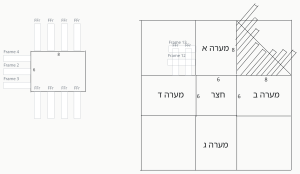
רַבִּי שִׁמְעוֹן אוֹמֵר: עוֹשֶׂה תּוֹכָהּ שֶׁל מְעָרָה שֵׁשׁ אַמּוֹת עַל שְׁמוֹנֶה, וּפוֹתֵחַ לְתוֹכָהּ שְׁלֹשָׁה עָשָׂר כּוּךְ – אַרְבָּעָה מִכָּאן, וְאַרְבָּעָה מִכָּאן, וּשְׁלֹשָׁה מִכְּנֶגְדָּן, וְאֶחָד מִימִין הַפֶּתַח, וְאֶחָד מִן הַשְּׂמֹאל.

Rabbi Shimon says: He should construct the inside of each burial chamber six cubits wide by eight cubits long and open up into the chamber, by digging into its walls, thirteen burial niches. Four niches should be opened up from the wall here, along the length of the chamber, and four from there, along the other side, and three niches from the wall facing the entrance, and one from the right of the entrance and another one from the left.

וְעוֹשֶׂה חָצֵר עַל פִּי הַמְּעָרָה שֵׁשׁ עַל שֵׁשׁ, כִּמְלֹא הַמִּטָּה וְקוֹבְרֶיהָ.

The mishna describes the general structure of the catacomb: And he must fashion a courtyard at the entrance of the burial chamber that should be six cubits by six cubits, which is equal to the combined length of the bier of the deceased and those who bury him, to ensure adequate room for the burial to take place.

וּפוֹתֵחַ לְתוֹכָהּ שְׁתֵּי מְעָרוֹת – אַחַת מִכָּאן וְאַחַת מִכָּאן. רַבִּי שִׁמְעוֹן אוֹמֵר: אַרְבַּע לְאַרְבַּע רוּחוֹתֶיהָ.

And he should open up two burial chambers into the courtyard, one from here and one from there, i.e., on opposite sides of the courtyard. Rabbi Shimon says: He should open up four burial chambers, one on each of the courtyard’s four sides.

רַבָּן שִׁמְעוֹן בֶּן גַּמְלִיאֵל אוֹמֵר: הַכֹּל לְפִי הַסֶּלַע.

Rabban Shimon ben Gamliel says: Everything is dependent on the nature of the bedrock. If the bedrock is hard and strong it will be able to accommodate more niches, which will be more closely packed together, with less bedrock between them. If the bedrock is softer, fewer and more sparsely spaced niches should be formed.

גְּמָ׳ הָנֵי תְּרֵי לְהֵיכָא שָׁדֵי לְהוּ? אִי לְבָרַאי – הָא קָמִיתַּדְשִׁי לְהוּ! וְתוּ, הָא תְּנַן: חֲצַר הַקֶּבֶר, הָעוֹמֵד בְּתוֹכוֹ – טָהוֹר!

GEMARA: In Rabbi Shimon’s depiction of a burial chamber, he states that two niches should be opened up, one from the right of the entrance and one from the left. The Gemara asks: These two niches, in which direction does he set them? If they are directed toward the outside of the chamber, i.e., under the floor of the courtyard, won’t people trample over them when they enter the courtyard, which is improper? And furthermore, didn’t we learn in the mishna (Oholot 15:8): With regard to the courtyard of a catacomb, one who stands inside it is ritually pure because it can be presumed that he did not stand over a dead body? Clearly, these niches are not to be dug underneath the courtyard.

אָמַר רַבִּי יוֹסֵי בְּרַבִּי חֲנִינָא: דְּעָבֵיד לְהוּ כְּמִין נֶגֶר.

Rabbi Yosei, son of Rabbi Ḥanina, said: He makes these two niches at the side of the entrance, vertically, like a door bolt.

וְהָא אָמַר רַבִּי יוֹחָנָן:

The Gemara challenges this explanation: But doesn’t Rabbi Yoḥanan say with regard to the burial of people in a vertical position:

קְבוּרַת חֲמוֹרִים הִיא זוֹ!

This is like a burial of donkeys and is disrespectful.

לְרַבִּי יוֹחָנָן, דְּעָבֵיד לְהוּ בְּקֶרֶן זָוִית.

The Gemara answers: According to the opinion of Rabbi Yoḥanan, each of these two niches is formed in a different corner of the chamber, aligned diagonally away from the chamber’s cavity.

וְהָא נָגְעִי כּוּכִין לַהֲדָדֵי!

The Gemara challenges: But if so, won’t the niches located around the corners touch one another? According to Rabbi Yoḥanan’s suggestion, there are, in fact, three niches located at each of the two back corners. One is recessed into the wall of the length of the chamber, at right angles to it, another is recessed into the back wall of the chamber, also at right angles to it, and a third that extends diagonally away from the chamber. The ends of these three niches will overlap, causing there to be too little space in them to fulfill the minimum required measurement.

אָמַר רַב אָשֵׁי: בְּמַעֲמִיק. דְּאִי לָא תֵּימָא הָכִי, אַרְבַּע מְעָרוֹת לְרַבִּי שִׁמְעוֹן – הֵיכִי עָבֵיד לְהוּ? הָא קָא נָגְעִי כּוּכִין לַהֲדָדֵי! אֶלָּא בְּמַעֲמִיק; הָכָא נָמֵי בְּמַעֲמִיק.

Rav Ashi said: It is possible to do this where, when constructing the niches that extend diagonally away from the chamber, one deepens them, i.e., forms them lower down in the wall than the other niches adjacent to them. As, if you do not say that this is a solution, then how could the four chambers depicted by Rabbi Shimon be constructed? Won’t the niches touch one another? The niches of one chamber will overlap those of the chamber adjacent to it. Rather, it is possible to arrange the niches only where, when constructing the niches of two chambers at opposite ends of the courtyard, one deepens them, i.e., forms them lower down in the wall than the niches of the other two chambers that are adjacent to them. Here too, it is a case in which one deepens them.

רַב הוּנָא בְּרֵיהּ דְּרַב יְהוֹשֻׁעַ אָמַר: אַרְבַּע מְעָרוֹת לְרַבִּי שִׁמְעוֹן – דְּעָבֵיד לְהוּ כִּי חֲרוּתָא.

Rav Huna, son of Rav Yehoshua, said that there is an alternative explanation: It is possible to fashion the four chambers depicted by Rabbi Shimon where one constructs them so that all the niches extend diagonally away from the cavity of the chamber like the leaves of a palm branch, which have spread out from its spine. If formed in this way, the niches of adjacent chambers will not overlap, even if they are at the same depth in the ground.

וְהָא דְּרַב הוּנָא בְּרֵיהּ דְּרַב יְהוֹשֻׁעַ – בְּרוּתָא הִיא. מִכְּדֵי כׇּל אַמְּתָא בְּרִיבּוּעָא אַמְּתָא וּתְרֵי חוּמְשֵׁי בַּאֲלַכְסוֹנָא; כַּמָּה הָוֵי לְהוּ? חַד סְרֵי וְחוּמְשָׁא; כּוּכִין כַּמָּה הָווּ? תְּמָנְיָא; תְּמָנְיָא בְּחַד סְרֵי וְחוּמְשָׁא הֵיכִי מַשְׁכַּחַתְּ לַהּ? אֶלָּא הָא דְּרַב הוּנָא בְּרֵיהּ דְּרַב יְהוֹשֻׁעַ – בְּרוּתָא הִיא.

The Gemara notes: And this statement of Rav Huna, son of Rav Yehoshua, is an error, because it is not possible to form all the niches in this way, since the length of the diagonal of every square whose side is one cubit is one and two-fifths cubits. Each chamber is eight cubits long, which means that between two adjacent chambers, placed at right angles to each other, there is a square area of eight cubits by eight cubits into which the niches of those two chambers must be formed. How much is the diagonal of that area? Eleven and one-fifth cubits. How many niches have to fit in that space? Eight. How can you find that eight niches can possibly fit into eleven and one-fifth cubits? Each of the niches is a cubit wide, and there must be a cubit wall of bedrock between each niche. To accommodate this once would need an area of at least fifteen cubits. Rather, this statement of Rav Huna, son of Rav Yehoshua, is in error.

וְאִי בָּעֵית אֵימָא, כִּדְאָמַר רַב שִׁישָׁא בְּרֵיהּ דְּרַב אִידִי: בְּנִיפְלֵי; הָכָא נָמֵי בְּנִיפְלֵי.

The Gemara provides an alternative solution to the problem of the niches at the corners overlapping. Or if you wish, say as Rav Sheisha, son of Rav Idi, said in answer to a similar question: It is referring to non-viable newborns, which require only very small burial niches. Similarly, here also, the niches at the corners of the chambers were used for non-viable newborns.

תְּנַן הָתָם: הַמּוֹצֵא מֵת מוּשְׁכָּב כְּדַרְכּוֹ, נוֹטְלוֹ וְאֶת תְּפוּסָתוֹ. שְׁנַיִם – נוֹטְלָן וְאֶת תְּפוּסָתָן.

§ The Gemara considers another mishna that relates to the structure of a catacomb: We learned in a mishna there (Nazir 64b): With regard to one who finds a corpse while inspecting a place that was not previously established as a cemetery, to ensure that it is free of ritual impurity, and the corpse is lying in the usual manner of Jewish burial, he removes it from there and also removes its surrounding earth. And similarly, if he finds two corpses buried in the usual manner, he removes them and their surrounding earth. Since only one or two corpses were found, it may be assumed that the area is not a cemetery; therefore, the corpses may be removed.

New to Talmud?

Check out our resources designed to help you navigate a page of Talmud – and study at the pace, level and style that fits you. 

The Hadran Women’s Tapestry

Meet the diverse women learning Gemara at Hadran and hear their stories. 

I started learning at the beginning of this cycle more than 2 years ago, and I have not missed a day or a daf. It’s been challenging and enlightening and even mind-numbing at times, but the learning and the shared experience have all been worth it. If you are open to it, there’s no telling what might come into your life.

Patti Evans
Patti Evans

Phoenix, Arizona, United States

Margo
I started my Talmud journey in 7th grade at Akiba Jewish Day School in Chicago. I started my Daf Yomi journey after hearing Erica Brown speak at the Hadran Siyum about marking the passage of time through Daf Yomi.

Carolyn
I started my Talmud journey post-college in NY with a few classes. I started my Daf Yomi journey after the Hadran Siyum, which inspired both my son and myself.

Carolyn Hochstadter and Margo Kossoff Shizgal

Merion Station,  USA

Beit Shemesh, Israel

I went to day school in Toronto but really began to learn when I attended Brovenders back in the early 1980’s. Last year after talking to my sister who was learning Daf Yomi, inspired, I looked on the computer and the Hadran site came up. I have been listening to each days shiur in the morning as I work. I emphasis listening since I am not sitting with a Gamara. I listen while I work in my studio.

Rachel Rotenberg
Rachel Rotenberg

Tekoa, Israel

I was exposed to Talmud in high school, but I was truly inspired after my daughter and I decided to attend the Women’s Siyum Shas in 2020. We knew that this was a historic moment. We were blown away, overcome with emotion at the euphoria of the revolution. Right then, I knew I would continue. My commitment deepened with the every-morning Virtual Beit Midrash on Zoom with R. Michelle.

Adina Hagege
Adina Hagege

Zichron Yaakov, Israel

“I got my job through the NY Times” was an ad campaign when I was growing up. I can headline “I got my daily Daf shiur and Hadran through the NY Times”. I read the January 4, 2020 feature on Reb. Michelle Farber and Hadran and I have been participating ever since. Thanks NY Times & Hadran!
Deborah Aschheim
Deborah Aschheim

New York, United States

I never thought I’d be able to do Daf Yomi till I saw the video of Hadran’s Siyum HaShas. Now, 2 years later, I’m about to participate in Siyum Seder Mo’ed with my Hadran community. It has been an incredible privilege to learn with Rabbanit Michelle and to get to know so many caring, talented and knowledgeable women. I look forward with great anticipation and excitement to learning Seder Nashim.

Caroline-Ben-Ari-Tapestry
Caroline Ben-Ari

Karmiel, Israel

I started learning at the start of this cycle, and quickly fell in love. It has become such an important part of my day, enriching every part of my life.

Naomi Niederhoffer
Naomi Niederhoffer

Toronto, Canada

I started with Ze Kollel in Berlin, directed by Jeremy Borowitz for Hillel Deutschland. We read Masechet Megillah chapter 4 and each participant wrote his commentary on a Sugia that particularly impressed him. I wrote six poems about different Sugiot! Fascinated by the discussions on Talmud I continued to learn with Rabanit Michelle Farber and am currently taking part in the Tikun Olam course.
Yael Merlini
Yael Merlini

Berlin, Germany

When I was working and taking care of my children, learning was never on the list. Now that I have more time I have two different Gemora classes and the nach yomi as well as the mishna yomi daily.

Shoshana Shinnar
Shoshana Shinnar

Jerusalem, Israel

I attended the Siyum so that I could tell my granddaughter that I had been there. Then I decided to listen on Spotify and after the siyum of Brachot, Covid and zoom began. It gave structure to my day. I learn with people from all over the world who are now my friends – yet most of us have never met. I can’t imagine life without it. Thank you Rabbanit Michelle.

Emma Rinberg
Emma Rinberg

Raanana, Israel

The start of my journey is not so exceptional. I was between jobs and wanted to be sure to get out every day (this was before corona). Well, I was hooked after about a month and from then on only looked for work-from-home jobs so I could continue learning the Daf. Daf has been a constant in my life, though hurricanes, death, illness/injury, weddings. My new friends are Rav, Shmuel, Ruth, Joanna.
Judi Felber
Judi Felber

Raanana, Israel

I decided to learn one masechet, Brachot, but quickly fell in love and never stopped! It has been great, everyone is always asking how it’s going and chering me on, and my students are always making sure I did the day’s daf.

Yafit Fishbach
Yafit Fishbach

Memphis, Tennessee, United States

I started learning after the siyum hashas for women and my daily learning has been a constant over the last two years. It grounded me during the chaos of Corona while providing me with a community of fellow learners. The Daf can be challenging but it’s filled with life’s lessons, struggles and hope for a better world. It’s not about the destination but rather about the journey. Thank you Hadran!

Dena Lehrman
Dena Lehrman

אפרת, Israel

When the new cycle began, I thought, If not now, when? I’d just turned 72. I feel like a tourist on a tour bus passing astonishing scenery each day. Rabbanit Michelle is my beloved tour guide. When the cycle ends, I’ll be 80. I pray that I’ll have strength and mind to continue the journey to glimpse a little more. My grandchildren think having a daf-learning savta is cool!

Wendy Dickstein
Wendy Dickstein

Jerusalem, Israel

I started learning at the beginning of this Daf Yomi cycle because I heard a lot about the previous cycle coming to an end and thought it would be a good thing to start doing. My husband had already bought several of the Koren Talmud Bavli books and they were just sitting on the shelf, not being used, so here was an opportunity to start using them and find out exactly what was in them. Loving it!

Caroline Levison
Caroline Levison

Borehamwood, United Kingdom

I tried Daf Yomi in the middle of the last cycle after realizing I could listen to Michelle’s shiurim online. It lasted all of 2 days! Then the new cycle started just days before my father’s first yahrzeit and my youngest daughter’s bat mitzvah. It seemed the right time for a new beginning. My family, friends, colleagues are immensely supportive!

Catriella-Freedman-jpeg
Catriella Freedman

Zichron Yaakov, Israel

It’s hard to believe it has been over two years. Daf yomi has changed my life in so many ways and has been sustaining during this global sea change. Each day means learning something new, digging a little deeper, adding another lens, seeing worlds with new eyes. Daf has also fostered new friendships and deepened childhood connections, as long time friends have unexpectedly become havruta.

Joanna Rom
Joanna Rom

Northwest Washington, United States

In January 2020, my chevruta suggested that we “up our game. Let’s do Daf Yomi” – and she sent me the Hadran link. I lost my job (and went freelance), there was a pandemic, and I am still opening the podcast with my breakfast coffee, or after Shabbat with popcorn. My Aramaic is improving. I will need a new bookcase, though.

Rhondda May
Rhondda May

Atlanta, Georgia, United States

My curiosity was peaked after seeing posts about the end of the last cycle. I am always looking for opportunities to increase my Jewish literacy & I am someone that is drawn to habit and consistency. Dinnertime includes a “Guess what I learned on the daf” segment for my husband and 18 year old twins. I also love the feelings of connection with my colleagues who are also learning.

Diana Bloom
Diana Bloom

Tampa, United States

I read Ilana Kurshan’s “If All the Seas Were Ink” which inspired me. Then the Women’s Siyum in Jerusalem in 2020 convinced me, I knew I had to join! I have loved it- it’s been a constant in my life daily, many of the sugiyot connect to our lives. My family and friends all are so supportive. It’s incredible being part of this community and love how diverse it is! I am so excited to learn more!

Shira Jacobowitz
Shira Jacobowitz

Jerusalem, Israel

Bava Batra 101

וְרׇחְבָּן שִׁשָּׁה.

and their width is six handbreadths.

רַבִּי שִׁמְעוֹן אוֹמֵר: עוֹשֶׂה תּוֹכָהּ שֶׁל מְעָרָה שֵׁשׁ אַמּוֹת עַל שְׁמוֹנֶה, וּפוֹתֵחַ לְתוֹכָהּ שְׁלֹשָׁה עָשָׂר כּוּךְ – אַרְבָּעָה מִכָּאן, וְאַרְבָּעָה מִכָּאן, וּשְׁלֹשָׁה מִכְּנֶגְדָּן, וְאֶחָד מִימִין הַפֶּתַח, וְאֶחָד מִן הַשְּׂמֹאל.

Rabbi Shimon says: He should construct the inside of each burial chamber six cubits wide by eight cubits long and open up into the chamber, by digging into its walls, thirteen burial niches. Four niches should be opened up from the wall here, along the length of the chamber, and four from there, along the other side, and three niches from the wall facing the entrance, and one from the right of the entrance and another one from the left.

וְעוֹשֶׂה חָצֵר עַל פִּי הַמְּעָרָה שֵׁשׁ עַל שֵׁשׁ, כִּמְלֹא הַמִּטָּה וְקוֹבְרֶיהָ.

The mishna describes the general structure of the catacomb: And he must fashion a courtyard at the entrance of the burial chamber that should be six cubits by six cubits, which is equal to the combined length of the bier of the deceased and those who bury him, to ensure adequate room for the burial to take place.

וּפוֹתֵחַ לְתוֹכָהּ שְׁתֵּי מְעָרוֹת – אַחַת מִכָּאן וְאַחַת מִכָּאן. רַבִּי שִׁמְעוֹן אוֹמֵר: אַרְבַּע לְאַרְבַּע רוּחוֹתֶיהָ.

And he should open up two burial chambers into the courtyard, one from here and one from there, i.e., on opposite sides of the courtyard. Rabbi Shimon says: He should open up four burial chambers, one on each of the courtyard’s four sides.

רַבָּן שִׁמְעוֹן בֶּן גַּמְלִיאֵל אוֹמֵר: הַכֹּל לְפִי הַסֶּלַע.

Rabban Shimon ben Gamliel says: Everything is dependent on the nature of the bedrock. If the bedrock is hard and strong it will be able to accommodate more niches, which will be more closely packed together, with less bedrock between them. If the bedrock is softer, fewer and more sparsely spaced niches should be formed.

גְּמָ׳ הָנֵי תְּרֵי לְהֵיכָא שָׁדֵי לְהוּ? אִי לְבָרַאי – הָא קָמִיתַּדְשִׁי לְהוּ! וְתוּ, הָא תְּנַן: חֲצַר הַקֶּבֶר, הָעוֹמֵד בְּתוֹכוֹ – טָהוֹר!

GEMARA: In Rabbi Shimon’s depiction of a burial chamber, he states that two niches should be opened up, one from the right of the entrance and one from the left. The Gemara asks: These two niches, in which direction does he set them? If they are directed toward the outside of the chamber, i.e., under the floor of the courtyard, won’t people trample over them when they enter the courtyard, which is improper? And furthermore, didn’t we learn in the mishna (Oholot 15:8): With regard to the courtyard of a catacomb, one who stands inside it is ritually pure because it can be presumed that he did not stand over a dead body? Clearly, these niches are not to be dug underneath the courtyard.

אָמַר רַבִּי יוֹסֵי בְּרַבִּי חֲנִינָא: דְּעָבֵיד לְהוּ כְּמִין נֶגֶר.

Rabbi Yosei, son of Rabbi Ḥanina, said: He makes these two niches at the side of the entrance, vertically, like a door bolt.

וְהָא אָמַר רַבִּי יוֹחָנָן:

The Gemara challenges this explanation: But doesn’t Rabbi Yoḥanan say with regard to the burial of people in a vertical position:

קְבוּרַת חֲמוֹרִים הִיא זוֹ!

This is like a burial of donkeys and is disrespectful.

לְרַבִּי יוֹחָנָן, דְּעָבֵיד לְהוּ בְּקֶרֶן זָוִית.

The Gemara answers: According to the opinion of Rabbi Yoḥanan, each of these two niches is formed in a different corner of the chamber, aligned diagonally away from the chamber’s cavity.

וְהָא נָגְעִי כּוּכִין לַהֲדָדֵי!

The Gemara challenges: But if so, won’t the niches located around the corners touch one another? According to Rabbi Yoḥanan’s suggestion, there are, in fact, three niches located at each of the two back corners. One is recessed into the wall of the length of the chamber, at right angles to it, another is recessed into the back wall of the chamber, also at right angles to it, and a third that extends diagonally away from the chamber. The ends of these three niches will overlap, causing there to be too little space in them to fulfill the minimum required measurement.

אָמַר רַב אָשֵׁי: בְּמַעֲמִיק. דְּאִי לָא תֵּימָא הָכִי, אַרְבַּע מְעָרוֹת לְרַבִּי שִׁמְעוֹן – הֵיכִי עָבֵיד לְהוּ? הָא קָא נָגְעִי כּוּכִין לַהֲדָדֵי! אֶלָּא בְּמַעֲמִיק; הָכָא נָמֵי בְּמַעֲמִיק.

Rav Ashi said: It is possible to do this where, when constructing the niches that extend diagonally away from the chamber, one deepens them, i.e., forms them lower down in the wall than the other niches adjacent to them. As, if you do not say that this is a solution, then how could the four chambers depicted by Rabbi Shimon be constructed? Won’t the niches touch one another? The niches of one chamber will overlap those of the chamber adjacent to it. Rather, it is possible to arrange the niches only where, when constructing the niches of two chambers at opposite ends of the courtyard, one deepens them, i.e., forms them lower down in the wall than the niches of the other two chambers that are adjacent to them. Here too, it is a case in which one deepens them.

רַב הוּנָא בְּרֵיהּ דְּרַב יְהוֹשֻׁעַ אָמַר: אַרְבַּע מְעָרוֹת לְרַבִּי שִׁמְעוֹן – דְּעָבֵיד לְהוּ כִּי חֲרוּתָא.

Rav Huna, son of Rav Yehoshua, said that there is an alternative explanation: It is possible to fashion the four chambers depicted by Rabbi Shimon where one constructs them so that all the niches extend diagonally away from the cavity of the chamber like the leaves of a palm branch, which have spread out from its spine. If formed in this way, the niches of adjacent chambers will not overlap, even if they are at the same depth in the ground.

וְהָא דְּרַב הוּנָא בְּרֵיהּ דְּרַב יְהוֹשֻׁעַ – בְּרוּתָא הִיא. מִכְּדֵי כׇּל אַמְּתָא בְּרִיבּוּעָא אַמְּתָא וּתְרֵי חוּמְשֵׁי בַּאֲלַכְסוֹנָא; כַּמָּה הָוֵי לְהוּ? חַד סְרֵי וְחוּמְשָׁא; כּוּכִין כַּמָּה הָווּ? תְּמָנְיָא; תְּמָנְיָא בְּחַד סְרֵי וְחוּמְשָׁא הֵיכִי מַשְׁכַּחַתְּ לַהּ? אֶלָּא הָא דְּרַב הוּנָא בְּרֵיהּ דְּרַב יְהוֹשֻׁעַ – בְּרוּתָא הִיא.

The Gemara notes: And this statement of Rav Huna, son of Rav Yehoshua, is an error, because it is not possible to form all the niches in this way, since the length of the diagonal of every square whose side is one cubit is one and two-fifths cubits. Each chamber is eight cubits long, which means that between two adjacent chambers, placed at right angles to each other, there is a square area of eight cubits by eight cubits into which the niches of those two chambers must be formed. How much is the diagonal of that area? Eleven and one-fifth cubits. How many niches have to fit in that space? Eight. How can you find that eight niches can possibly fit into eleven and one-fifth cubits? Each of the niches is a cubit wide, and there must be a cubit wall of bedrock between each niche. To accommodate this once would need an area of at least fifteen cubits. Rather, this statement of Rav Huna, son of Rav Yehoshua, is in error.

וְאִי בָּעֵית אֵימָא, כִּדְאָמַר רַב שִׁישָׁא בְּרֵיהּ דְּרַב אִידִי: בְּנִיפְלֵי; הָכָא נָמֵי בְּנִיפְלֵי.

The Gemara provides an alternative solution to the problem of the niches at the corners overlapping. Or if you wish, say as Rav Sheisha, son of Rav Idi, said in answer to a similar question: It is referring to non-viable newborns, which require only very small burial niches. Similarly, here also, the niches at the corners of the chambers were used for non-viable newborns.

תְּנַן הָתָם: הַמּוֹצֵא מֵת מוּשְׁכָּב כְּדַרְכּוֹ, נוֹטְלוֹ וְאֶת תְּפוּסָתוֹ. שְׁנַיִם – נוֹטְלָן וְאֶת תְּפוּסָתָן.

§ The Gemara considers another mishna that relates to the structure of a catacomb: We learned in a mishna there (Nazir 64b): With regard to one who finds a corpse while inspecting a place that was not previously established as a cemetery, to ensure that it is free of ritual impurity, and the corpse is lying in the usual manner of Jewish burial, he removes it from there and also removes its surrounding earth. And similarly, if he finds two corpses buried in the usual manner, he removes them and their surrounding earth. Since only one or two corpses were found, it may be assumed that the area is not a cemetery; therefore, the corpses may be removed.

Want to follow content and continue where you left off?

Create an account today to track your progress, mark what you’ve learned, and follow the shiurim that speak to you.

Clear all items from this list?

This will remove ALL the items in this section. You will lose any progress or history connected to them. This is irreversible.

Cancel
Yes, clear all

Are you sure you want to delete this item?

You will lose any progress or history connected to this item.

Cancel
Yes, delete