חיפוש

יומא נב

רוצה להקדיש לימוד?

podcast placeholder

0:00
0:00


תקציר

 הדף היום מוקדש ע”י ג’ודי שפירא לכבוד ימי ההולדת של נכדיה מתן, יקירה ועדין אברהם.

מה בדיוק הייתה השאלה לגבי בסטטוס של אמה טרקסין שהיה בין ההיכל לקודש הקודשים? רבינא מסביר את זה והגמרא מביאה את רבי יוחנן שמצטט שאלה שהעלה יוסף איש הוצל לגבי שתי אפשרויות לקרוא פסוק במלכים א ו:כ לגבי המחיצה הזאת כדי להוכיח את הבנתו בשאלה. הגמרא מטילה ספק בכך כפי שנאמר בברייתא שאיסי בן יהודה אמר שיש חמישה פסוקים בתורה שניתן לקרוא בשתי דרכים שונות ופסוק זה אינו אחד מהם ונאמר שיוסף איש הוצל הוא איסי בן יהודה. המשנה ממשיכה לתאר את הדרך בה כהן גדול עובר לאחר שהגיעה לפרוכת, המחיצה בין המקדש לקודש הקדשים. ואז היא מתארת כיצד העלה את הקטורת בקודש הקודשים ואת המסלול שעבר לצאת מקודש הקדשים כשסיים. בהיכל, בדרך החוצה, הוא היה קורא תפילה קצרה, כדי לא להדאיג את האנשים שבחוץ כי היה מסוכן לכהן גדול להיכנס לקודש הקדשים והיה חשש שמא ימות. האם המשנה תיארה את המקדש בבית ראשון או בבית שני כי מופיע פרוכת שרק היתה בבית שני וגם ארון שרק היה בבית ראשון כי נגנז על ידי יאשיה עם עוד כמה דברים. למה גנזם? יש ויכוח לגבי האופן שבו מניחים את הקטורת על הגחלים – בבת אחת או בהדרגה? יש גם ויכוח לגבי היכן על ערימת הגחלים הוא שם – קרוב יותר לארון קודם ואז לכיוון של הכהן הגדול או קרוב יותר למקום בו עומד כהן גדול קודם ואז לכיוןן הארון?

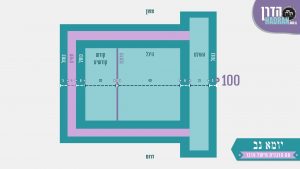
Temple measurements מידות המקדש יומא נב

יומא נב

לְמֵיעַל לְהֶדְיָא. וְרַבִּי יוֹסֵי אָמַר לָךְ: חֲבִיבִין יִשְׂרָאֵל שֶׁלֹּא הִצְרִיכָן הַכָּתוּב לְשָׁלִיחַ.

to enter directly, as it is more appropriate for the High Priest to approach the Holy of Holies somewhat circuitously. And in response to this Rabbi Yosei could have said to you: The Jewish people are beloved by God, as the Torah did not require them to make use of an agent, e.g., an angel, to intercede on their behalf. Instead, God hears the nation’s prayers directly. Consequently, the High Priest, who represents the people on Yom Kippur, need not approach in a roundabout fashion.

וְרַבִּי יְהוּדָה נָמֵי, נֵיעוּל בֵּין מְנוֹרָה לְכוֹתֶל! מַשְׁחֲרִי מָאנֵיהּ.

The Gemara asks: But if an indirect approach is a mark of respect, in accordance with the opinion of Rabbi Yehuda, too, let the High Priest enter indirectly between the candelabrum and the wall. The Gemara answers: If the High Priest walks by that route, he might blacken his clothes through the soot left on the wall by the candelabrum.

אָמַר רַבִּי נָתָן: אַמָּה טְרַקְסִין, לֹא הִכְרִיעוּ בּוֹ חֲכָמִים אִי כְּלִפְנִים אִי כְּלַחוּץ.

Rabbi Natan said: With regard to the one-cubit partition, the Sages did not determine its status, whether it was part of the inside of the Holy of Holies or part of the outside area of the Sanctuary.

מַתְקֵיף לַהּ רָבִינָא: מַאי טַעְמָא? אִילֵּימָא מִשּׁוּם דִּכְתִיב: ״וְהַבַּיִת אֲשֶׁר בָּנָה הַמֶּלֶךְ שְׁלֹמֹה לַה׳ שִׁשִּׁים אַמָּה אׇרְכּוֹ וְעֶשְׂרִים רׇחְבּוֹ וּשְׁלֹשִׁים אַמָּה קוֹמָתוֹ״, וּכְתִיב: ״וְאַרְבָּעִים בָּאַמָּה הָיָה הַבָּיִת הוּא הַהֵיכָל לִפְנָי״, וּכְתִיב: ״וְלִפְנֵי הַדְּבִיר עֶשְׂרִים אַמָּה אוֹרֶךְ וְעֶשְׂרִים אַמָּה רוֹחַב וְעֶשְׂרִים אַמָּה קוֹמָתוֹ״, וְלָא יָדְעִינַן אַמָּה טְרַקְסִין אִי מֵהָנֵי עֶשְׂרִים, וְאִי מֵהָנֵי אַרְבָּעִים.

Ravina strongly objects to this opinion: What is the reason for this uncertainty? If we say it is because it is written: “And the House that King Solomon built for the Lord was sixty cubits in length, and its width was twenty cubits, and its height was thirty cubits” (I Kings 6:2), and it is written: “And the House, that is, the Sanctuary, was forty cubits long” (I Kings 6:17), and it is written: “And before the partition twenty cubits in length, and twenty cubits in width, and twenty cubits in height” (I Kings 6:20), and therefore we do not know whether the one-cubit partition was part of these twenty cubits of the Holy of Holies or part of these forty cubits of the Sanctuary, then this problem can be resolved.

וְדִילְמָא לָא מֵהָנֵי עֶשְׂרִין וְלָא מֵהָנֵי אַרְבְּעִין, וַחֲלָלָא קָא חָשֵׁיב, כְּותָלִים לָא קָא חָשֵׁיב. תִּדַּע, דְּכֹל הֵיכָא דְּקָא חָשֵׁיב כְּותָלִים — חָשֵׁיב לֵיהּ לְדִידֵיהּ,

Ravina explains the resolution of the problem: But perhaps it was not part of these twenty cubits nor part of these forty cubits, as in establishing the measurements the verse counts the space but does not count the walls themselves, i.e., the cubit of the wall is not included in either measurement. Know that it is so, as anywhere that the verse counts the area of the walls in addition to the spaces they contain, it also counts the one-cubit partition.

דִּתְנַן: הַהֵיכָל מֵאָה עַל מֵאָה בְּרוּם מֵאָה. כּוֹתֶל אוּלָם חָמֵשׁ, וְהָאוּלָם אַחַת עֶשְׂרֵה, כּוֹתֶל הַהֵיכָל שֵׁשׁ, וְאׇרְכּוֹ אַרְבָּעִים אַמָּה, וְאַמָּה טְרַקְסִין, וְעֶשְׂרִים אַמָּה בֵּית קׇדְשֵׁי הַקֳּדָשִׁים, כּוֹתֶל הַהֵיכָל שֵׁשׁ, וְהַתָּא שֵׁשׁ, וְכוֹתֶל הַתָּא חָמֵשׁ.

Ravina cites a proof for the previous claim. As we learned in a mishna: The Sanctuary was one hundred cubits by one hundred cubits, with a height of one hundred cubits. From east to west, the hundred cubits were divided as follows: The wall of the Entrance Hall was five cubits; and the Entrance Hall itself was eleven cubits; the wall of the Sanctuary was six cubits; the length of the Sanctuary itself was forty cubits; and there was the one-cubit partition; the Hall of the Holy of Holies was another twenty cubits; the outer wall of the Sanctuary was six cubits; and the chamber behind it was six cubits; and the wall of the chamber was five cubits. This mishna proves that when the walls are counted in addition to the spaces, the one-cubit partition is included in the calculation.

אֶלָּא קְדוּשְּׁתֵיהּ אִי כְּלִפְנִים אִי כְּלַחוּץ.

Rather, the uncertainty does not concern the location of the one-cubit partition, which was certainly positioned between the Sanctuary and the Holy of Holies. Instead, the issue is its sanctity, whether it was considered like the inside of the Holy of Holies or like the outside area of the Sanctuary. Since there was no such wall in the Second Temple, the Sages were uncertain with regard to the status of the extra cubit.

וְהַיְינוּ דְּאָמַר רַבִּי יוֹחָנָן, בָּעֵי יוֹסֵף אִישׁ הוּצָל: ״וּדְבִיר בְּתוֹךְ הַבַּיִת מִפְּנִימָה הֵכִין לְתִתֵּן שָׁם אֶת אֲרוֹן בְּרִית ה׳״. אִיבַּעְיָא לְהוּ: הֵיכִי קָאָמַר קְרָא:

§ And this is what Rabbi Yoḥanan said: Yosef of Hutzal raised a dilemma with regard to the verse: “And he prepared a partition in the midst of the House within to set there the Ark of the Covenant of the Lord” (I Kings 6:19). This was his dilemma that was raised before the Sages: With regard to what case is the verse speaking?

״וּדְבִיר בְּתוֹךְ הַבַּיִת מִפְּנִימָה הֵכִין לְתִתֵּן שָׁם״, אוֹ דִילְמָא הָכִי קָאָמַר: ״וּדְבִיר בְּתוֹךְ הַבַּיִת מִפְּנִימָה״?

The Gemara explains the dilemma. Should it be read: And Solomon prepared a partition in the midst of the House within to set there, meaning that he placed the partition within the Temple and behind it he prepared a space to place the Ark, and the partition itself did not possess the sanctity of the Holy of Holies? Or perhaps this is what the verse states: A partition in the midst of the House within, i.e., the verse ends there, while the rest of the text forms a new verse. According to this interpretation, the place of the partition itself was part of the Holy of Holies, and that was where Solomon prepared a place for the Ark.

וּמִי מְסַפְּקָא לֵיהּ? וְהַתַּנְיָא, אִיסִי בֶּן יְהוּדָה אוֹמֵר: חָמֵשׁ מִקְרָאוֹת בַּתּוֹרָה אֵין לָהֶן הֶכְרֵעַ:

The Gemara is surprised at this explanation: And was Yosef of Hutzal really uncertain how to punctuate this verse? But wasn’t it taught in a baraita that Isi ben Yehuda says: There are five verses in the Torah whose meaning cannot be decided, i.e., it is unclear from the text how the verses should be read.

״שְׂאֵת״.

The first example is the term: Se’et (Genesis 4:7). It is unclear whether the verse should be read: “If you do well, shall it not be lifted up [se’et]?” in which case se’et involves forgiveness and pardon; or: “If you do well, but you will lift up [se’et] your sin if you do not do well.” According to this interpretation, se’et is referring to remembrance: If you do not do well, your sin will be remembered.

״מְשׁוּקָּדִים״.

The second uncertain case is the term: Meshukkadim (Exodus 25:34). This verse can be read: “And in the candelabrum four cups made like almond blossoms [meshukkadim]”; or as: “Its knops and its flowers made like almond blossoms [meshukkadim].” In other words, the term meshukkadim can be read either with the first part or the last part of the verse.

״מָחָר״.

Likewise, the term: Maḥar (Exodus 17:9) can be read: “And go out, fight with Amalek tomorrow [maḥar]”. Alternatively, it can mean that Joshua must go out to war with Amalek immediately, and Moses added: “Tomorrow [maḥar] I will stand on the top of the hill” (Exodus 17:9), but today you do not need my prayer. Once again, the issue is whether this term belongs to the beginning or the end of the verse.

״אָרוּר״.

The fourth case is the term: Arur (Genesis 49:7). This verse can be read: “Cursed [arur] be their anger for it was fierce, and their wrath for it was cruel,” on account of Levi and Simeon’s treatment of Shechem. Alternatively, this term, which appears at the beginning of the verse, can be read as the last word of the previous verse: “And in their anger they cut off cursed [arur] oxen” (Genesis 49:6–7). According to this interpretation, “cursed oxen” is referring to the oxen of Shechem, who descended from the accursed Canaan.

״וְקָם״.

Finally, the term: Vekam (Deuteronomy 31:16) can be read as: “Behold, you are about to sleep with your fathers and rise up [vekam]” at the time of the resurrection of the dead; or: “And this people will rise up [vekam] and go astray.”

וְהָתַנְיָא: הוּא יוֹסֵף אִישׁ הוּצָל, הוּא יוֹסֵף הַבַּבְלִי, הוּא אִיסִי בֶּן יְהוּדָה, הוּא אִיסִי בֶּן גּוּר אַרְיֵה, הוּא אִיסִי בֶּן גַּמְלִיאֵל, הוּא אִיסִי בֶּן מַהֲלַלְאֵל, וּמָה שְׁמוֹ — אִיסִי בֶּן עֲקִיבָא שְׁמוֹ. בִּדְאוֹרָיְיתָא — לֵיכָּא, בְּדִנְבִיאֵי — אִיכָּא.

The Gemara explains the objection presented by this baraita. And wasn’t it taught in a baraita that Yosef of Hutzal is the one called Yosef the Babylonian, as Hutzal is a city in Babylonia; and he is also the person called Isi ben Yehuda, as Isi is a shortened form of Yosef; he is Isi ben Gur Arye, a nickname for Yehuda; he is Isi ben Gamliel; he is Isi ben Mahalalel? And what is his real name? Isi ben Akiva is his name. If they are indeed the same person, Isi ben Yehuda, who is Yosef of Hutzal, says that there are only five verses whose punctuation is unclear, whereas here he adds an additional verse. The Gemara explains: In the Torah itself, there are indeed no more than five verses, but in the Prophets there are more examples of equivocal punctuation, one of which is the verse from I Kings.

וּבִדְאוֹרָיְיתָא לֵיכָּא? וְהָא אִיכָּא דְּבָעֵי רַב חִסְדָּא: ״וַיִּשְׁלַח אֶת נַעֲרֵי בְּנֵי יִשְׂרָאֵל וַיַּעֲלוּ עוֹלוֹת כְּבָשִׂים וַיִּזְבְּחוּ זְבָחִים שְׁלָמִים פָּרִים״ — אוֹ דִילְמָא אִידֵּי וְאִידֵּי פָּרִים! לְרַב חִסְדָּא מְסַפְּקָא לֵיהּ, לְאִיסִי בֶּן יְהוּדָה פְּשִׁיטָא לֵיהּ.

The Gemara raises a difficulty: And in the Torah itself, are there no other examples of indeterminate punctuation? But there is this dilemma that Rav Ḥisda raised with regard to the verse: “And he sent the young men of the children of Israel who sacrificed burnt-offerings” (Exodus 24:5); were these burnt-offerings sheep, and when the verse continues: “And sacrificed peace-offerings of bulls to the Lord,” these peace-offerings alone were bulls? Or perhaps these and these were bulls, as the word “bulls” is referring both to the burnt-offerings and the peace-offerings? This is another verse whose punctuation is unclear. The Gemara rejects this contention: This is not difficult; according to Rav Ḥisda it was uncertain how to read the verse, but the interpretation was obvious to Isi ben Yehuda.

מַתְנִי׳ הַחִיצוֹנָה הָיְתָה פְּרוּפָה מִן הַדָּרוֹם, וּפְנִימִית מִן הַצָּפוֹן. מְהַלֵּךְ בֵּינֵיהֶן, עַד שֶׁמַּגִּיעַ לַצָּפוֹן. הִגִּיעַ לַצָּפוֹן — הוֹפֵךְ פָּנָיו לַדָּרוֹם, מְהַלֵּךְ לִשְׂמֹאלוֹ עִם הַפָּרוֹכֶת עַד שֶׁהוּא מַגִּיעַ לָאָרוֹן,

MISHNA: The outer curtain between the Sanctuary and the Holy of Holies was hooked [perufa] slightly open on the south side of the Sanctuary, and the inner curtain hooked slightly open on the north side of the Sanctuary, and therefore the High Priest could not enter the Holy of Holies directly. Rather, he enters through the southern opening and walks between the curtains until he reaches the opening to the north. When he reaches the opening to the north, he enters the Holy of Holies through that opening, turns his face to the south, and walks to his left along the curtain until he reaches the area before the Ark.

הִגִּיעַ לָאָרוֹן — נוֹתֵן אֶת הַמַּחְתָּה בֵּין שְׁנֵי הַבַּדִּים. צָבַר אֶת הַקְּטֹרֶת עַל גַּבֵּי גֶּחָלִים, וְנִתְמַלֵּא כָּל הַבַּיִת כּוּלּוֹ עָשָׁן. יָצָא וּבָא לוֹ בְּדֶרֶךְ בֵּית כְּנִיסָתוֹ, וּמִתְפַּלֵּל תְּפִלָּה קְצָרָה בַּבַּיִת הַחִיצוֹן. וְלֹא הָיָה מַאֲרִיךְ בִּתְפִלָּתוֹ, שֶׁלֹּא לְהַבְעִית אֶת יִשְׂרָאֵל.

When he reaches the Ark, he places the coal pan between the two staves. He piles the incense atop the coals, and the whole chamber in its entirety would fill with smoke. He then exits and comes out the way that he entered. He does not turn around but leaves the Holy of Holies walking while facing the Ark. And he recites a brief prayer in the outer chamber, in the Sanctuary. And he would not extend his prayer there so as not to alarm the Jewish people, who would otherwise conclude that something happened and that he died in the Holy of Holies.

גְּמָ׳ בְּמַאי עָסְקִינַן? אִילֵימָא בְּמִקְדָּשׁ רִאשׁוֹן, מִי הֲווֹ פָּרוֹכֶת? אֶלָּא בְּמִקְדָּשׁ שֵׁנִי, מִי הֲוָה אָרוֹן?

GEMARA: The Gemara asks: With what are we dealing here? To which time period is the mishna referring? If we say it is speaking about the First Temple, were there curtains then? There was only one curtain over the one-cubit partition. Rather, if we say that the mishna is dealing with the Second Temple, was there an Ark there?

וְהָתַנְיָא: מִשֶּׁנִּגְנַז אָרוֹן — נִגְנְזָה עִמּוֹ צִנְצֶנֶת הַמָּן, וּצְלוֹחִית שֶׁמֶן הַמִּשְׁחָה, וּמַקְלוֹ שֶׁל אַהֲרֹן וּשְׁקֵדֶיהָ וּפְרָחֶיהָ, וְאַרְגַּז שֶׁשִּׁגְּרוּ פְּלִשְׁתִּים דּוֹרוֹן לֵאלֹהֵי יִשְׂרָאֵל, שֶׁנֶּאֱמַר: ״וּכְלֵי הַזָּהָב אֲשֶׁר הֲשֵׁיבוֹתֶם לוֹ אָשָׁם תָּשִׂימוּ בָאַרְגַּז מִצִּדּוֹ וְשִׁלַּחְתֶּם אוֹתוֹ וְהָלָךְ״.

The Gemara elaborates: But wasn’t it taught in a baraita that when the Ark was buried, along with it was buried the jar of manna that was next to it, and the flask of oil used for anointing, and Aaron’s staff with its almonds and blossoms, and the chest that the Philistines sent as a gift [doron] to the God of Israel after they captured the Ark and were stricken by several plagues, as it is stated: “And put the jewels of gold that you return to Him for a guilt-offering, in a coffer by its side, and send it away that it may go” (I Samuel 6:8)?

וּמִי גְּנָזוֹ — יֹאשִׁיָּהוּ גְּנָזוֹ. מָה רָאָה שֶׁגְּנָזוֹ? רָאָה שֶׁכָּתוּב: ״יוֹלֵךְ ה׳ אוֹתְךָ וְאֶת מַלְכְּךָ אֲשֶׁר תָּקִים עָלֶיךָ״, עָמַד וּגְנָזוֹ.

§ And who buried the Ark? Josiah, king of Judea, buried it. And what did he see that he decided to bury it? He saw that it is written: “The Lord will bring you, and your king whom you shall set over you, to a nation that you have not known” (Deuteronomy 28:36). Since he knew that the Jewish people would ultimately be exiled, he felt it was better that the Ark should not be disgraced in exile, and therefore he arose and buried it.

שֶׁנֶּאֱמַר: ״וַיֹּאמֶר לַלְוִיִּם הַמְּבִינִים לְכׇל יִשְׂרָאֵל הַקְּדוֹשִׁים לַה׳ תְּנוּ אֶת אֲרוֹן הַקּוֹדֶשׁ בַּבַּיִת אֲשֶׁר בָּנָה שְׁלֹמֹה בֶן דָּוִד מֶלֶךְ יִשְׂרָאֵל אֵין לָכֶם מַשָּׂא בַּכָּתֵף עַתָּה עִבְדוּ אֶת ה׳ אֱלֹהֵיכֶם וְאֵת עַמּוֹ יִשְׂרָאֵל״.

The Gemara cites the source for the tradition that Josiah buried the Ark. As it is stated: “And he said to the Levites who taught all of Israel, who were sacred to the Lord: Put the sacred Ark in the house that Solomon, son of David, king of Israel, built. There shall no more be a burden upon your shoulders; now serve the Lord your God, and His people Israel (I Chronicles 35:3). In other words, from now onward the Levites will no longer carry the Ark on their shoulders, and they should dedicate themselves to their service of singing and locking the gates of the Temple.

וְאָמַר רַבִּי אֶלְעָזָר: אָתְיָא ״שָׁמָּה״ ״שָׁמָּה״, וְאָתְיָא ״דּוֹרוֹת״ ״דּוֹרוֹת״.

And Rabbi Elazar said: The matter is derived by means of a verbal analogy, as it is written with regard to the Ark: “That is by the Ark of the Testimony, before the Ark cover that is above the testimony, there will I meet with you” (Exodus 30:6), and it is written: “Take a jar and put a full omer of manna there, and place it before the Lord for safekeeping throughout your generations” (Exodus 16:33). And it is further derived by verbal analogy from the term “Generations” written here and “generations” written with regard to the oil used for anointing: “This shall be a sacred anointing oil for Me throughout your generations” (Exodus 30:31).

וְאָתְיָא ״מִשְׁמֶרֶת״ ״מִשְׁמֶרֶת״.

Rabbi Elazar continued: And it is likewise derived by verbal analogy from the term “safekeeping” stated here and “safekeeping” stated in connection to the staff of Aaron: “Place back the rod of Aaron before the testimony for safekeeping” (Numbers 17:25). These verbal analogies teach that all of these items were hidden together with the Ark. Evidently, there was no Ark in the Holy of Holies even before the First Temple period ended. How, then, can the mishna speak of the Ark during the Second Temple period?

לְעוֹלָם בְּמִקְדָּשׁ שֵׁנִי, וּמַאי ״הִגִּיעַ לָאָרוֹן״ — מְקוֹם אָרוֹן. וְהָא קָתָנֵי: נָתַן אֶת הַמַּחְתָּה לְבֵין שְׁנֵי הַבַּדִּים! אֵימָא: ״כְּבֵין שְׁנֵי הַבַּדִּים״.

The Gemara answers: Actually, the mishna is referring to the Second Temple, and what is the meaning of the phrase: Reaches the Ark? It means the place of the Ark. The Gemara raises a difficulty: But it is taught that he places the coal pan between the two staves, which indicates that the staves of the Ark were present. The Gemara answers: Emend the text and say: As though it was between the two staves, i.e., in the place where the staves had been located when the Ark was there.

צָבַר אֶת הַקְּטֹרֶת עַל גַּבֵּי גֶּחָלִים. תְּנַן כְּמַאן דְּאָמַר צוֹבְרָהּ. תָּנֵי חֲדָא: צוֹבְרָהּ פְּנִימָה שֶׁהִיא חוּצָה לוֹ. וְתַנְיָא אִידַּךְ: צוֹבְרָהּ חוּצָה שֶׁהִיא פְּנִימָה לוֹ.

§ The mishna taught: He piles the incense atop the coals. The Gemara comments: We learned in the mishna in accordance with the opinion of the one who said that he piles the incense on the coals and does not scatter it there. It was taught in one baraita: He piles the incense in the section of the coal pan closest to the Ark, which is farthest from the High Priest, until he reaches the other side of the coal pan. And it was taught in another baraita: He piles it in the section of the coal pan farthest from the Ark, which is closest to him.

אָמַר אַבָּיֵי: תַּנָּאֵי הִיא. וְאָמַר אַבָּיֵי: מִסְתַּבְּרָא כְּמַאן דְּאָמַר פְּנִימָה שֶׁהִיא חוּצָה לוֹ — דִּתְנַן, מְלַמְּדִין אוֹתוֹ: הִזָּהֵר

Abaye said that this issue is a dispute between tanna’im. And Abaye said: It is reasonable to explain in accordance with the opinion of the one who said that he piles the incense in the section of the coal pan closest to the Ark, which is farthest from him. As we learned in a mishna that they would teach the priest who burns the incense: Be careful

חדשה בלימוד הגמרא?

זה הדף הראשון שלך? איזו התרגשות עצומה! יש לנו בדיוק את התכנים והכלים שיעזרו לך לעשות את הצעדים הראשונים ללמידה בקצב וברמה שלך, כך תוכלי להרגיש בנוח גם בתוך הסוגיות המורכבות ומאתגרות.

פסיפס הלומדות שלנו

גלי את קהילת הלומדות שלנו, מגוון נשים, רקעים וסיפורים. כולן חלק מתנועה ומסע מרגש ועוצמתי.

הצטרפתי ללומדות בתחילת מסכת תענית. ההתרגשות שלי ושל המשפחה היתה גדולה מאוד, והיא הולכת וגוברת עם כל סיום שאני זוכה לו. במשך שנים רבות רציתי להצטרף ומשום מה זה לא קרה… ב”ה מצאתי לפני מספר חודשים פרסום של הדרן, ומיד הצטרפתי והתאהבתי. הדף היומי שינה את חיי ממש והפך כל יום- ליום של תורה. מודה לכן מקרב ליבי ומאחלת לכולנו לימוד פורה מתוך אהבת התורה ולומדיה.

Noa Rosen
נעה רוזן

חיספין רמת הגולן, ישראל

התחלתי ללמוד דף יומי באמצע תקופת הקורונה, שאבא שלי סיפר לי על קבוצה של בנות שתיפתח ביישוב שלנו ותלמד דף יומי כל יום. הרבה זמן רציתי להצטרף לזה וזאת הייתה ההזדמנות בשבילי. הצטרפתי במסכת שקלים ובאמצע הייתה הפסקה קצרה. כיום אני כבר לומדת באולפנה ולומדת דף יומי לבד מתוך גמרא של טיינזלץ.

Saturdays in Raleigh
שבות בראלי

עתניאל, ישראל

באירוע של הדרן בנייני האומה. בהשראתה של אמי שלי שסיימה את הש”ס בסבב הקודם ובעידוד מאיר , אישי, וילדיי וחברותיי ללימוד במכון למנהיגות הלכתית של רשת אור תורה סטון ומורתיי הרבנית ענת נובוסלסקי והרבנית דבורה עברון, ראש המכון למנהיגות הלכתית.
הלימוד מעשיר את יומי, מחזיר אותי גם למסכתות שכבר סיימתי וידוע שאינו דומה מי ששונה פרקו מאה לשונה פרקו מאה ואחת במיוחד מרתקים אותי החיבורים בין המסכתות

Roit Kalech
רוית קלך

מודיעין, ישראל

שמעתי על הסיום הענק של הדף היומי ע”י נשים בבנייני האומה. רציתי גם.
החלטתי להצטרף. התחלתי ושיכנעתי את בעלי ועוד שתי חברות להצטרף. עכשיו יש לי לימוד משותף איתו בשבת ומפגש חודשי איתן בנושא (והתכתבויות תדירות על דברים מיוחדים שקראנו). הצטרפנו לקבוצות שונות בווטסאפ. אנחנו ממש נהנות. אני שומעת את השיעור מידי יום (בד”כ מהרב יוני גוטמן) וקוראת ומצטרפת לסיומים של הדרן. גם מקפידה על דף משלהן (ונהנית מאד).

Liat Citron
ליאת סיטרון

אפרת, ישראל

הייתי לפני שנתיים בסיום הדרן נשים בבנייני האומה והחלטתי להתחיל. אפילו רק כמה דפים, אולי רק פרק, אולי רק מסכת… בינתיים סיימתי רבע שס ותכף את כל סדר מועד בה.
הסביבה תומכת ומפרגנת. אני בת יחידה עם ארבעה אחים שכולם לומדים דף יומי. מדי פעם אנחנו עושים סיומים יחד באירועים משפחתיים. ממש מרגש. מסכת שבת סיימנו כולנו יחד עם אבא שלנו!
אני שומעת כל יום פודקאסט בהליכה או בנסיעה ואחכ לומדת את הגמרא.

Edna Gross
עדנה גרוס

מרכז שפירא, ישראל

התחלתי לפני 8 שנים במדרשה. לאחרונה סיימתי מסכת תענית בלמידה עצמית ועכשיו לקראת סיום מסכת מגילה.

Daniela Baruchim
דניאלה ברוכים

רעננה, ישראל

ראיתי את הסיום הגדול בבנייני האומה וכל כך התרשמתי ורציתי לקחת חלק.. אבל לקח לי עוד כשנה וחצי )באמצע מסיכת שבת להצטרף..
הלימוד חשוב לי מאוד.. אני תמיד במרדף אחרי הדף וגונבת כל פעם חצי דף כשהילדים עסוקים ומשלימה אח”כ אחרי שכולם הלכו לישון..

Olga Mizrahi
אולגה מזרחי

ירושלים, ישראל

התחלתי ללמוד את הדף היומי מעט אחרי שבני הקטן נולד. בהתחלה בשמיעה ולימוד באמצעות השיעור של הרבנית שפרבר. ובהמשך העזתי וקניתי לעצמי גמרא. מאז ממשיכה יום יום ללמוד עצמאית, ולפעמים בעזרת השיעור של הרבנית, כל יום. כל סיום של מסכת מביא לאושר גדול וסיפוק. הילדים בבית נהיו חלק מהלימוד, אני משתפת בסוגיות מעניינות ונהנית לשמוע את דעתם.

Eliraz Blau
אלירז בלאו

מעלה מכמש, ישראל

התחלתי ללמוד דף יומי בסבב הקודם. זכיתי לסיים אותו במעמד המרגש של הדרן. בסבב הראשון ליווה אותי הספק, שאולי לא אצליח לעמוד בקצב ולהתמיד. בסבב השני אני לומדת ברוגע, מתוך אמונה ביכולתי ללמוד ולסיים. בסבב הלימוד הראשון ליוותה אותי חוויה מסויימת של בדידות. הדרן העניקה לי קהילת לימוד ואחוות נשים. החוויה של סיום הש”ס במעמד כה גדול כשנשים שאינן מכירות אותי, שמחות ומתרגשות עבורי , היתה חוויה מרוממת נפש

Ilanit Weil
אילנית ווייל

קיבוץ מגדל עוז, ישראל

התחלתי ללמוד דף יומי ממסכת נידה כי זה היה חומר הלימוד שלי אז. לאחר הסיום הגדול בבנייני האומה החלטתי להמשיך. וב”ה מאז עם הפסקות קטנות של קורונה ולידה אני משתדלת להמשיך ולהיות חלק.

זה משפיע מאוד על היום יום שלי ועל אף שאני עסוקה בלימודי הלכה ותורה כל יום, זאת המסגרת הקבועה והמחייבת ביותר שיש לי.

Moriah Taesan Michaeli
מוריה תעסן מיכאלי

גבעת הראל, ישראל

A life-changing journey started with a Chanukah family tiyul to Zippori, home of the Sanhedrin 2 years ago and continued with the Syum in Binanei Hauma where I was awed by the energy of 3000 women dedicated to learning daf Yomi. Opening my morning daily with a fresh daf, I am excited with the new insights I find enriching my life and opening new and deeper horizons for me.

Becky Goldstein
בקי גולדשטיין

Elazar gush etzion, Israel

התחלתי ללמוד את הדף היומי מעט אחרי שבני הקטן נולד. בהתחלה בשמיעה ולימוד באמצעות השיעור של הרבנית שפרבר. ובהמשך העזתי וקניתי לעצמי גמרא. מאז ממשיכה יום יום ללמוד עצמאית, ולפעמים בעזרת השיעור של הרבנית, כל יום. כל סיום של מסכת מביא לאושר גדול וסיפוק. הילדים בבית נהיו חלק מהלימוד, אני משתפת בסוגיות מעניינות ונהנית לשמוע את דעתם.

Eliraz Blau
אלירז בלאו

מעלה מכמש, ישראל

רציתי לקבל ידע בתחום שהרגשתי שהוא גדול וחשוב אך נעלם ממני. הלימוד מעניק אתגר וסיפוק ומעמיק את תחושת השייכות שלי לתורה וליהדות

Ruth Agiv
רות עגיב

עלי זהב – לשם, ישראל

בתחילת הסבב הנוכחי של לימוד הדף היומי, נחשפתי לחגיגות המרגשות באירועי הסיום ברחבי העולם. והבטחתי לעצמי שבקרוב אצטרף גם למעגל הלומדות. הסבב התחיל כאשר הייתי בתחילת דרכי בתוכנית קרן אריאל להכשרת יועצות הלכה של נשמ”ת. לא הצלחתי להוסיף את ההתחייבות לדף היומי על הלימוד האינטנסיבי של תוכנית היועצות. בבוקר למחרת המבחן הסופי בנשמ”ת, התחלתי את לימוד הדף במסכת סוכה ומאז לא הפסקתי.

Hana Shaham-Rozby (Dr.)
חנה שחם-רוזבי (ד”ר)

קרית גת, ישראל

"
גם אני התחלתי בסבב הנוכחי וב””ה הצלחתי לסיים את רוב המסכתות . בזכות הרבנית מישל משתדלת לפתוח את היום בשיעור הזום בשעה 6:20 .הלימוד הפך להיות חלק משמעותי בחיי ויש ימים בהם אני מצליחה לחזור על הדף עם מלמדים נוספים ששיעוריהם נמצאים במרשתת. שמחה להיות חלק מקהילת לומדות ברחבי העולם. ובמיוחד לשמש דוגמה לנכדותיי שאי””ה יגדלו לדור שלימוד תורה לנשים יהיה משהו שבשגרה. "

Ronit Shavit
רונית שביט

נתניה, ישראל

רבנית מישל הציתה אש התלמוד בלבבות בביניני האומה ואני נדלקתי. היא פתחה פתח ותמכה במתחילות כמוני ואפשרה לנו להתקדם בצעדים נכונים וטובים. הקימה מערך שלם שמסובב את הלומדות בסביבה תומכת וכך נכנסתי למסלול לימוד מעשיר שאין כמוה. הדרן יצר קהילה גדולה וחזקה שמאפשרת התקדמות מכל נקודת מוצא. יש דיבוק לומדות שמחזק את ההתמדה של כולנו. כל פניה ושאלה נענית בזריזות ויסודיות. תודה גם למגי על כל העזרה.

Sarah Aber
שרה אבר

נתניה, ישראל

הצטרפתי ללומדות בתחילת מסכת תענית. ההתרגשות שלי ושל המשפחה היתה גדולה מאוד, והיא הולכת וגוברת עם כל סיום שאני זוכה לו. במשך שנים רבות רציתי להצטרף ומשום מה זה לא קרה… ב”ה מצאתי לפני מספר חודשים פרסום של הדרן, ומיד הצטרפתי והתאהבתי. הדף היומי שינה את חיי ממש והפך כל יום- ליום של תורה. מודה לכן מקרב ליבי ומאחלת לכולנו לימוד פורה מתוך אהבת התורה ולומדיה.

Noa Rosen
נעה רוזן

חיספין רמת הגולן, ישראל

התחלתי בסיום הש”ס, יצאתי באורות. נשברתי פעמיים, ובשתיהם הרבנית מישל עודדה להמשיך איפה שכולם בסבב ולהשלים כשאוכל, וכך עשיתי וכיום השלמתי הכל. מדהים אותי שאני לומדת כל יום קצת, אפילו בחדר הלידה, בבידוד או בחו”ל. לאט לאט יותר נינוחה בסוגיות. לא כולם מבינים את הרצון, בפרט כפמניסטית. חשה סיפוק גדול להכיר את המושגים וצורת החשיבה. החלום זה להמשיך ולהתמיד ובמקביל ללמוד איך מהסוגיות נוצרה והתפתחה ההלכה.

Weingarten Sherrington Foundation
קרן וינגרטן שרינגטון

מודיעין, ישראל

התחלתי ללמוד בעידוד שתי חברות אתן למדתי בעבר את הפרק היומי במסגרת 929.
בבית מתלהבים מאוד ובשבת אני לומדת את הדף עם בעלי שזה מפתיע ומשמח מאוד! לימוד הדף הוא חלק בלתי נפרד מהיום שלי. לומדת בצהריים ומחכה לזמן הזה מידי יום…

Miriam Wengerover
מרים ונגרובר

אפרת, ישראל

כבר סיפרתי בסיום של מועד קטן.
הלימוד מאוד משפיעה על היום שלי כי אני לומדת עם רבנית מישל על הבוקר בזום. זה נותן טון לכל היום – בסיס למחשבות שלי .זה זכות גדול להתחיל את היום בלימוד ובתפילה. תודה רבה !

שרה-ברלוביץ
שרה ברלוביץ

ירושלים, ישראל

יומא נב

לְמֵיעַל לְהֶדְיָא. וְרַבִּי יוֹסֵי אָמַר לָךְ: חֲבִיבִין יִשְׂרָאֵל שֶׁלֹּא הִצְרִיכָן הַכָּתוּב לְשָׁלִיחַ.

to enter directly, as it is more appropriate for the High Priest to approach the Holy of Holies somewhat circuitously. And in response to this Rabbi Yosei could have said to you: The Jewish people are beloved by God, as the Torah did not require them to make use of an agent, e.g., an angel, to intercede on their behalf. Instead, God hears the nation’s prayers directly. Consequently, the High Priest, who represents the people on Yom Kippur, need not approach in a roundabout fashion.

וְרַבִּי יְהוּדָה נָמֵי, נֵיעוּל בֵּין מְנוֹרָה לְכוֹתֶל! מַשְׁחֲרִי מָאנֵיהּ.

The Gemara asks: But if an indirect approach is a mark of respect, in accordance with the opinion of Rabbi Yehuda, too, let the High Priest enter indirectly between the candelabrum and the wall. The Gemara answers: If the High Priest walks by that route, he might blacken his clothes through the soot left on the wall by the candelabrum.

אָמַר רַבִּי נָתָן: אַמָּה טְרַקְסִין, לֹא הִכְרִיעוּ בּוֹ חֲכָמִים אִי כְּלִפְנִים אִי כְּלַחוּץ.

Rabbi Natan said: With regard to the one-cubit partition, the Sages did not determine its status, whether it was part of the inside of the Holy of Holies or part of the outside area of the Sanctuary.

מַתְקֵיף לַהּ רָבִינָא: מַאי טַעְמָא? אִילֵּימָא מִשּׁוּם דִּכְתִיב: ״וְהַבַּיִת אֲשֶׁר בָּנָה הַמֶּלֶךְ שְׁלֹמֹה לַה׳ שִׁשִּׁים אַמָּה אׇרְכּוֹ וְעֶשְׂרִים רׇחְבּוֹ וּשְׁלֹשִׁים אַמָּה קוֹמָתוֹ״, וּכְתִיב: ״וְאַרְבָּעִים בָּאַמָּה הָיָה הַבָּיִת הוּא הַהֵיכָל לִפְנָי״, וּכְתִיב: ״וְלִפְנֵי הַדְּבִיר עֶשְׂרִים אַמָּה אוֹרֶךְ וְעֶשְׂרִים אַמָּה רוֹחַב וְעֶשְׂרִים אַמָּה קוֹמָתוֹ״, וְלָא יָדְעִינַן אַמָּה טְרַקְסִין אִי מֵהָנֵי עֶשְׂרִים, וְאִי מֵהָנֵי אַרְבָּעִים.

Ravina strongly objects to this opinion: What is the reason for this uncertainty? If we say it is because it is written: “And the House that King Solomon built for the Lord was sixty cubits in length, and its width was twenty cubits, and its height was thirty cubits” (I Kings 6:2), and it is written: “And the House, that is, the Sanctuary, was forty cubits long” (I Kings 6:17), and it is written: “And before the partition twenty cubits in length, and twenty cubits in width, and twenty cubits in height” (I Kings 6:20), and therefore we do not know whether the one-cubit partition was part of these twenty cubits of the Holy of Holies or part of these forty cubits of the Sanctuary, then this problem can be resolved.

וְדִילְמָא לָא מֵהָנֵי עֶשְׂרִין וְלָא מֵהָנֵי אַרְבְּעִין, וַחֲלָלָא קָא חָשֵׁיב, כְּותָלִים לָא קָא חָשֵׁיב. תִּדַּע, דְּכֹל הֵיכָא דְּקָא חָשֵׁיב כְּותָלִים — חָשֵׁיב לֵיהּ לְדִידֵיהּ,

Ravina explains the resolution of the problem: But perhaps it was not part of these twenty cubits nor part of these forty cubits, as in establishing the measurements the verse counts the space but does not count the walls themselves, i.e., the cubit of the wall is not included in either measurement. Know that it is so, as anywhere that the verse counts the area of the walls in addition to the spaces they contain, it also counts the one-cubit partition.

דִּתְנַן: הַהֵיכָל מֵאָה עַל מֵאָה בְּרוּם מֵאָה. כּוֹתֶל אוּלָם חָמֵשׁ, וְהָאוּלָם אַחַת עֶשְׂרֵה, כּוֹתֶל הַהֵיכָל שֵׁשׁ, וְאׇרְכּוֹ אַרְבָּעִים אַמָּה, וְאַמָּה טְרַקְסִין, וְעֶשְׂרִים אַמָּה בֵּית קׇדְשֵׁי הַקֳּדָשִׁים, כּוֹתֶל הַהֵיכָל שֵׁשׁ, וְהַתָּא שֵׁשׁ, וְכוֹתֶל הַתָּא חָמֵשׁ.

Ravina cites a proof for the previous claim. As we learned in a mishna: The Sanctuary was one hundred cubits by one hundred cubits, with a height of one hundred cubits. From east to west, the hundred cubits were divided as follows: The wall of the Entrance Hall was five cubits; and the Entrance Hall itself was eleven cubits; the wall of the Sanctuary was six cubits; the length of the Sanctuary itself was forty cubits; and there was the one-cubit partition; the Hall of the Holy of Holies was another twenty cubits; the outer wall of the Sanctuary was six cubits; and the chamber behind it was six cubits; and the wall of the chamber was five cubits. This mishna proves that when the walls are counted in addition to the spaces, the one-cubit partition is included in the calculation.

אֶלָּא קְדוּשְּׁתֵיהּ אִי כְּלִפְנִים אִי כְּלַחוּץ.

Rather, the uncertainty does not concern the location of the one-cubit partition, which was certainly positioned between the Sanctuary and the Holy of Holies. Instead, the issue is its sanctity, whether it was considered like the inside of the Holy of Holies or like the outside area of the Sanctuary. Since there was no such wall in the Second Temple, the Sages were uncertain with regard to the status of the extra cubit.

וְהַיְינוּ דְּאָמַר רַבִּי יוֹחָנָן, בָּעֵי יוֹסֵף אִישׁ הוּצָל: ״וּדְבִיר בְּתוֹךְ הַבַּיִת מִפְּנִימָה הֵכִין לְתִתֵּן שָׁם אֶת אֲרוֹן בְּרִית ה׳״. אִיבַּעְיָא לְהוּ: הֵיכִי קָאָמַר קְרָא:

§ And this is what Rabbi Yoḥanan said: Yosef of Hutzal raised a dilemma with regard to the verse: “And he prepared a partition in the midst of the House within to set there the Ark of the Covenant of the Lord” (I Kings 6:19). This was his dilemma that was raised before the Sages: With regard to what case is the verse speaking?

״וּדְבִיר בְּתוֹךְ הַבַּיִת מִפְּנִימָה הֵכִין לְתִתֵּן שָׁם״, אוֹ דִילְמָא הָכִי קָאָמַר: ״וּדְבִיר בְּתוֹךְ הַבַּיִת מִפְּנִימָה״?

The Gemara explains the dilemma. Should it be read: And Solomon prepared a partition in the midst of the House within to set there, meaning that he placed the partition within the Temple and behind it he prepared a space to place the Ark, and the partition itself did not possess the sanctity of the Holy of Holies? Or perhaps this is what the verse states: A partition in the midst of the House within, i.e., the verse ends there, while the rest of the text forms a new verse. According to this interpretation, the place of the partition itself was part of the Holy of Holies, and that was where Solomon prepared a place for the Ark.

וּמִי מְסַפְּקָא לֵיהּ? וְהַתַּנְיָא, אִיסִי בֶּן יְהוּדָה אוֹמֵר: חָמֵשׁ מִקְרָאוֹת בַּתּוֹרָה אֵין לָהֶן הֶכְרֵעַ:

The Gemara is surprised at this explanation: And was Yosef of Hutzal really uncertain how to punctuate this verse? But wasn’t it taught in a baraita that Isi ben Yehuda says: There are five verses in the Torah whose meaning cannot be decided, i.e., it is unclear from the text how the verses should be read.

״שְׂאֵת״.

The first example is the term: Se’et (Genesis 4:7). It is unclear whether the verse should be read: “If you do well, shall it not be lifted up [se’et]?” in which case se’et involves forgiveness and pardon; or: “If you do well, but you will lift up [se’et] your sin if you do not do well.” According to this interpretation, se’et is referring to remembrance: If you do not do well, your sin will be remembered.

״מְשׁוּקָּדִים״.

The second uncertain case is the term: Meshukkadim (Exodus 25:34). This verse can be read: “And in the candelabrum four cups made like almond blossoms [meshukkadim]”; or as: “Its knops and its flowers made like almond blossoms [meshukkadim].” In other words, the term meshukkadim can be read either with the first part or the last part of the verse.

״מָחָר״.

Likewise, the term: Maḥar (Exodus 17:9) can be read: “And go out, fight with Amalek tomorrow [maḥar]”. Alternatively, it can mean that Joshua must go out to war with Amalek immediately, and Moses added: “Tomorrow [maḥar] I will stand on the top of the hill” (Exodus 17:9), but today you do not need my prayer. Once again, the issue is whether this term belongs to the beginning or the end of the verse.

״אָרוּר״.

The fourth case is the term: Arur (Genesis 49:7). This verse can be read: “Cursed [arur] be their anger for it was fierce, and their wrath for it was cruel,” on account of Levi and Simeon’s treatment of Shechem. Alternatively, this term, which appears at the beginning of the verse, can be read as the last word of the previous verse: “And in their anger they cut off cursed [arur] oxen” (Genesis 49:6–7). According to this interpretation, “cursed oxen” is referring to the oxen of Shechem, who descended from the accursed Canaan.

״וְקָם״.

Finally, the term: Vekam (Deuteronomy 31:16) can be read as: “Behold, you are about to sleep with your fathers and rise up [vekam]” at the time of the resurrection of the dead; or: “And this people will rise up [vekam] and go astray.”

וְהָתַנְיָא: הוּא יוֹסֵף אִישׁ הוּצָל, הוּא יוֹסֵף הַבַּבְלִי, הוּא אִיסִי בֶּן יְהוּדָה, הוּא אִיסִי בֶּן גּוּר אַרְיֵה, הוּא אִיסִי בֶּן גַּמְלִיאֵל, הוּא אִיסִי בֶּן מַהֲלַלְאֵל, וּמָה שְׁמוֹ — אִיסִי בֶּן עֲקִיבָא שְׁמוֹ. בִּדְאוֹרָיְיתָא — לֵיכָּא, בְּדִנְבִיאֵי — אִיכָּא.

The Gemara explains the objection presented by this baraita. And wasn’t it taught in a baraita that Yosef of Hutzal is the one called Yosef the Babylonian, as Hutzal is a city in Babylonia; and he is also the person called Isi ben Yehuda, as Isi is a shortened form of Yosef; he is Isi ben Gur Arye, a nickname for Yehuda; he is Isi ben Gamliel; he is Isi ben Mahalalel? And what is his real name? Isi ben Akiva is his name. If they are indeed the same person, Isi ben Yehuda, who is Yosef of Hutzal, says that there are only five verses whose punctuation is unclear, whereas here he adds an additional verse. The Gemara explains: In the Torah itself, there are indeed no more than five verses, but in the Prophets there are more examples of equivocal punctuation, one of which is the verse from I Kings.

וּבִדְאוֹרָיְיתָא לֵיכָּא? וְהָא אִיכָּא דְּבָעֵי רַב חִסְדָּא: ״וַיִּשְׁלַח אֶת נַעֲרֵי בְּנֵי יִשְׂרָאֵל וַיַּעֲלוּ עוֹלוֹת כְּבָשִׂים וַיִּזְבְּחוּ זְבָחִים שְׁלָמִים פָּרִים״ — אוֹ דִילְמָא אִידֵּי וְאִידֵּי פָּרִים! לְרַב חִסְדָּא מְסַפְּקָא לֵיהּ, לְאִיסִי בֶּן יְהוּדָה פְּשִׁיטָא לֵיהּ.

The Gemara raises a difficulty: And in the Torah itself, are there no other examples of indeterminate punctuation? But there is this dilemma that Rav Ḥisda raised with regard to the verse: “And he sent the young men of the children of Israel who sacrificed burnt-offerings” (Exodus 24:5); were these burnt-offerings sheep, and when the verse continues: “And sacrificed peace-offerings of bulls to the Lord,” these peace-offerings alone were bulls? Or perhaps these and these were bulls, as the word “bulls” is referring both to the burnt-offerings and the peace-offerings? This is another verse whose punctuation is unclear. The Gemara rejects this contention: This is not difficult; according to Rav Ḥisda it was uncertain how to read the verse, but the interpretation was obvious to Isi ben Yehuda.

מַתְנִי׳ הַחִיצוֹנָה הָיְתָה פְּרוּפָה מִן הַדָּרוֹם, וּפְנִימִית מִן הַצָּפוֹן. מְהַלֵּךְ בֵּינֵיהֶן, עַד שֶׁמַּגִּיעַ לַצָּפוֹן. הִגִּיעַ לַצָּפוֹן — הוֹפֵךְ פָּנָיו לַדָּרוֹם, מְהַלֵּךְ לִשְׂמֹאלוֹ עִם הַפָּרוֹכֶת עַד שֶׁהוּא מַגִּיעַ לָאָרוֹן,

MISHNA: The outer curtain between the Sanctuary and the Holy of Holies was hooked [perufa] slightly open on the south side of the Sanctuary, and the inner curtain hooked slightly open on the north side of the Sanctuary, and therefore the High Priest could not enter the Holy of Holies directly. Rather, he enters through the southern opening and walks between the curtains until he reaches the opening to the north. When he reaches the opening to the north, he enters the Holy of Holies through that opening, turns his face to the south, and walks to his left along the curtain until he reaches the area before the Ark.

הִגִּיעַ לָאָרוֹן — נוֹתֵן אֶת הַמַּחְתָּה בֵּין שְׁנֵי הַבַּדִּים. צָבַר אֶת הַקְּטֹרֶת עַל גַּבֵּי גֶּחָלִים, וְנִתְמַלֵּא כָּל הַבַּיִת כּוּלּוֹ עָשָׁן. יָצָא וּבָא לוֹ בְּדֶרֶךְ בֵּית כְּנִיסָתוֹ, וּמִתְפַּלֵּל תְּפִלָּה קְצָרָה בַּבַּיִת הַחִיצוֹן. וְלֹא הָיָה מַאֲרִיךְ בִּתְפִלָּתוֹ, שֶׁלֹּא לְהַבְעִית אֶת יִשְׂרָאֵל.

When he reaches the Ark, he places the coal pan between the two staves. He piles the incense atop the coals, and the whole chamber in its entirety would fill with smoke. He then exits and comes out the way that he entered. He does not turn around but leaves the Holy of Holies walking while facing the Ark. And he recites a brief prayer in the outer chamber, in the Sanctuary. And he would not extend his prayer there so as not to alarm the Jewish people, who would otherwise conclude that something happened and that he died in the Holy of Holies.

גְּמָ׳ בְּמַאי עָסְקִינַן? אִילֵימָא בְּמִקְדָּשׁ רִאשׁוֹן, מִי הֲווֹ פָּרוֹכֶת? אֶלָּא בְּמִקְדָּשׁ שֵׁנִי, מִי הֲוָה אָרוֹן?

GEMARA: The Gemara asks: With what are we dealing here? To which time period is the mishna referring? If we say it is speaking about the First Temple, were there curtains then? There was only one curtain over the one-cubit partition. Rather, if we say that the mishna is dealing with the Second Temple, was there an Ark there?

וְהָתַנְיָא: מִשֶּׁנִּגְנַז אָרוֹן — נִגְנְזָה עִמּוֹ צִנְצֶנֶת הַמָּן, וּצְלוֹחִית שֶׁמֶן הַמִּשְׁחָה, וּמַקְלוֹ שֶׁל אַהֲרֹן וּשְׁקֵדֶיהָ וּפְרָחֶיהָ, וְאַרְגַּז שֶׁשִּׁגְּרוּ פְּלִשְׁתִּים דּוֹרוֹן לֵאלֹהֵי יִשְׂרָאֵל, שֶׁנֶּאֱמַר: ״וּכְלֵי הַזָּהָב אֲשֶׁר הֲשֵׁיבוֹתֶם לוֹ אָשָׁם תָּשִׂימוּ בָאַרְגַּז מִצִּדּוֹ וְשִׁלַּחְתֶּם אוֹתוֹ וְהָלָךְ״.

The Gemara elaborates: But wasn’t it taught in a baraita that when the Ark was buried, along with it was buried the jar of manna that was next to it, and the flask of oil used for anointing, and Aaron’s staff with its almonds and blossoms, and the chest that the Philistines sent as a gift [doron] to the God of Israel after they captured the Ark and were stricken by several plagues, as it is stated: “And put the jewels of gold that you return to Him for a guilt-offering, in a coffer by its side, and send it away that it may go” (I Samuel 6:8)?

וּמִי גְּנָזוֹ — יֹאשִׁיָּהוּ גְּנָזוֹ. מָה רָאָה שֶׁגְּנָזוֹ? רָאָה שֶׁכָּתוּב: ״יוֹלֵךְ ה׳ אוֹתְךָ וְאֶת מַלְכְּךָ אֲשֶׁר תָּקִים עָלֶיךָ״, עָמַד וּגְנָזוֹ.

§ And who buried the Ark? Josiah, king of Judea, buried it. And what did he see that he decided to bury it? He saw that it is written: “The Lord will bring you, and your king whom you shall set over you, to a nation that you have not known” (Deuteronomy 28:36). Since he knew that the Jewish people would ultimately be exiled, he felt it was better that the Ark should not be disgraced in exile, and therefore he arose and buried it.

שֶׁנֶּאֱמַר: ״וַיֹּאמֶר לַלְוִיִּם הַמְּבִינִים לְכׇל יִשְׂרָאֵל הַקְּדוֹשִׁים לַה׳ תְּנוּ אֶת אֲרוֹן הַקּוֹדֶשׁ בַּבַּיִת אֲשֶׁר בָּנָה שְׁלֹמֹה בֶן דָּוִד מֶלֶךְ יִשְׂרָאֵל אֵין לָכֶם מַשָּׂא בַּכָּתֵף עַתָּה עִבְדוּ אֶת ה׳ אֱלֹהֵיכֶם וְאֵת עַמּוֹ יִשְׂרָאֵל״.

The Gemara cites the source for the tradition that Josiah buried the Ark. As it is stated: “And he said to the Levites who taught all of Israel, who were sacred to the Lord: Put the sacred Ark in the house that Solomon, son of David, king of Israel, built. There shall no more be a burden upon your shoulders; now serve the Lord your God, and His people Israel (I Chronicles 35:3). In other words, from now onward the Levites will no longer carry the Ark on their shoulders, and they should dedicate themselves to their service of singing and locking the gates of the Temple.

וְאָמַר רַבִּי אֶלְעָזָר: אָתְיָא ״שָׁמָּה״ ״שָׁמָּה״, וְאָתְיָא ״דּוֹרוֹת״ ״דּוֹרוֹת״.

And Rabbi Elazar said: The matter is derived by means of a verbal analogy, as it is written with regard to the Ark: “That is by the Ark of the Testimony, before the Ark cover that is above the testimony, there will I meet with you” (Exodus 30:6), and it is written: “Take a jar and put a full omer of manna there, and place it before the Lord for safekeeping throughout your generations” (Exodus 16:33). And it is further derived by verbal analogy from the term “Generations” written here and “generations” written with regard to the oil used for anointing: “This shall be a sacred anointing oil for Me throughout your generations” (Exodus 30:31).

וְאָתְיָא ״מִשְׁמֶרֶת״ ״מִשְׁמֶרֶת״.

Rabbi Elazar continued: And it is likewise derived by verbal analogy from the term “safekeeping” stated here and “safekeeping” stated in connection to the staff of Aaron: “Place back the rod of Aaron before the testimony for safekeeping” (Numbers 17:25). These verbal analogies teach that all of these items were hidden together with the Ark. Evidently, there was no Ark in the Holy of Holies even before the First Temple period ended. How, then, can the mishna speak of the Ark during the Second Temple period?

לְעוֹלָם בְּמִקְדָּשׁ שֵׁנִי, וּמַאי ״הִגִּיעַ לָאָרוֹן״ — מְקוֹם אָרוֹן. וְהָא קָתָנֵי: נָתַן אֶת הַמַּחְתָּה לְבֵין שְׁנֵי הַבַּדִּים! אֵימָא: ״כְּבֵין שְׁנֵי הַבַּדִּים״.

The Gemara answers: Actually, the mishna is referring to the Second Temple, and what is the meaning of the phrase: Reaches the Ark? It means the place of the Ark. The Gemara raises a difficulty: But it is taught that he places the coal pan between the two staves, which indicates that the staves of the Ark were present. The Gemara answers: Emend the text and say: As though it was between the two staves, i.e., in the place where the staves had been located when the Ark was there.

צָבַר אֶת הַקְּטֹרֶת עַל גַּבֵּי גֶּחָלִים. תְּנַן כְּמַאן דְּאָמַר צוֹבְרָהּ. תָּנֵי חֲדָא: צוֹבְרָהּ פְּנִימָה שֶׁהִיא חוּצָה לוֹ. וְתַנְיָא אִידַּךְ: צוֹבְרָהּ חוּצָה שֶׁהִיא פְּנִימָה לוֹ.

§ The mishna taught: He piles the incense atop the coals. The Gemara comments: We learned in the mishna in accordance with the opinion of the one who said that he piles the incense on the coals and does not scatter it there. It was taught in one baraita: He piles the incense in the section of the coal pan closest to the Ark, which is farthest from the High Priest, until he reaches the other side of the coal pan. And it was taught in another baraita: He piles it in the section of the coal pan farthest from the Ark, which is closest to him.

אָמַר אַבָּיֵי: תַּנָּאֵי הִיא. וְאָמַר אַבָּיֵי: מִסְתַּבְּרָא כְּמַאן דְּאָמַר פְּנִימָה שֶׁהִיא חוּצָה לוֹ — דִּתְנַן, מְלַמְּדִין אוֹתוֹ: הִזָּהֵר

Abaye said that this issue is a dispute between tanna’im. And Abaye said: It is reasonable to explain in accordance with the opinion of the one who said that he piles the incense in the section of the coal pan closest to the Ark, which is farthest from him. As we learned in a mishna that they would teach the priest who burns the incense: Be careful

רוצה לעקוב אחרי התכנים ולהמשיך ללמוד?

ביצירת חשבון עוד היום ניתן לעקוב אחרי ההתקדמות שלך, לסמן מה למדת, ולעקוב אחרי השיעורים שמעניינים אותך.

לנקות את כל הפריטים מהרשימה?

פעולה זו תסיר את כל הפריטים בחלק זה כולל ההתקדמות וההיסטוריה. שימי לב: לא ניתן לשחזר פעולה זו.

ביטול
מחיקה

האם את/ה בטוח/ה שברצונך למחוק פריט זה?

תאבד/י את כל ההתקדמות או ההיסטוריה הקשורות לפריט זה.

ביטול
מחיקה