Search

Bava Batra 105

Want to dedicate learning? Get started here:

podcast placeholder

0:00
0:00


Summary

If a seller says “I am selling you land the size of a beit kor measured out with a rope, more or less” – is the second part of the statement indicating a change of mind, or was it meant to keep open both possibilities? Ben Nanas says we hold by the last words.

Rav points out that the rabbis disagree and hold that they split the difference since it is unclear what the seller intended. Why was it necessary for Rav to point this out when there is already a case in a Mishna regarding a rental agreement for “twelve months for twelve gold dinarim, one dinar per month” and Rabban Shimon ben Gamliel and Rabbi Yosi ruled in a case of a leap year that the rent for the thirteenth month was to be split between the owner and the renter? The Gemara distinguishes between the two cases, explaining why it may not have been clear that the law would be the same in both cases.

Shmuel held that those who disagree and think that the language is unclear hold that the seller has the upper hand as the land is in the seller’s possession (in a case of doubt, the burden of proof lies on the one trying to take something from the possession of another). When Shmuel pointed out that some disagreed with Ben Nanas, did he mean to say that he held like the others or not? The Gemara brings other similar cases to assess whether Shmuel held like/against Ben Nanas and after differentiating between the cases, concludes that Shmuel held like the rabbis.

Rav Huna explains that Rav rules like Ben Nanas in a different, but similar case. Why was it necessary for him to teach that ruling, if Rav’s ruling was known from a different case?

Bava Batra 105

בִּטֵּל ״מִדָּה בְּחֶבֶל״ ״הֵן חָסֵר הֵן יָתֵר״; דִּבְרֵי בֶּן נַנָּס.

the words: Measured precisely with a rope, nullify the words: More or less, since the principle is that in all cases, one should attend to the final expression; this is the statement of ben Nanas.

גְּמָ׳ אָמַר רַבִּי אַבָּא בַּר מֶמֶל אָמַר רַב: חוֹלְקִין עָלָיו חֲבֵירָיו עַל בֶּן נַנָּס. מַאי קָא מַשְׁמַע לַן? תְּנֵינָא: מַעֲשֶׂה בְּצִיפּוֹרִי, בְּאֶחָד שֶׁשָּׂכַר מֶרְחָץ מֵחֲבֵירוֹ בִּשְׁנֵים עָשָׂר זְהוּבִים לְשָׁנָה – דִּינַר זָהָב לְחֹדֶשׁ;

GEMARA: Rabbi Abba bar Memel says that Rav says: Ben Nanas’s colleagues disagree with him with regard to his ruling that one should attend to the final expression. The Gemara asks: What new halakha is Rav teaching us? Don’t we already learn that they disagree from a mishna (Bava Metzia 102a): There was once an incident in Tzippori involving one who rented a bathhouse from another, and it was stated that the rental fee would be twelve gold dinars [zehuvim] a year, one gold dinar per month, and the year was later intercalated, an extra month being added.

וּבָא מַעֲשֶׂה לִפְנֵי רַבָּן שִׁמְעוֹן בֶּן גַּמְלִיאֵל וְלִפְנֵי רַבִּי יוֹסֵי, וְאָמְרוּ: יַחְלוֹקוּ אֶת חֹדֶשׁ הָעִיבּוּר!

The incident came before Rabban Shimon ben Gamliel and before Rabbi Yosei for a decision as to whether the intercalated month is included in the words: Twelve gold dinars a year, or whether an additional payment must be made for that month, as the agreement stipulated: One gold dinar per month. And they said: The landlord and the tenant should divide the intercalated month between them, and so the tenant should pay only half a gold dinar for it. This indicates that these Sages ruled that the meaning of an agreement containing two contradictory expressions is in doubt, and therefore the parties divide the disputed amount between them. From here it follows that they disagree with the opinion of ben Nanas, who says that in such a case one should attend to the final expression.

אִי מֵהָתָם, הֲוָה אָמֵינָא: הָתָם הוּא דְּאִיכָּא לְמֵימַר מִיהְדָּר קָא הָדַר בֵּיהּ, וְאִיכָּא לְמֵימַר פָּרוֹשֵׁי קָא מְפָרֵשׁ. אֲבָל הָכָא, דְּוַדַּאי קָא הָדַר בֵּיהּ, אֵימָא לָא; קָא מַשְׁמַע לַן.

The Gemara replies: If the Sages’ opinion was derived only from there, I would not know that they disagree with the opinion of ben Nanas in all cases, as I would say that it is only there that the Sages say that the parties divide the disputed sum between them. As it is possible to say that the landlord retracted his first statement and set the rental fee at one gold dinar per month, but it is also possible to say that he is explaining his earlier statement. That is to say, he did not mean to relate to the intercalated month; rather, he was clarifying that payment was to be made not with a lump sum at the end of the year, but in monthly installments. Since there is uncertainty with regard to his intention, the parties divide the contested sum between them. But here in the mishna, where the seller certainly retracted his first statement, one might say that the Sages do not disagree with ben Nanas. Therefore, the mishna teaches us that in all cases the Sages disagree with ben Nanas.

אָמַר רַב יְהוּדָה אָמַר שְׁמוּאֵל: זוֹ דִּבְרֵי בֶּן נַנָּס, אֲבָל חֲכָמִים אוֹמְרִים: הַלֵּךְ אַחַר פָּחוֹת שֶׁבַּלְּשׁוֹנוֹת.

Similar to what was cited above in the name of Rav, Rav Yehuda says that Shmuel says: This is the statement of ben Nanas, who says with regard to a case of contradictory expressions that one should attend to the final expression; but the Sages say: Follow the least inclusive expression, the one that is the least advantageous to the buyer, in keeping with the principle that in a case of uncertainty, the burden of proof rests upon the claimant.

״זוֹ״ – וְלָא סְבִירָא לֵיהּ?! וְהָא רַב וּשְׁמוּאֵל דְּאָמְרִי תַּרְוַיְיהוּ: ״כּוֹר בִּשְׁלֹשִׁים אֲנִי מוֹכֵר לָךְ״ – יָכוֹל לַחֲזוֹר בּוֹ אֲפִילּוּ בַּסְּאָה הָאַחֲרוֹנָה.

The Gemara asks: Did Shmuel mean to say that this is the statement of ben Nanas, but he, Shmuel, does not agree with him? But don’t Rav and Shmuel both say: If the seller said to the buyer: I am selling you a kor of grain, an amount equivalent to thirty se’a, for the sum of thirty sela, he can renege on the entire sale even while measuring out the last se’a. Since the seller stipulated that he was selling a full kor of grain, as long as he has not yet measured out the full amount, he may still renege, as the sale is not yet complete.

״כּוֹר בִּשְׁלֹשִׁים – סְאָה בְּסֶלַע אֲנִי מוֹכֵר לָךְ״ – רִאשׁוֹן רִאשׁוֹן קָנָה. אֶלָּא ״זוֹ״ – וּסְבִירָא לֵיהּ.

But if the seller said to the buyer: I am selling you a kor of grain for thirty sela, each se’a for a sela, the buyer acquires each se’a one by one as it is being measured out to him. Since the seller specified the price per sela, he has indicated that he is ready to sell each sela on its own. This seems to indicate that Shmuel maintains that in a case of contradictory expressions, one should attend to the final expression. Rather, Shmuel’s formulation: This is the statement of ben Nanas, must be explained as follows: This is the statement of ben Nanas, and he, Shmuel, agrees with him that one should attend to the final expression.

וּמִי סְבִירָא לֵיהּ?! וְהָאָמַר שְׁמוּאֵל: בְּבָא בָּאֶמְצַע הַחֹדֶשׁ עָסְקִינַן; אֲבָל בָּא בִּתְחִלַּת הַחֹדֶשׁ – כּוּלּוֹ לַמַּשְׂכִּיר. בְּסוֹף הַחֹדֶשׁ – כּוּלּוֹ לַשּׂוֹכֵר!

The Gemara asks: And does Shmuel actually agree with him? But doesn’t Shmuel say: Concerning the ruling of the Sages that the landlord and the tenant should divide the intercalated month between them, we are dealing with a case where the landlord came to collect the rent in the middle of the month. Only in that case is the disputed rent divided between them. But in a case where he came to collect the rent at the beginning of the month, the entire sum goes to the landlord who is demanding payment, since he is in possession of the property. And if he came at the end of the month, the entire sum goes to the tenant who is refusing payment, since he is in possession of the money. This indicates that Shmuel maintains that in a case of contradictory expressions, one should not attend to the latter expression. Rather, the case is viewed as one of uncertainty, and the burden of proof rests upon the claimant.

אֶלָּא לְעוֹלָם ״זוֹ״ – וְלָא סְבִירָא לֵיהּ. וְהָתָם טַעְמָא מַאי – מִשּׁוּם דְּתָפֵיס,

Rather, it must be that Shmuel actually meant to say that this is the statement of ben Nanas, but he, Shmuel, does not agree with him that one should attend to the latter expression. In fact, he is in agreement with the Sages who maintain that two contradictory expressions create a case of uncertainty. And there, in the case of the rent for the intercalated month, what is the reason for his ruling that if the landlord came to collect the rent at the beginning of the month, the entire sum goes to the landlord, whereas if he came at the end of the month, the money goes to the tenant? Because the party who is awarded the money was seen as already being in possession of it, and in a case of uncertainty, money is left in the hands of the party enjoying possession.

הָכָא נָמֵי – הָא תָּפֵיס.

Here too, in the case where the seller says that he is selling a kor of grain for thirty sela, each se’a for a sela, the buyer was seen as already being in possession of each se’a that was measured out to him, and therefore the seller cannot renege on the sale. It is for this reason that the buyer acquires the grain, and not because of the principle that in a case of contradictory expressions, one should attend to the latter expression.

אָמַר רַב הוּנָא, אָמְרִי בֵּי רַב: ״אִיסְתֵּרָא, מְאָה מָעֵי״ – מְאָה מָעֵי. ״מְאָה מָעֵי, אִיסְתֵּרָא״ – אִיסְתֵּרָא.

On a similar topic, Rav Huna says that they say in the school of Rav: If the seller said to the buyer: I am selling you this item for an istera, one hundred ma’a, an istera being a silver coin equal to ninety-six copper ma’a, it is assumed he meant one hundred ma’a. And if the seller reversed the order and said that he was selling the item for one hundred ma’a, an istera, it is assumed he meant an istera.

מַאי קָא מַשְׁמַע לַן – תְּפוֹס לָשׁוֹן אַחֲרוֹן? הָא אַמְרַהּ רַב חֲדָא זִימְנָא – דְּאָמַר רַב: אִי הֲוַאי הָתָם, הֲוָה יָהֵיבְנָא כּוּלֵּיהּ לְמַשְׂכִּיר!

The Gemara asks: What new halakha is Rav teaching us? Is it that with regard to a statement comprised of contradictory expressions one should attend only to the last statement? Didn’t Rav already say this on another occasion? As Rav says: Had I been there as a judge when the ruling was issued with regard to the rental fee for the intercalated month, I would have given the entire month’s rent to the landlord, based on the final expression in the rental agreement: One gold dinar per month.

אִי אִיתְּמַר הָא וְלָא אִיתְּמַר הָא, הֲוָה אָמֵינָא: מִיהְדָּר קָא הָדַר בֵּיהּ. אֲבָל הָכָא, מַהוּ דְּתֵימָא פָּרוֹשֵׁי קָא מְפָרֵשׁ; קָא מַשְׁמַע לַן.

The Gemara answers: Nevertheless, it was necessary to state both rulings, as the one cannot necessarily be inferred from the other. If this halakha with regard to the istera was stated and that halakha with regard to the intercalated month was not stated, I would say that when the seller uttered the second expression: One hundred ma’a, he retracted his first expression: An istera, as the two expressions contradict one another, and for that reason Rav said that one should attend to the final expression. But here, in the case of the intercalated month, perhaps you would say that when the landlord utters the second expression: One gold dinar per month, he is explaining the original intent of his first expression: Twelve gold dinars a year, and one should view it as a clarification. Therefore Rav comes and teaches us that in all cases one should attend to the final expression.

New to Talmud?

Check out our resources designed to help you navigate a page of Talmud – and study at the pace, level and style that fits you. 

The Hadran Women’s Tapestry

Meet the diverse women learning Gemara at Hadran and hear their stories. 

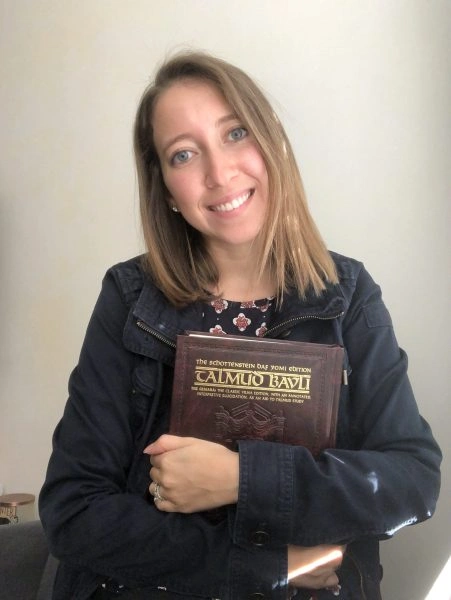
I saw an elderly man at the shul kiddush in early March 2020, celebrating the siyyum of masechet brachot which he had been learning with a young yeshiva student. I thought, if he can do it, I can do it! I began to learn masechet Shabbat the next day, Making up masechet brachot myself, which I had missed. I haven’t missed a day since, thanks to the ease of listening to Hadran’s podcast!
Judith Shapiro
Judith Shapiro

Minnesota, United States

I’ve been studying Talmud since the ’90s, and decided to take on Daf Yomi two years ago. I wanted to attempt the challenge of a day-to-day, very Jewish activity. Some days are so interesting and some days are so boring. But I’m still here.
Wendy Rozov
Wendy Rozov

Phoenix, AZ, United States

About a year into learning more about Judaism on a path to potential conversion, I saw an article about the upcoming Siyum HaShas in January of 2020. My curiosity was piqued and I immediately started investigating what learning the Daf actually meant. Daily learning? Just what I wanted. Seven and a half years? I love a challenge! So I dove in head first and I’ve enjoyed every moment!!
Nickie Matthews
Nickie Matthews

Blacksburg, United States

A friend mentioned that she was starting Daf Yomi in January 2020. I had heard of it and thought, why not? I decided to try it – go day by day and not think about the seven plus year commitment. Fast forward today, over two years in and I can’t imagine my life without Daf Yomi. It’s part of my morning ritual. If I have a busy day ahead of me I set my alarm to get up early to finish the day’s daf
Debbie Fitzerman
Debbie Fitzerman

Ontario, Canada

I never thought I’d be able to do Daf Yomi till I saw the video of Hadran’s Siyum HaShas. Now, 2 years later, I’m about to participate in Siyum Seder Mo’ed with my Hadran community. It has been an incredible privilege to learn with Rabbanit Michelle and to get to know so many caring, talented and knowledgeable women. I look forward with great anticipation and excitement to learning Seder Nashim.

Caroline-Ben-Ari-Tapestry
Caroline Ben-Ari

Karmiel, Israel

I started learning at the start of this cycle, and quickly fell in love. It has become such an important part of my day, enriching every part of my life.

Naomi Niederhoffer
Naomi Niederhoffer

Toronto, Canada

My husband learns Daf, my son learns Daf, my son-in-law learns Daf.
When I read about Hadran’s Siyyum HaShas 2 years ago, I thought- I can learn Daf too!
I had learned Gemara in Hillel HS in NJ, & I remembered loving it.
Rabbanit Michelle & Hadran have opened my eyes & expanding my learning so much in the past few years. We can now discuss Gemara as a family.
This was a life saver during Covid

Renee Braha
Renee Braha

Brooklyn, NY, United States

Since I started in January of 2020, Daf Yomi has changed my life. It connects me to Jews all over the world, especially learned women. It makes cooking, gardening, and folding laundry into acts of Torah study. Daf Yomi enables me to participate in a conversation with and about our heritage that has been going on for more than 2000 years.

Shira Eliaser
Shira Eliaser

Skokie, IL, United States

In January 2020, my chevruta suggested that we “up our game. Let’s do Daf Yomi” – and she sent me the Hadran link. I lost my job (and went freelance), there was a pandemic, and I am still opening the podcast with my breakfast coffee, or after Shabbat with popcorn. My Aramaic is improving. I will need a new bookcase, though.

Rhondda May
Rhondda May

Atlanta, Georgia, United States

I am grateful for the structure of the Daf Yomi. When I am freer to learn to my heart’s content, I learn other passages in addition. But even in times of difficulty, I always know that I can rely on the structure and social support of Daf Yomi learners all over the world.

I am also grateful for this forum. It is very helpful to learn with a group of enthusiastic and committed women.

Janice Block-2
Janice Block

Beit Shemesh, Israel

I started learning Talmud with R’ Haramati in Yeshivah of Flatbush. But after a respite of 60 years, Rabbanit Michelle lit my fire – after attending the last three world siyumim in Miami Beach, Meadowlands and Boca Raton, and now that I’m retired, I decided – “I can do this!” It has been an incredible journey so far, and I look forward to learning Daf everyday – Mazal Tov to everyone!

Roslyn Jaffe
Roslyn Jaffe

Florida, United States

I started learning after the siyum hashas for women and my daily learning has been a constant over the last two years. It grounded me during the chaos of Corona while providing me with a community of fellow learners. The Daf can be challenging but it’s filled with life’s lessons, struggles and hope for a better world. It’s not about the destination but rather about the journey. Thank you Hadran!

Dena Lehrman
Dena Lehrman

אפרת, Israel

When I began the previous cycle, I promised myself that if I stuck with it, I would reward myself with a trip to Israel. Little did I know that the trip would involve attending the first ever women’s siyum and being inspired by so many learners. I am now over 2 years into my second cycle and being part of this large, diverse, fascinating learning family has enhanced my learning exponentially.

Shira Krebs
Shira Krebs

Minnesota, United States

The start of my journey is not so exceptional. I was between jobs and wanted to be sure to get out every day (this was before corona). Well, I was hooked after about a month and from then on only looked for work-from-home jobs so I could continue learning the Daf. Daf has been a constant in my life, though hurricanes, death, illness/injury, weddings. My new friends are Rav, Shmuel, Ruth, Joanna.
Judi Felber
Judi Felber

Raanana, Israel

I started the daf at the beginning of this cycle in January 2020. My husband, my children, grandchildren and siblings have been very supportive. As someone who learned and taught Tanach and mefarshim for many years, it has been an amazing adventure to complete the six sedarim of Mishnah, and now to study Talmud on a daily basis along with Rabbanit Michelle and the wonderful women of Hadran.

Rookie Billet
Rookie Billet

Jerusalem, Israel

I started my journey on the day I realized that the Siyum was happening in Yerushalayim and I was missing out. What? I told myself. How could I have not known about this? How can I have missed out on this opportunity? I decided that moment, I would start Daf Yomi and Nach Yomi the very next day. I am so grateful to Hadran. I am changed forever because I learn Gemara with women. Thank you.

Linda Brownstein
Linda Brownstein

Mitspe, Israel

Ive been learning Gmara since 5th grade and always loved it. Have always wanted to do Daf Yomi and now with Michelle Farber’s online classes it made it much easier to do! Really enjoying the experience thank you!!

Lisa Lawrence
Lisa Lawrence

Neve Daniel, Israel

I have joined the community of daf yomi learners at the start of this cycle. I have studied in different ways – by reading the page, translating the page, attending a local shiur and listening to Rabbanit Farber’s podcasts, depending on circumstances and where I was at the time. The reactions have been positive throughout – with no exception!

Silke Goldberg
Silke Goldberg

Guildford, United Kingdom

When I began learning Daf Yomi at the beginning of the current cycle, I was preparing for an upcoming surgery and thought that learning the Daf would be something positive I could do each day during my recovery, even if I accomplished nothing else. I had no idea what a lifeline learning the Daf would turn out to be in so many ways.

Laura Shechter
Laura Shechter

Lexington, MA, United States

I learned Mishnayot more than twenty years ago and started with Gemara much later in life. Although I never managed to learn Daf Yomi consistently, I am learning since some years Gemara in depth and with much joy. Since last year I am studying at the International Halakha Scholars Program at the WIHL. I often listen to Rabbanit Farbers Gemara shiurim to understand better a specific sugyiah. I am grateful for the help and inspiration!

Shoshana Ruerup
Shoshana Ruerup

Berlin, Germany

Bava Batra 105

בִּטֵּל ״מִדָּה בְּחֶבֶל״ ״הֵן חָסֵר הֵן יָתֵר״; דִּבְרֵי בֶּן נַנָּס.

the words: Measured precisely with a rope, nullify the words: More or less, since the principle is that in all cases, one should attend to the final expression; this is the statement of ben Nanas.

גְּמָ׳ אָמַר רַבִּי אַבָּא בַּר מֶמֶל אָמַר רַב: חוֹלְקִין עָלָיו חֲבֵירָיו עַל בֶּן נַנָּס. מַאי קָא מַשְׁמַע לַן? תְּנֵינָא: מַעֲשֶׂה בְּצִיפּוֹרִי, בְּאֶחָד שֶׁשָּׂכַר מֶרְחָץ מֵחֲבֵירוֹ בִּשְׁנֵים עָשָׂר זְהוּבִים לְשָׁנָה – דִּינַר זָהָב לְחֹדֶשׁ;

GEMARA: Rabbi Abba bar Memel says that Rav says: Ben Nanas’s colleagues disagree with him with regard to his ruling that one should attend to the final expression. The Gemara asks: What new halakha is Rav teaching us? Don’t we already learn that they disagree from a mishna (Bava Metzia 102a): There was once an incident in Tzippori involving one who rented a bathhouse from another, and it was stated that the rental fee would be twelve gold dinars [zehuvim] a year, one gold dinar per month, and the year was later intercalated, an extra month being added.

וּבָא מַעֲשֶׂה לִפְנֵי רַבָּן שִׁמְעוֹן בֶּן גַּמְלִיאֵל וְלִפְנֵי רַבִּי יוֹסֵי, וְאָמְרוּ: יַחְלוֹקוּ אֶת חֹדֶשׁ הָעִיבּוּר!

The incident came before Rabban Shimon ben Gamliel and before Rabbi Yosei for a decision as to whether the intercalated month is included in the words: Twelve gold dinars a year, or whether an additional payment must be made for that month, as the agreement stipulated: One gold dinar per month. And they said: The landlord and the tenant should divide the intercalated month between them, and so the tenant should pay only half a gold dinar for it. This indicates that these Sages ruled that the meaning of an agreement containing two contradictory expressions is in doubt, and therefore the parties divide the disputed amount between them. From here it follows that they disagree with the opinion of ben Nanas, who says that in such a case one should attend to the final expression.

אִי מֵהָתָם, הֲוָה אָמֵינָא: הָתָם הוּא דְּאִיכָּא לְמֵימַר מִיהְדָּר קָא הָדַר בֵּיהּ, וְאִיכָּא לְמֵימַר פָּרוֹשֵׁי קָא מְפָרֵשׁ. אֲבָל הָכָא, דְּוַדַּאי קָא הָדַר בֵּיהּ, אֵימָא לָא; קָא מַשְׁמַע לַן.

The Gemara replies: If the Sages’ opinion was derived only from there, I would not know that they disagree with the opinion of ben Nanas in all cases, as I would say that it is only there that the Sages say that the parties divide the disputed sum between them. As it is possible to say that the landlord retracted his first statement and set the rental fee at one gold dinar per month, but it is also possible to say that he is explaining his earlier statement. That is to say, he did not mean to relate to the intercalated month; rather, he was clarifying that payment was to be made not with a lump sum at the end of the year, but in monthly installments. Since there is uncertainty with regard to his intention, the parties divide the contested sum between them. But here in the mishna, where the seller certainly retracted his first statement, one might say that the Sages do not disagree with ben Nanas. Therefore, the mishna teaches us that in all cases the Sages disagree with ben Nanas.

אָמַר רַב יְהוּדָה אָמַר שְׁמוּאֵל: זוֹ דִּבְרֵי בֶּן נַנָּס, אֲבָל חֲכָמִים אוֹמְרִים: הַלֵּךְ אַחַר פָּחוֹת שֶׁבַּלְּשׁוֹנוֹת.

Similar to what was cited above in the name of Rav, Rav Yehuda says that Shmuel says: This is the statement of ben Nanas, who says with regard to a case of contradictory expressions that one should attend to the final expression; but the Sages say: Follow the least inclusive expression, the one that is the least advantageous to the buyer, in keeping with the principle that in a case of uncertainty, the burden of proof rests upon the claimant.

״זוֹ״ – וְלָא סְבִירָא לֵיהּ?! וְהָא רַב וּשְׁמוּאֵל דְּאָמְרִי תַּרְוַיְיהוּ: ״כּוֹר בִּשְׁלֹשִׁים אֲנִי מוֹכֵר לָךְ״ – יָכוֹל לַחֲזוֹר בּוֹ אֲפִילּוּ בַּסְּאָה הָאַחֲרוֹנָה.

The Gemara asks: Did Shmuel mean to say that this is the statement of ben Nanas, but he, Shmuel, does not agree with him? But don’t Rav and Shmuel both say: If the seller said to the buyer: I am selling you a kor of grain, an amount equivalent to thirty se’a, for the sum of thirty sela, he can renege on the entire sale even while measuring out the last se’a. Since the seller stipulated that he was selling a full kor of grain, as long as he has not yet measured out the full amount, he may still renege, as the sale is not yet complete.

״כּוֹר בִּשְׁלֹשִׁים – סְאָה בְּסֶלַע אֲנִי מוֹכֵר לָךְ״ – רִאשׁוֹן רִאשׁוֹן קָנָה. אֶלָּא ״זוֹ״ – וּסְבִירָא לֵיהּ.

But if the seller said to the buyer: I am selling you a kor of grain for thirty sela, each se’a for a sela, the buyer acquires each se’a one by one as it is being measured out to him. Since the seller specified the price per sela, he has indicated that he is ready to sell each sela on its own. This seems to indicate that Shmuel maintains that in a case of contradictory expressions, one should attend to the final expression. Rather, Shmuel’s formulation: This is the statement of ben Nanas, must be explained as follows: This is the statement of ben Nanas, and he, Shmuel, agrees with him that one should attend to the final expression.

וּמִי סְבִירָא לֵיהּ?! וְהָאָמַר שְׁמוּאֵל: בְּבָא בָּאֶמְצַע הַחֹדֶשׁ עָסְקִינַן; אֲבָל בָּא בִּתְחִלַּת הַחֹדֶשׁ – כּוּלּוֹ לַמַּשְׂכִּיר. בְּסוֹף הַחֹדֶשׁ – כּוּלּוֹ לַשּׂוֹכֵר!

The Gemara asks: And does Shmuel actually agree with him? But doesn’t Shmuel say: Concerning the ruling of the Sages that the landlord and the tenant should divide the intercalated month between them, we are dealing with a case where the landlord came to collect the rent in the middle of the month. Only in that case is the disputed rent divided between them. But in a case where he came to collect the rent at the beginning of the month, the entire sum goes to the landlord who is demanding payment, since he is in possession of the property. And if he came at the end of the month, the entire sum goes to the tenant who is refusing payment, since he is in possession of the money. This indicates that Shmuel maintains that in a case of contradictory expressions, one should not attend to the latter expression. Rather, the case is viewed as one of uncertainty, and the burden of proof rests upon the claimant.

אֶלָּא לְעוֹלָם ״זוֹ״ – וְלָא סְבִירָא לֵיהּ. וְהָתָם טַעְמָא מַאי – מִשּׁוּם דְּתָפֵיס,

Rather, it must be that Shmuel actually meant to say that this is the statement of ben Nanas, but he, Shmuel, does not agree with him that one should attend to the latter expression. In fact, he is in agreement with the Sages who maintain that two contradictory expressions create a case of uncertainty. And there, in the case of the rent for the intercalated month, what is the reason for his ruling that if the landlord came to collect the rent at the beginning of the month, the entire sum goes to the landlord, whereas if he came at the end of the month, the money goes to the tenant? Because the party who is awarded the money was seen as already being in possession of it, and in a case of uncertainty, money is left in the hands of the party enjoying possession.

הָכָא נָמֵי – הָא תָּפֵיס.

Here too, in the case where the seller says that he is selling a kor of grain for thirty sela, each se’a for a sela, the buyer was seen as already being in possession of each se’a that was measured out to him, and therefore the seller cannot renege on the sale. It is for this reason that the buyer acquires the grain, and not because of the principle that in a case of contradictory expressions, one should attend to the latter expression.

אָמַר רַב הוּנָא, אָמְרִי בֵּי רַב: ״אִיסְתֵּרָא, מְאָה מָעֵי״ – מְאָה מָעֵי. ״מְאָה מָעֵי, אִיסְתֵּרָא״ – אִיסְתֵּרָא.

On a similar topic, Rav Huna says that they say in the school of Rav: If the seller said to the buyer: I am selling you this item for an istera, one hundred ma’a, an istera being a silver coin equal to ninety-six copper ma’a, it is assumed he meant one hundred ma’a. And if the seller reversed the order and said that he was selling the item for one hundred ma’a, an istera, it is assumed he meant an istera.

מַאי קָא מַשְׁמַע לַן – תְּפוֹס לָשׁוֹן אַחֲרוֹן? הָא אַמְרַהּ רַב חֲדָא זִימְנָא – דְּאָמַר רַב: אִי הֲוַאי הָתָם, הֲוָה יָהֵיבְנָא כּוּלֵּיהּ לְמַשְׂכִּיר!

The Gemara asks: What new halakha is Rav teaching us? Is it that with regard to a statement comprised of contradictory expressions one should attend only to the last statement? Didn’t Rav already say this on another occasion? As Rav says: Had I been there as a judge when the ruling was issued with regard to the rental fee for the intercalated month, I would have given the entire month’s rent to the landlord, based on the final expression in the rental agreement: One gold dinar per month.

אִי אִיתְּמַר הָא וְלָא אִיתְּמַר הָא, הֲוָה אָמֵינָא: מִיהְדָּר קָא הָדַר בֵּיהּ. אֲבָל הָכָא, מַהוּ דְּתֵימָא פָּרוֹשֵׁי קָא מְפָרֵשׁ; קָא מַשְׁמַע לַן.

The Gemara answers: Nevertheless, it was necessary to state both rulings, as the one cannot necessarily be inferred from the other. If this halakha with regard to the istera was stated and that halakha with regard to the intercalated month was not stated, I would say that when the seller uttered the second expression: One hundred ma’a, he retracted his first expression: An istera, as the two expressions contradict one another, and for that reason Rav said that one should attend to the final expression. But here, in the case of the intercalated month, perhaps you would say that when the landlord utters the second expression: One gold dinar per month, he is explaining the original intent of his first expression: Twelve gold dinars a year, and one should view it as a clarification. Therefore Rav comes and teaches us that in all cases one should attend to the final expression.

Want to follow content and continue where you left off?

Create an account today to track your progress, mark what you’ve learned, and follow the shiurim that speak to you.

Clear all items from this list?

This will remove ALL the items in this section. You will lose any progress or history connected to them. This is irreversible.

Cancel
Yes, clear all

Are you sure you want to delete this item?

You will lose any progress or history connected to this item.

Cancel
Yes, delete